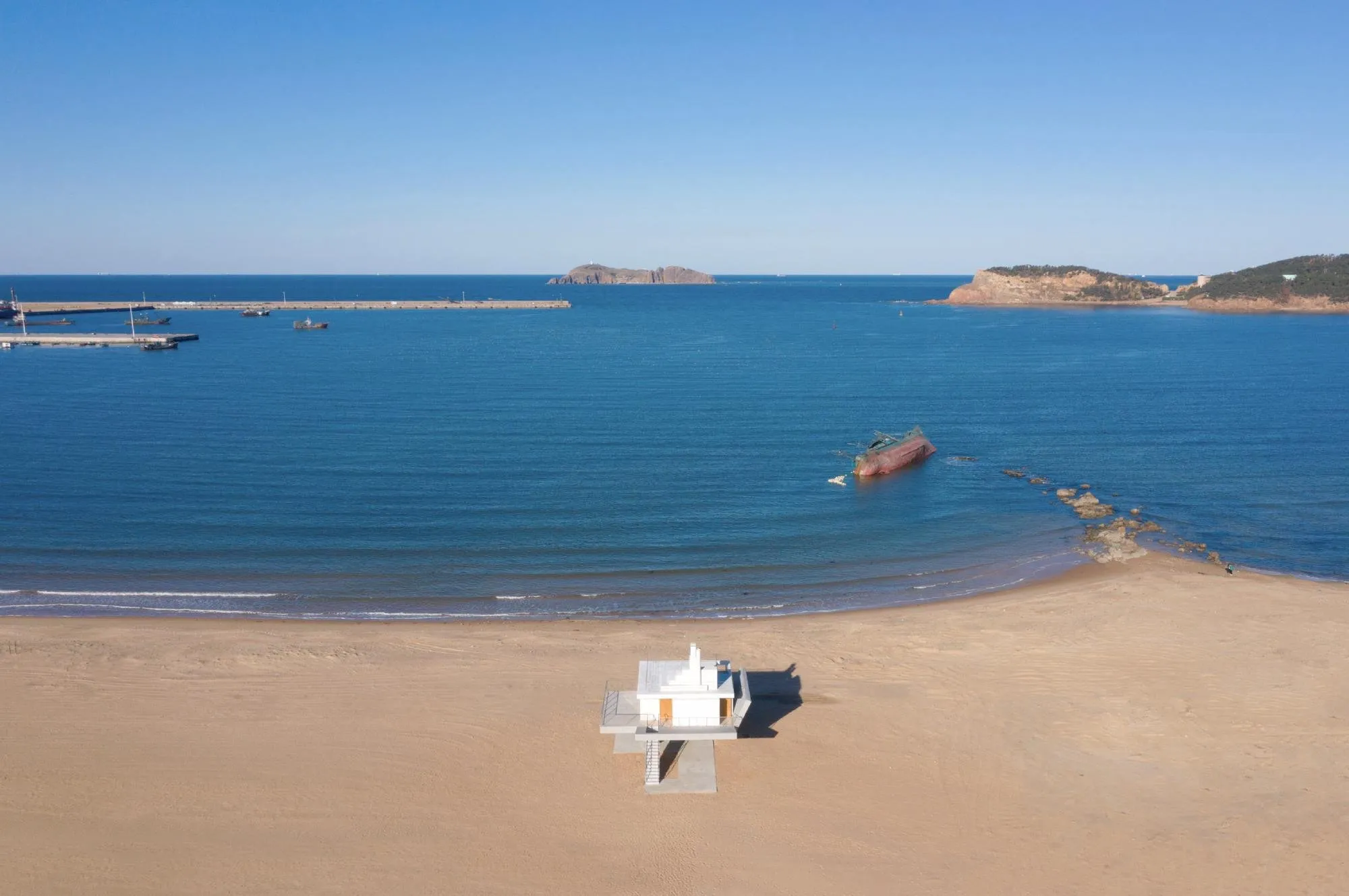
Seaside Floating Pavilion
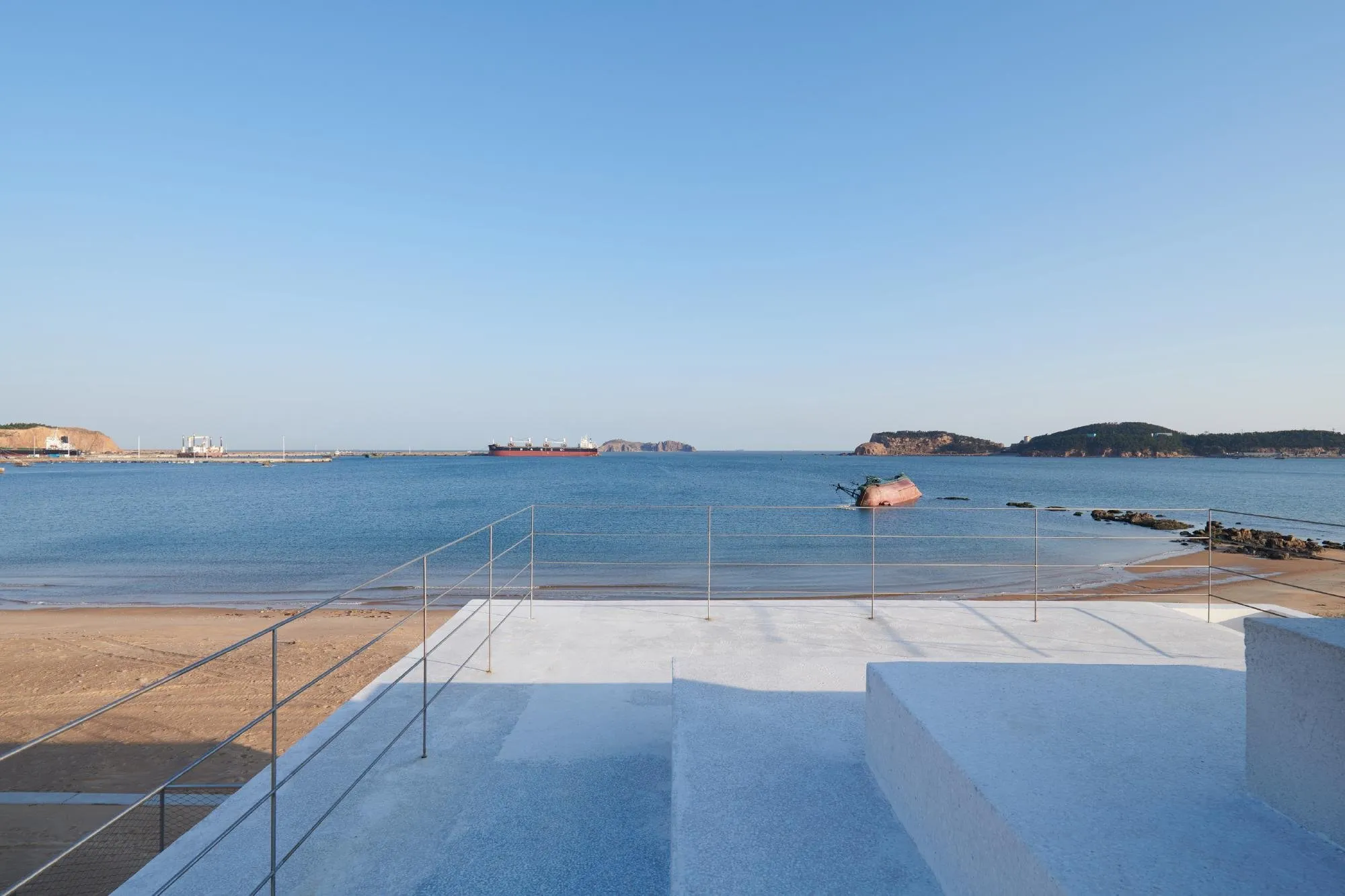
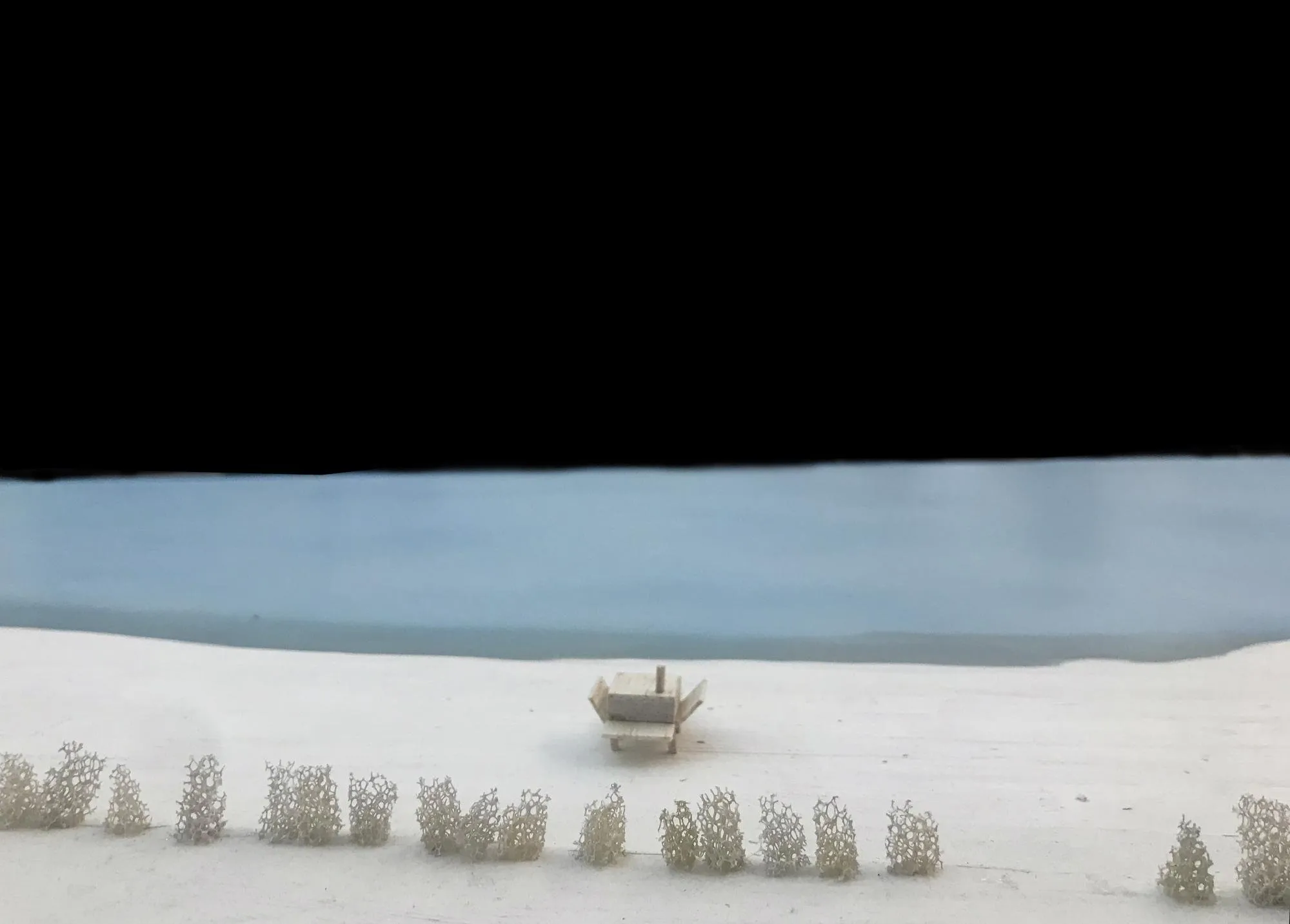
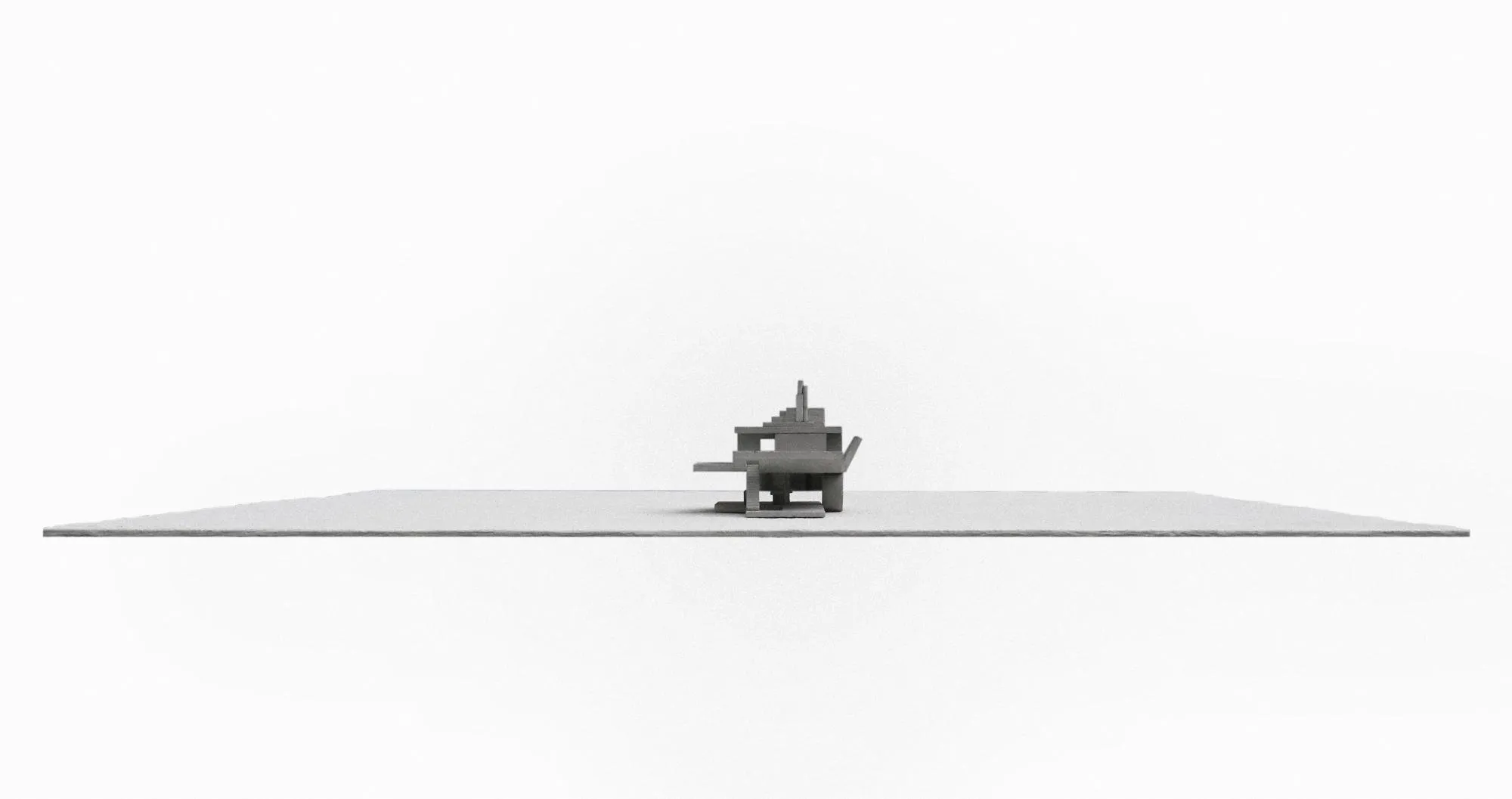
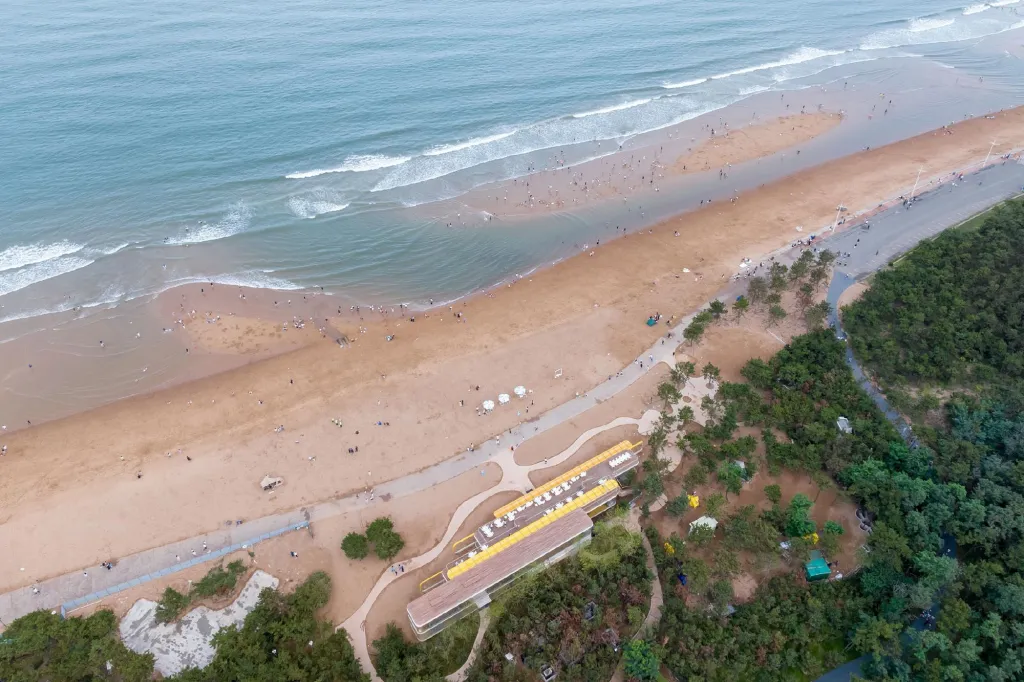
At the tip of a peninsula, an abandoned fishing boat had run aground near an untouched bay, leaning and scoured by waves as if about to capsize. The scene suggested to the Chinese design team a floating pavilion, a small, light object that has glided onto the beach and could take off again at any moment, answering the vastness of the sea with slenderness and lightness.
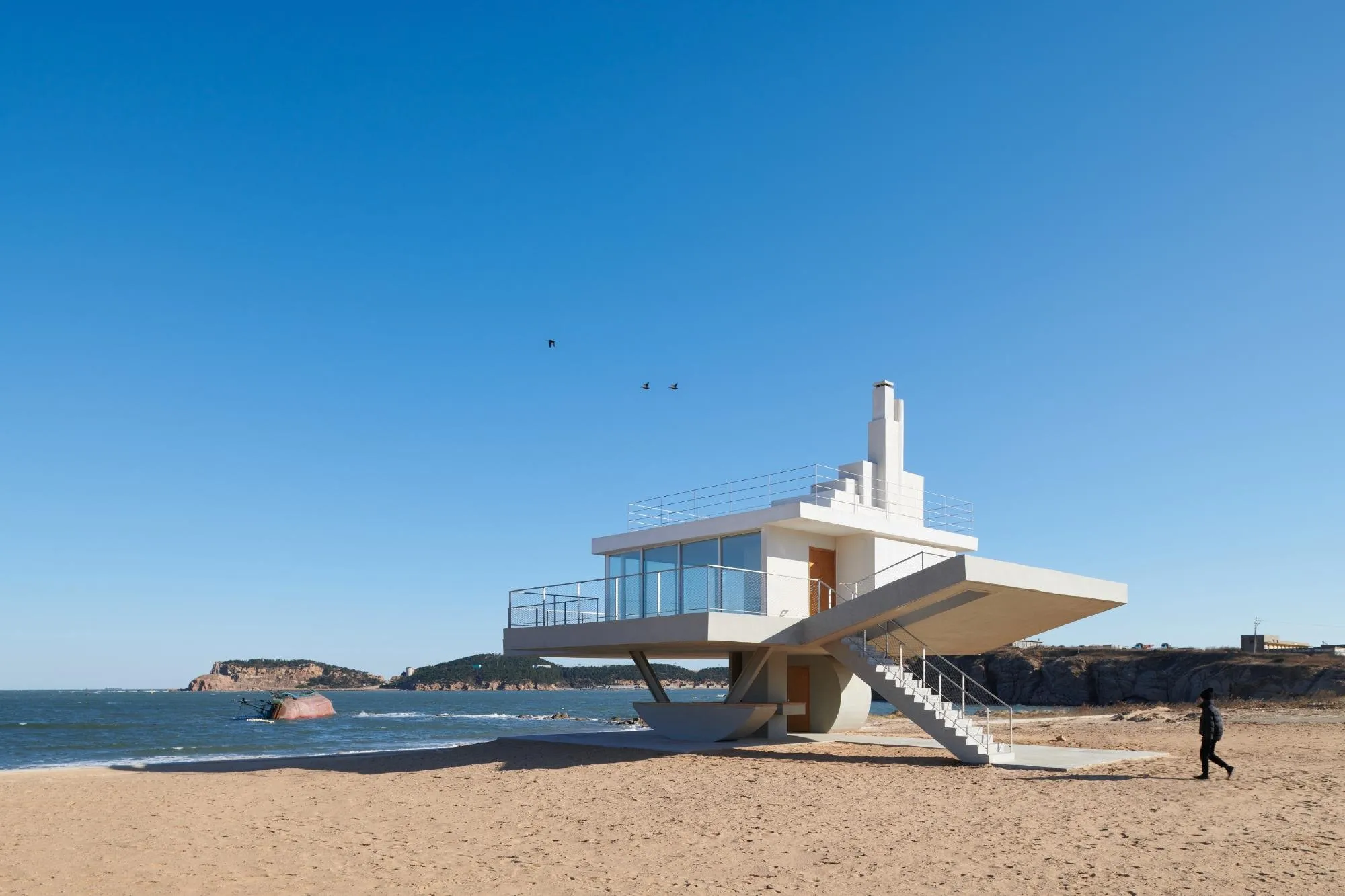
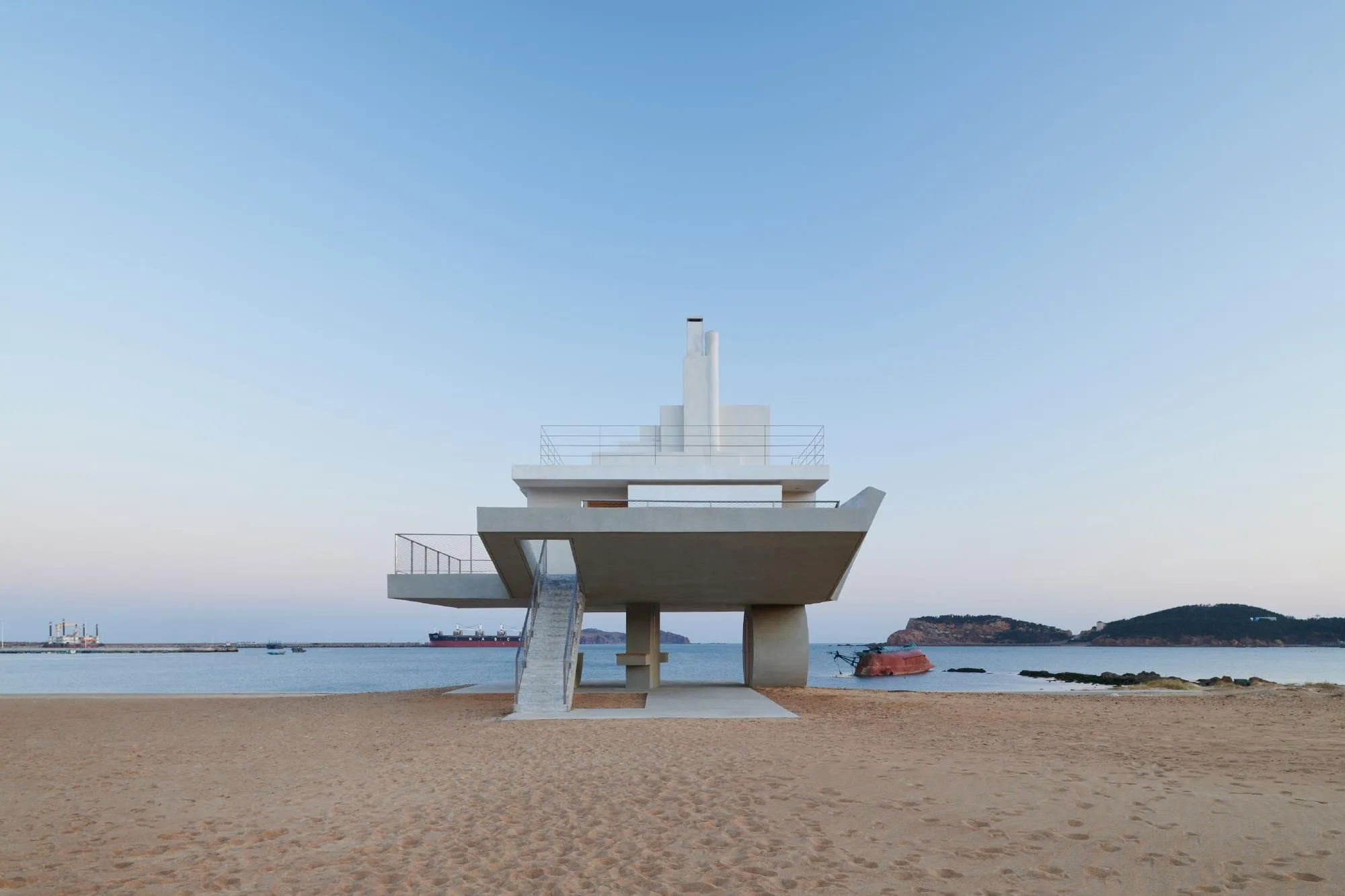
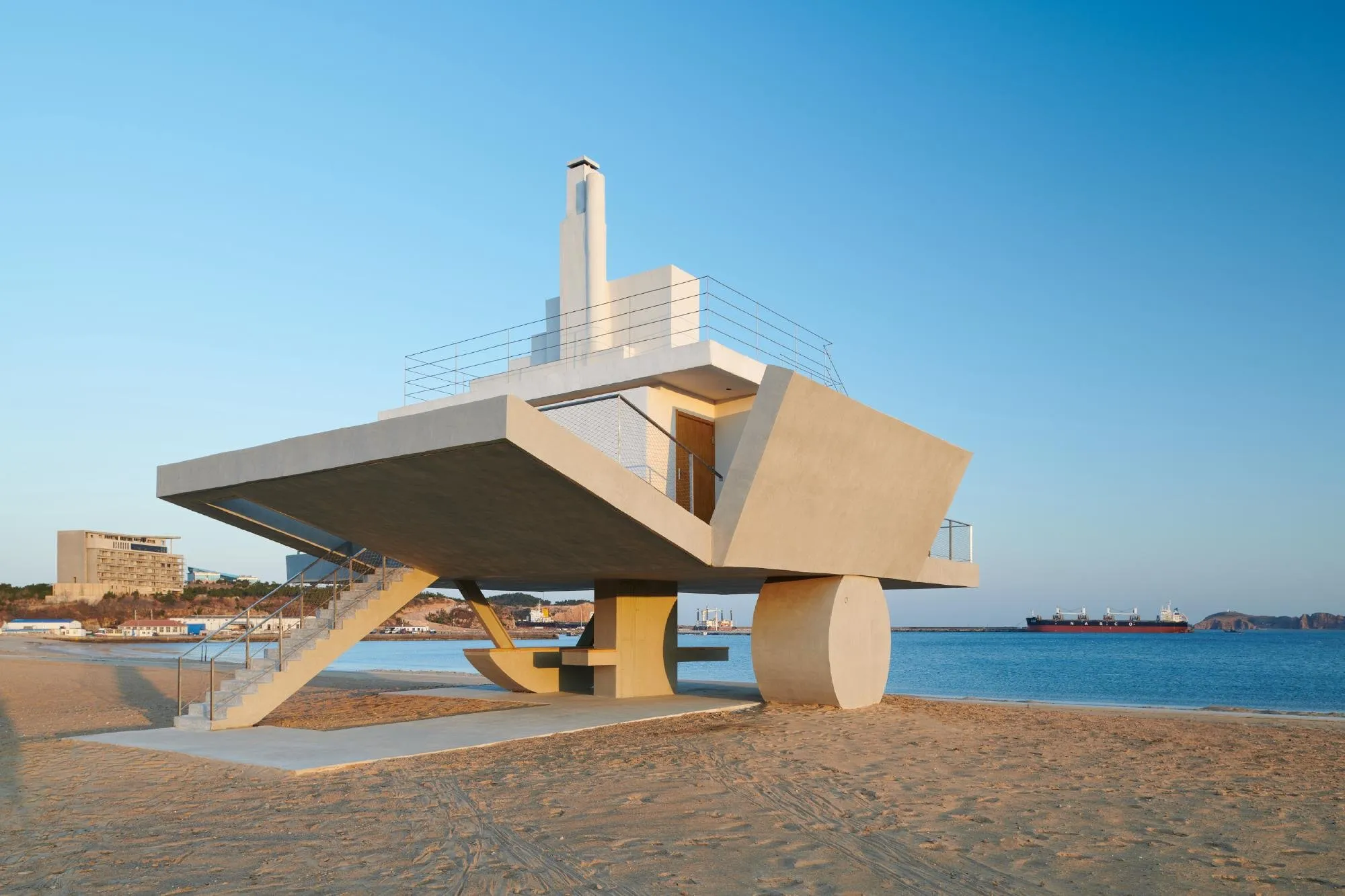
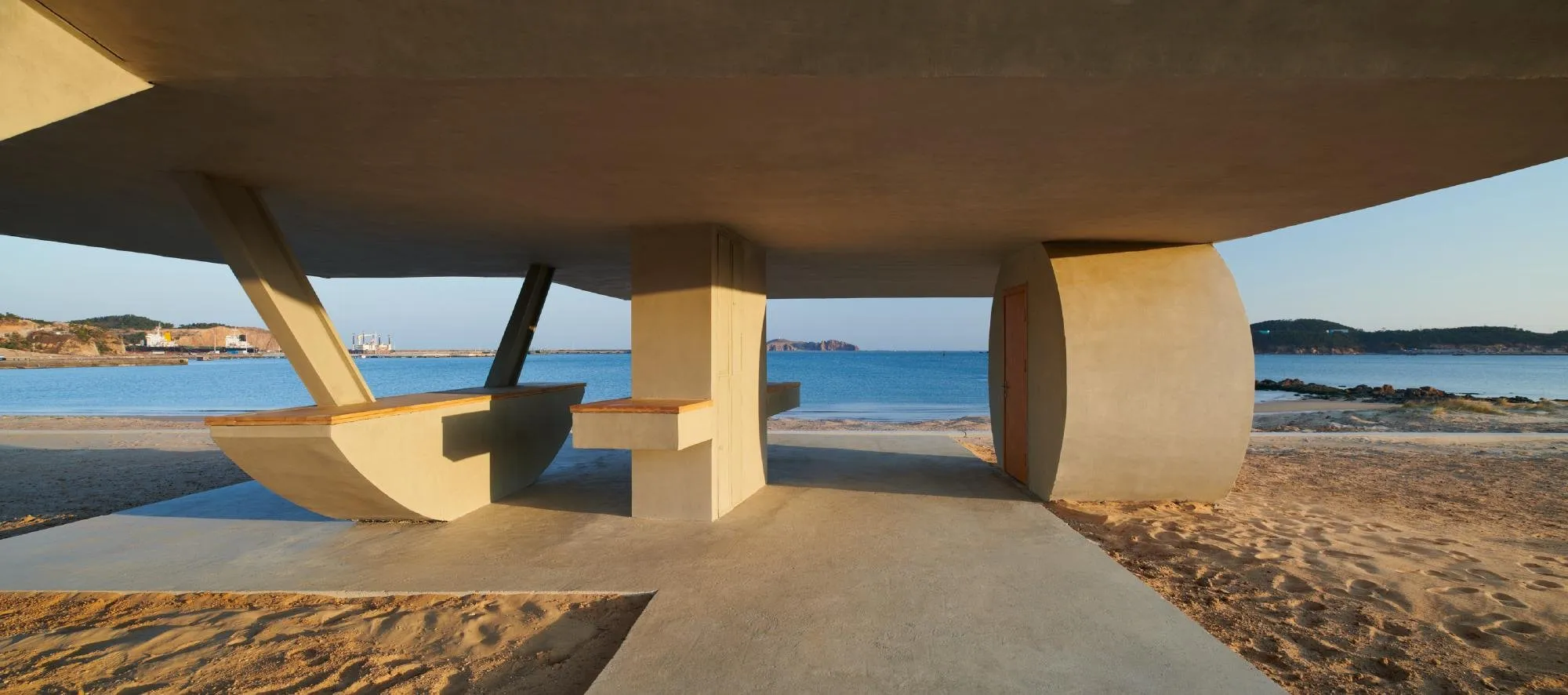
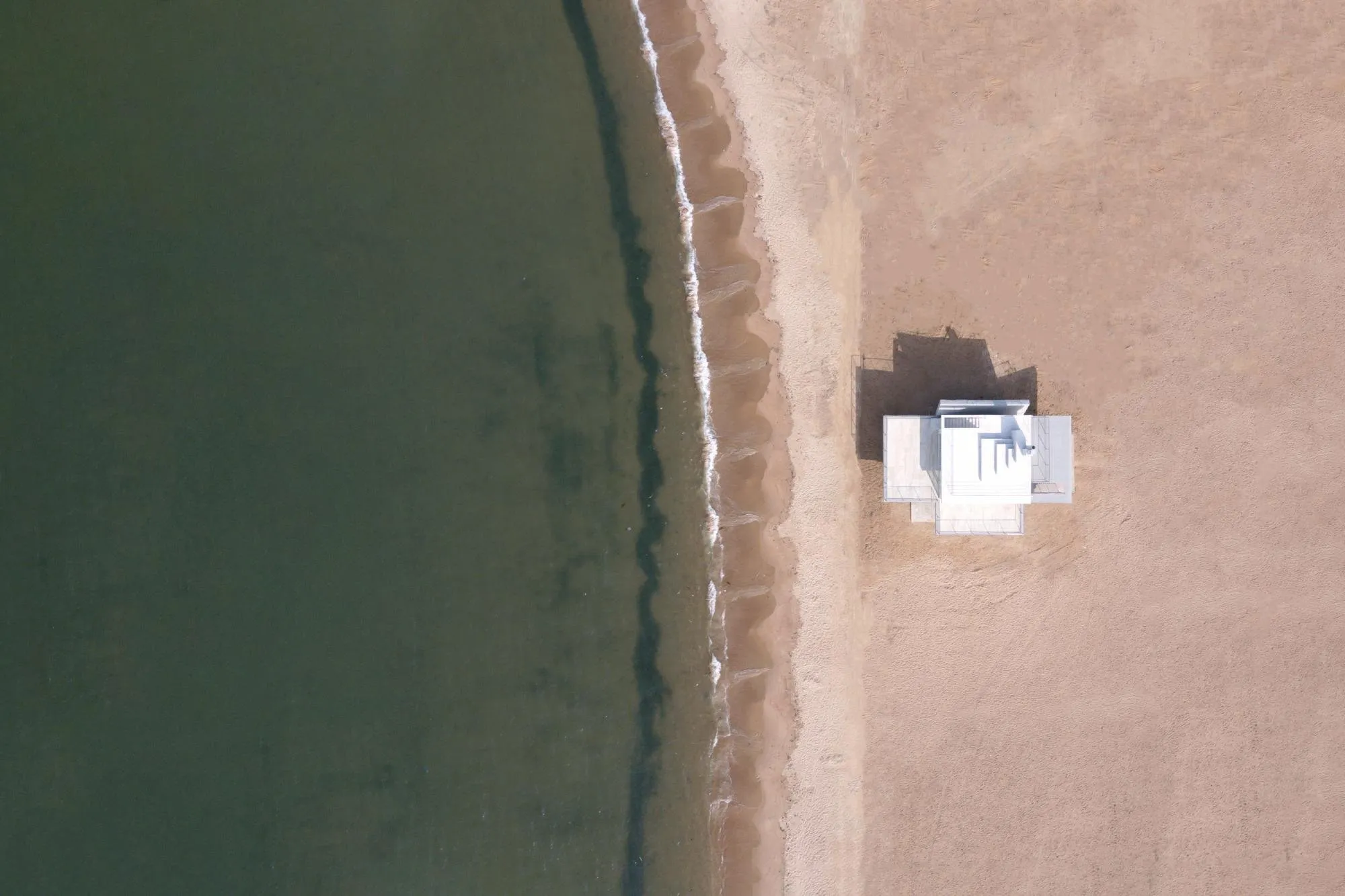
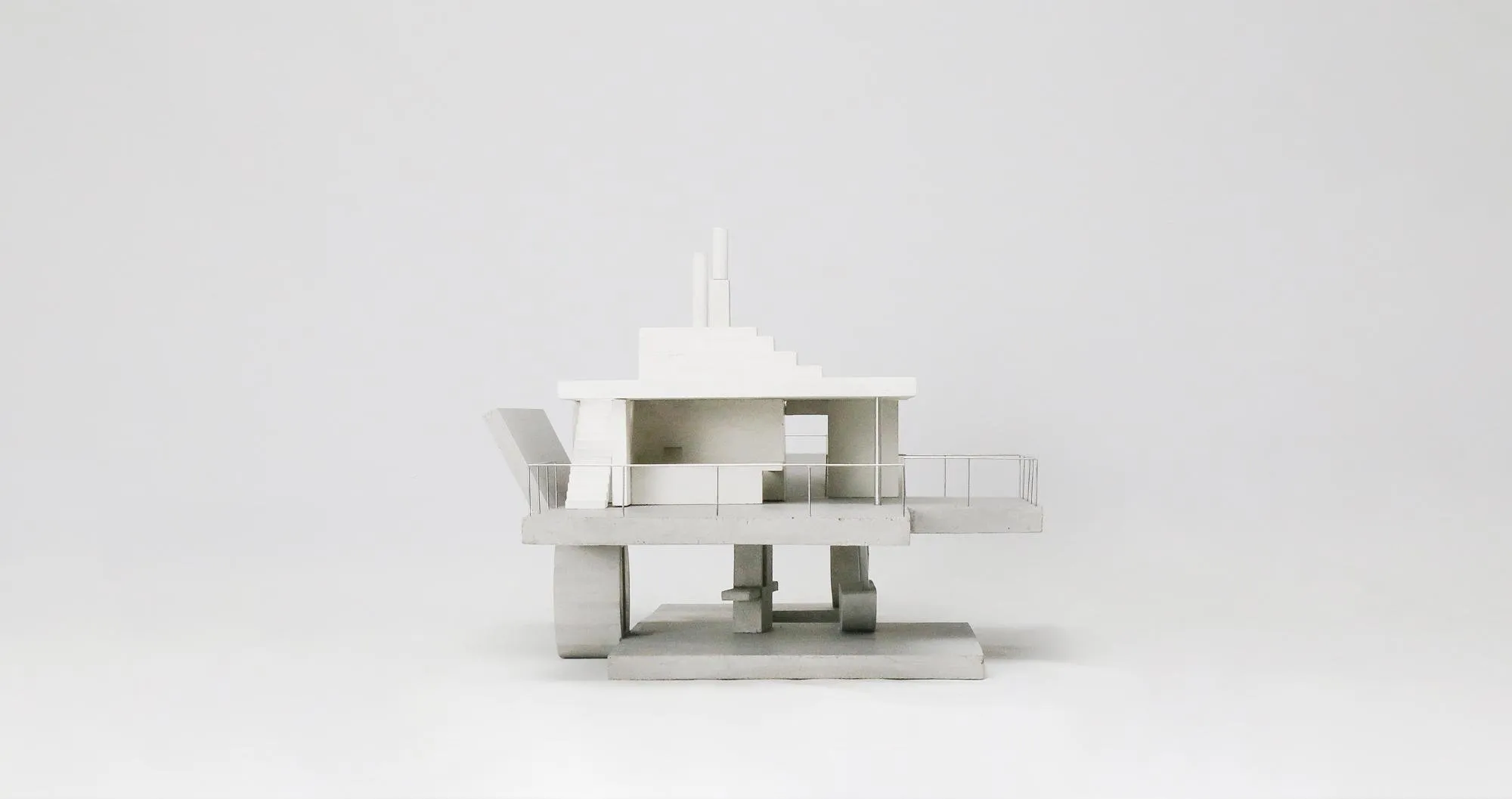
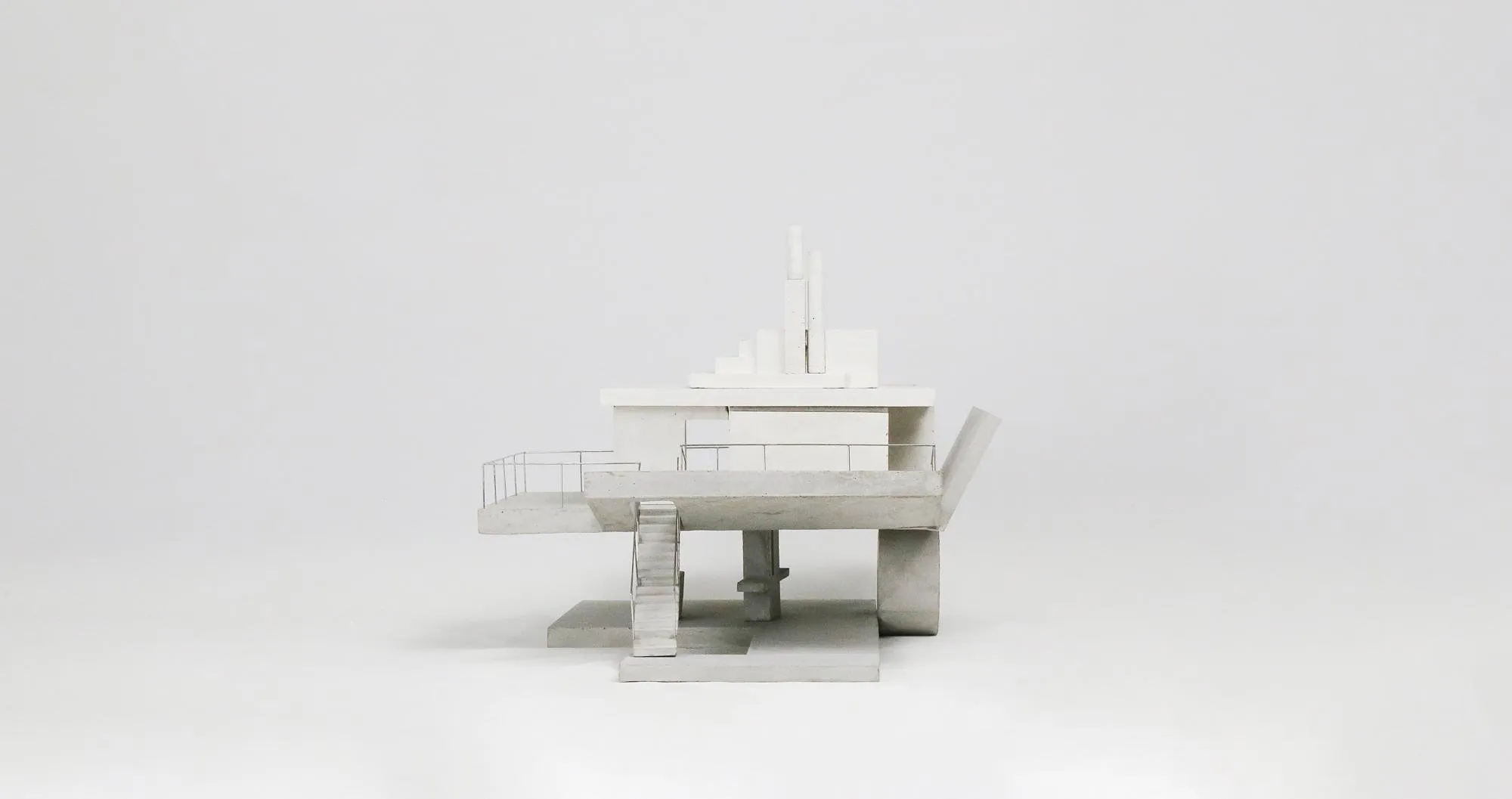
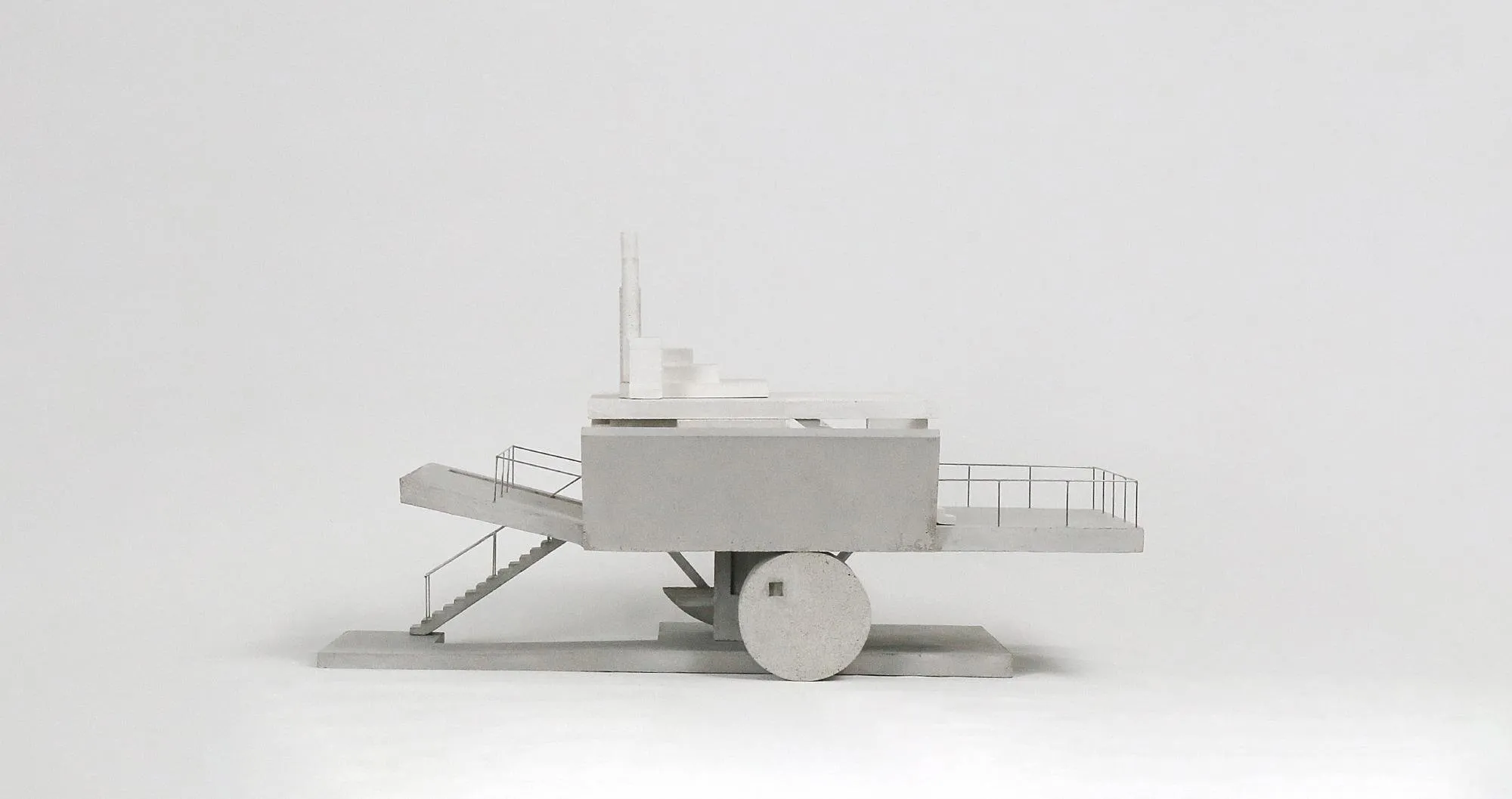
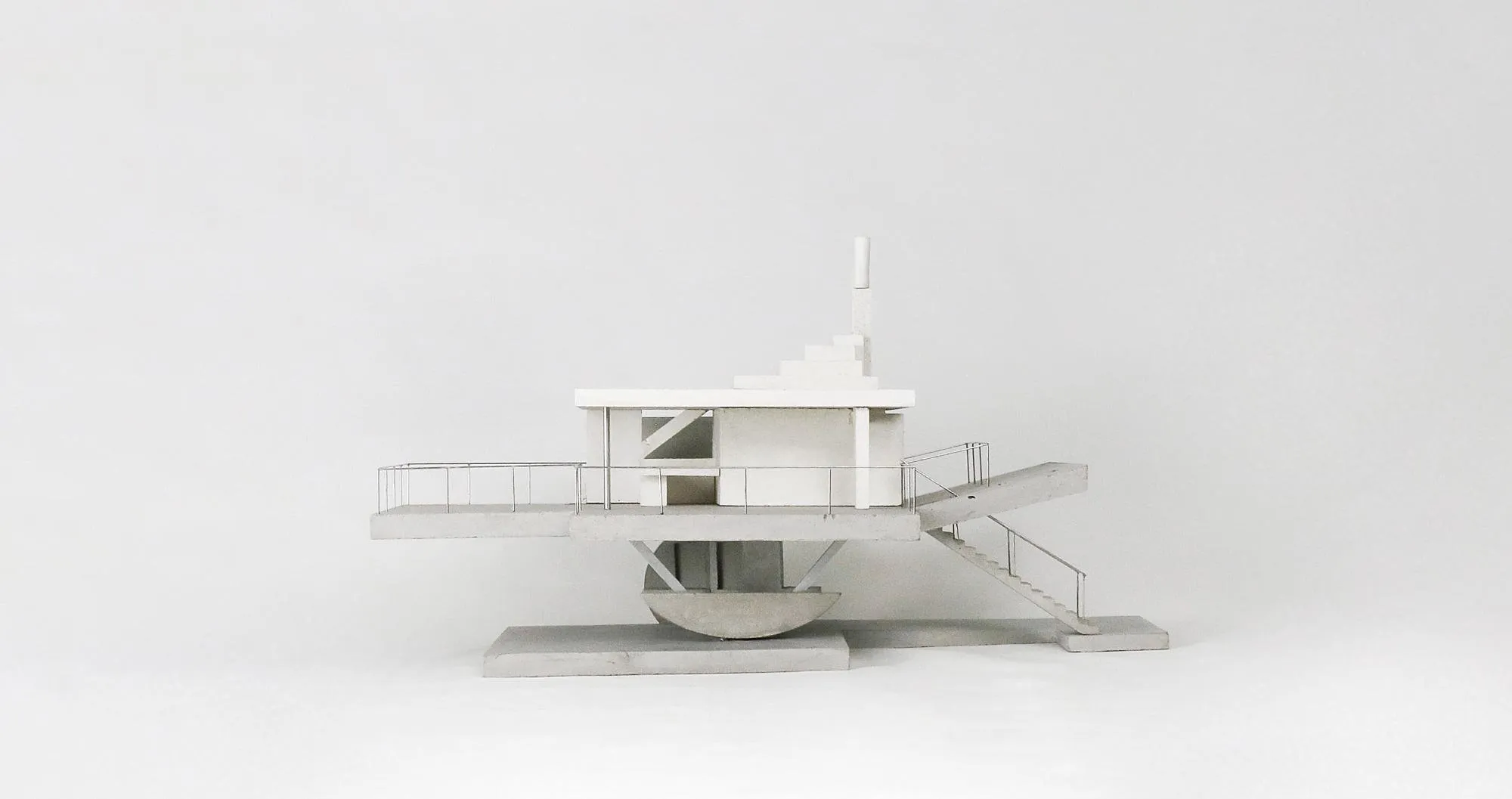
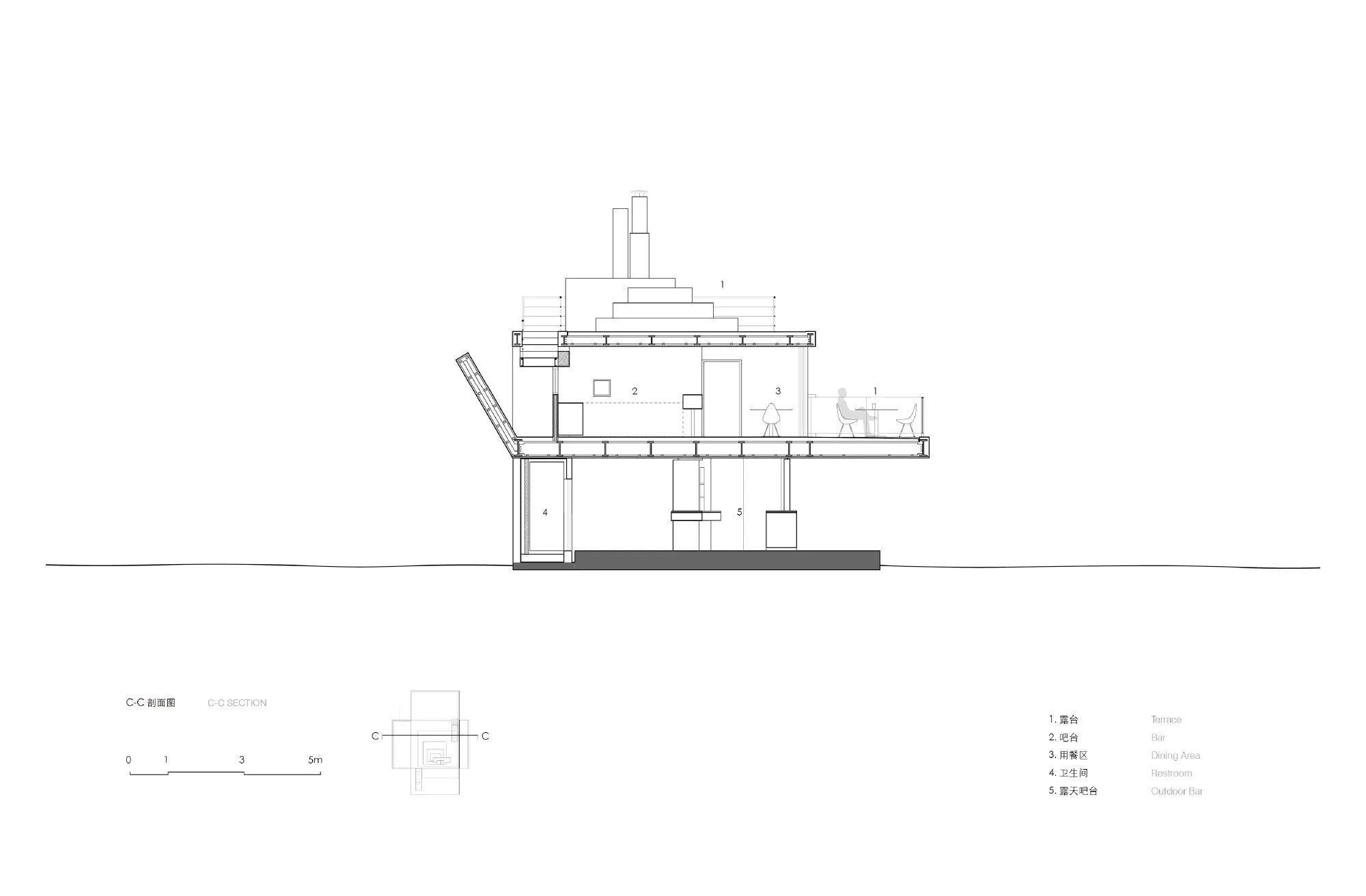
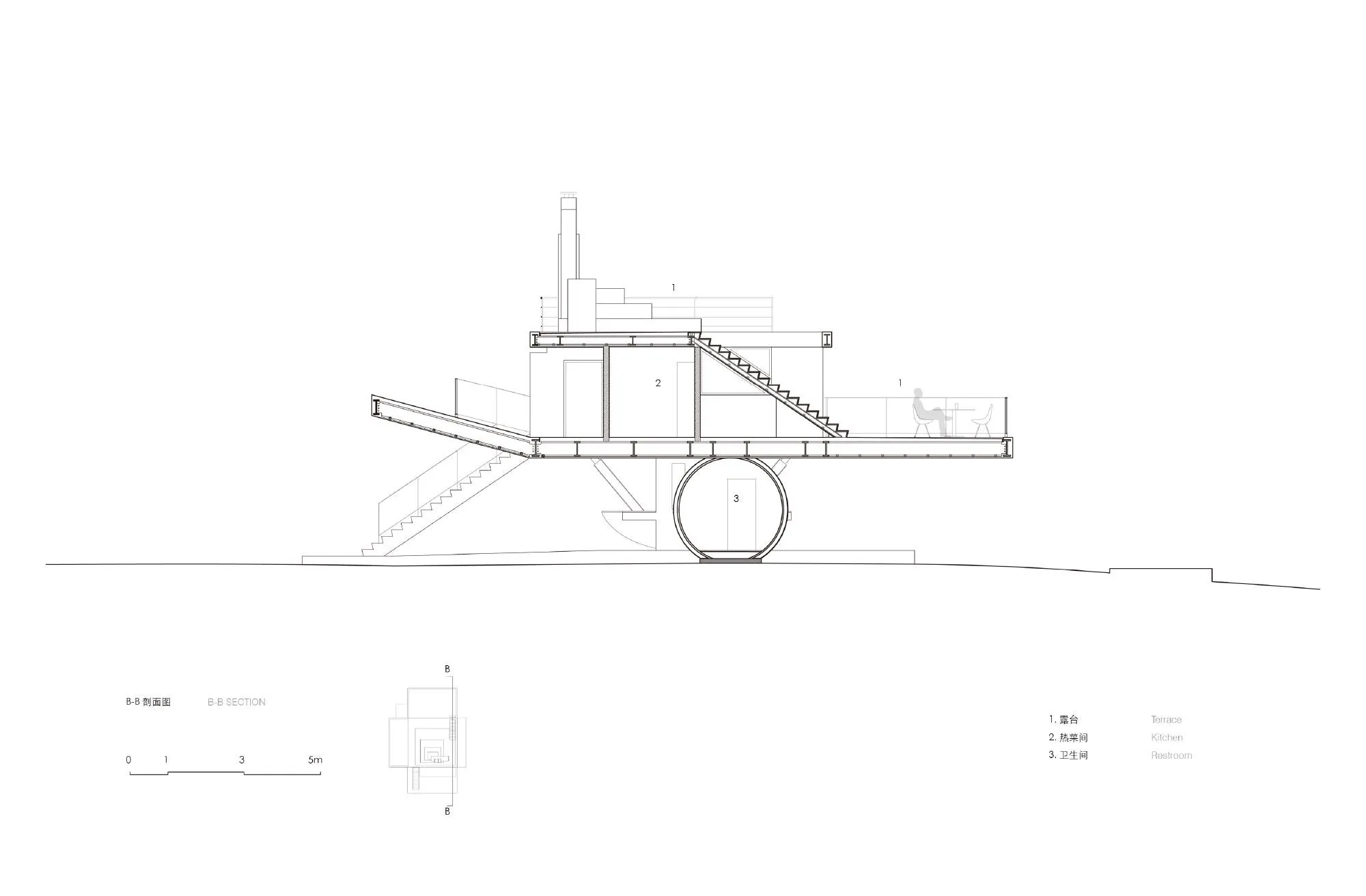
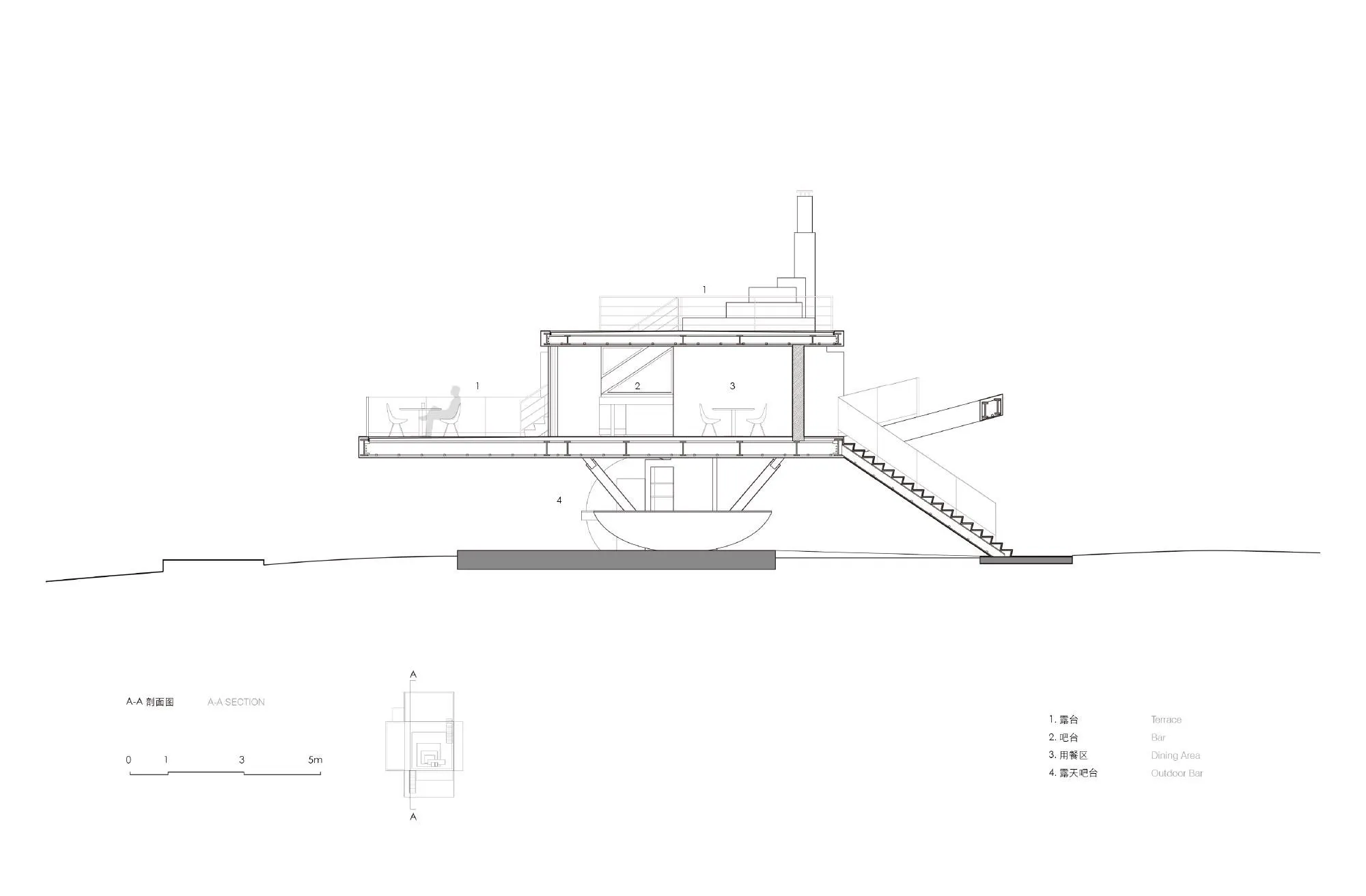
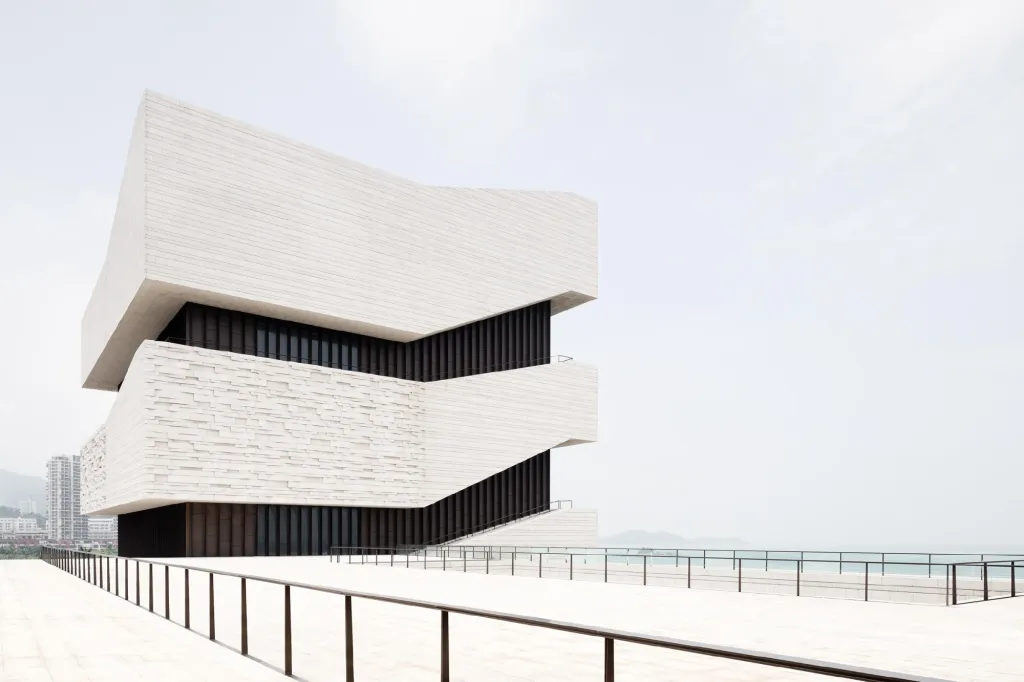
Its main feature is a horizontal plane open to the sky. Above it sit the main functions; below it a semi-outdoor space is held up by elements of different shapes, like a pavilion. The plane is both a sheltering roof and a high point for views.
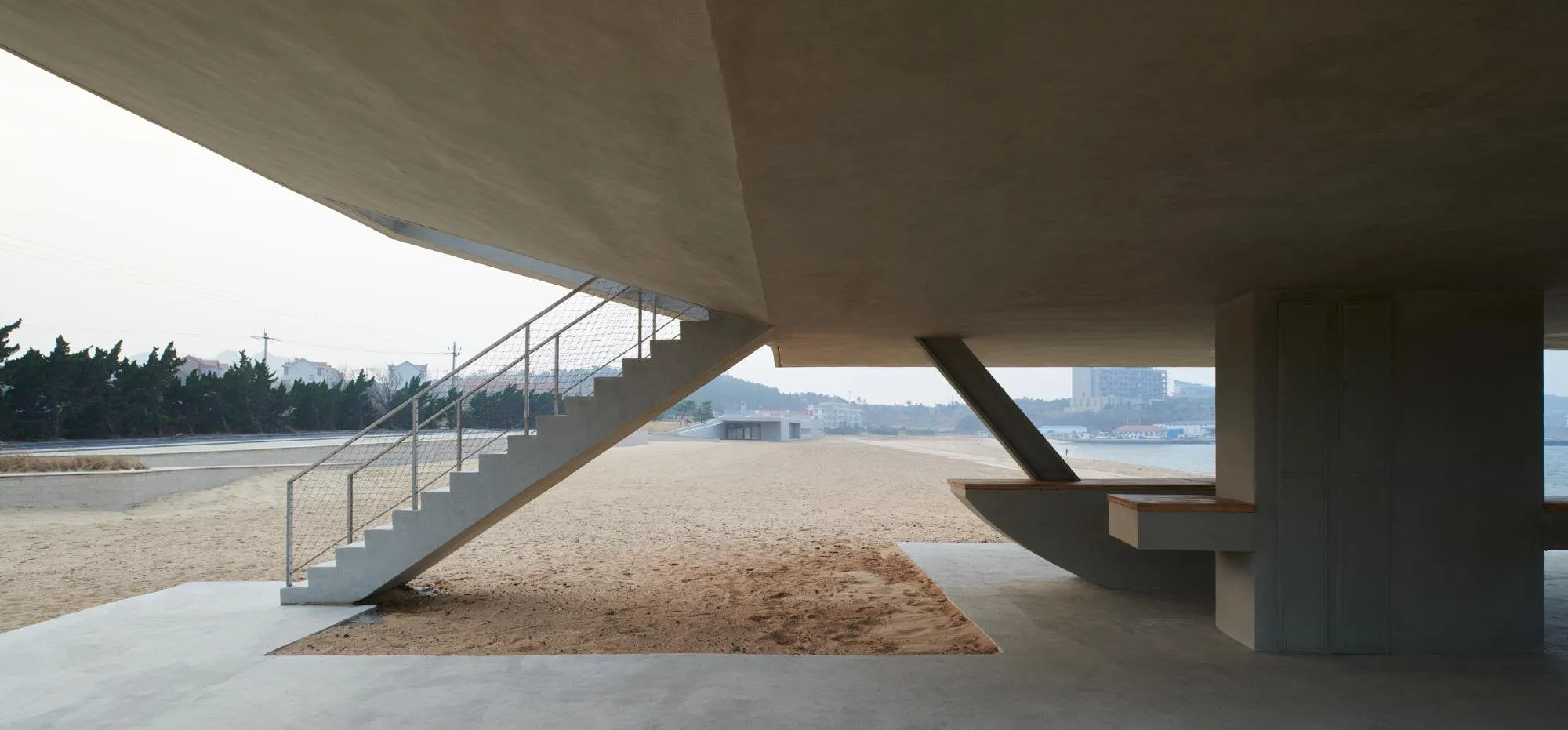
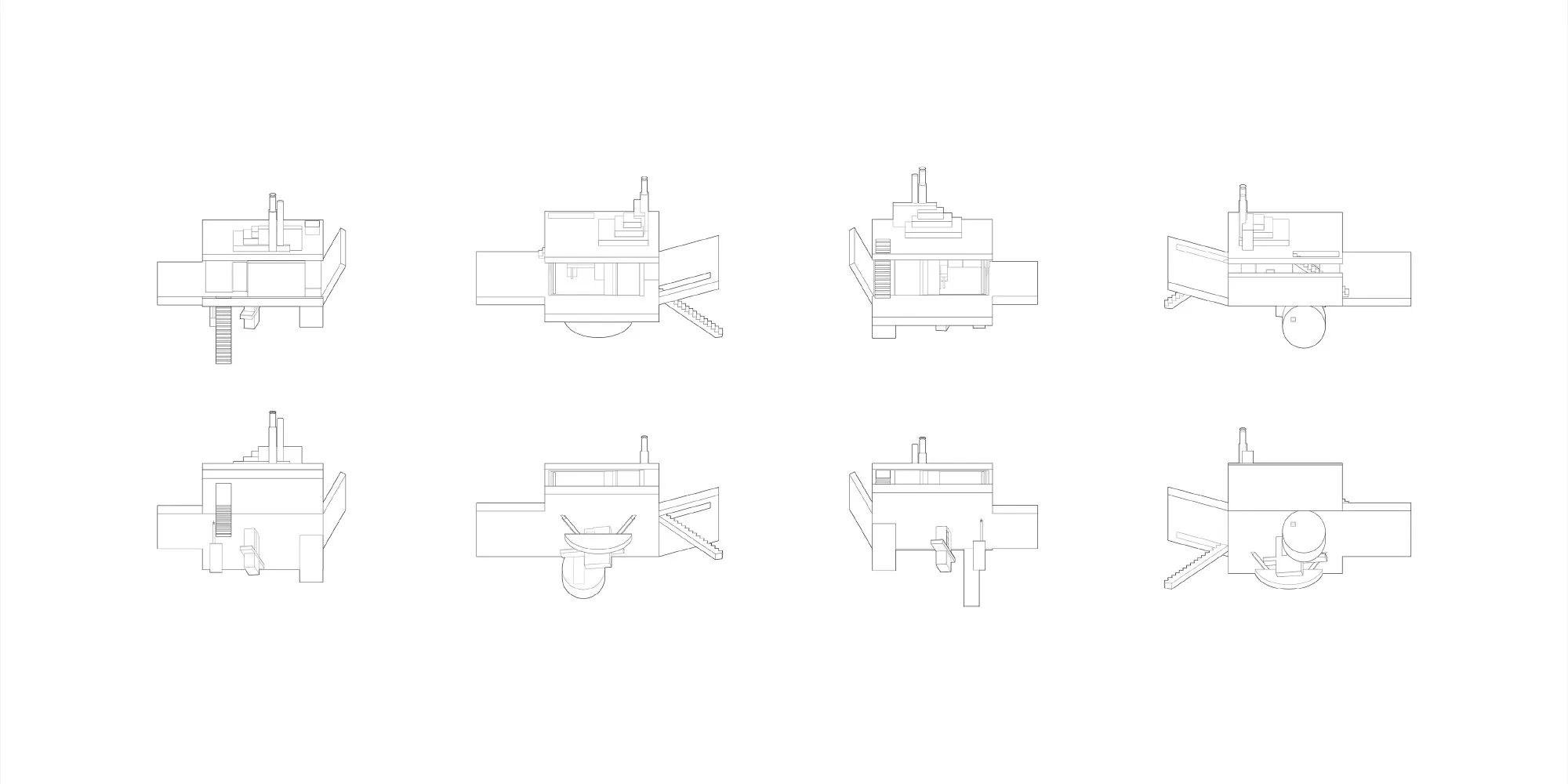
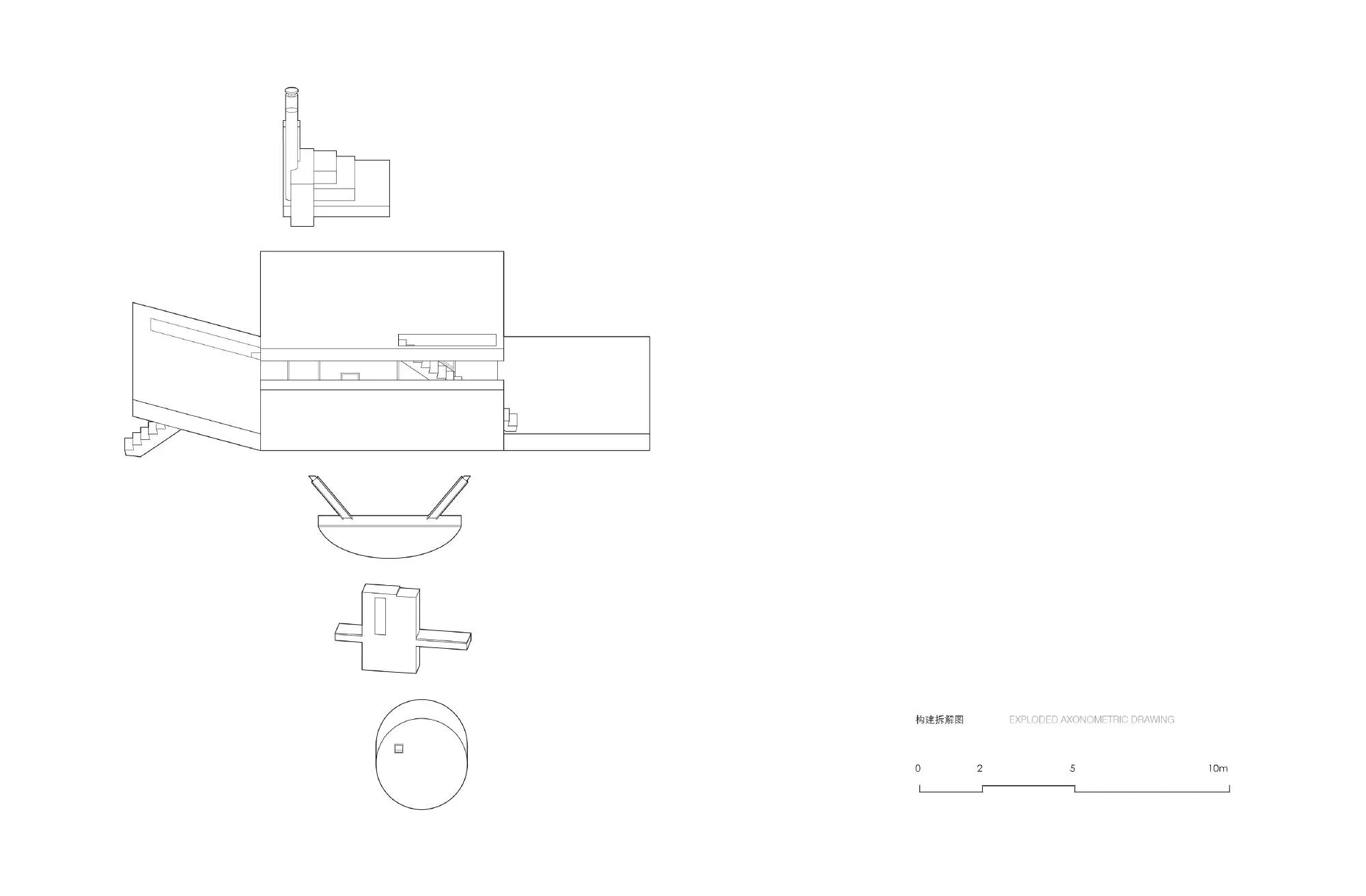
Like a wing, the cantilevered slab seems in flight, and part of it tilts, giving the building an unsettled look, as if it has just landed and will leave the next moment. Raised on a few geometric parts, it opens the ground floor and strengthens the sense of floating. Circles, curves and inclined stairs add to the instability.
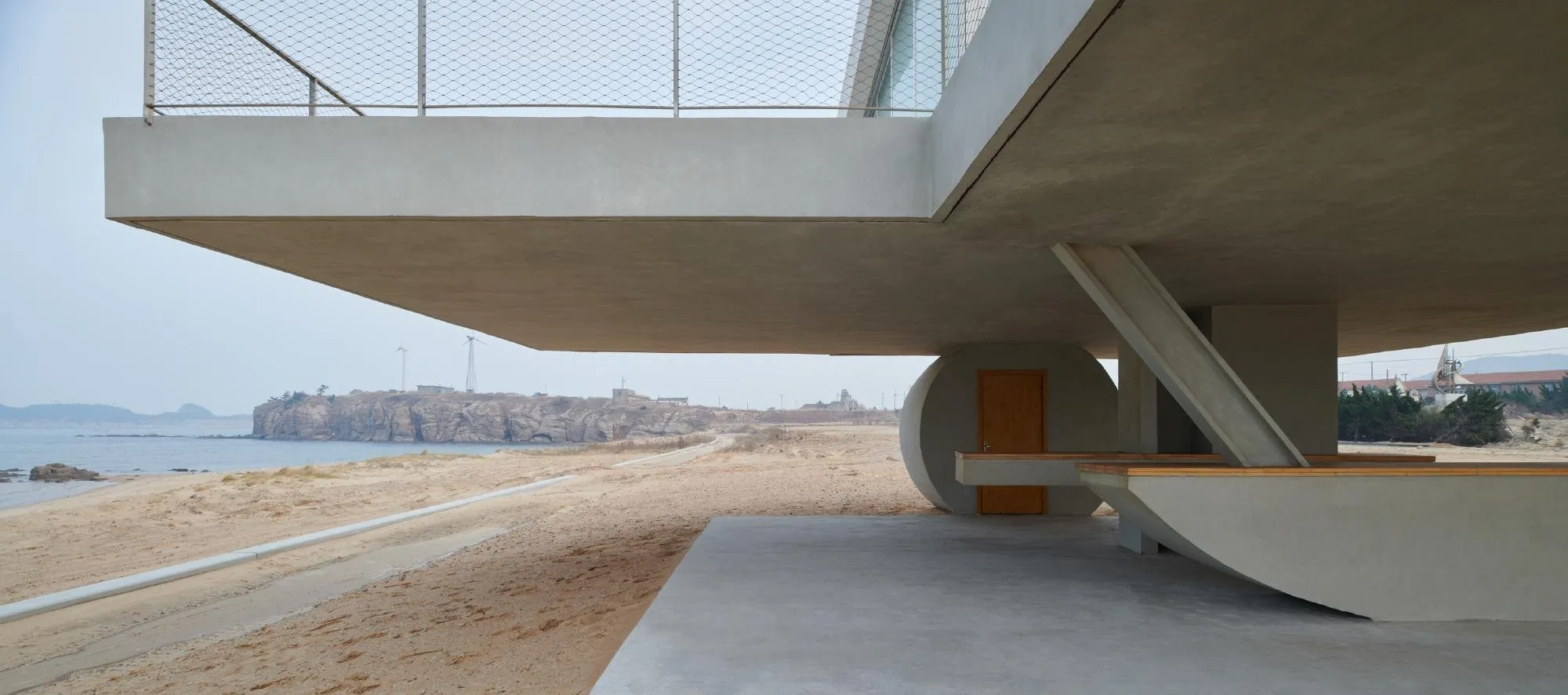
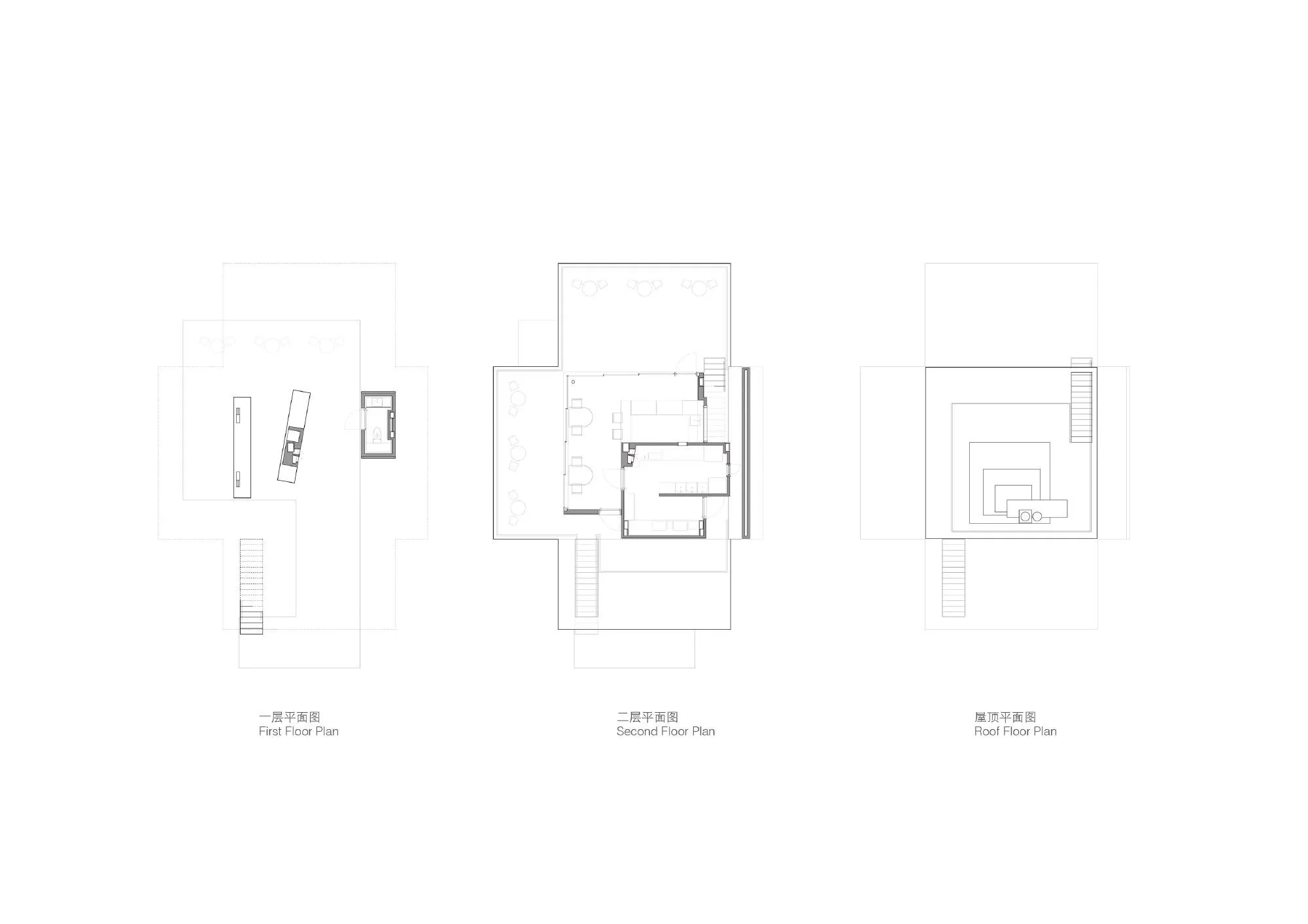
The visit begins with a long walk over soft sand. On the concrete floor, the space drops and opens to sea and beach. A round toilet, a square table and a curved open bar are the only elements, and they cut and frame the distant horizon.
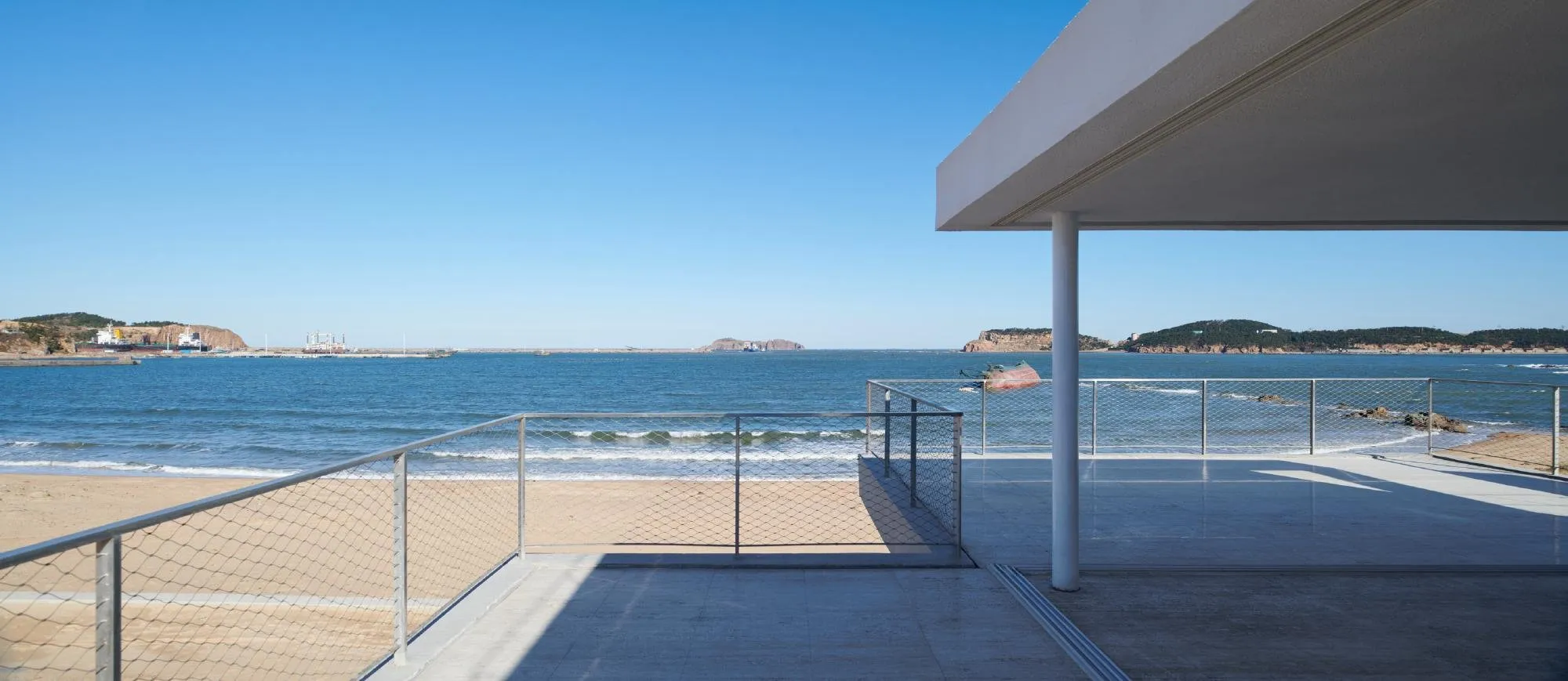
A narrow straight stair through the slab rises to an open deck facing the sea to the north and the village to the west. Sliding glass walls open fully to join inside and out, making a generous dining and viewing platform for such a small building. Service routes and the stair to the roof hide behind the tilted slab, which separates served and service spaces and guest and staff circulation.
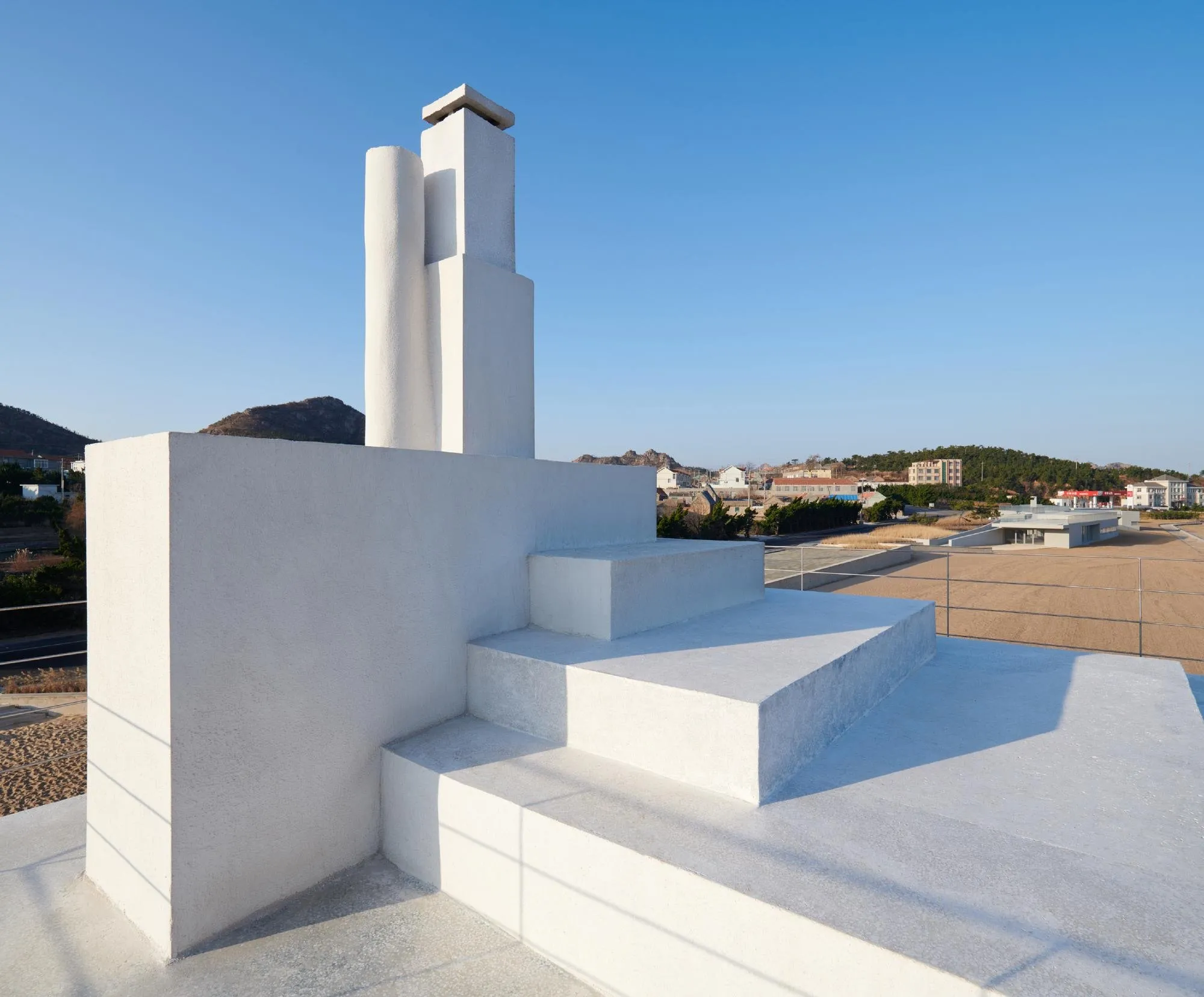
The rooftop ends the journey, where horizon meets sky above the bay, beach, hills and villages. A stepped chimney forms a small pyramid pointing upward.
Material follows the same logic. Grey micro-cement on the main slab looks heavy like concrete, while a steel structure makes the large cantilever possible. Grey micro-cement on the ground floor echoes the rough beach, light travertine on the upper floor stresses lightness, and white-washed stone on the top volume reads as abstract.
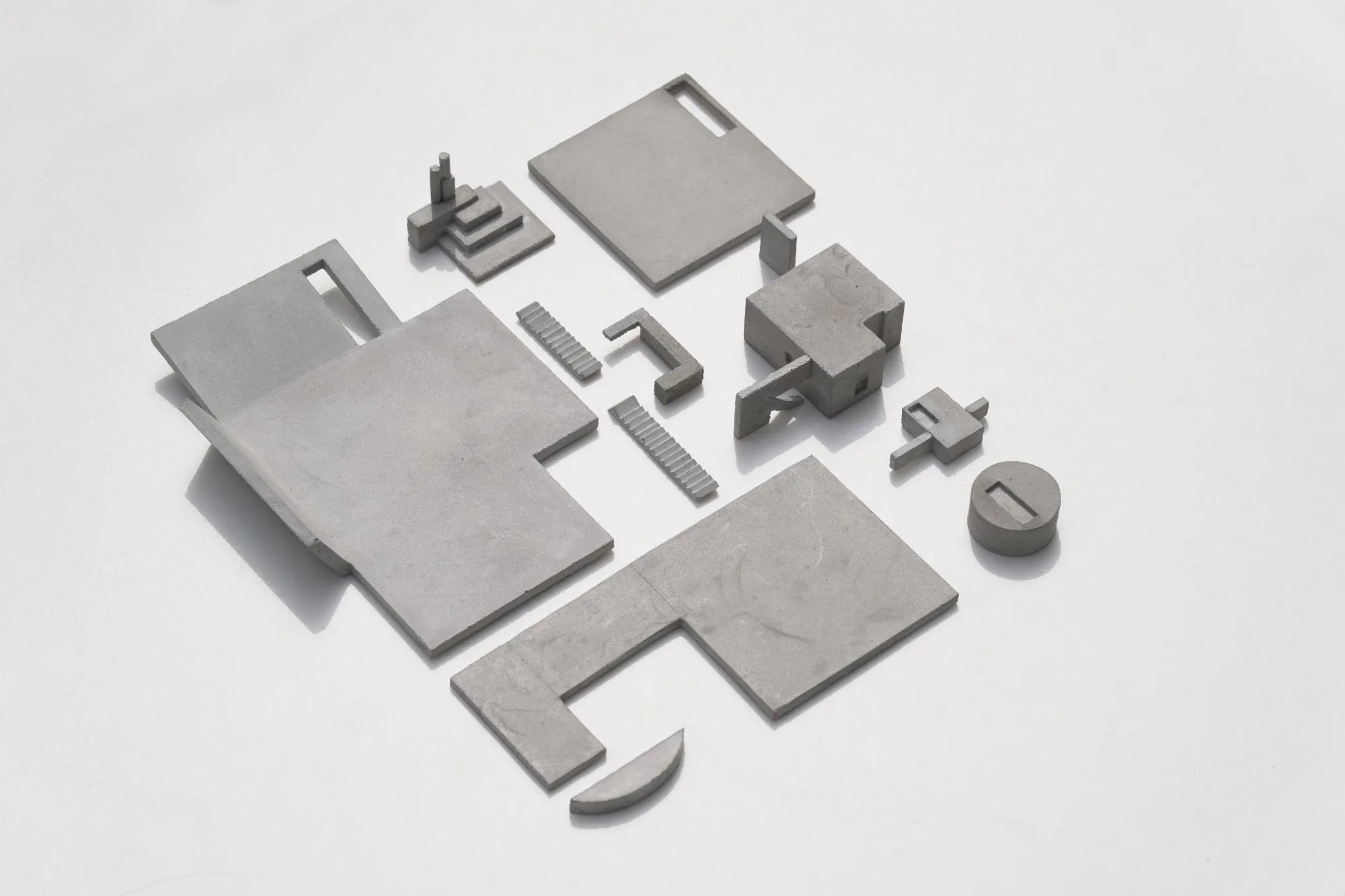
Circle, triangle, arc, square, plane and inclined rod make up the pavilion. Each also does structural or functional work: the stair braces the building, and columns, braces and slabs hide inside these components or become them. Like the fishing boat, the pavilion seems to have arrived by chance and now defines the bay.
Project Information
- Design studio
- Trace Architecture Office (TAO)
- Time
- 2021
- Type
- Hospitality, Pavilion
- Primary materials
- Glass, Natural stone, Steel
Comments