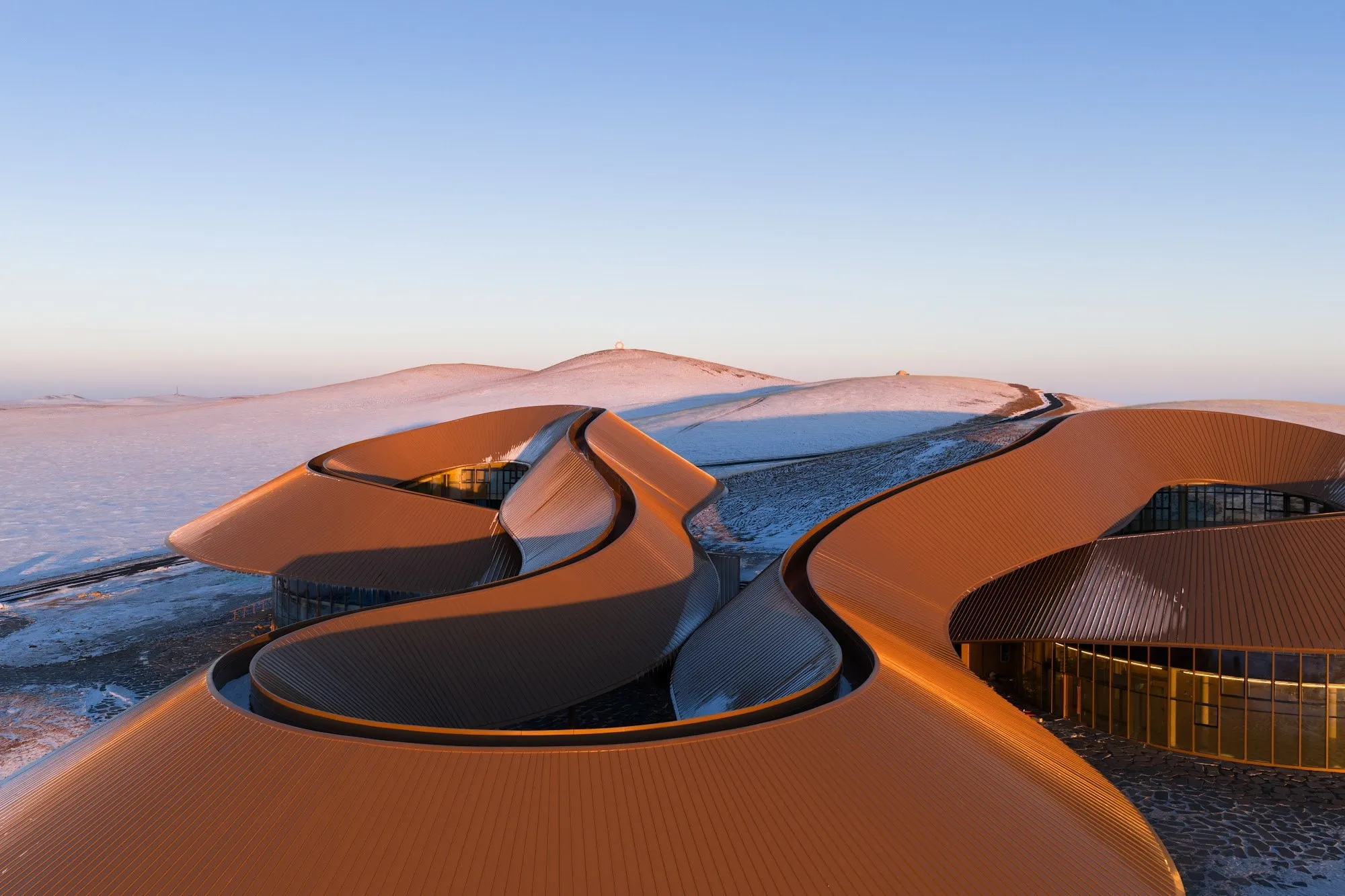
Xilinhot, Inner Mongolia, China
Volcano-In Visitor Center
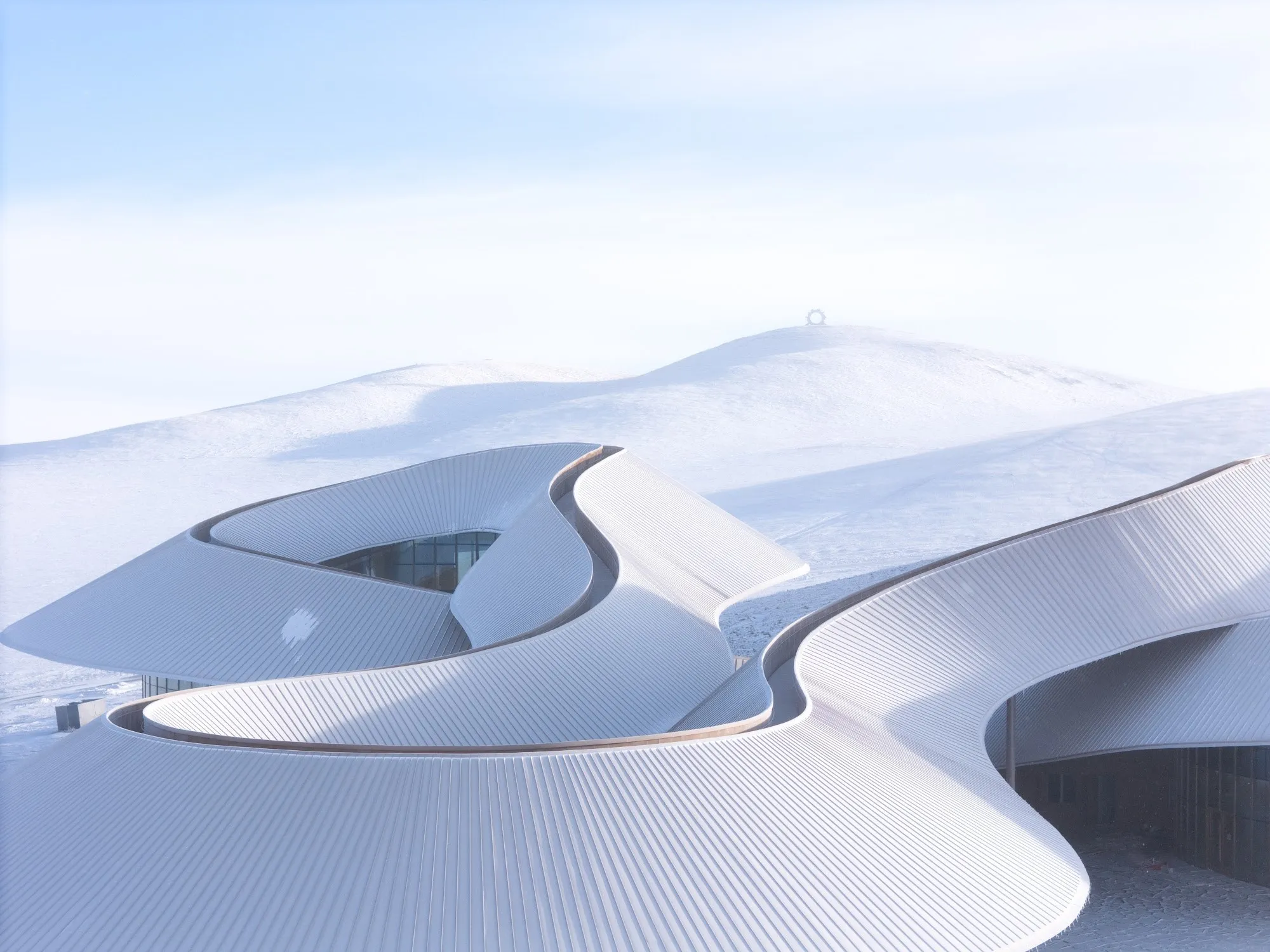
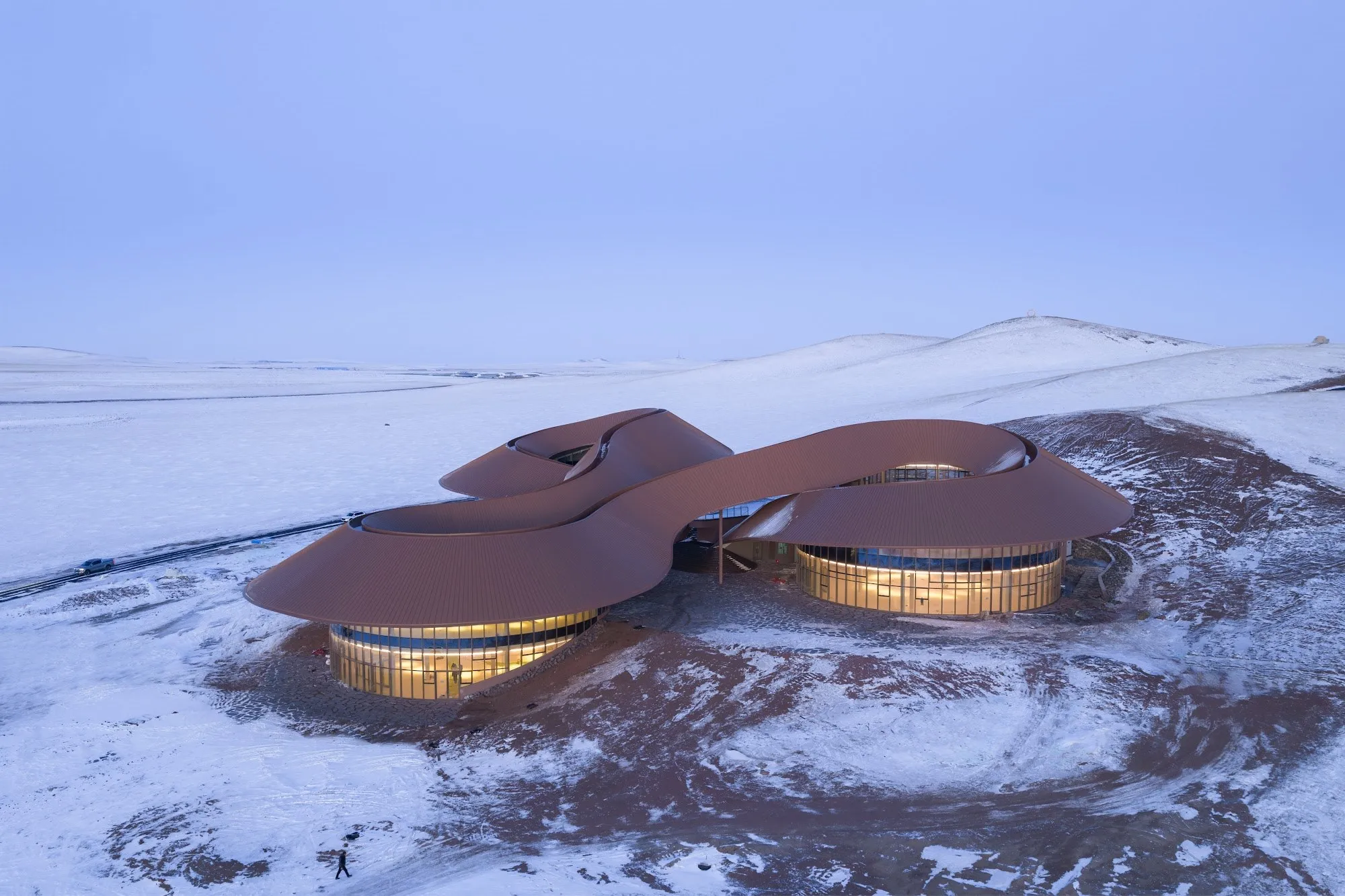
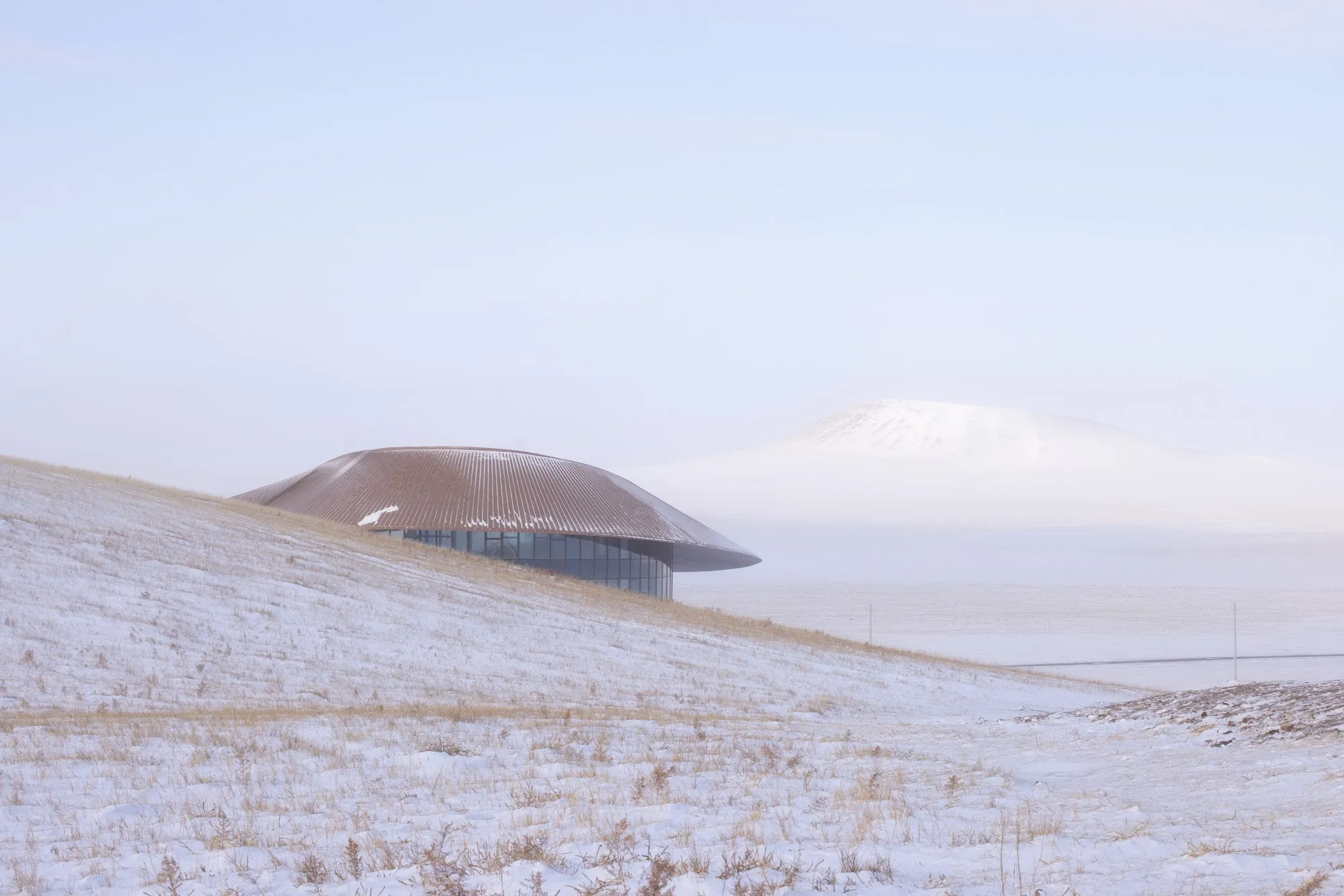
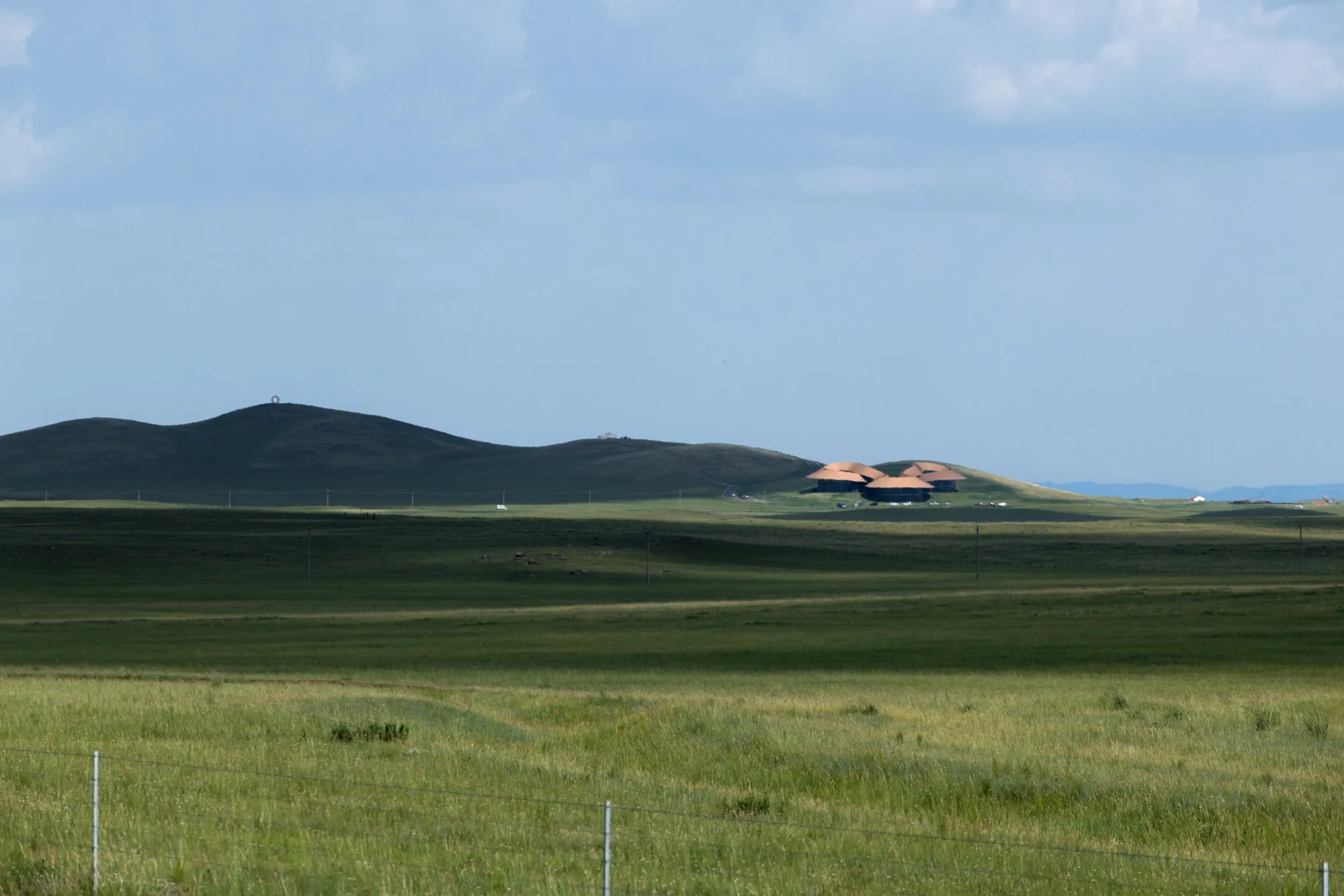
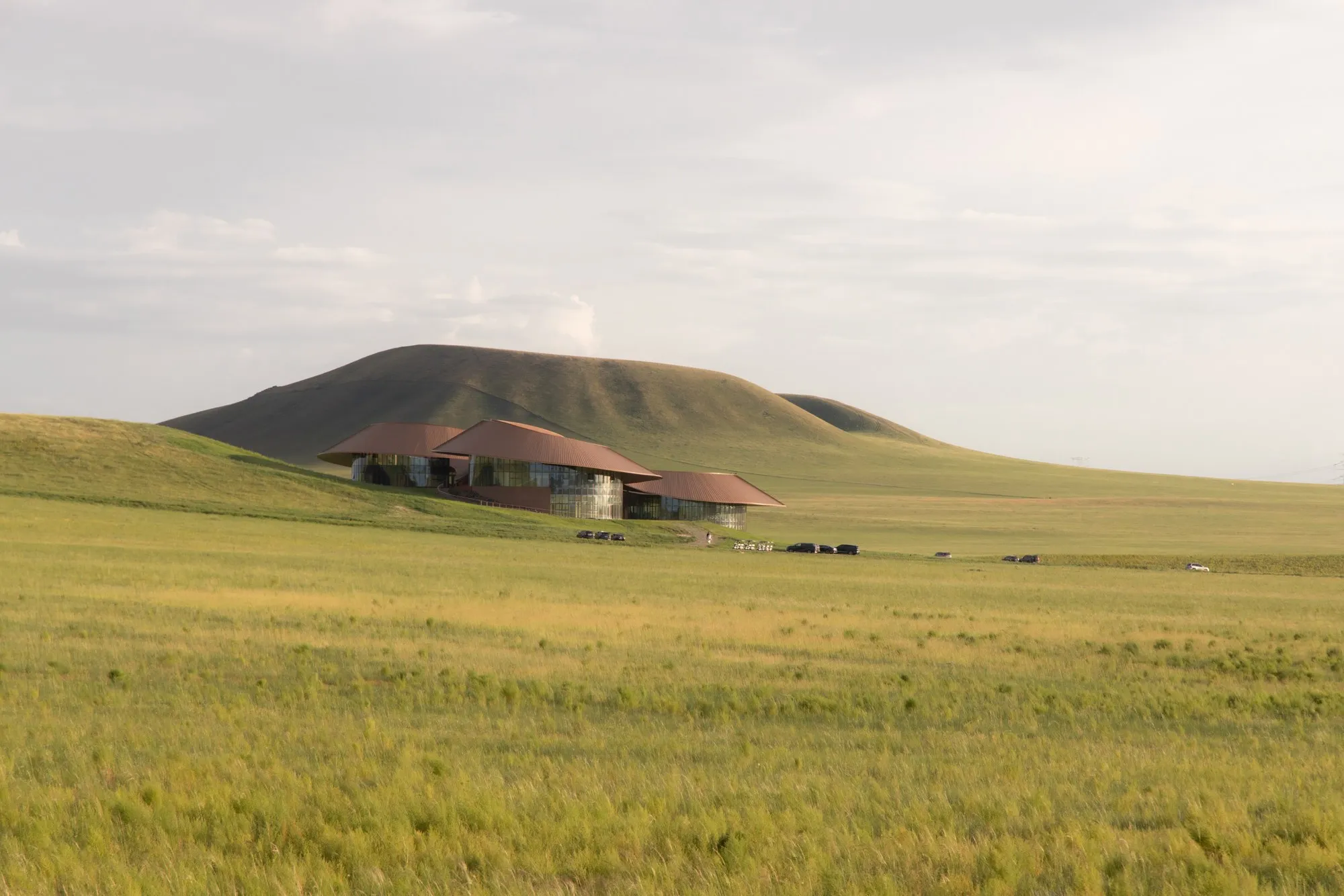
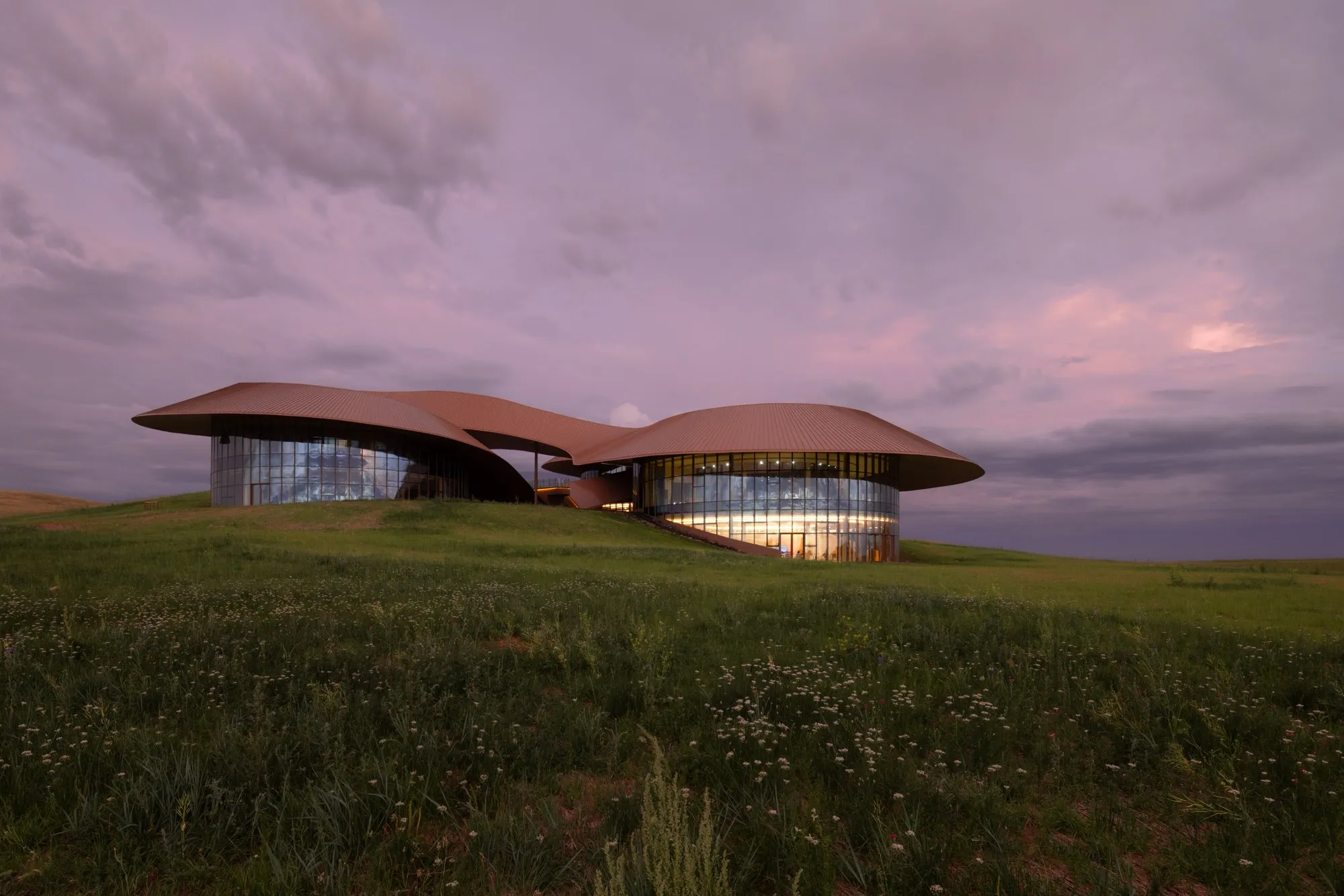
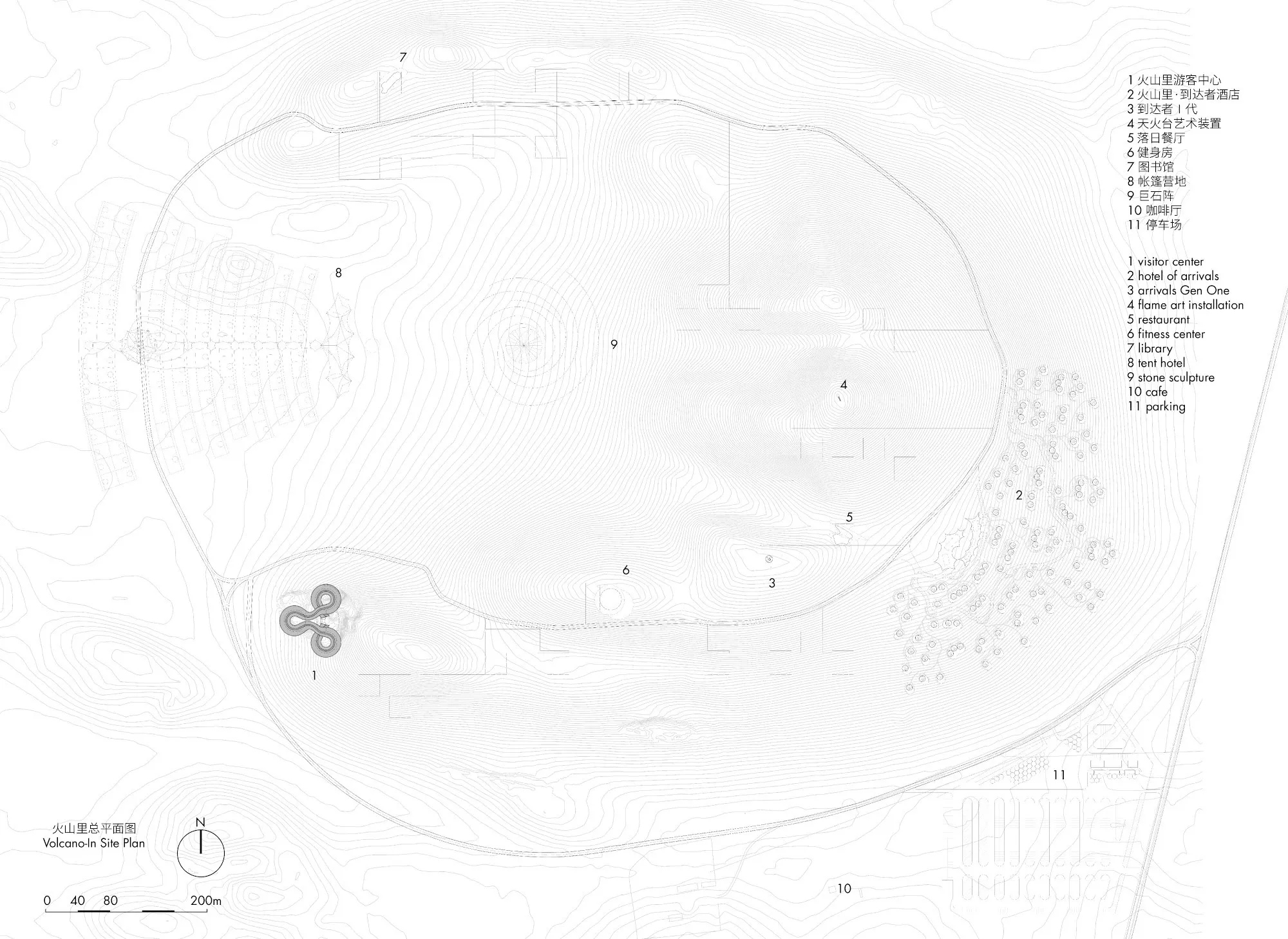
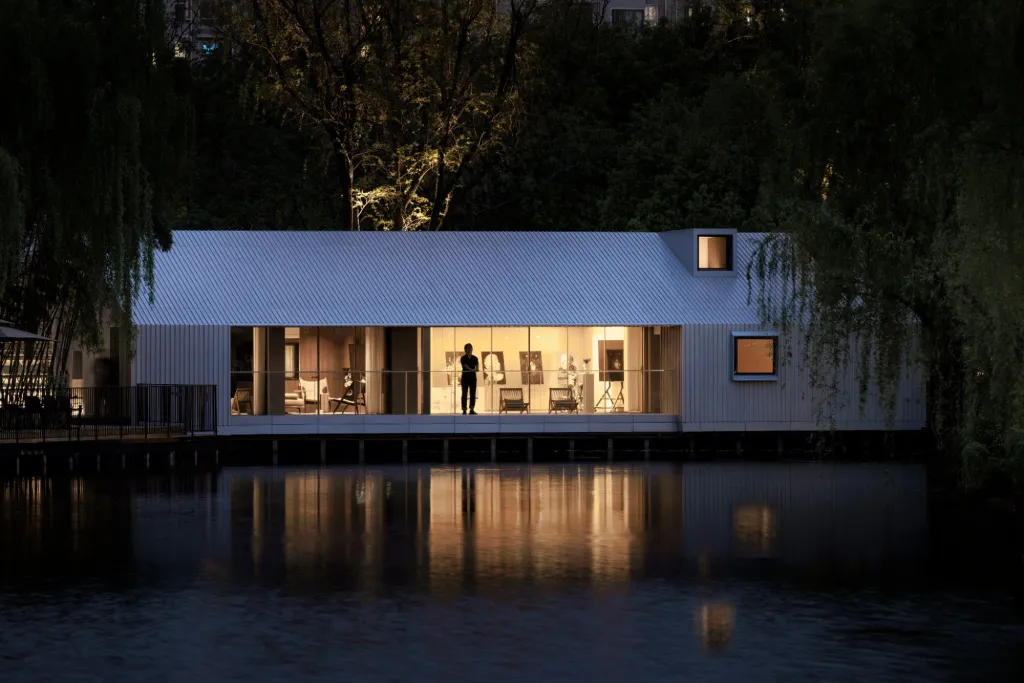
The visitor center sits inside a C-shaped extinct volcano that erupted around 150,000 years ago, one of more than a hundred cones scattered across a grassland region in northern China. Steppe, sandy land, lakes, wetlands and forest meet here, and the landscape changes completely with the seasons. It forms the first phase of a new resort, completed together with a small hotel on a nearby slope.
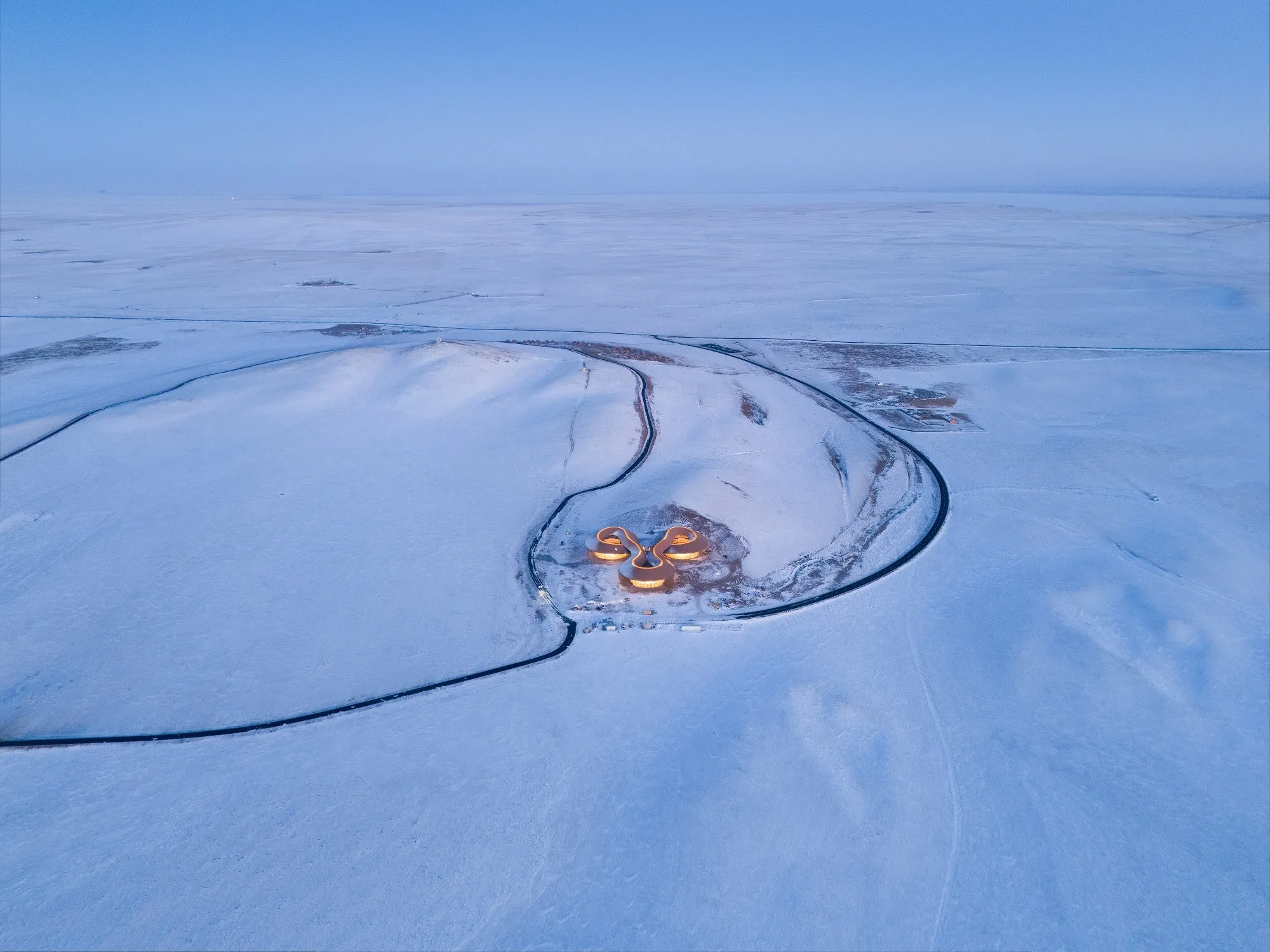
When the Chinese design team first surveyed the area, they found a large excavated scar on the west side of the volcano. Local herders said it had been there for ten years. The team and the client chose to build exactly there, so that the building would stop further wind erosion and help the ground heal, becoming part of the effort to protect the volcano and let a new ecology grow back.
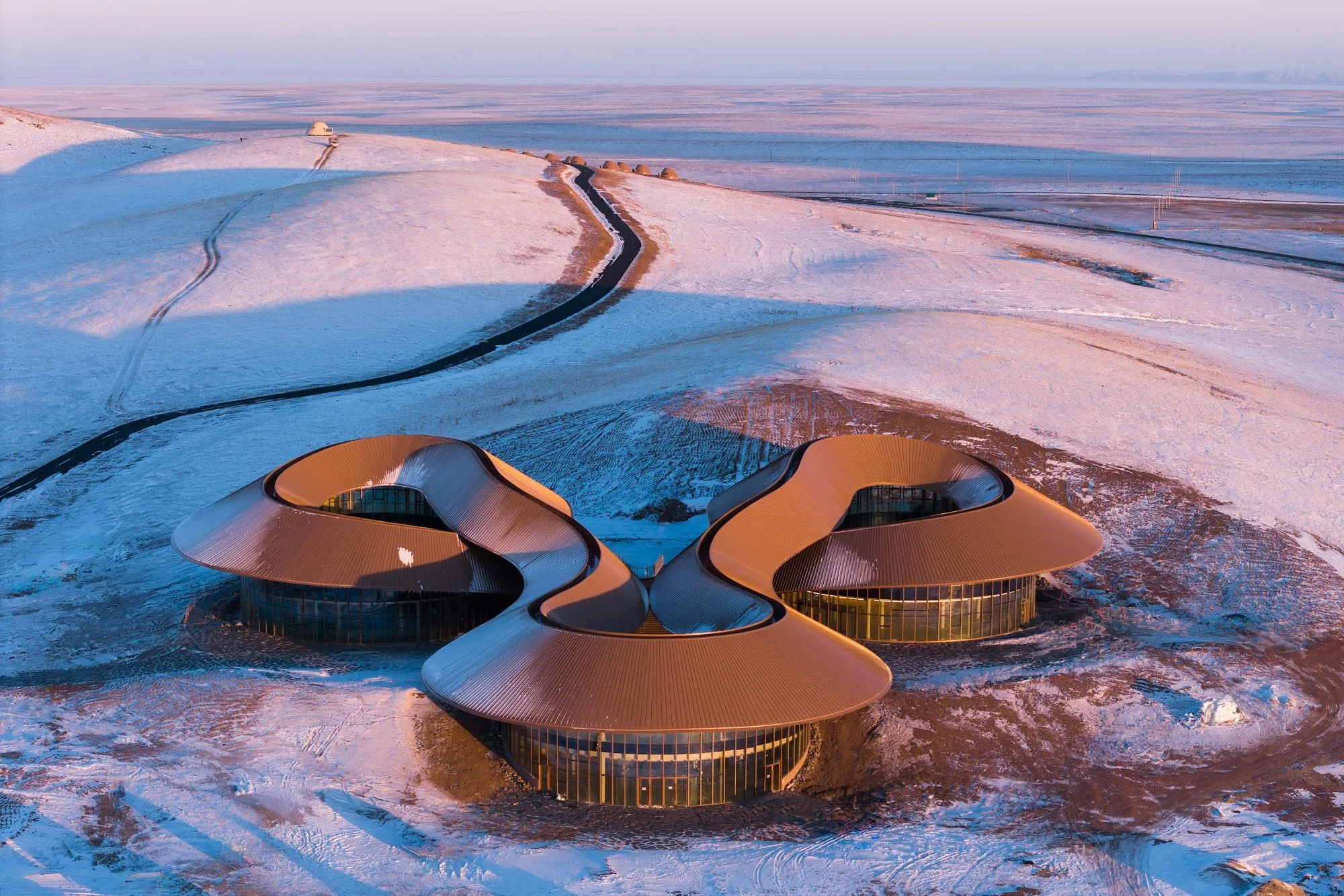
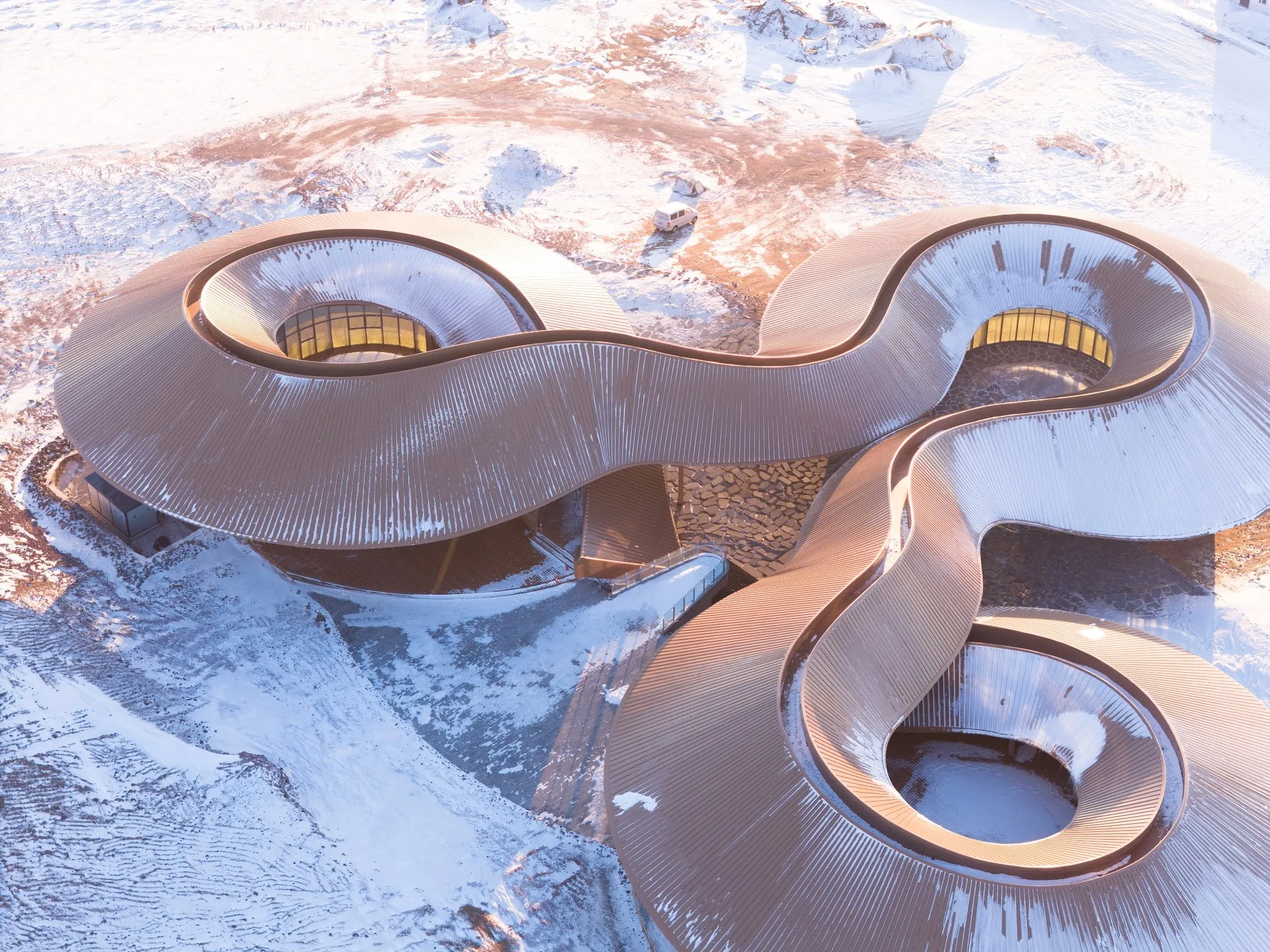
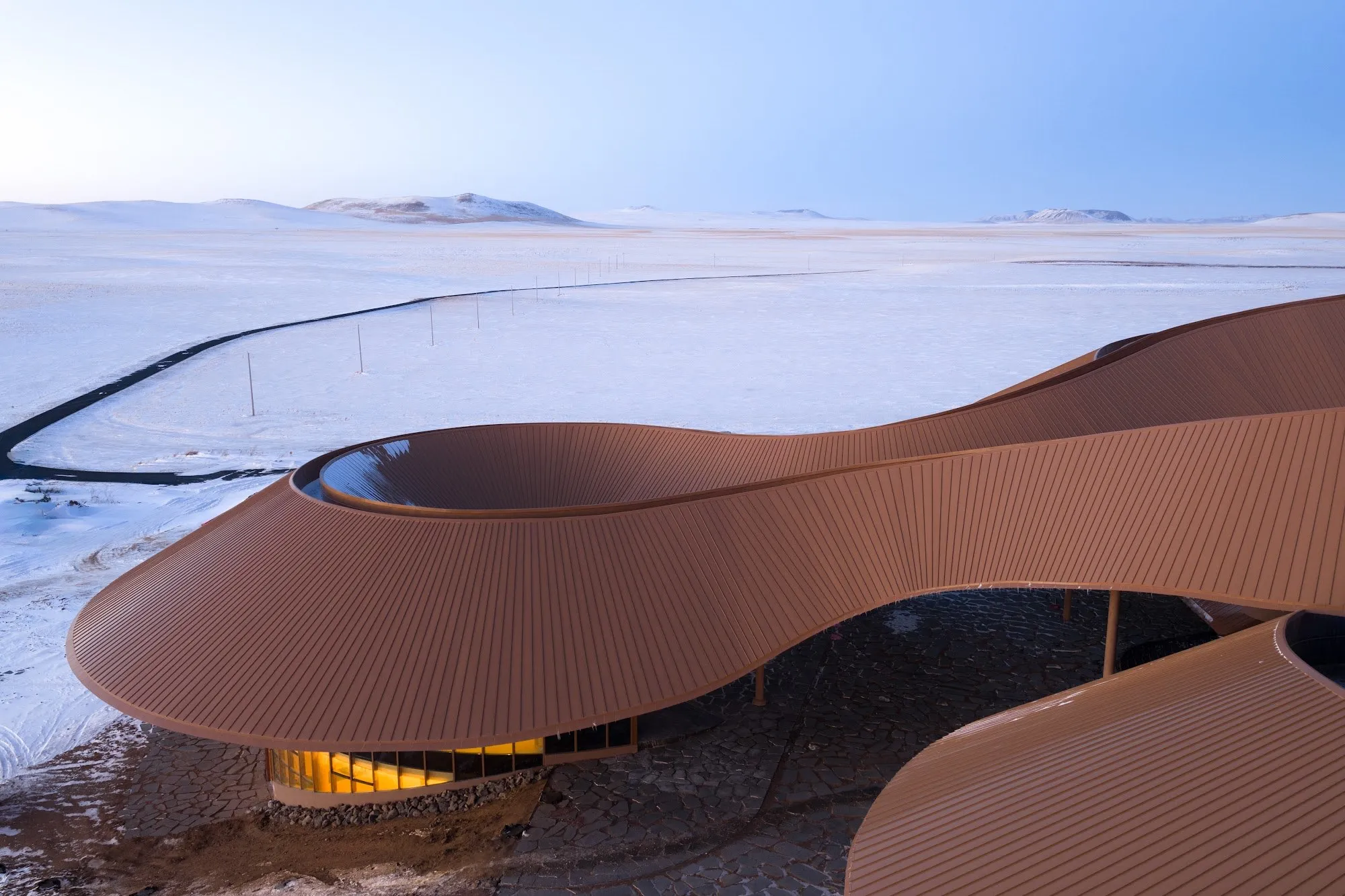
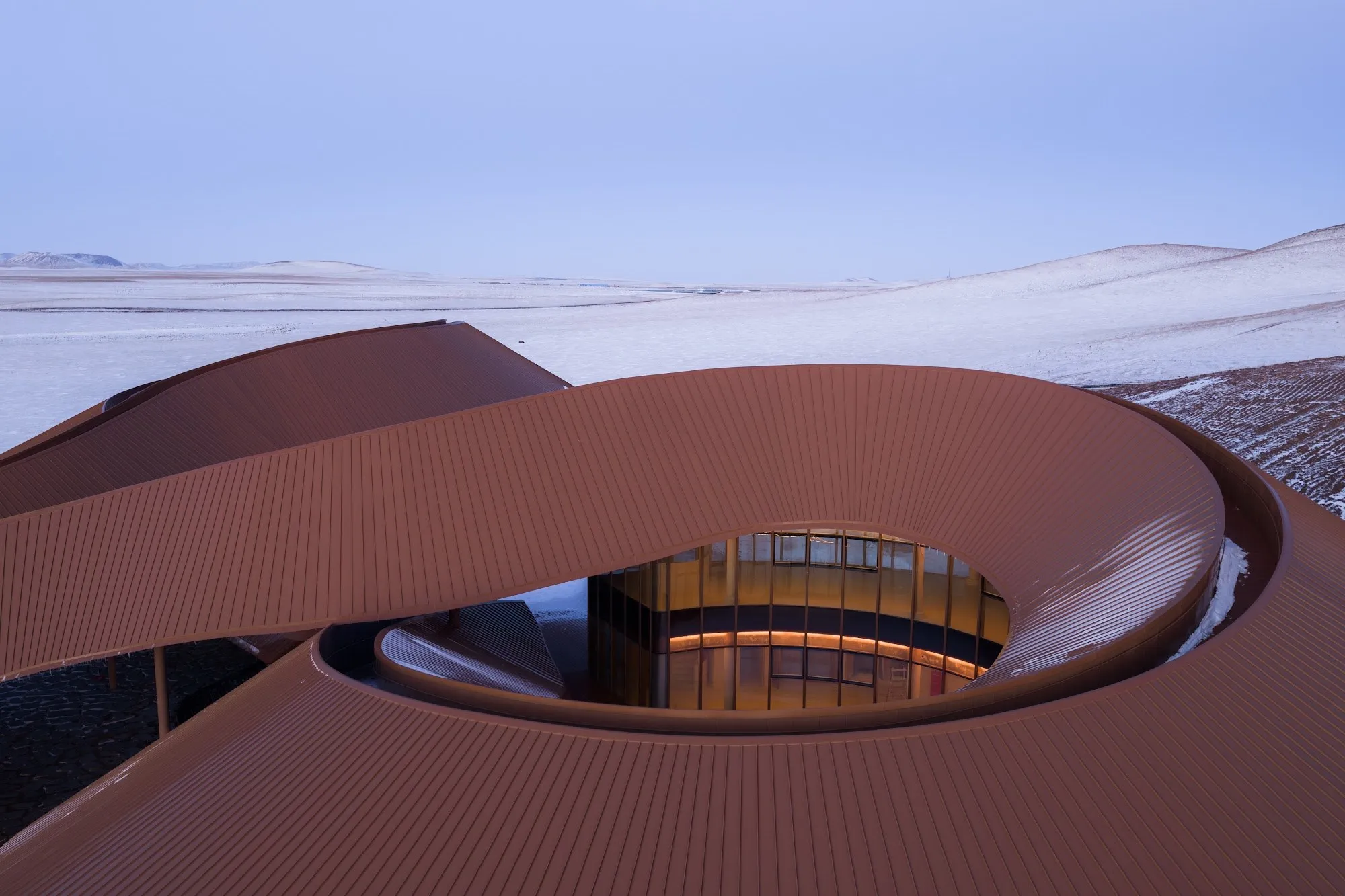
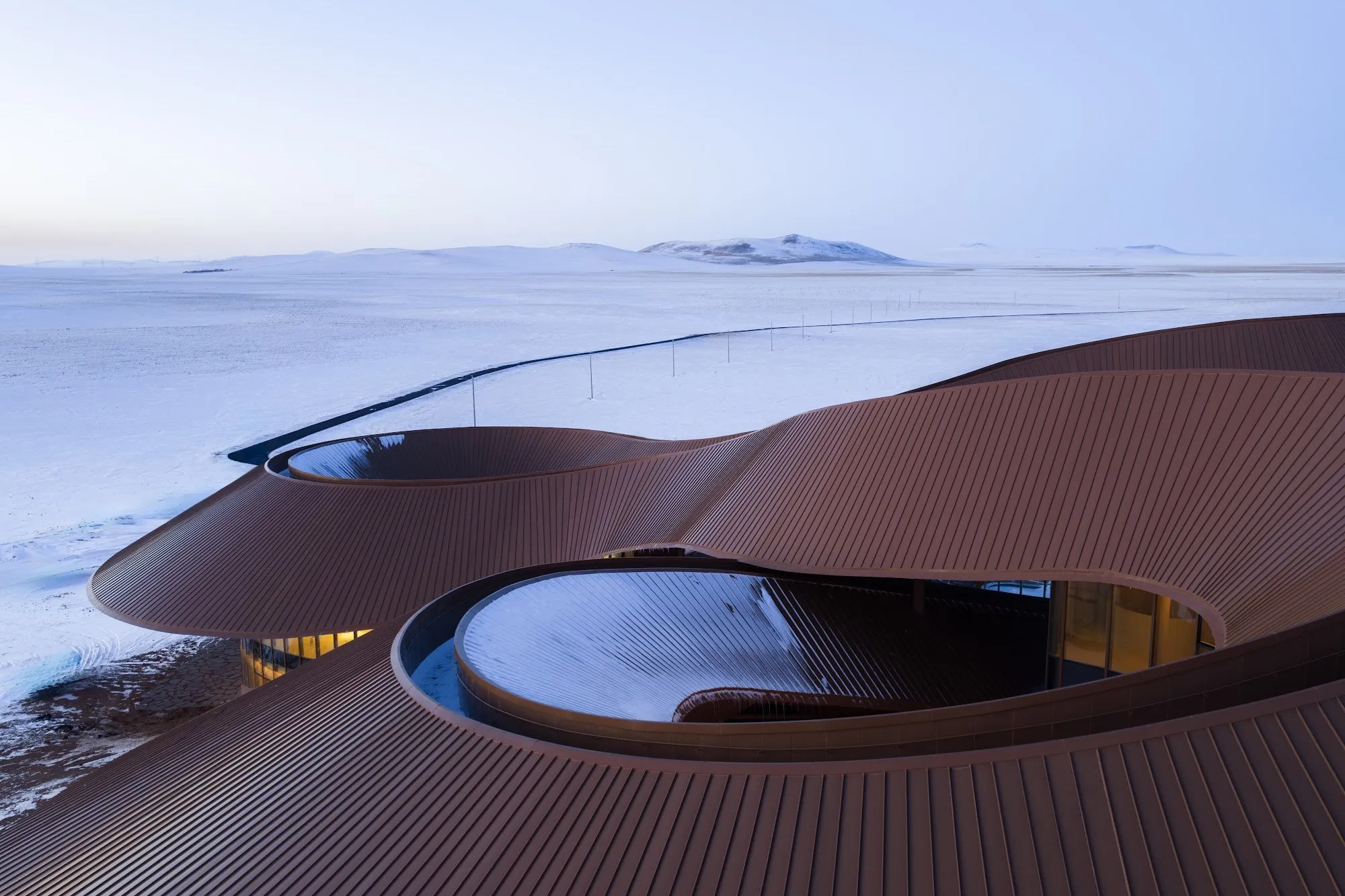
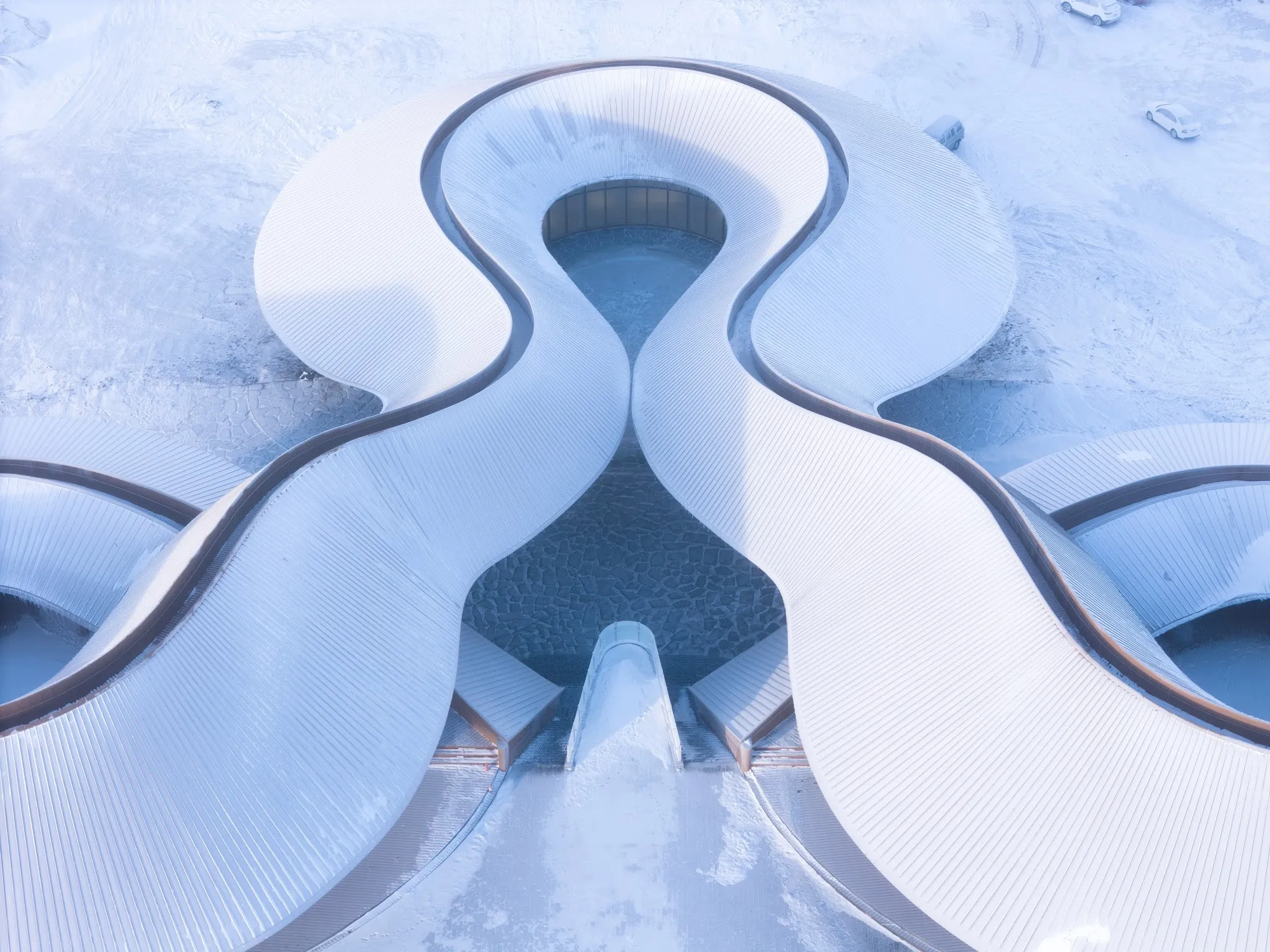
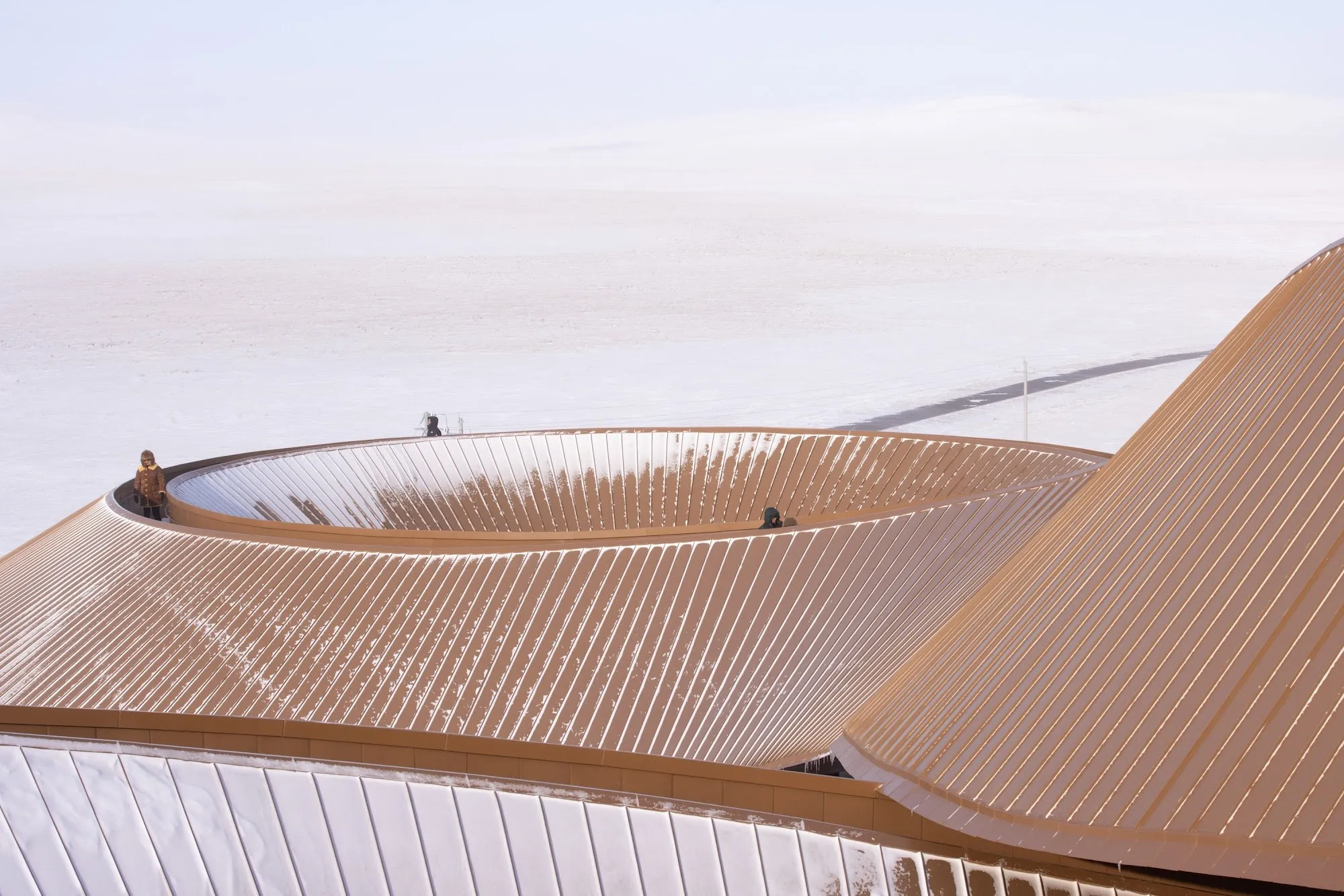
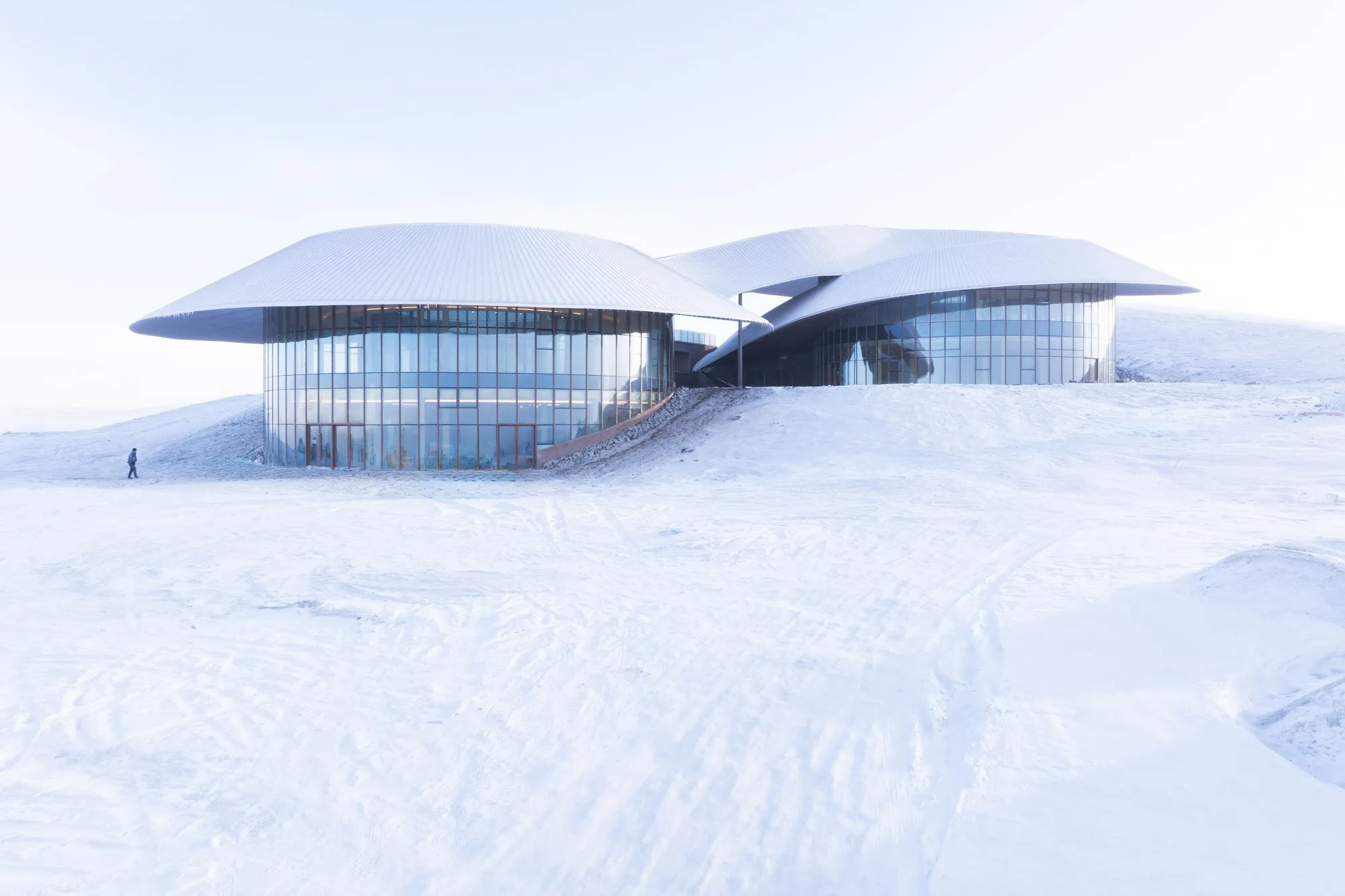
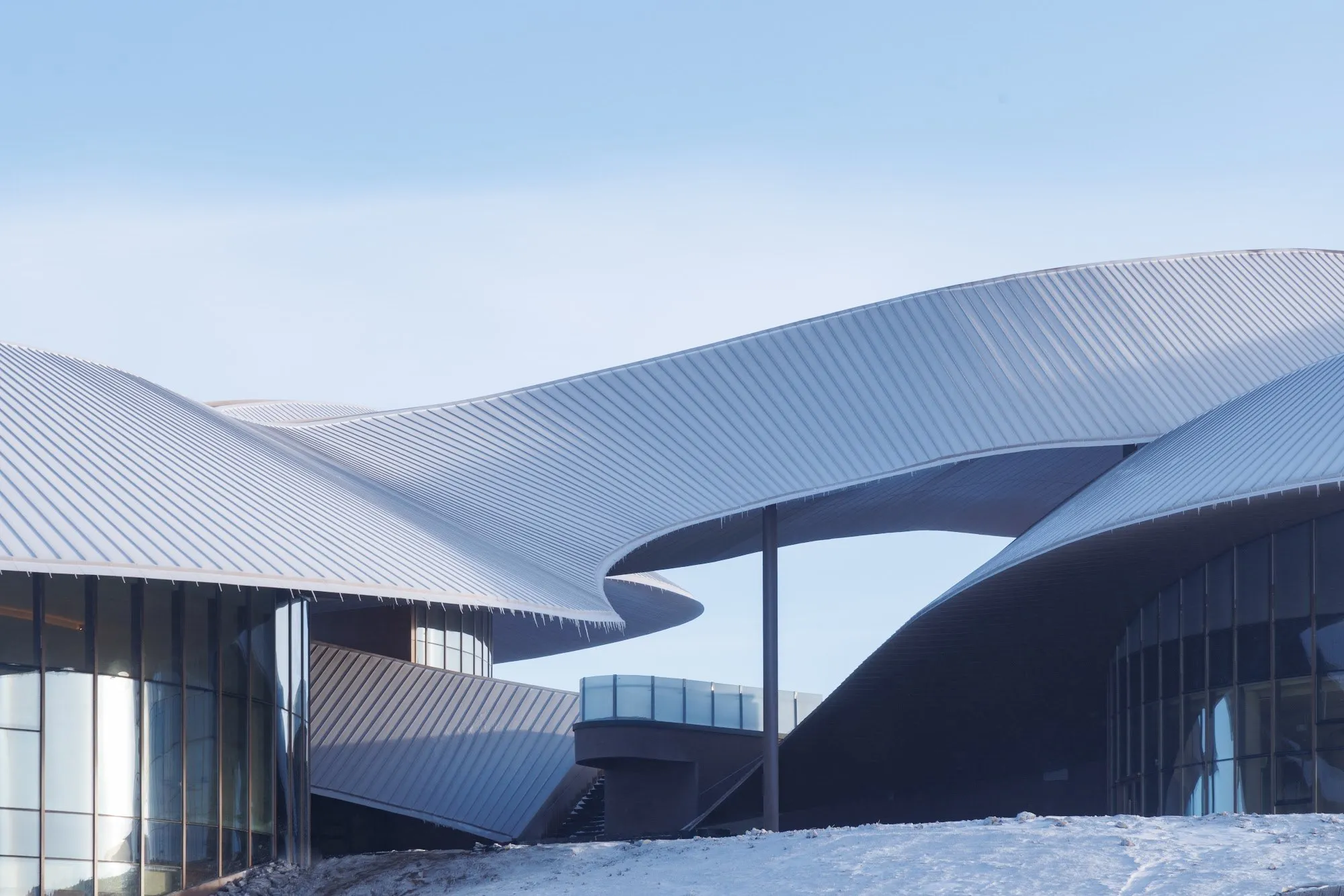
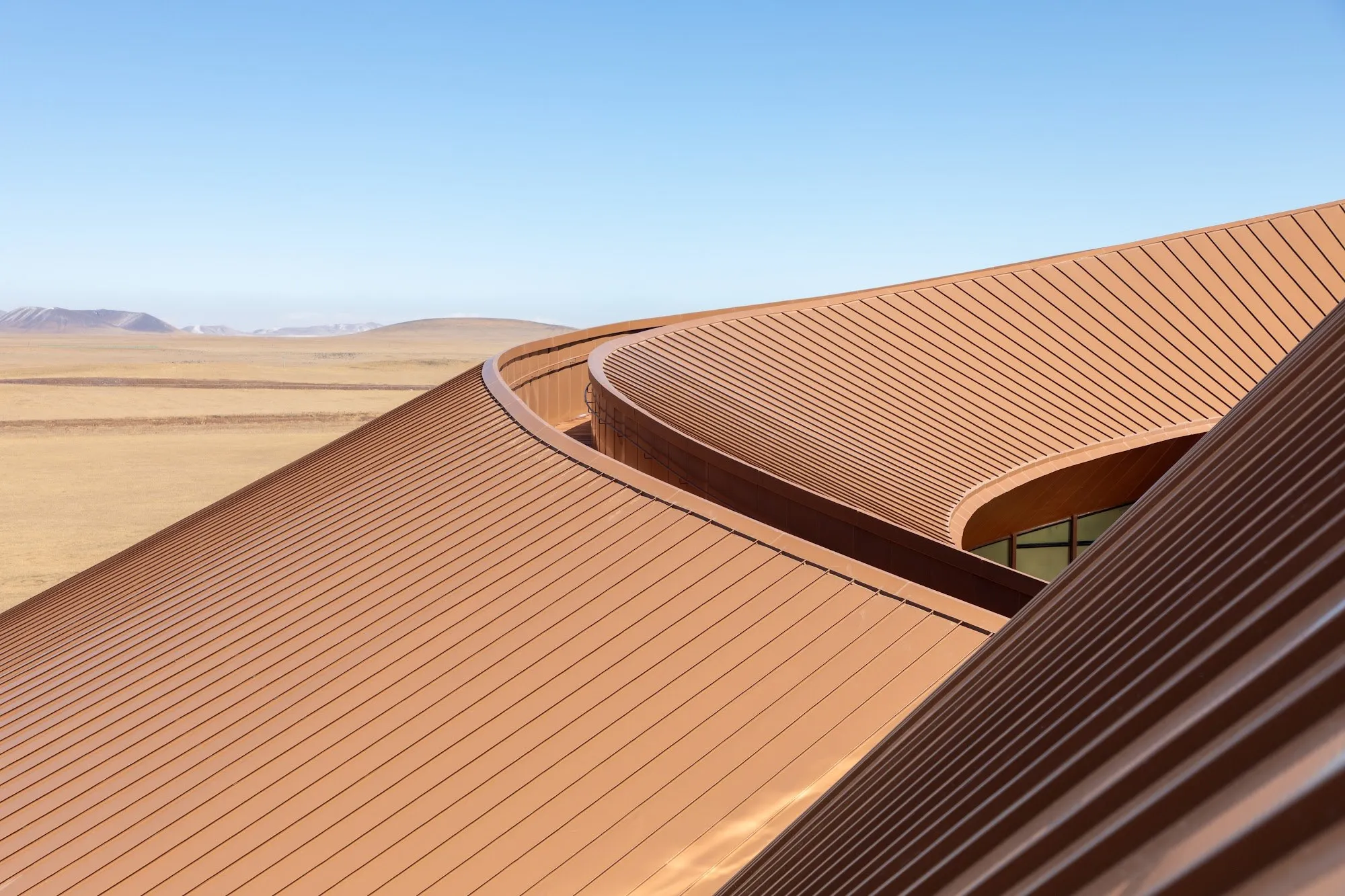
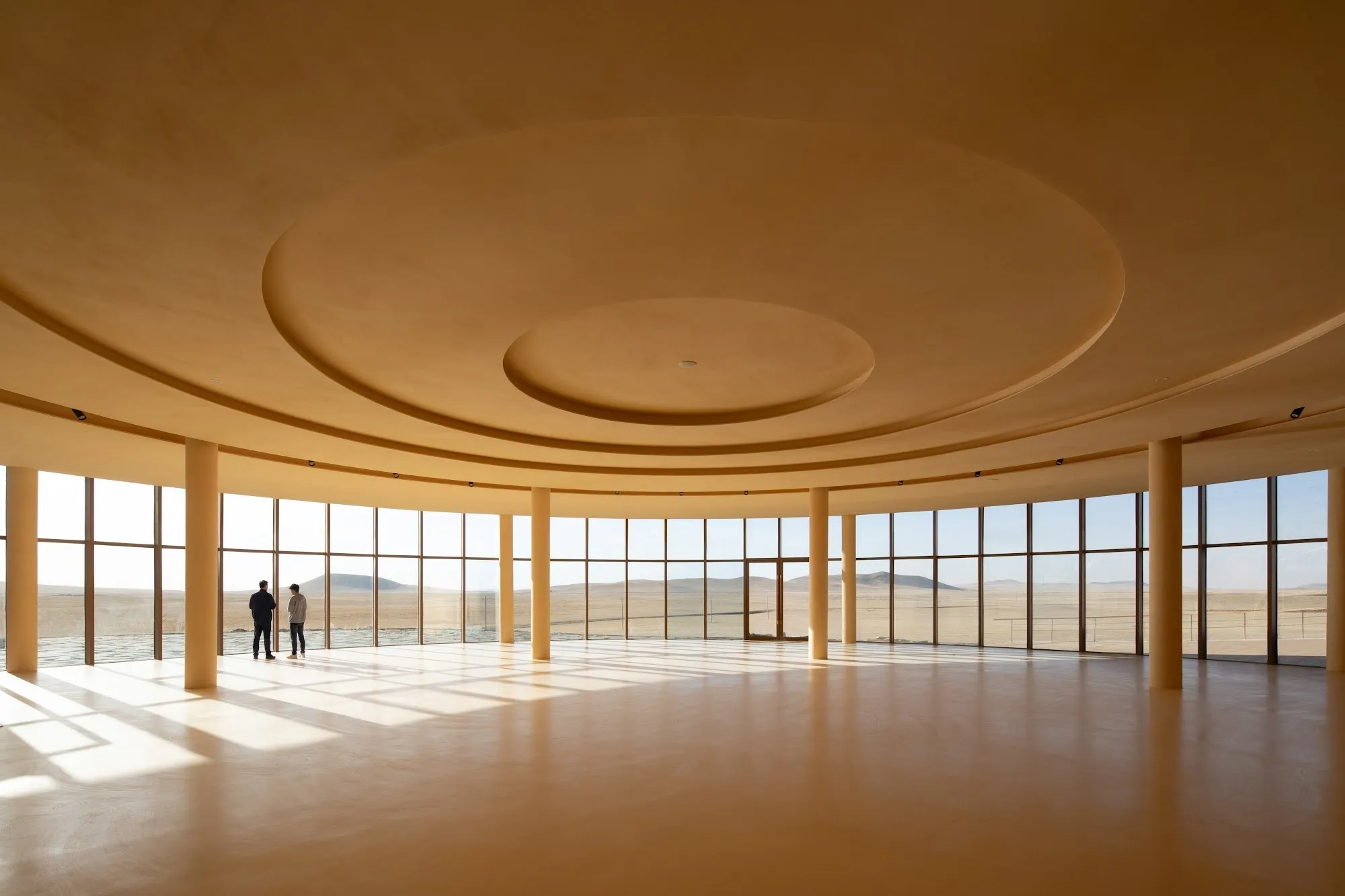
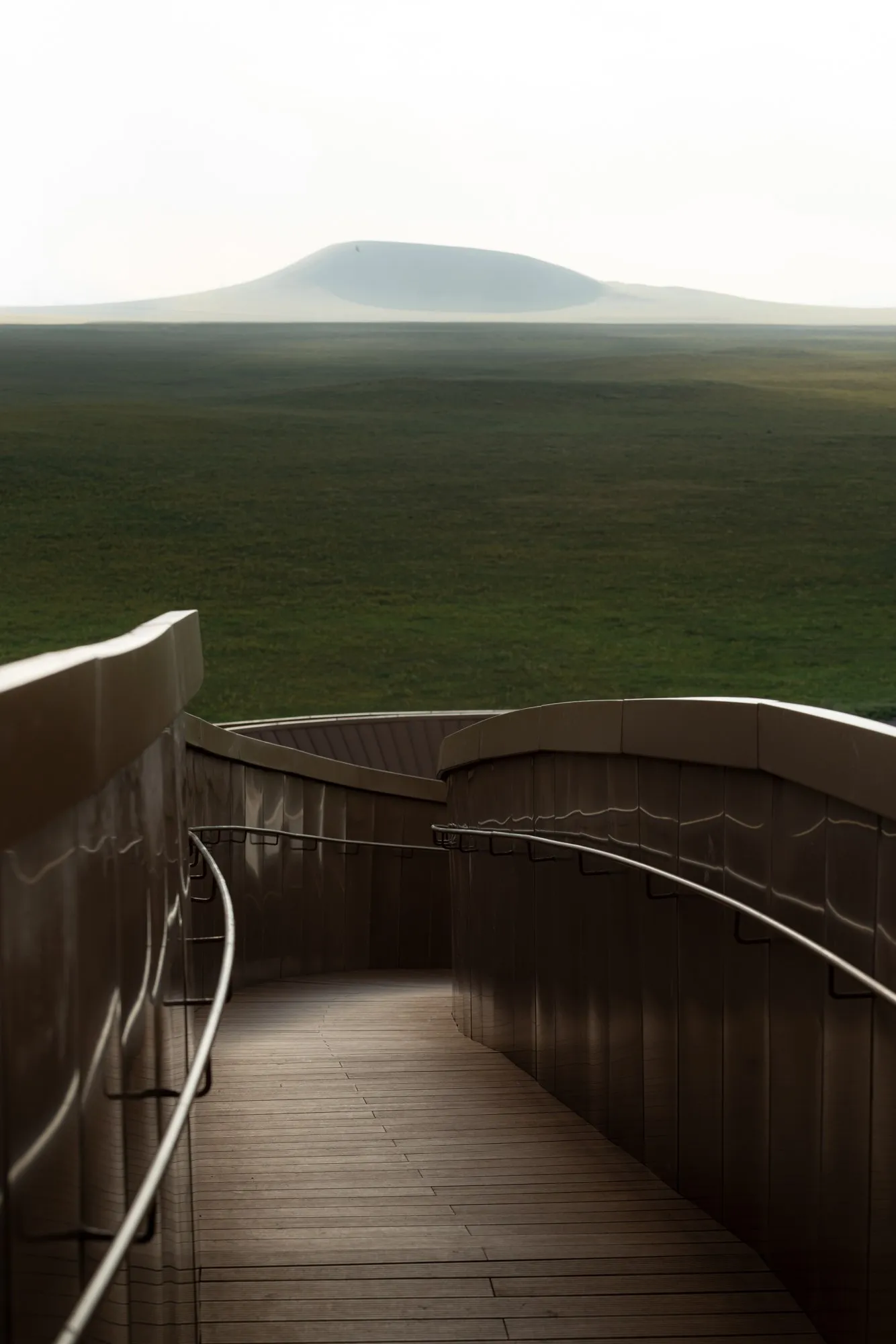
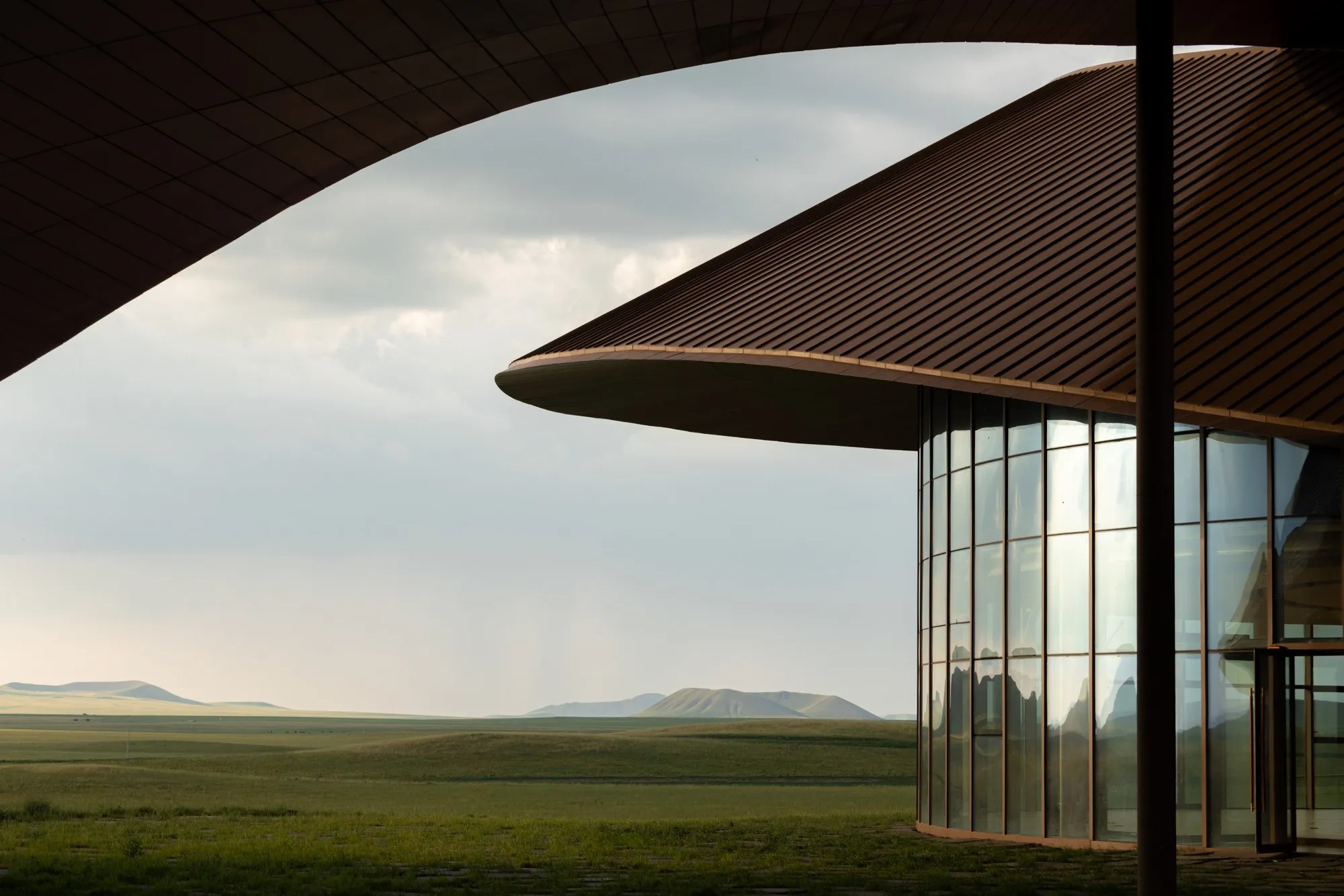
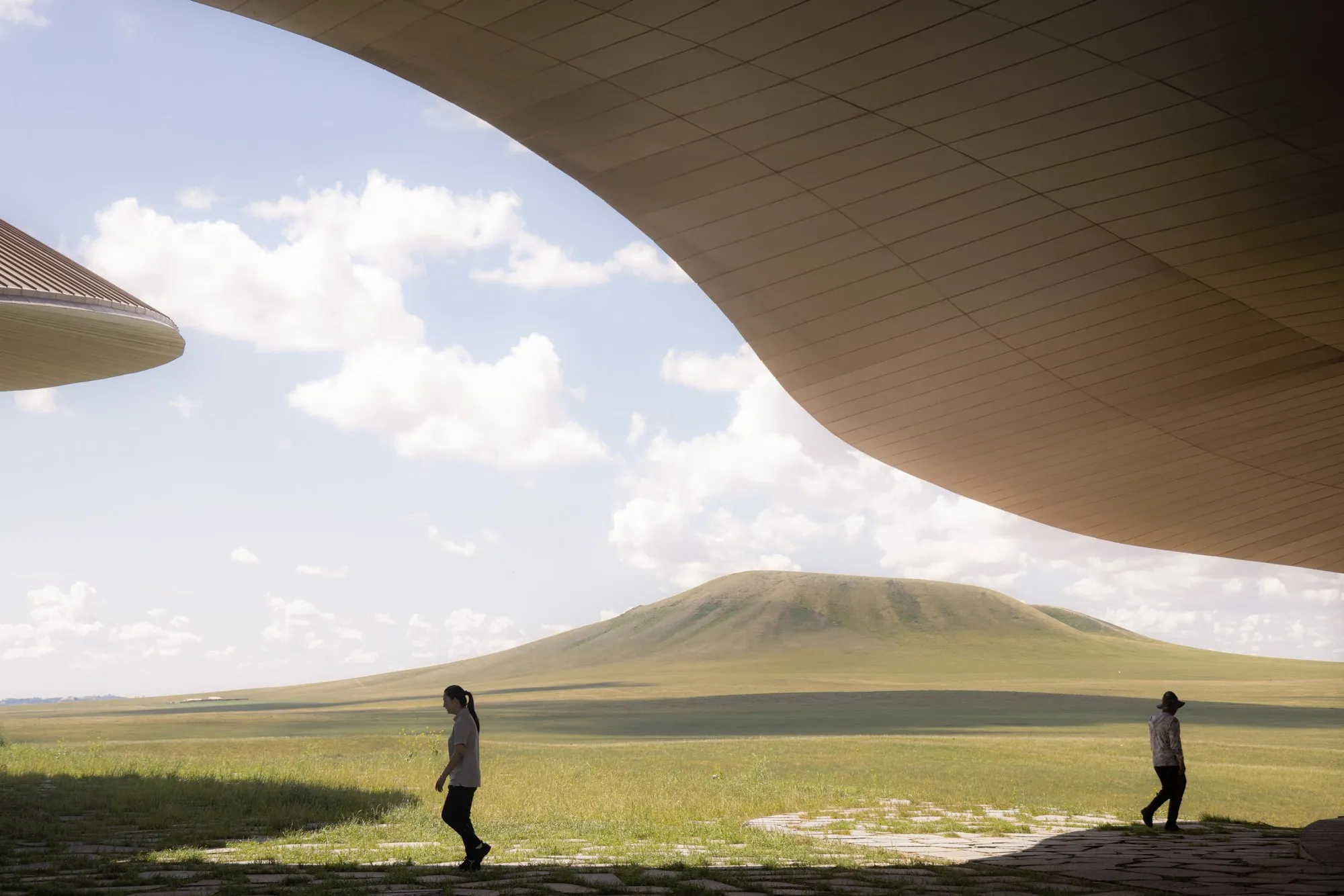
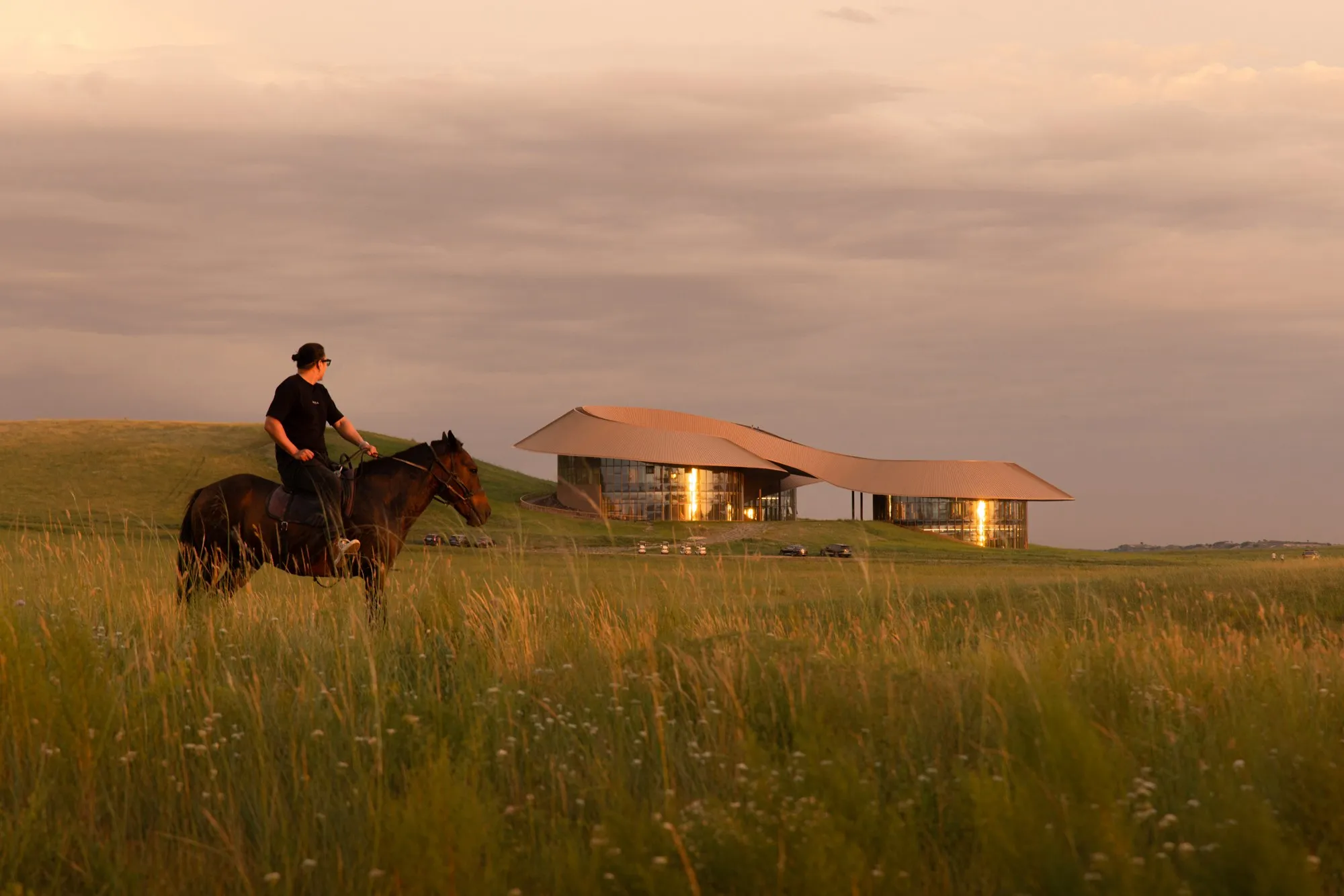
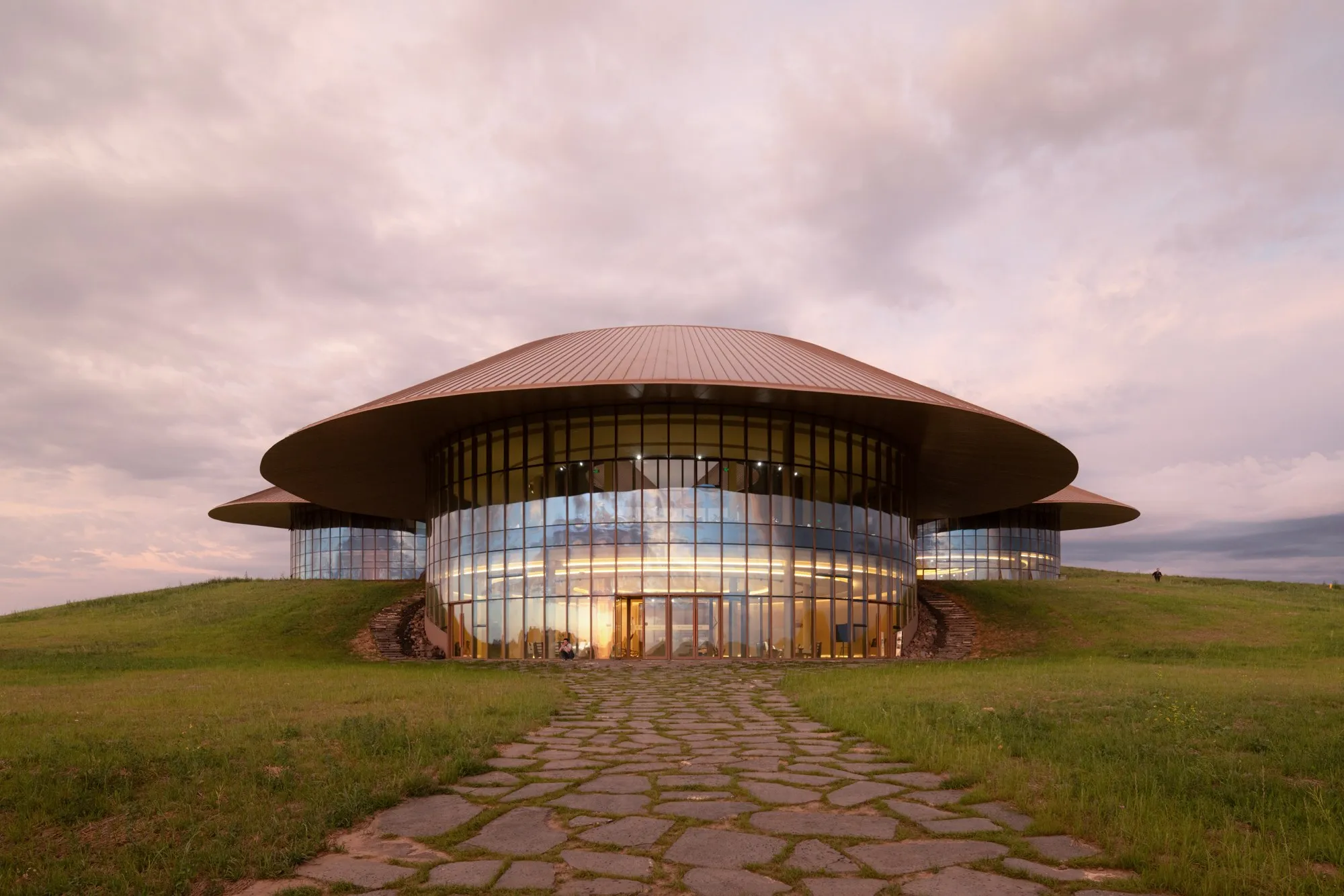
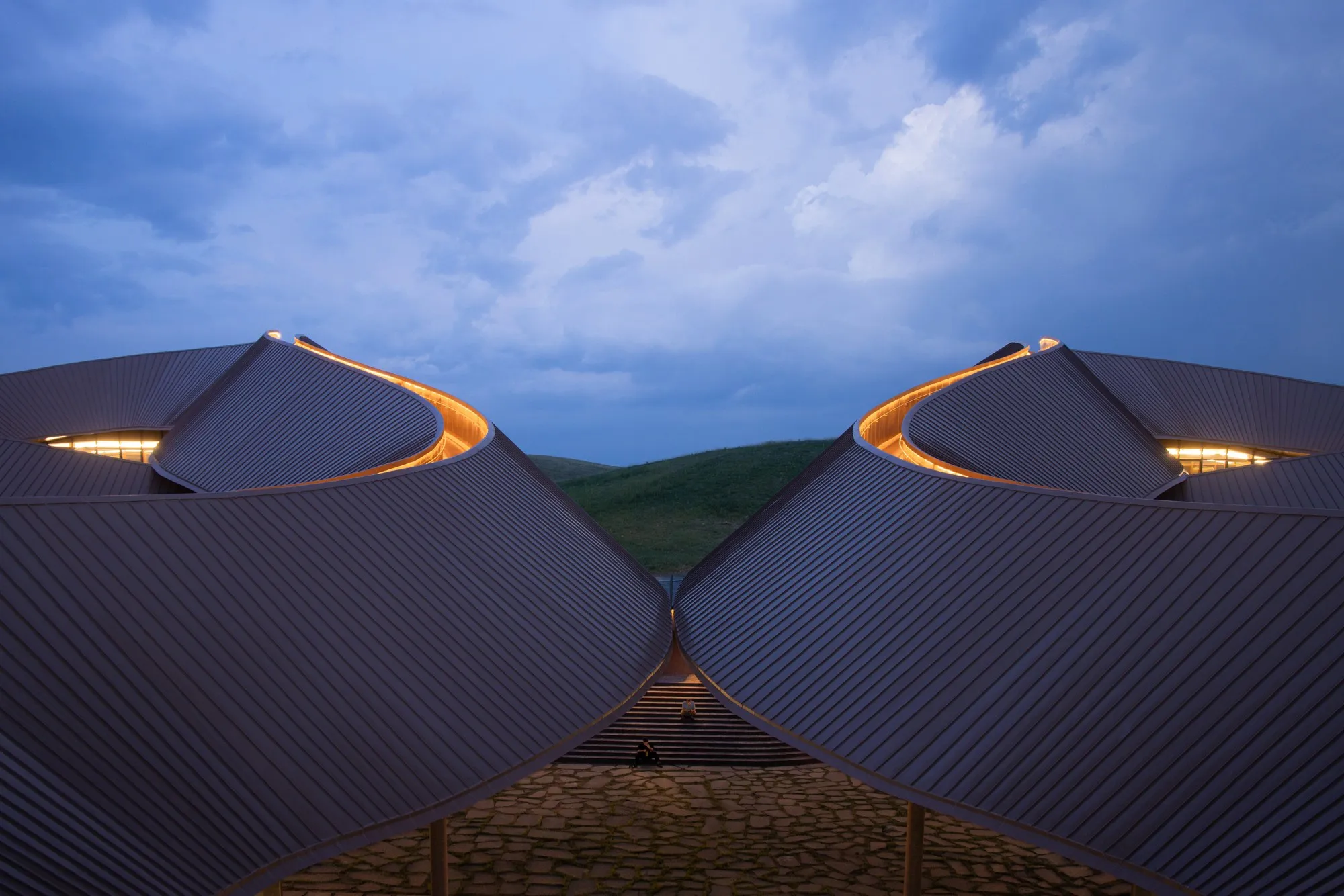
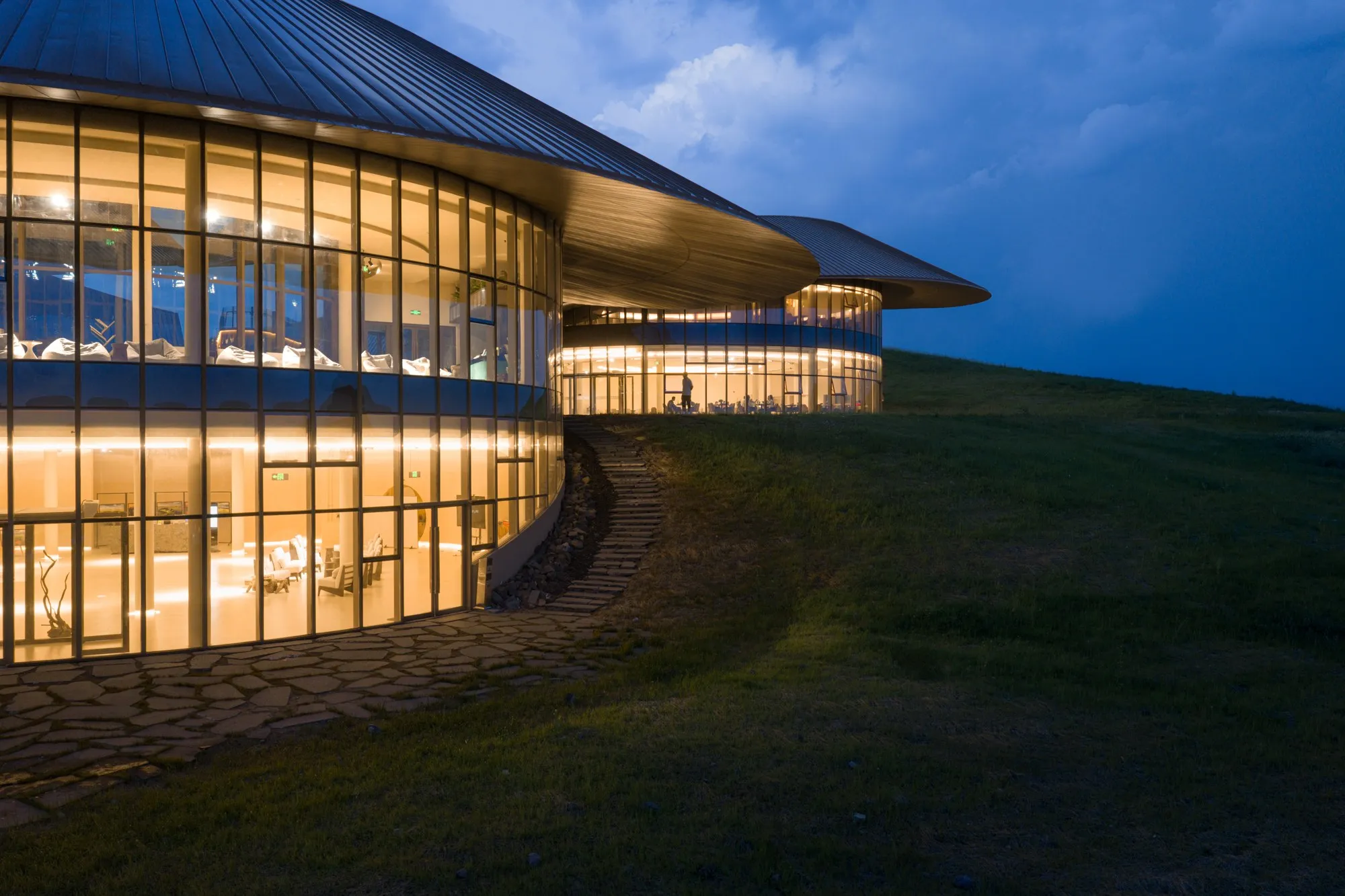
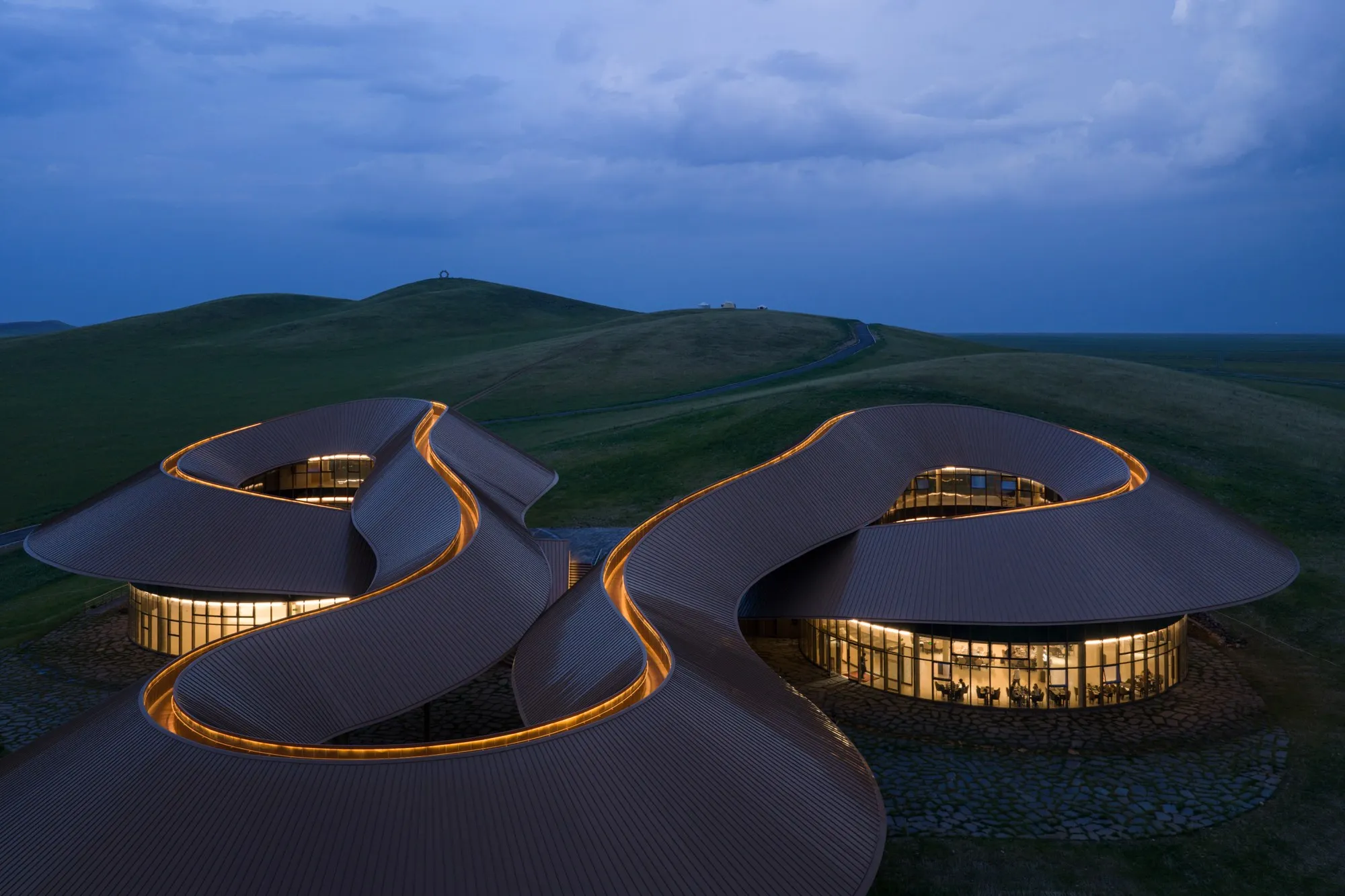
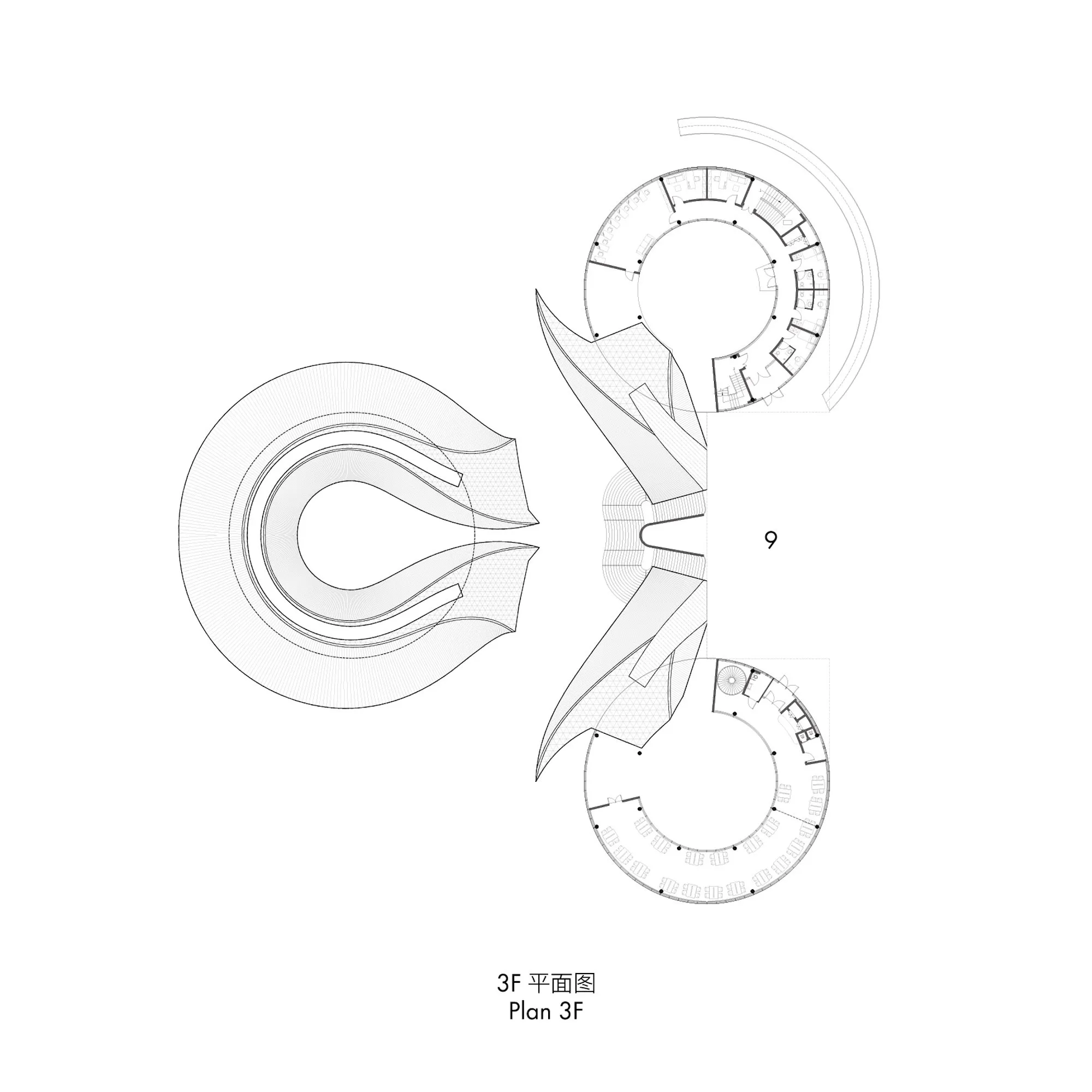
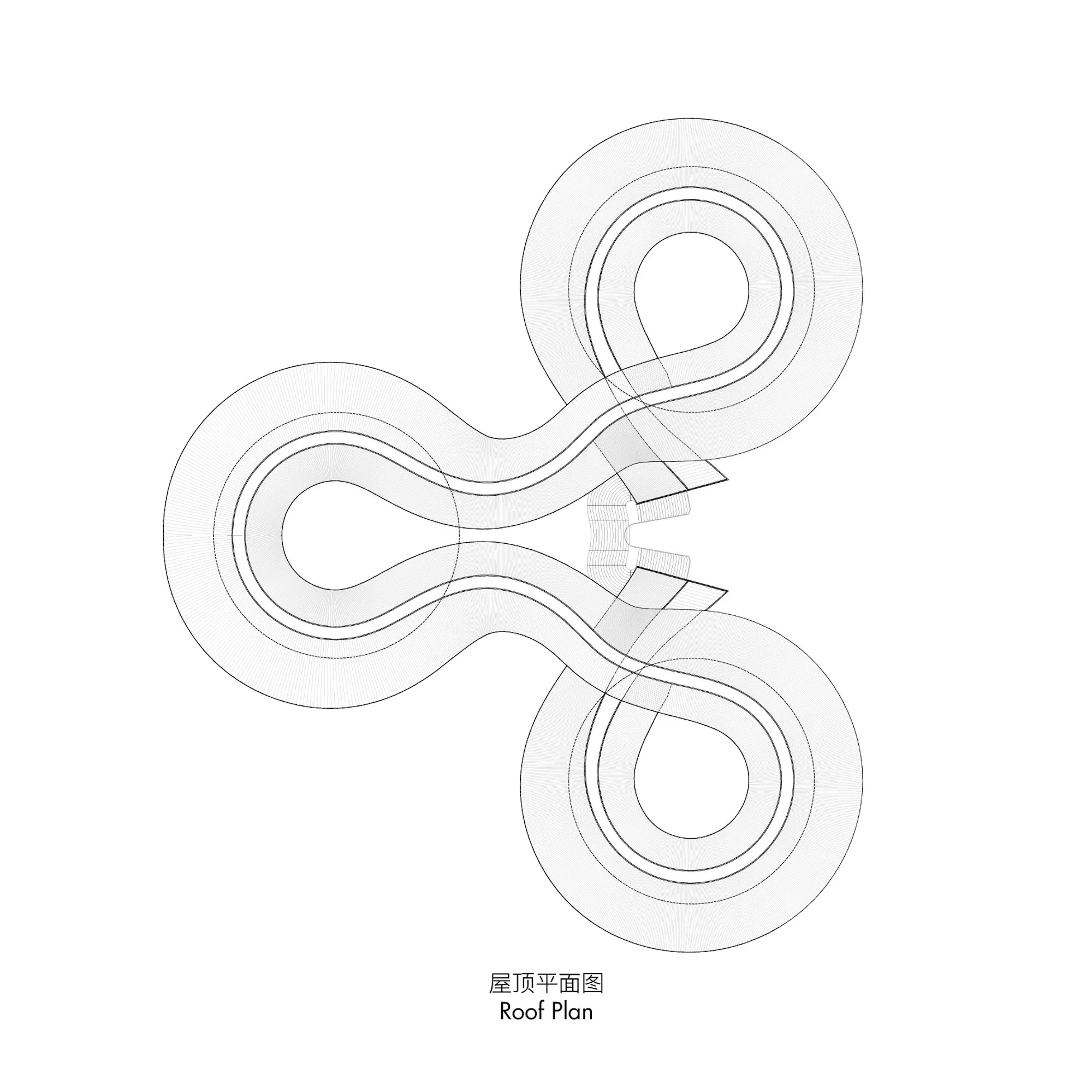
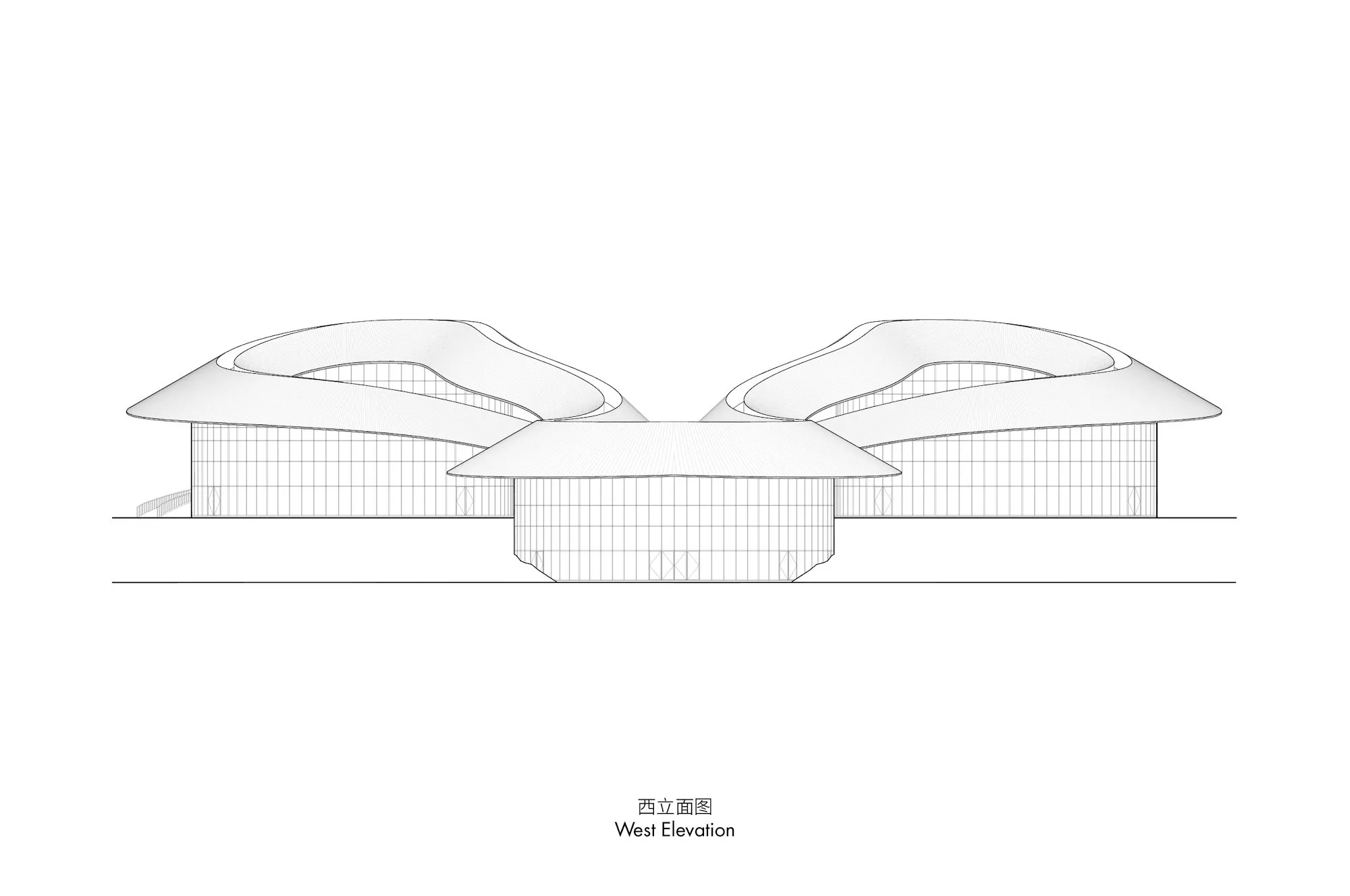
The guiding idea was that the volcano should lead and the building follow. A curved roof and three round volumes, set at different levels along the slope, recall the cone. A continuous winding corridor, 274 metres long, spirals around them like a labyrinth, opening views to the volcanoes, steppe, sand and lake, much as a walk around a crater rim would.
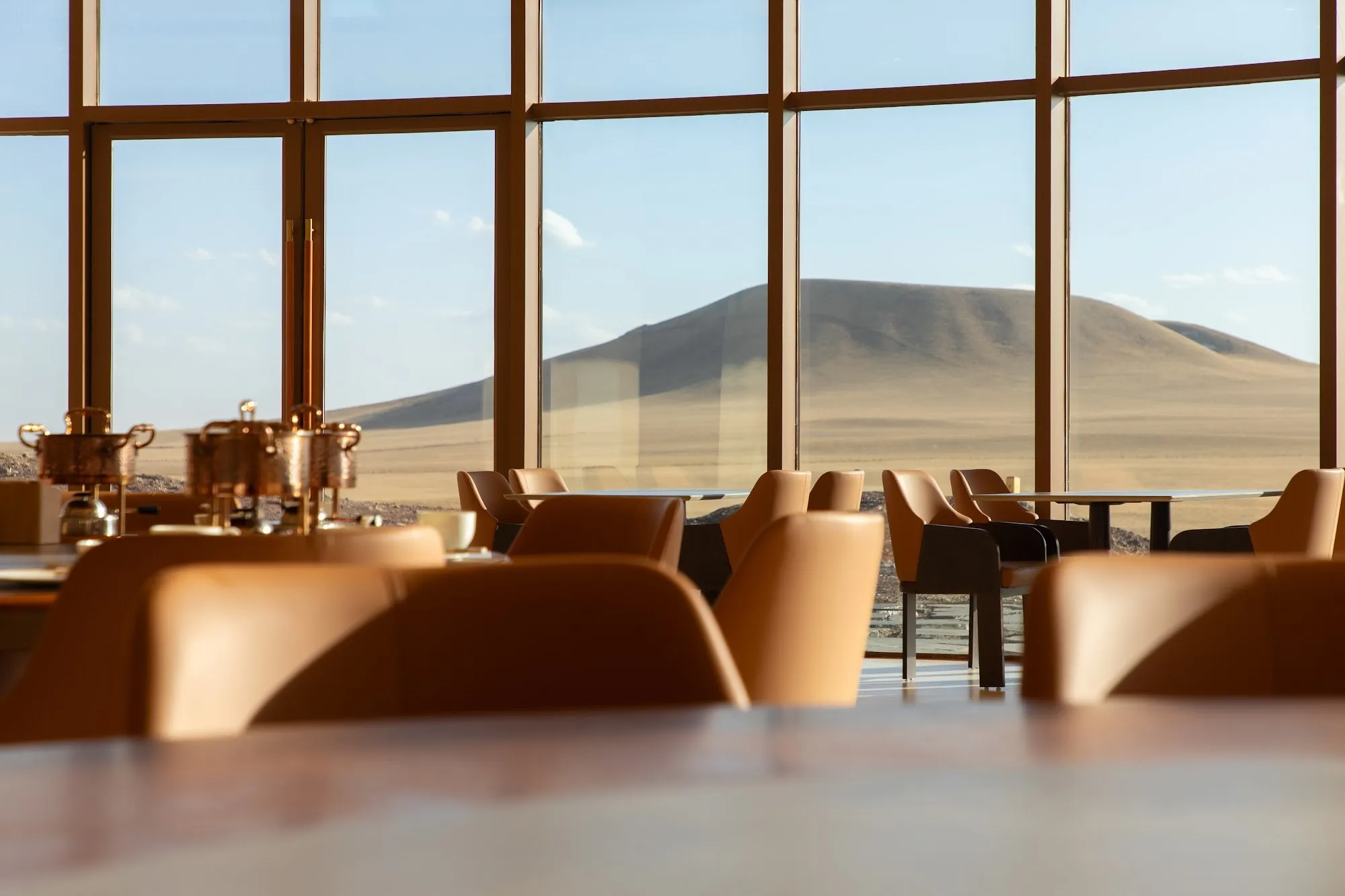
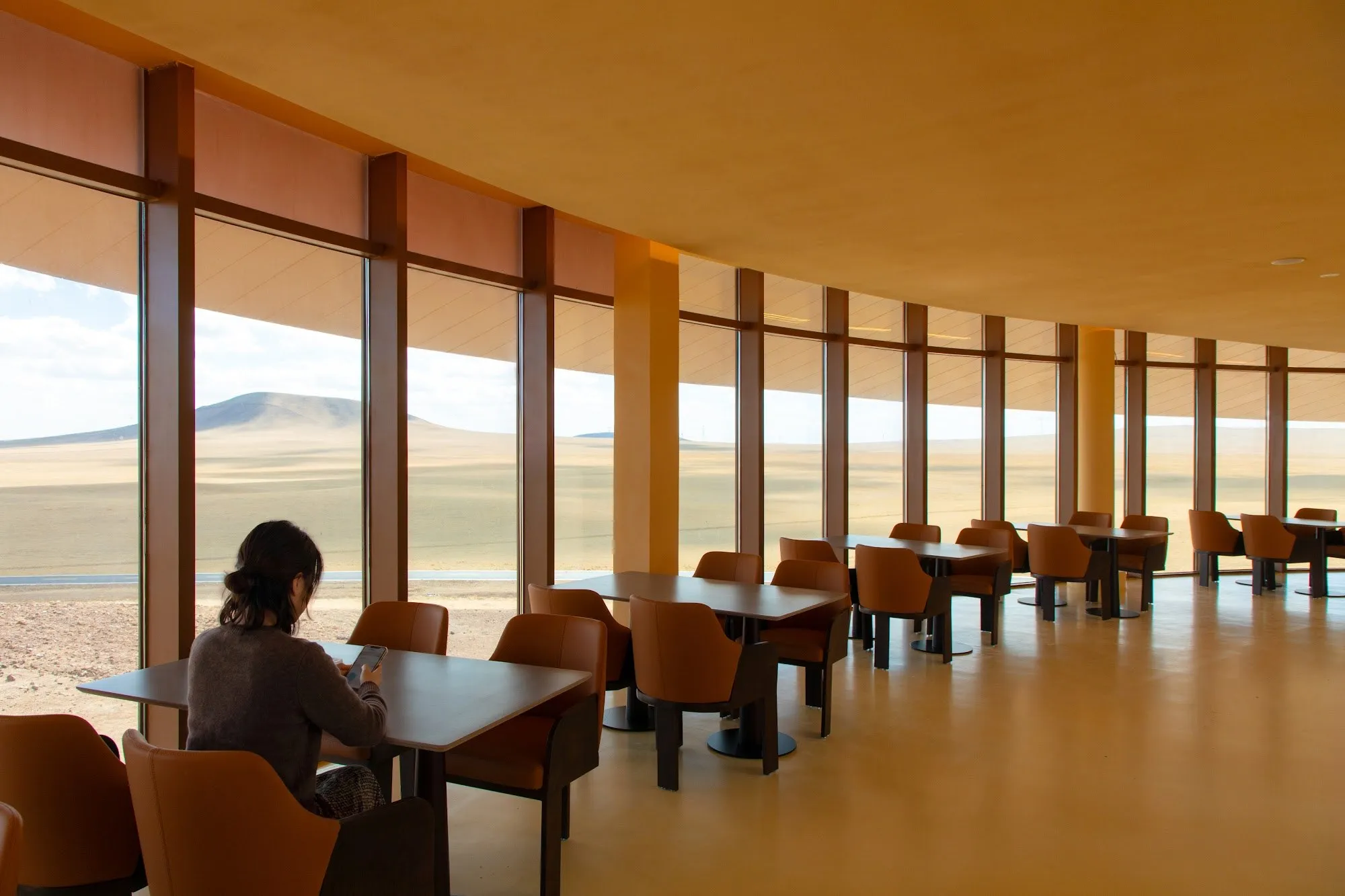
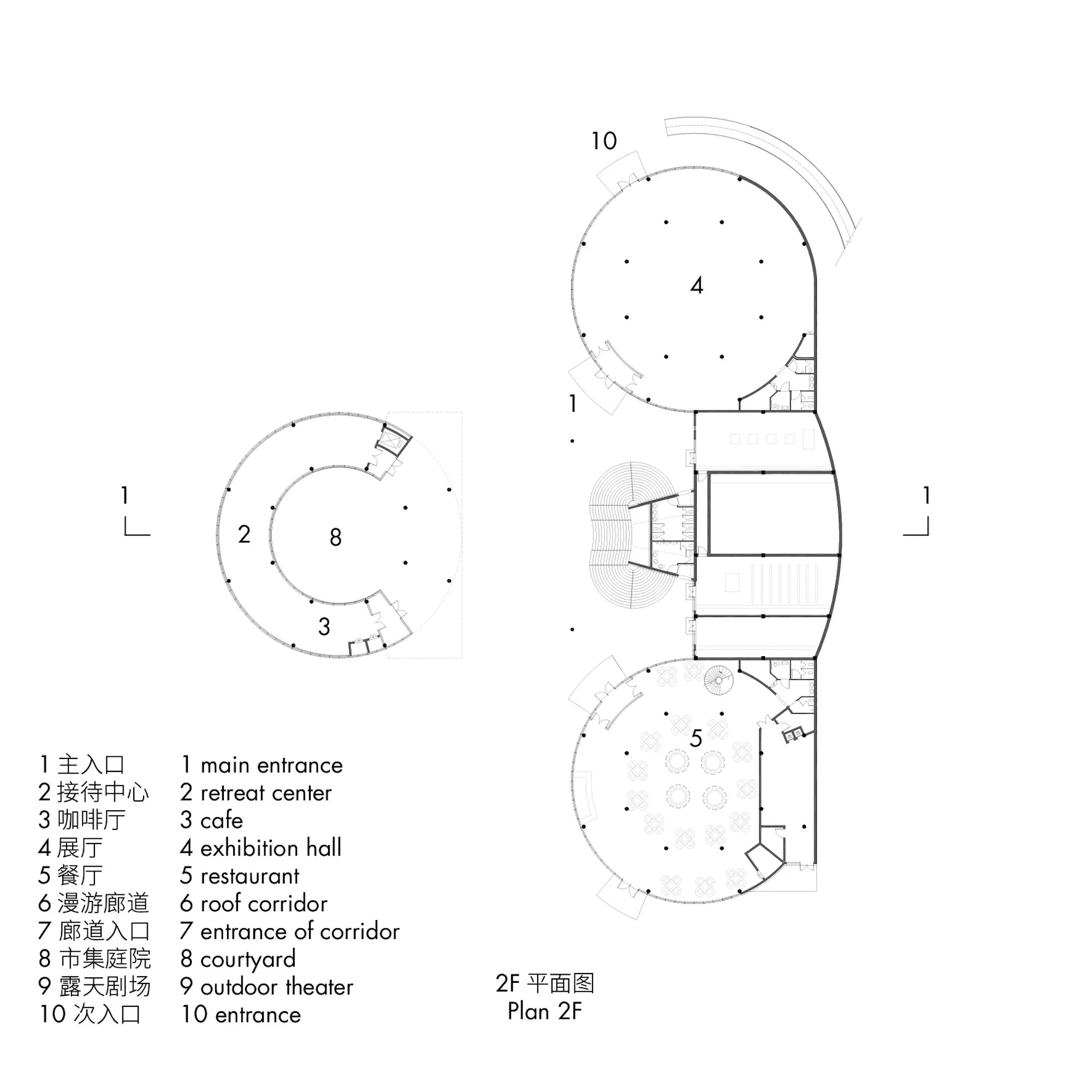
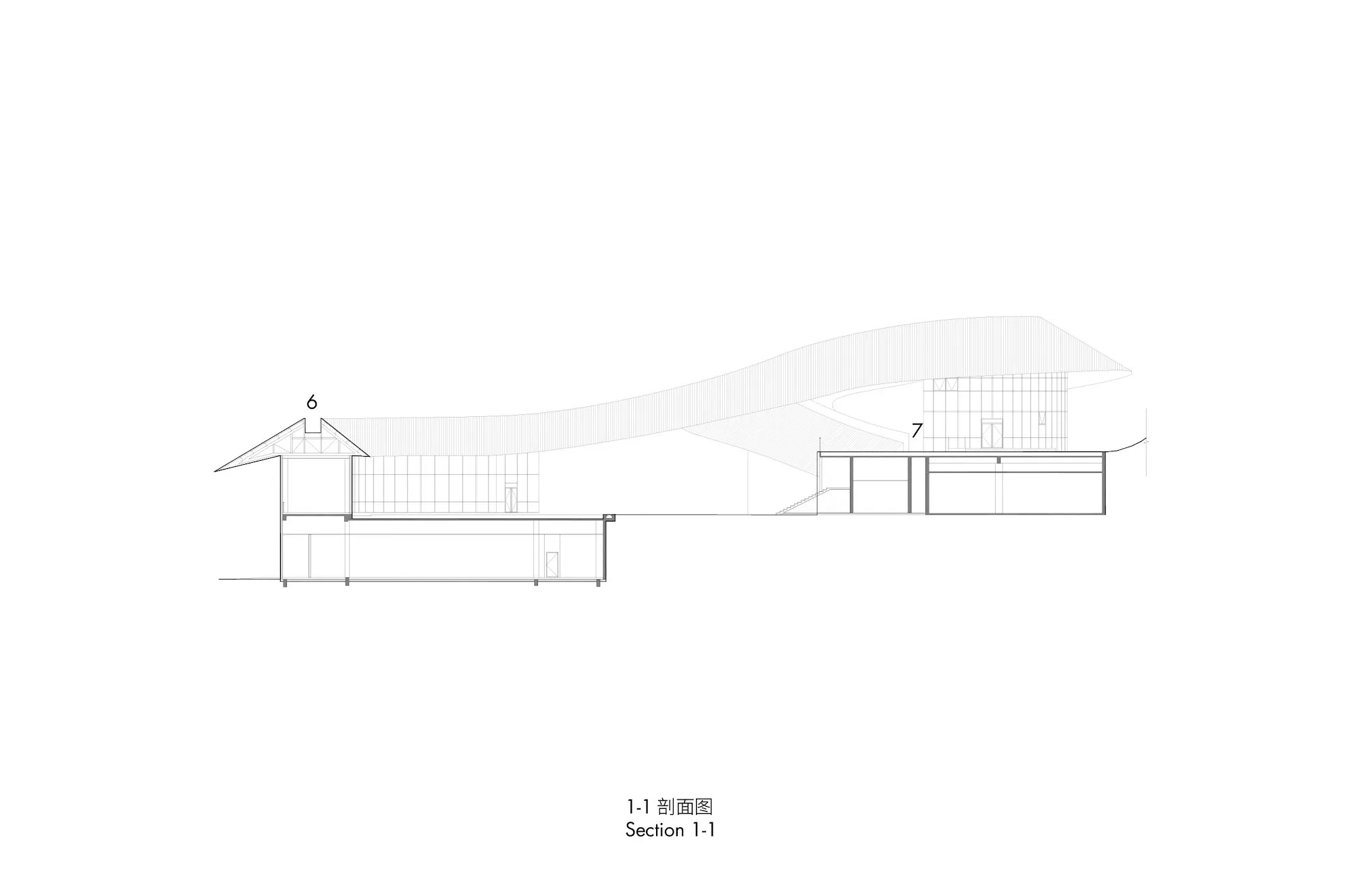
Inside the ring, like a crater, sit the visitor services, a café and bookshop, exhibition halls, offices and a restaurant. The service courtyard can host fairs, and the square between the exhibition and restaurant buildings works as an outdoor theatre. Grass-covered seating steps along the eastern slope look over the roof ring toward the distant cones.
The climate is harsh. Winds are strong and winter brings drifting snow, so the building takes a curved outline that reduces wind loads, and long eaves shield the courtyards while framing the landscape. Temperatures can fall below minus forty degrees, and weather-resistant metal cladding helps keep the interior warm. Outside, slabs of local volcanic stone pave the square and paths, and weathering steel platforms sit into the terrain.
The russet surface takes on the colours of the land through the year: it blends with green grass in summer, turns gold with the steppe in spring and autumn, and in winter glows warm against the snow. At night the lit corridor runs around the hill like a stream of lava.
Project Information
- Design studio
- PLAT ASIA
- Area
- 3,532 m²
- Time
- 2025
- Type
- Cultural
- Primary materials
- Concrete, Glass, Microcement, Natural stone, Steel
Comments