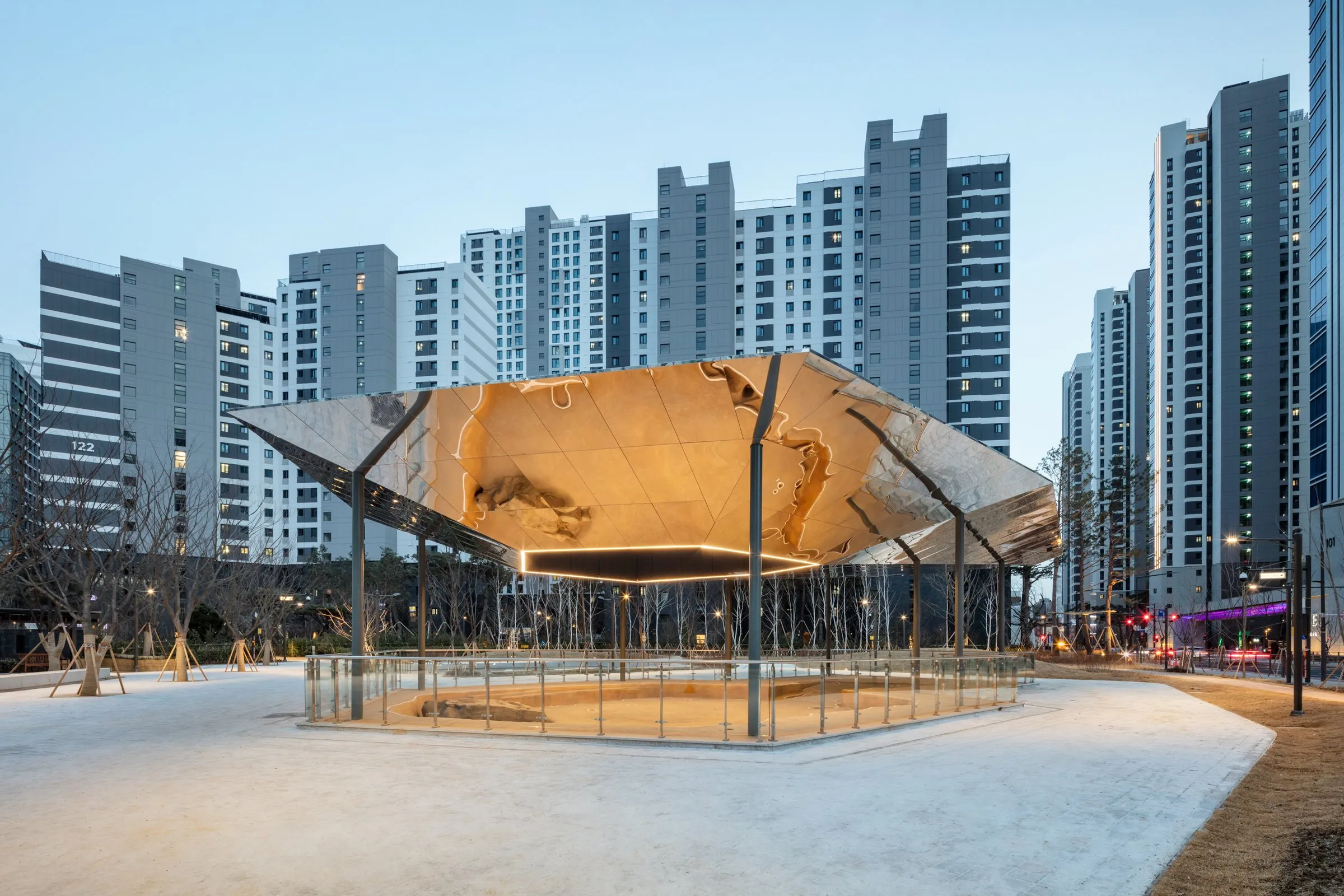
Floating Ground: A Landmark that Disappears
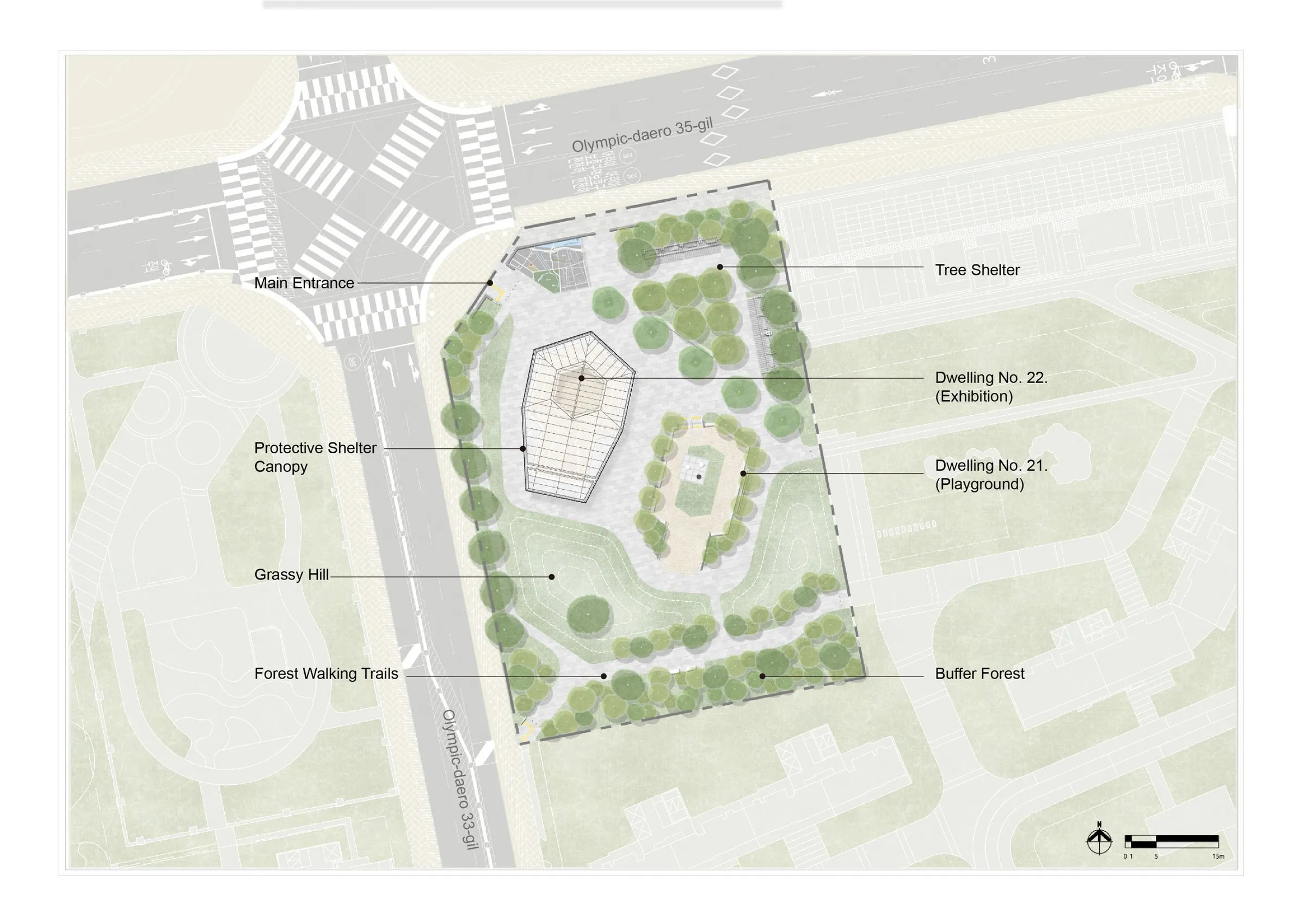
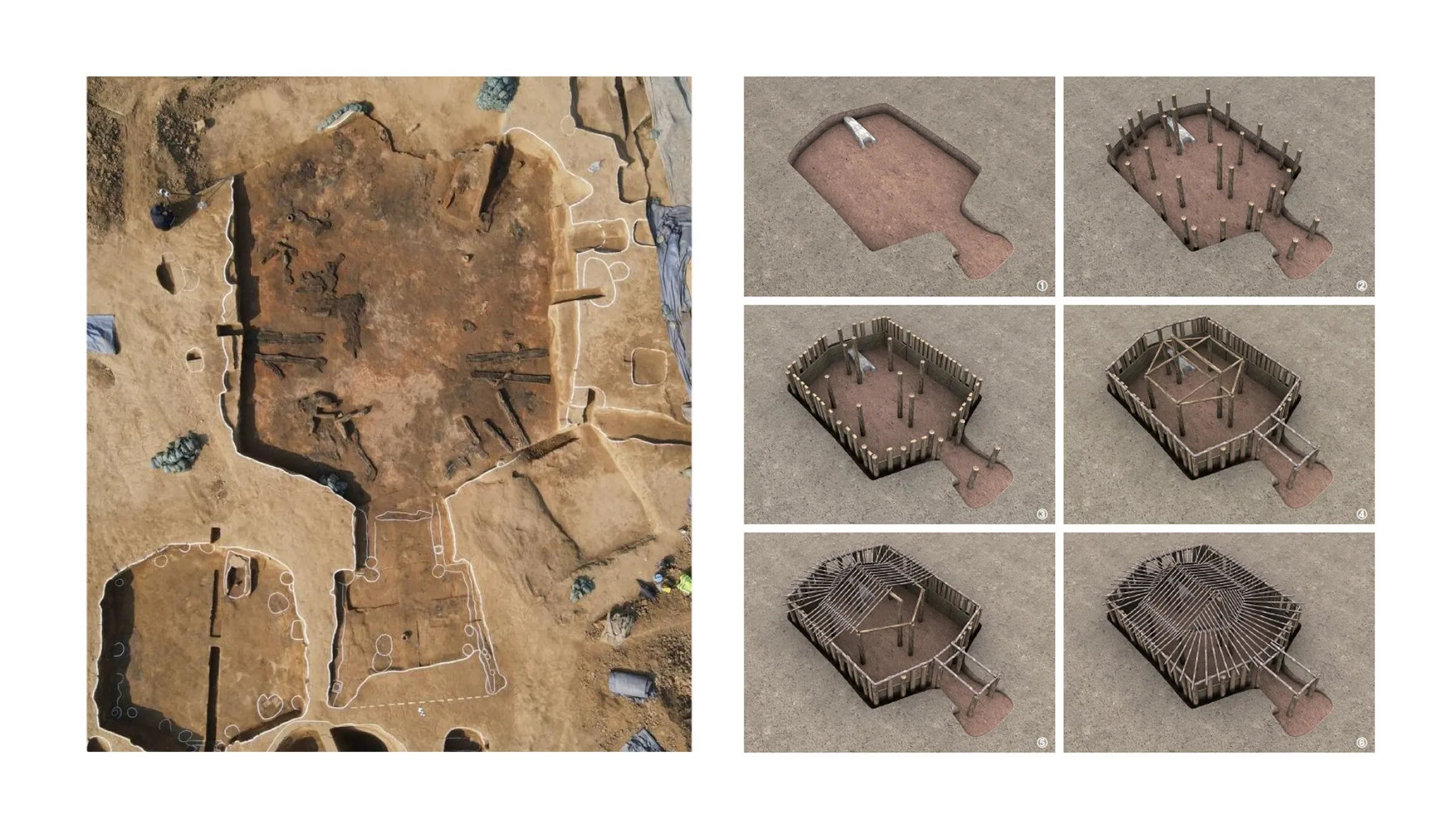
In 2022, excavations on the site of an apartment reconstruction uncovered remains from an ancient kingdom that flourished here until the fifth century, including pit dwellings and artefacts. Building work stopped, and after investigation it was decided to relocate and preserve the remains in a historical park within the new housing estate.
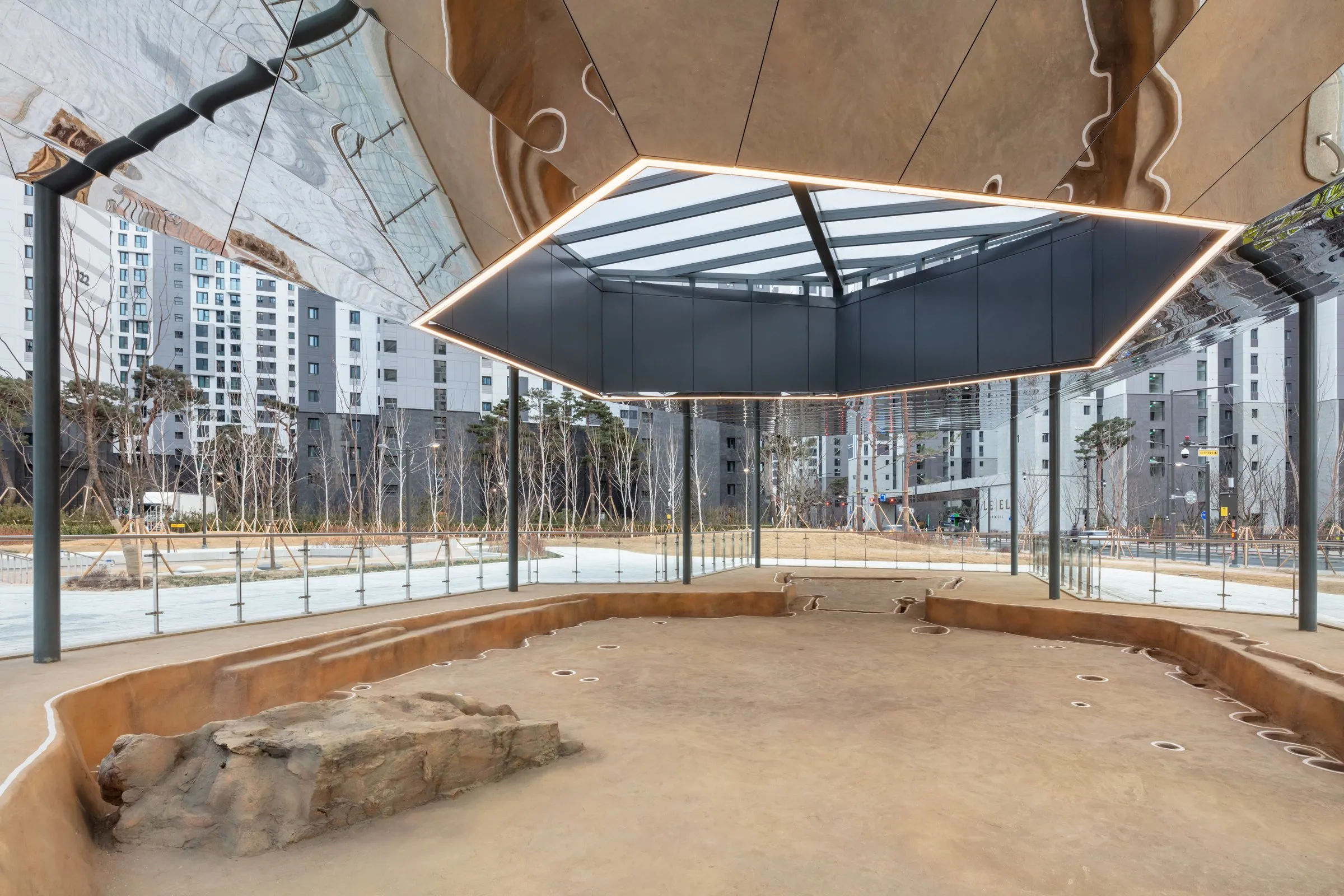
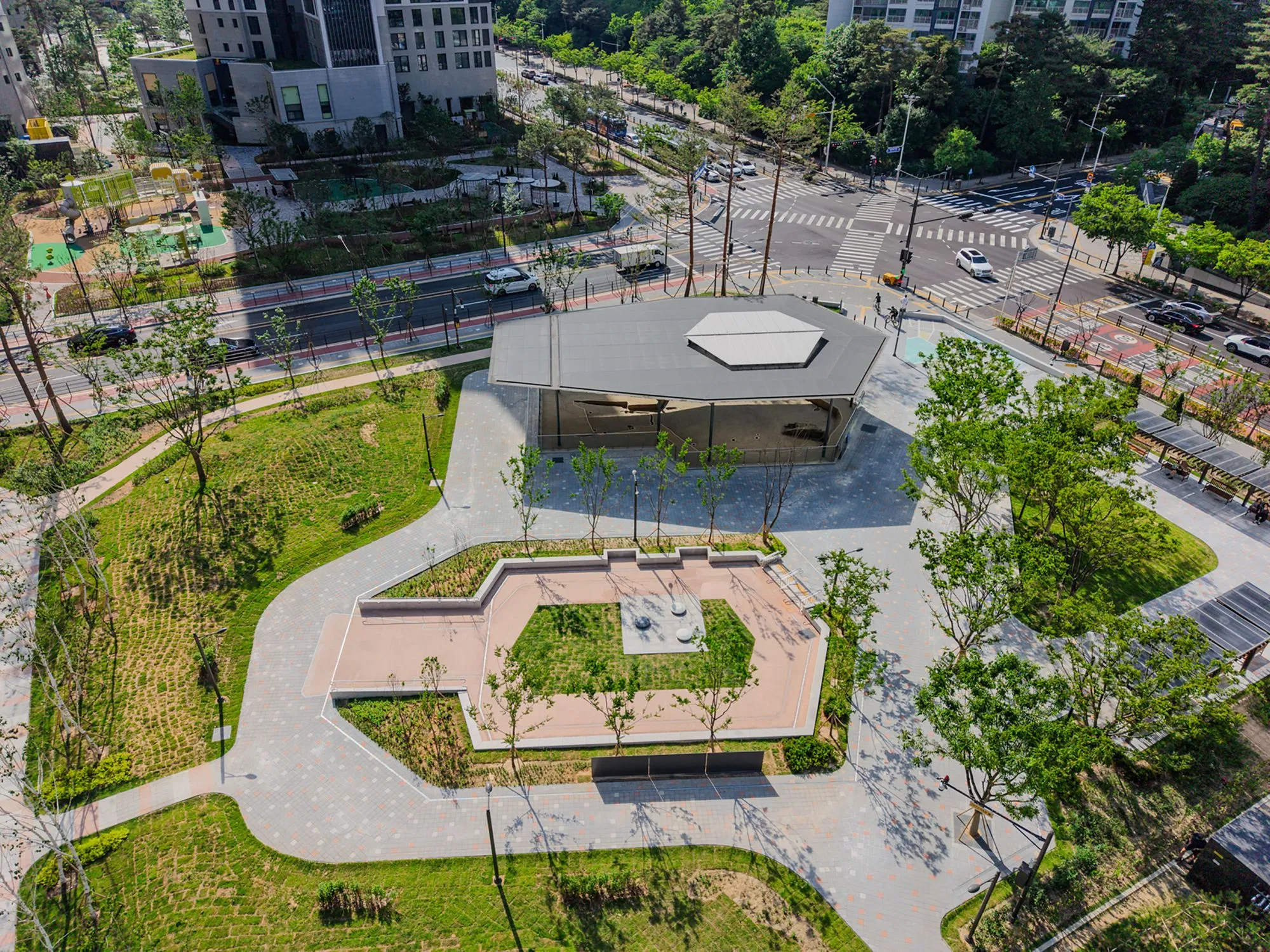
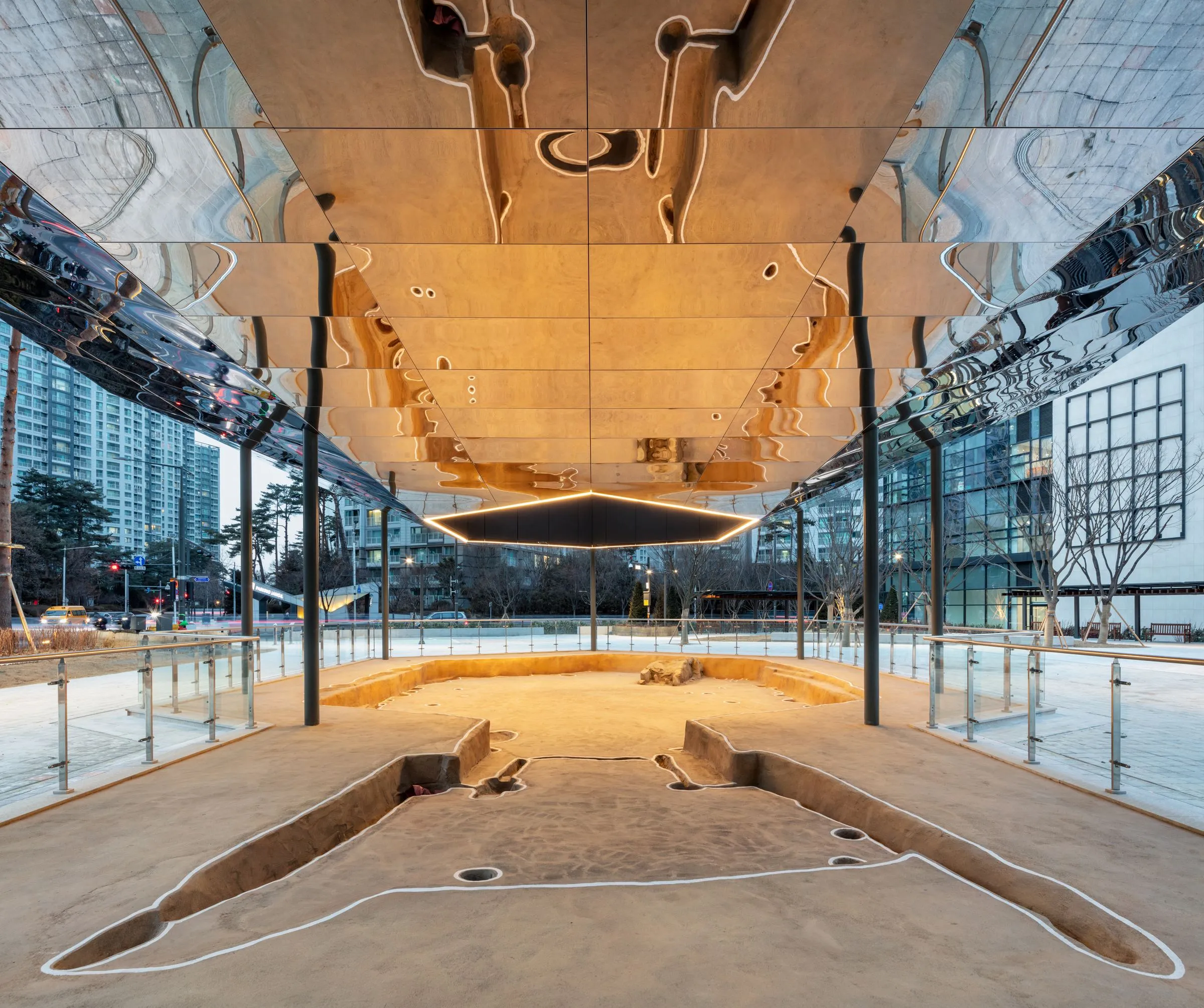
The largest pit dwelling found on the site was fully relocated and restored, while another was worked into the park landscape. The restored dwelling needed a protective shelter.
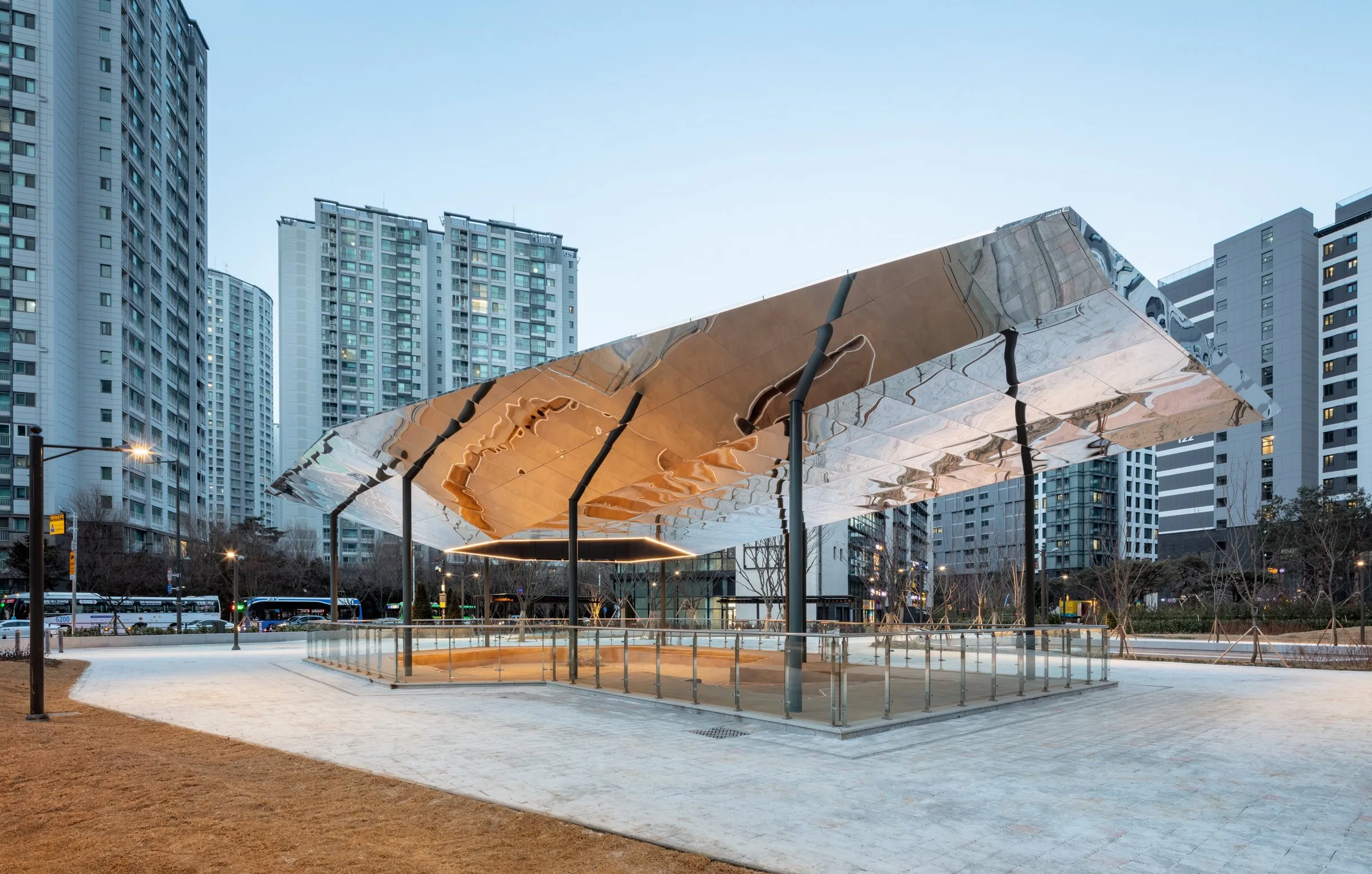
The task went beyond keeping off rain and snow. The shelter had to be a landmark for the park while staying subordinate to the heritage. Rather than an iconic object, the Korean design team sought a structure that would reveal the traces in the ground and amplify them through contemporary means.
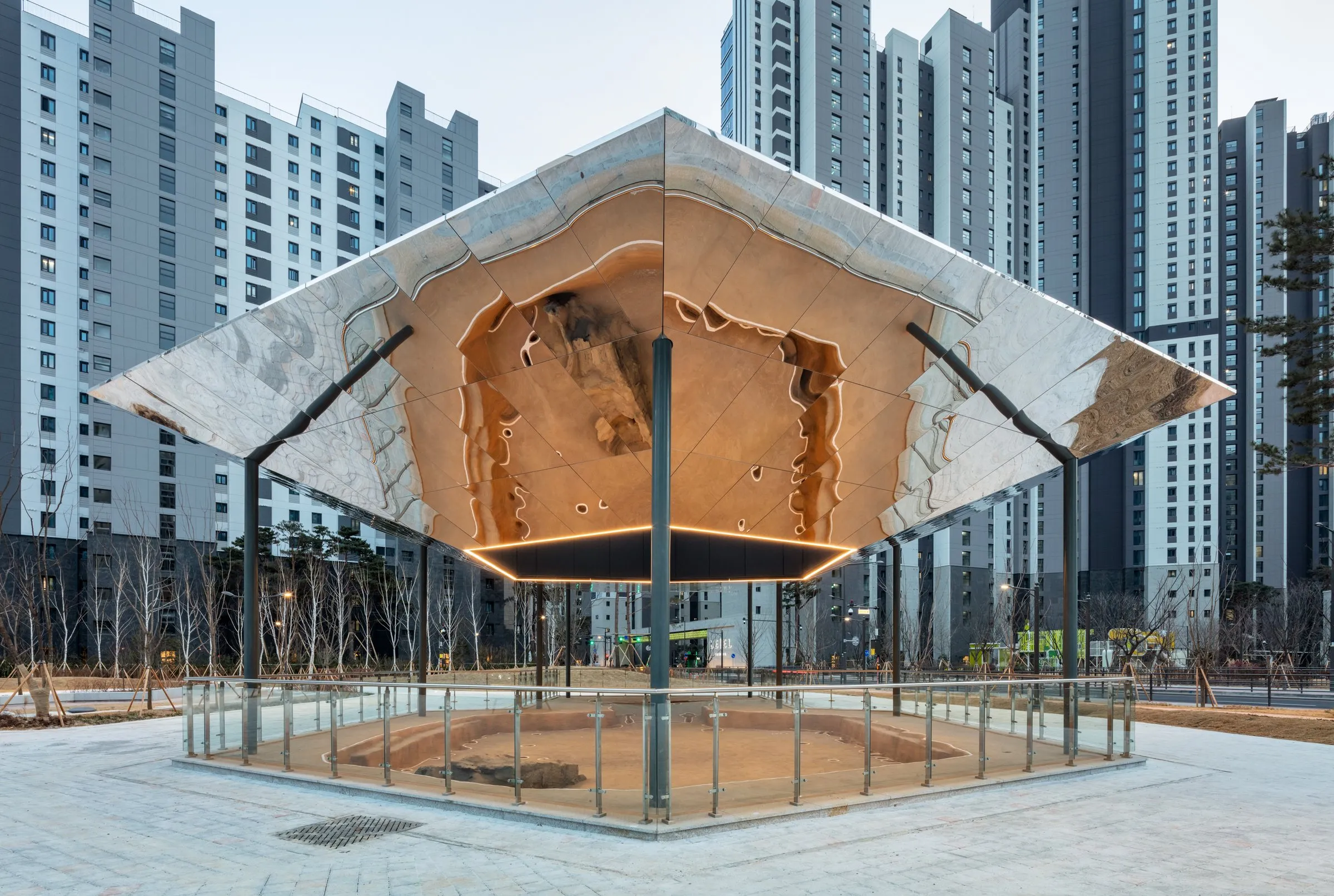
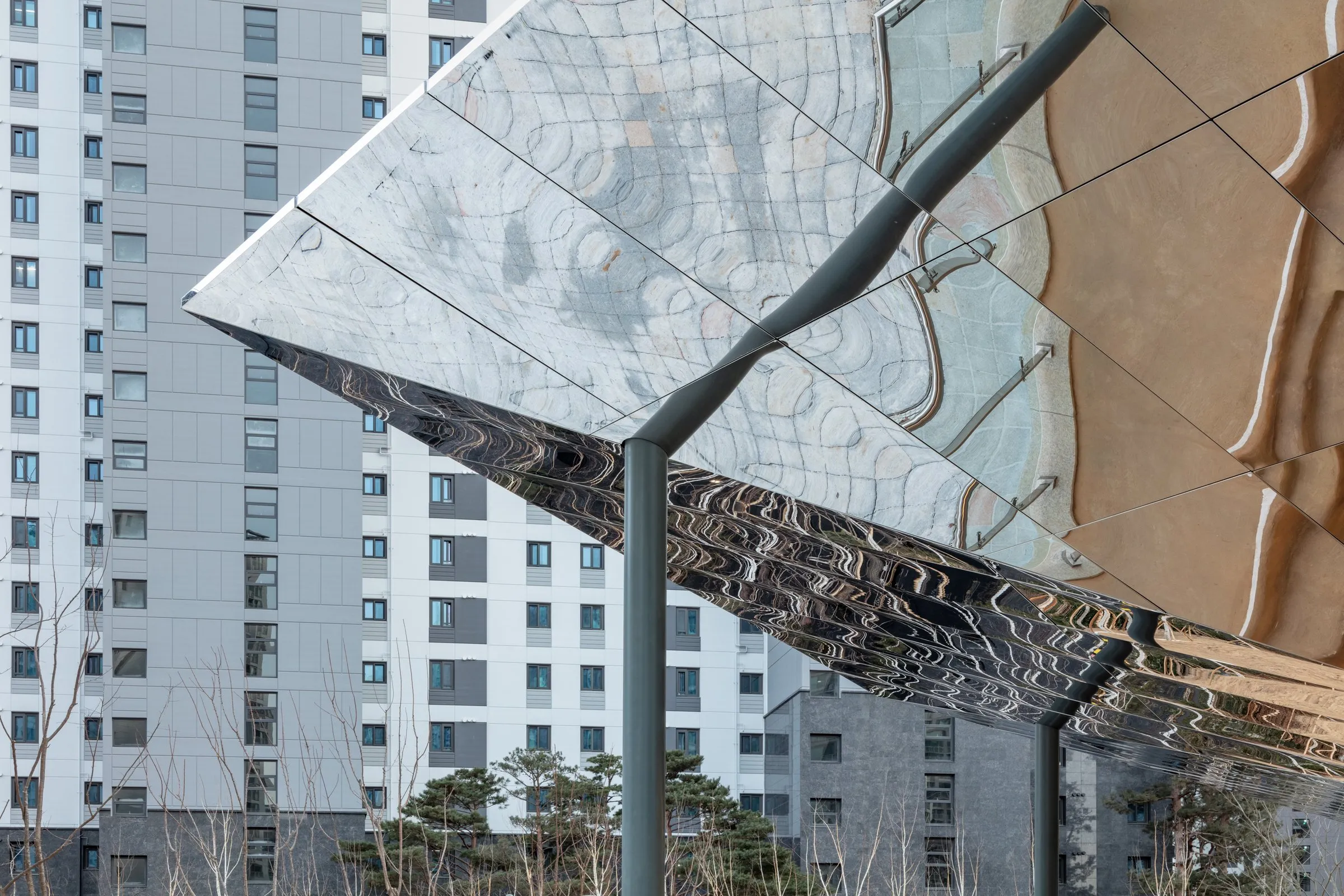
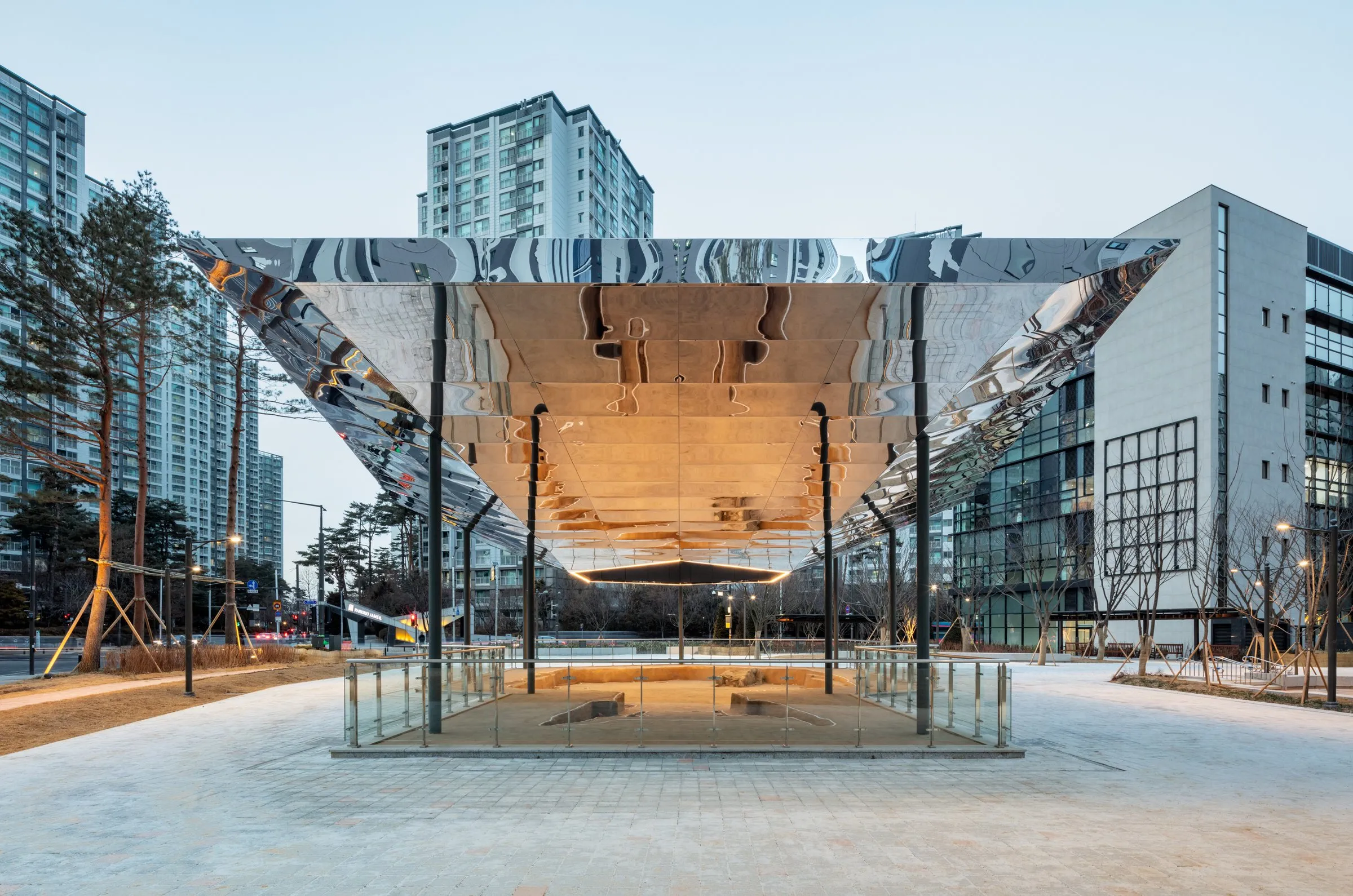
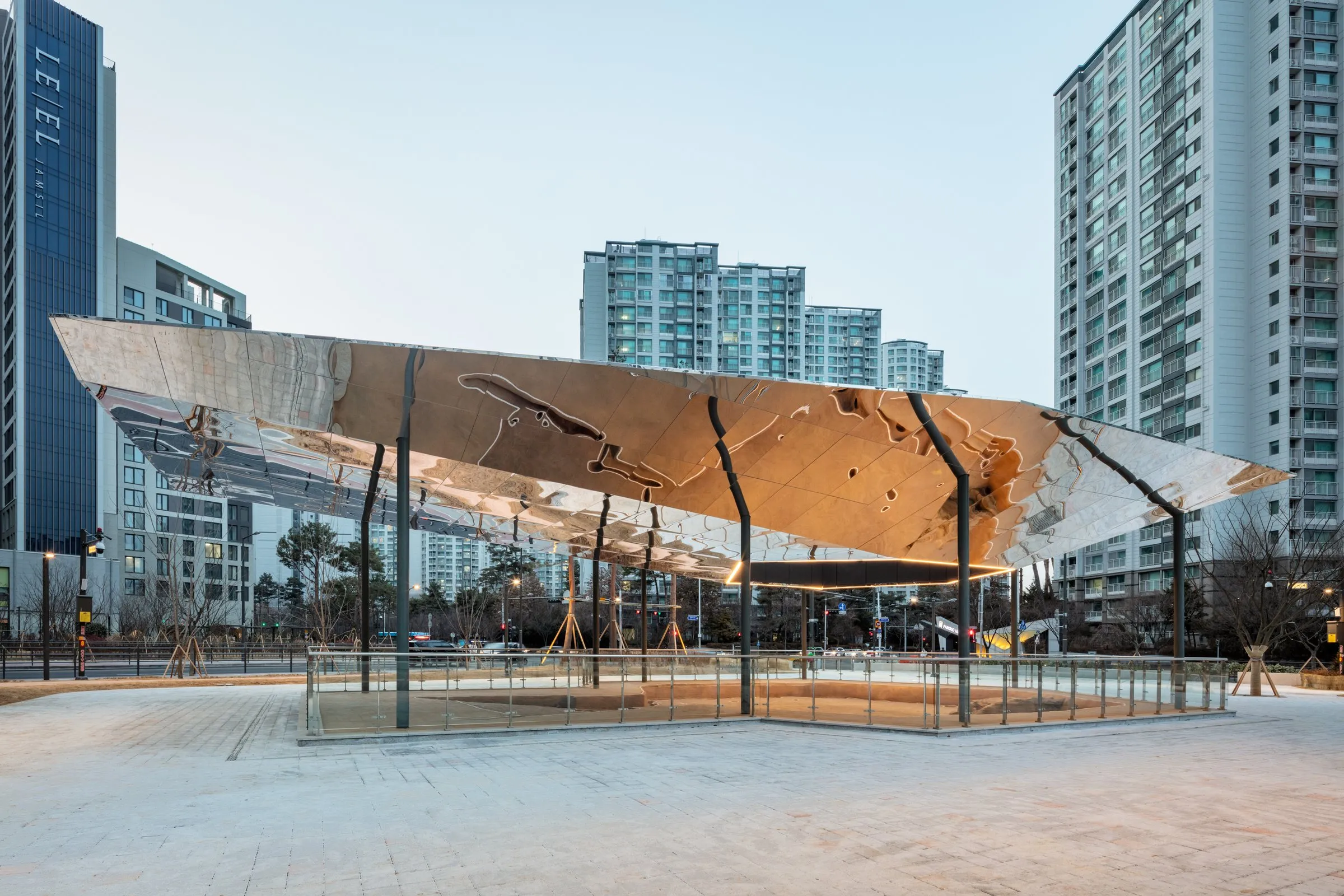
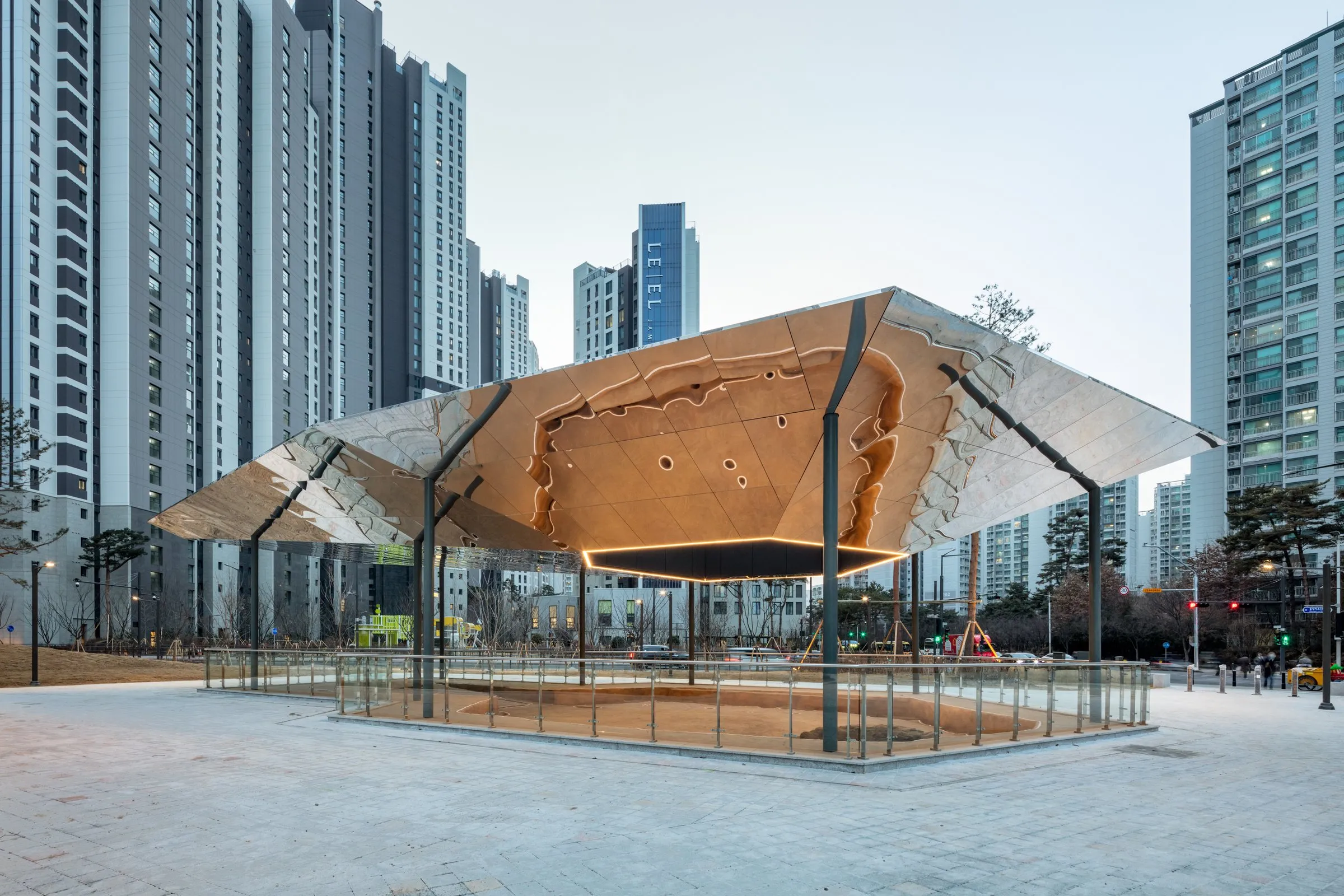
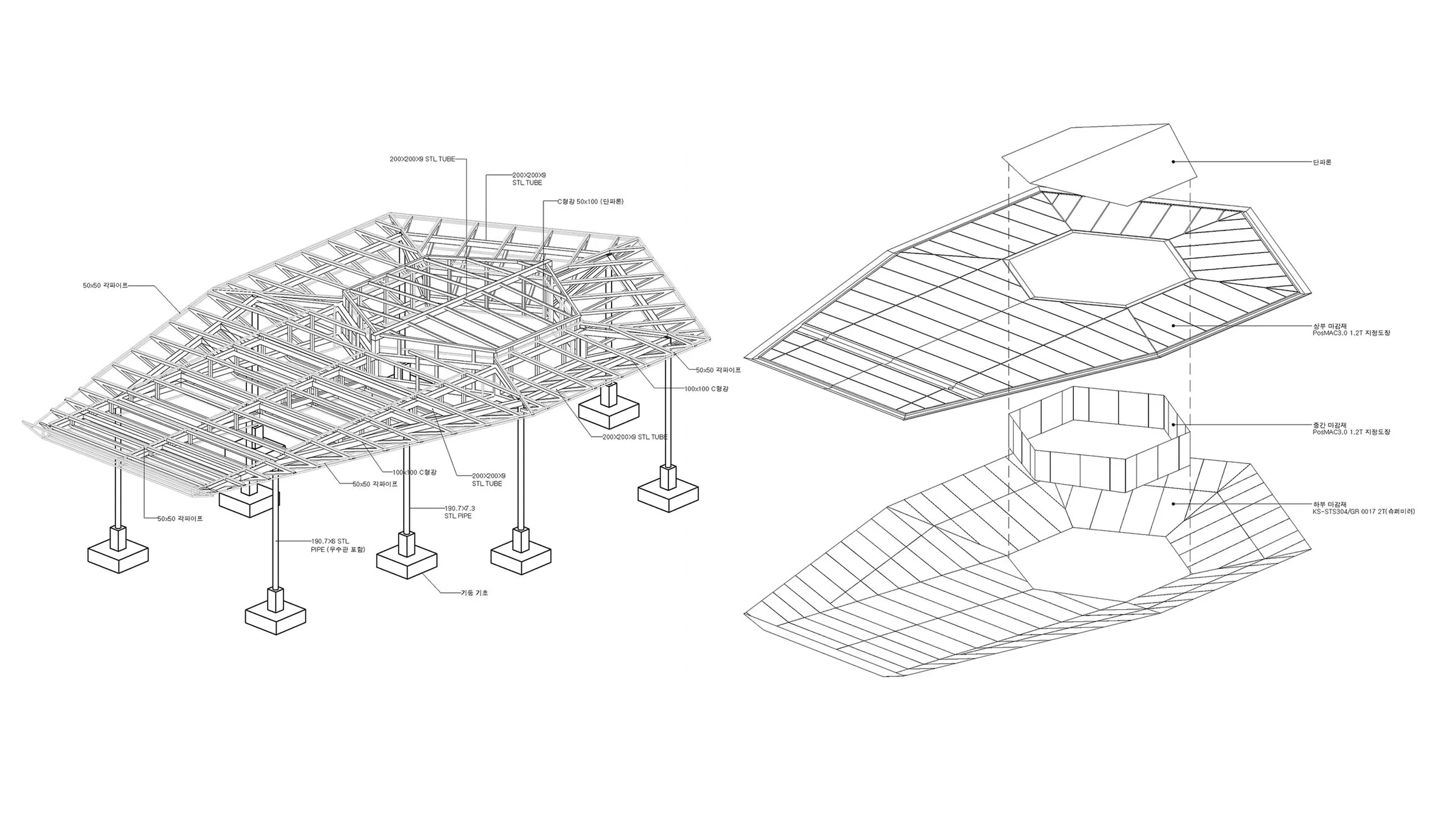
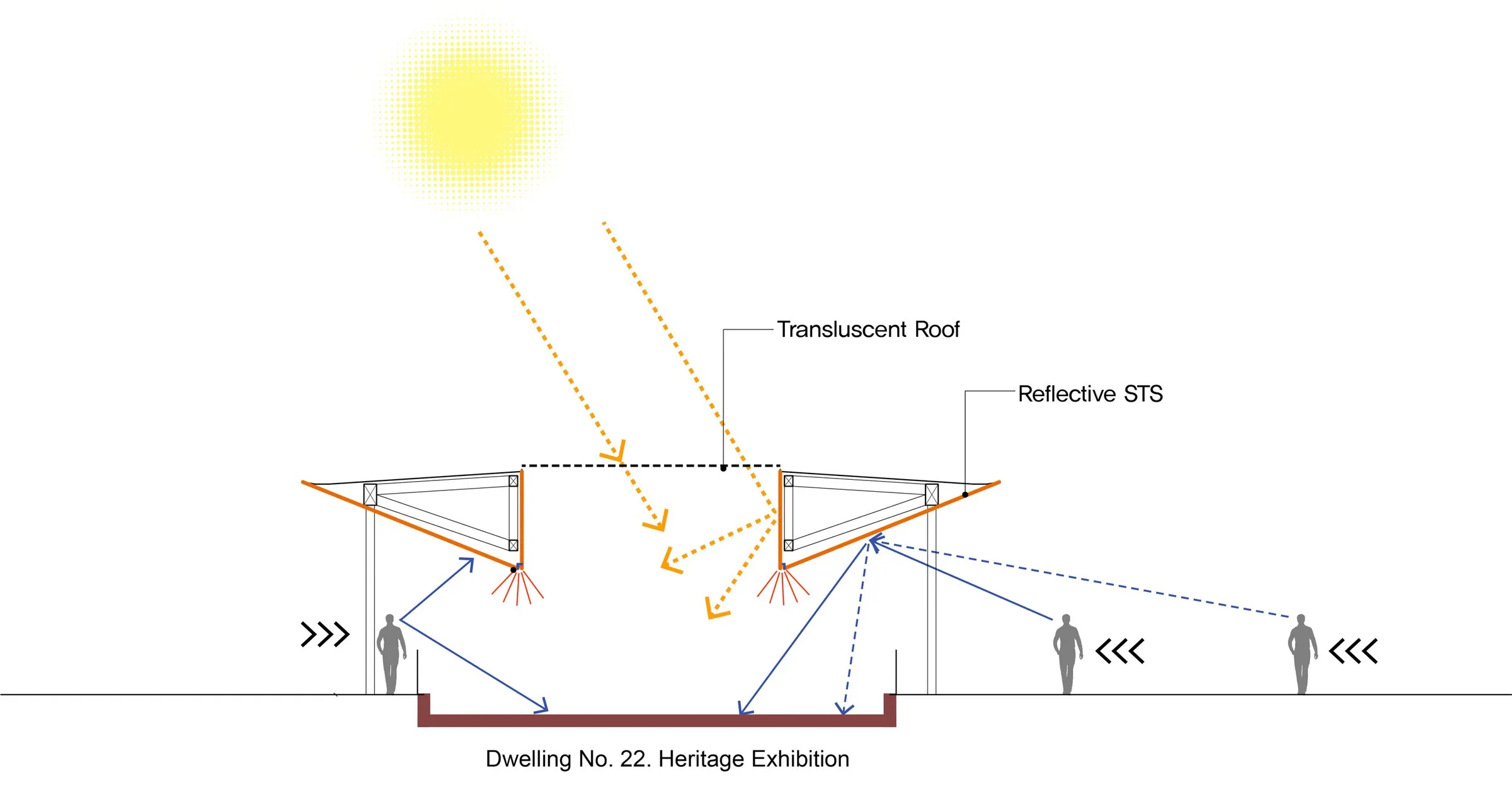
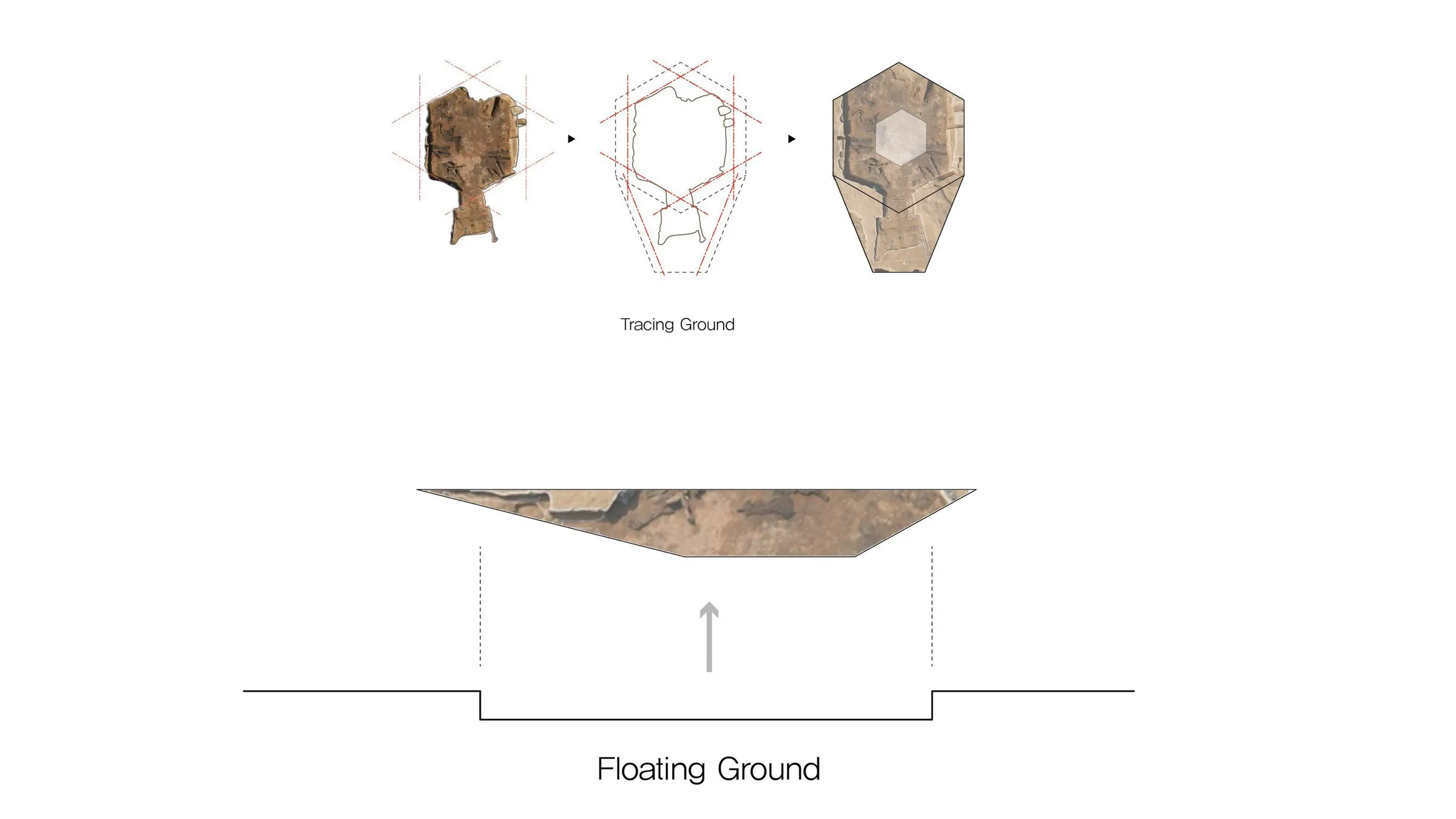
This led to the idea of a floating ground, an invisible landmark that reflects the memory of the site. The canopy geometry derives from the hexagonal traces of the excavated footprint. Clad in a super-mirror finish, it captures the landscape and sky, dissolving its own presence and giving the impression that a piece of earth has been lifted into the air.
Approaching visitors see the canopy as a floating reflection of the remains beneath, drawing them toward the reconstructed dwelling. Its final form came from simulations of viewpoints, distances and reflection angles. Translucent panels let diffused daylight onto the remains, and integrated lighting softly reveals the site at night.
Project Information
- Design studio
- YZA
- Area
- 200 m²
- Time
- 2026
- Primary materials
- Polycarbonate, Steel

Comments