Carrier Bags from the Peripherals
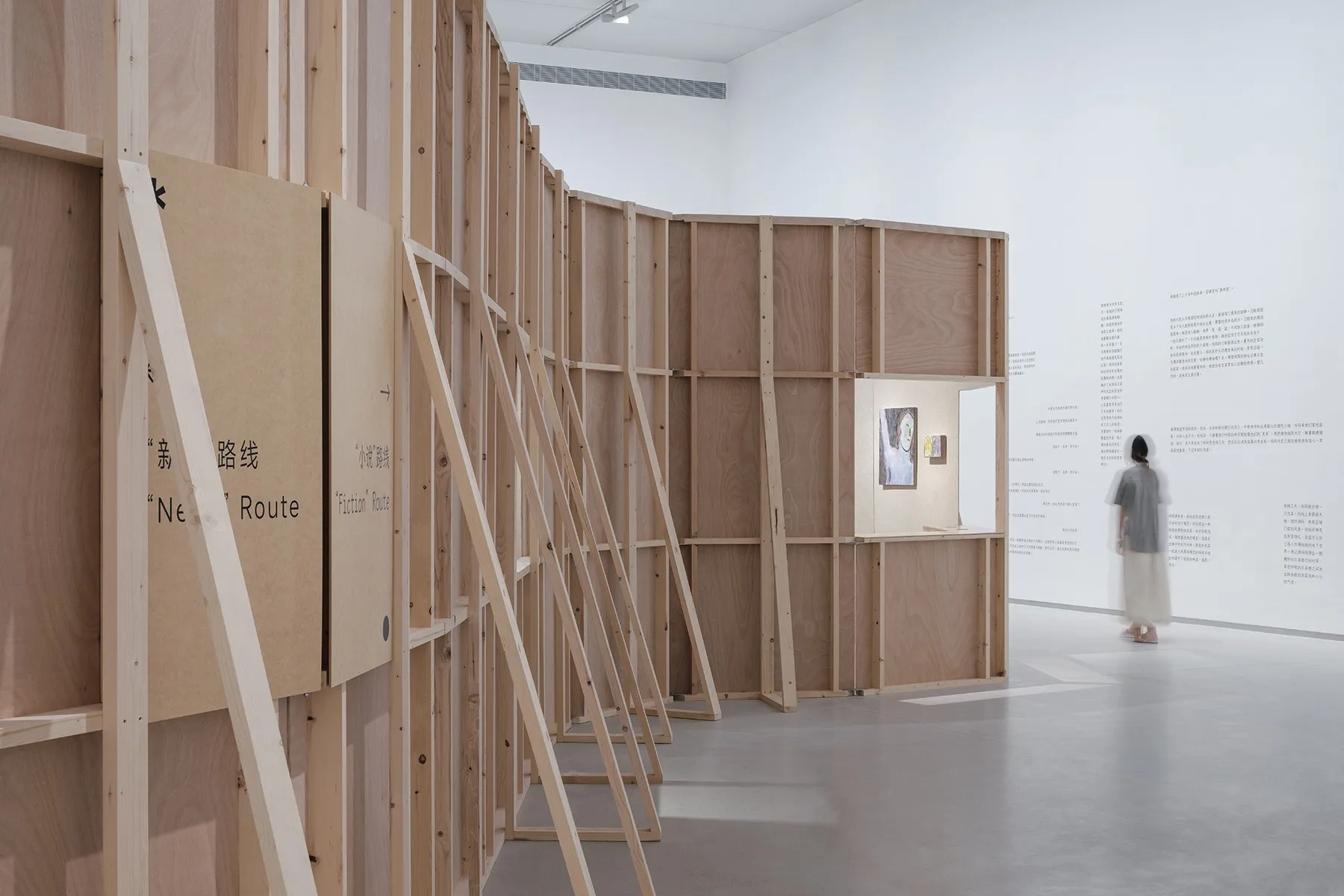
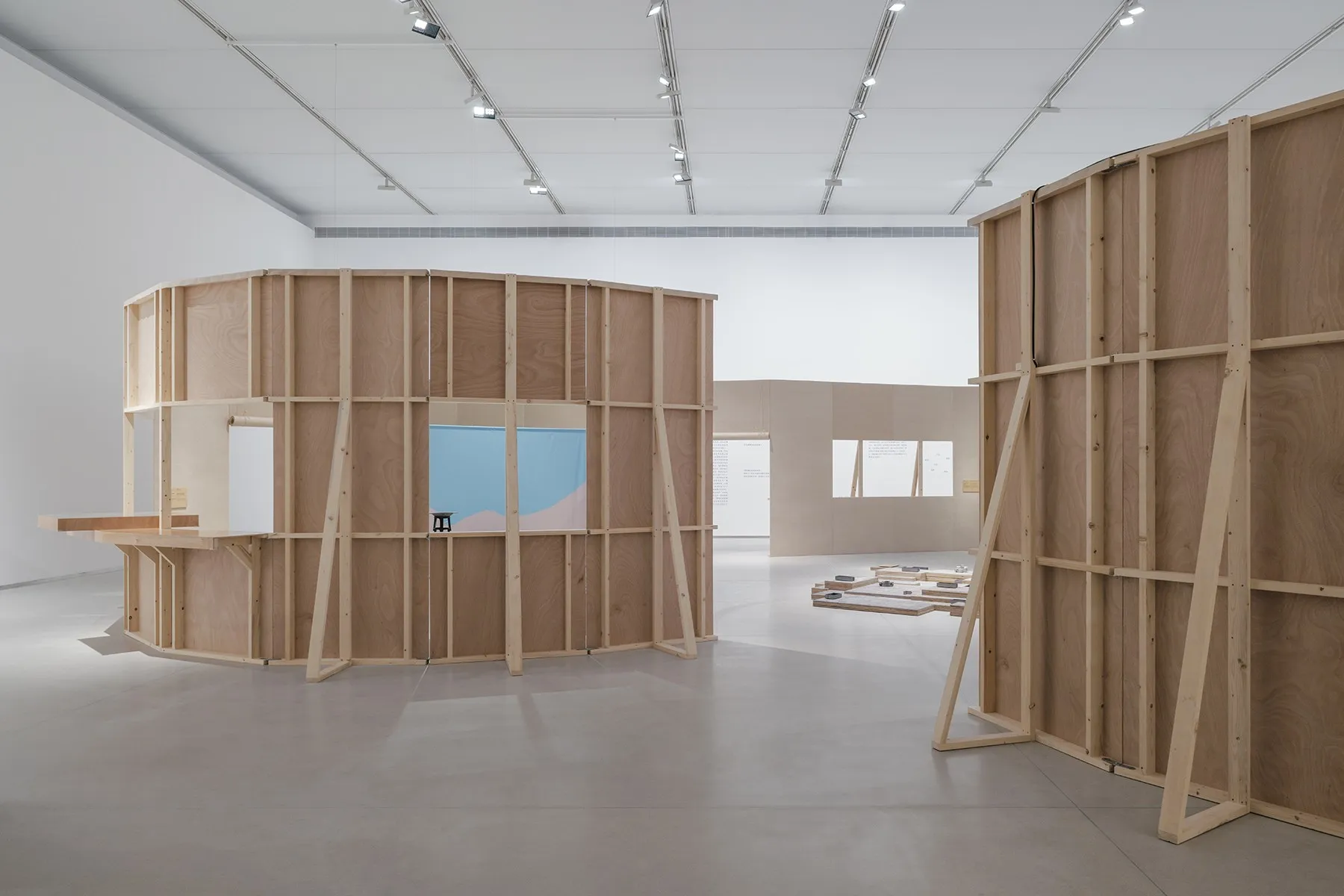
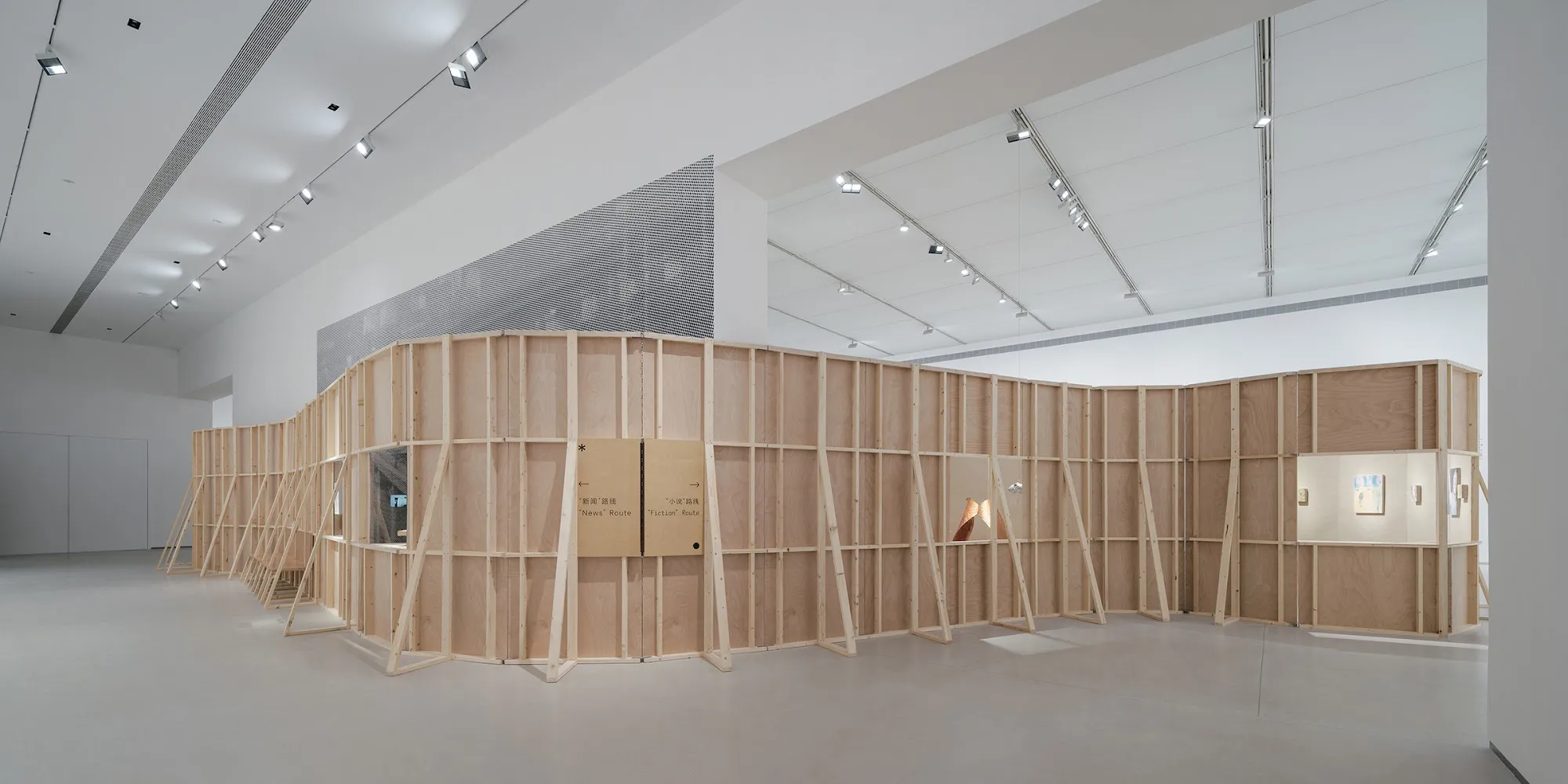
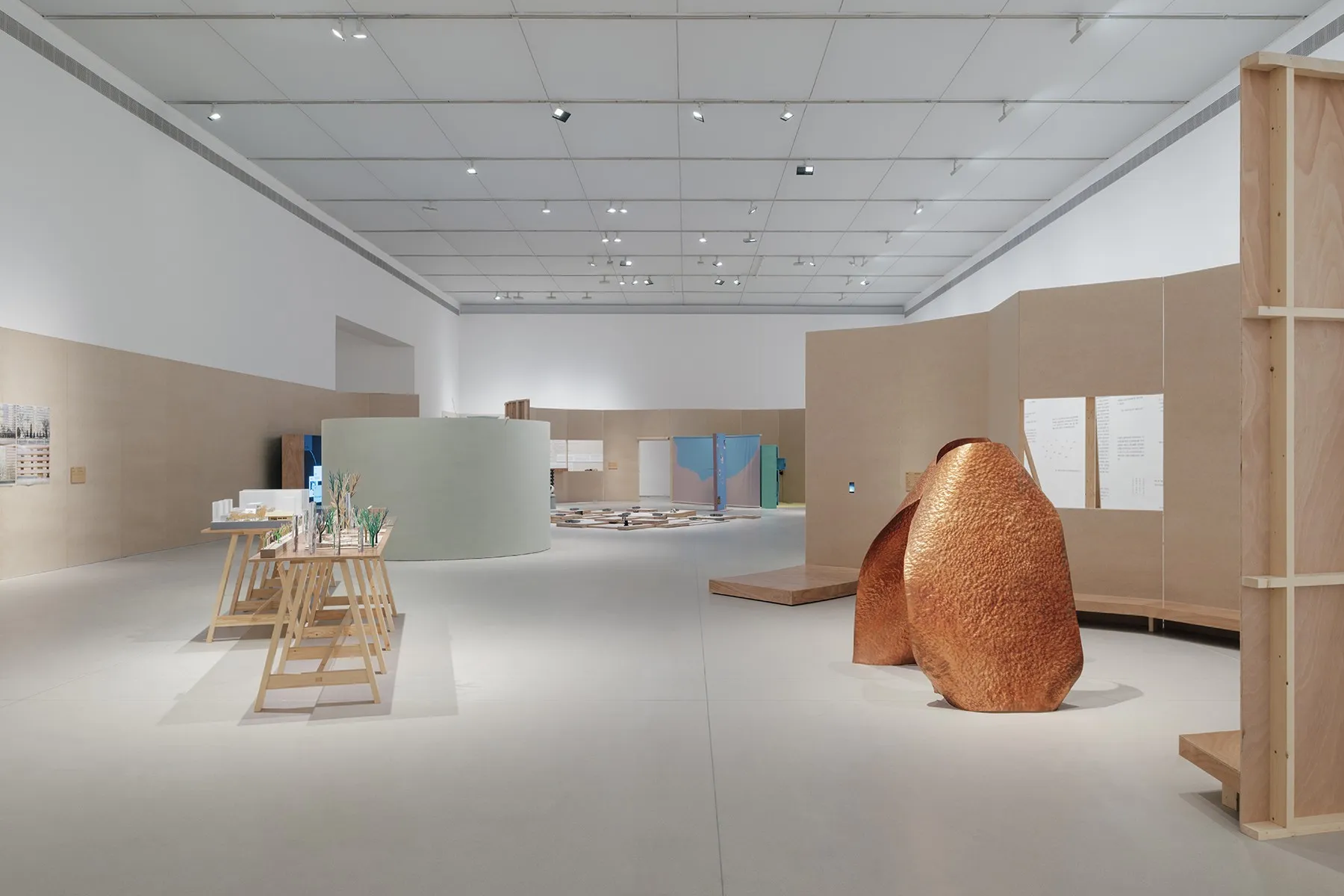
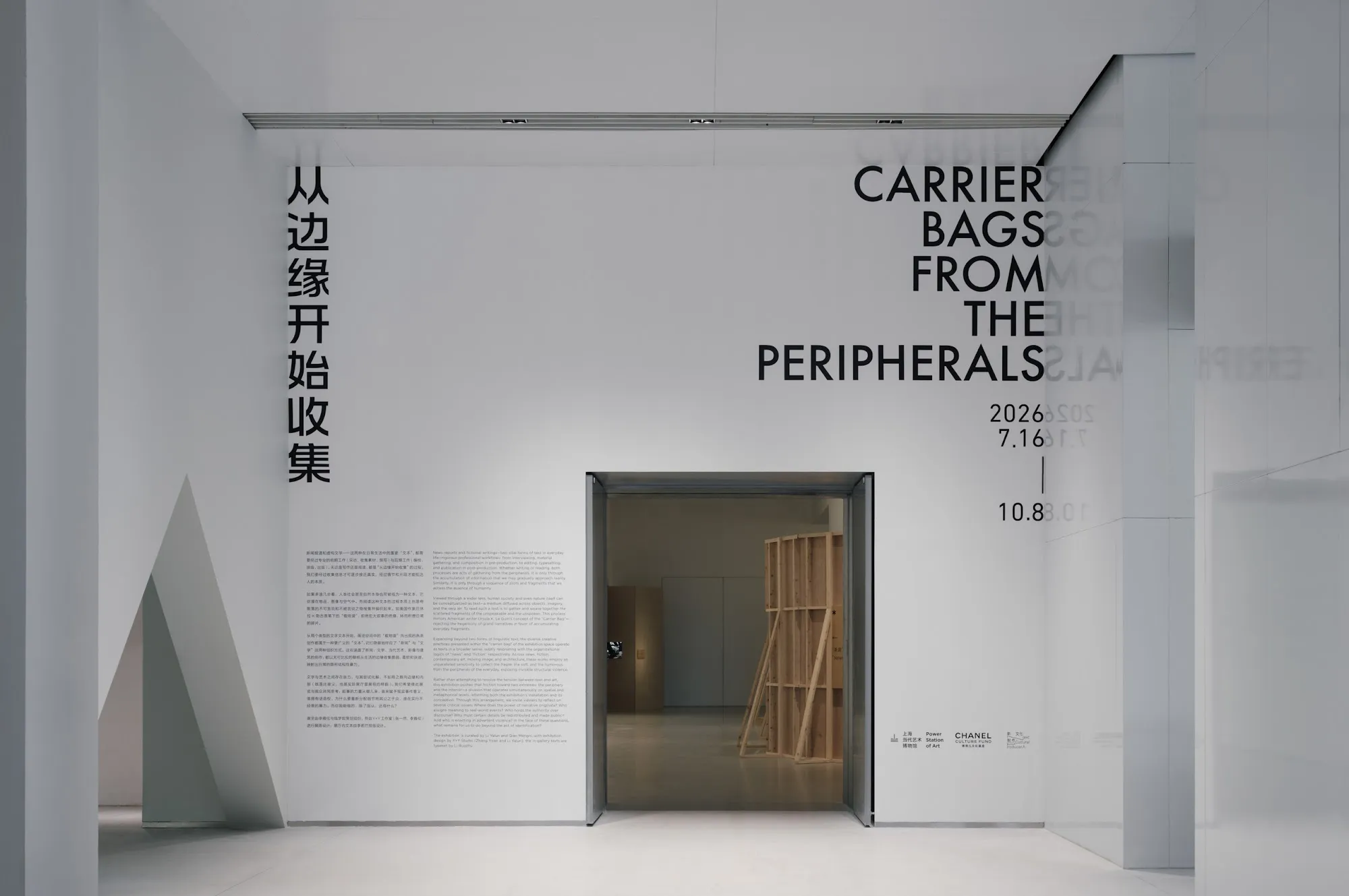
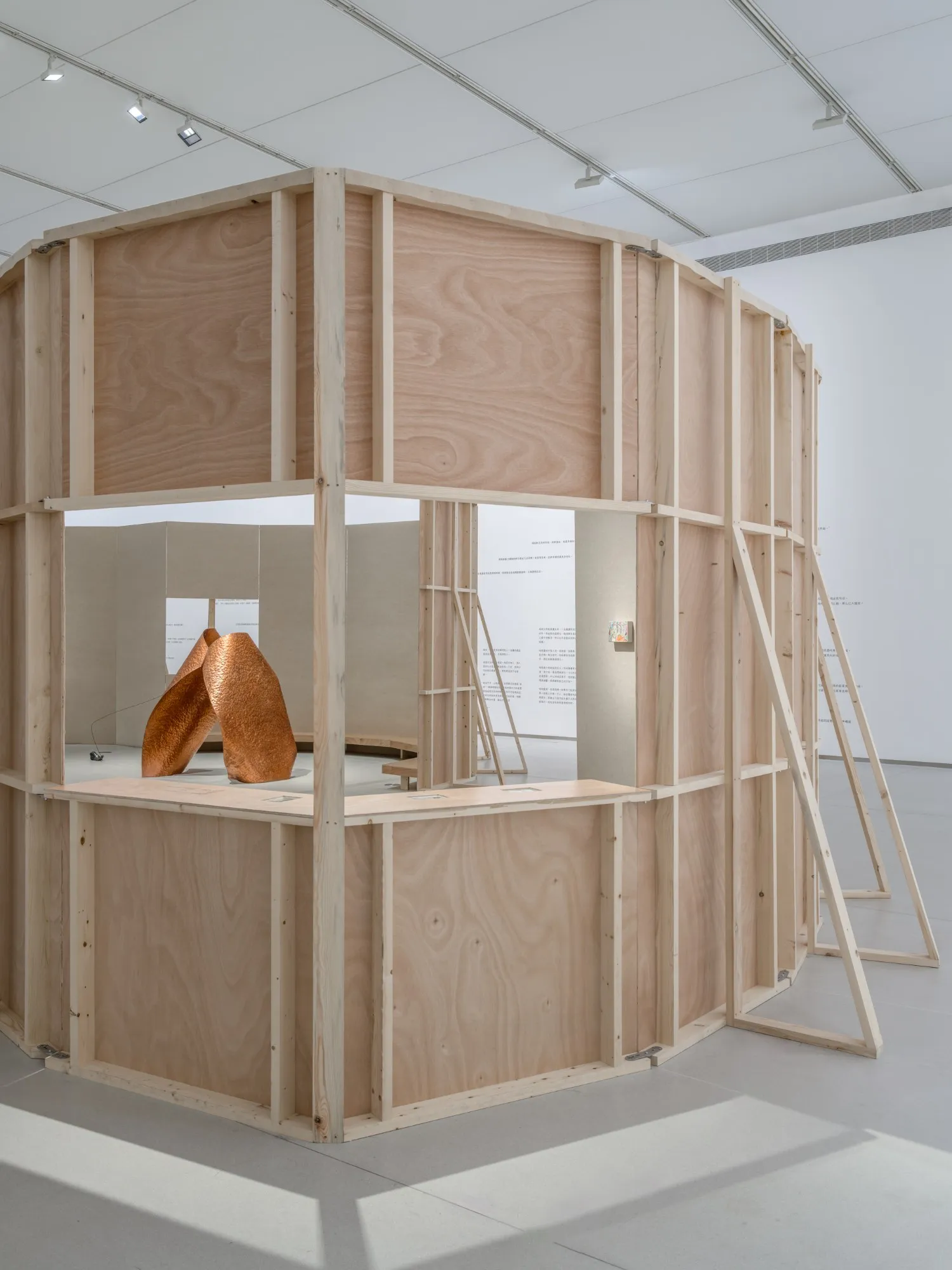
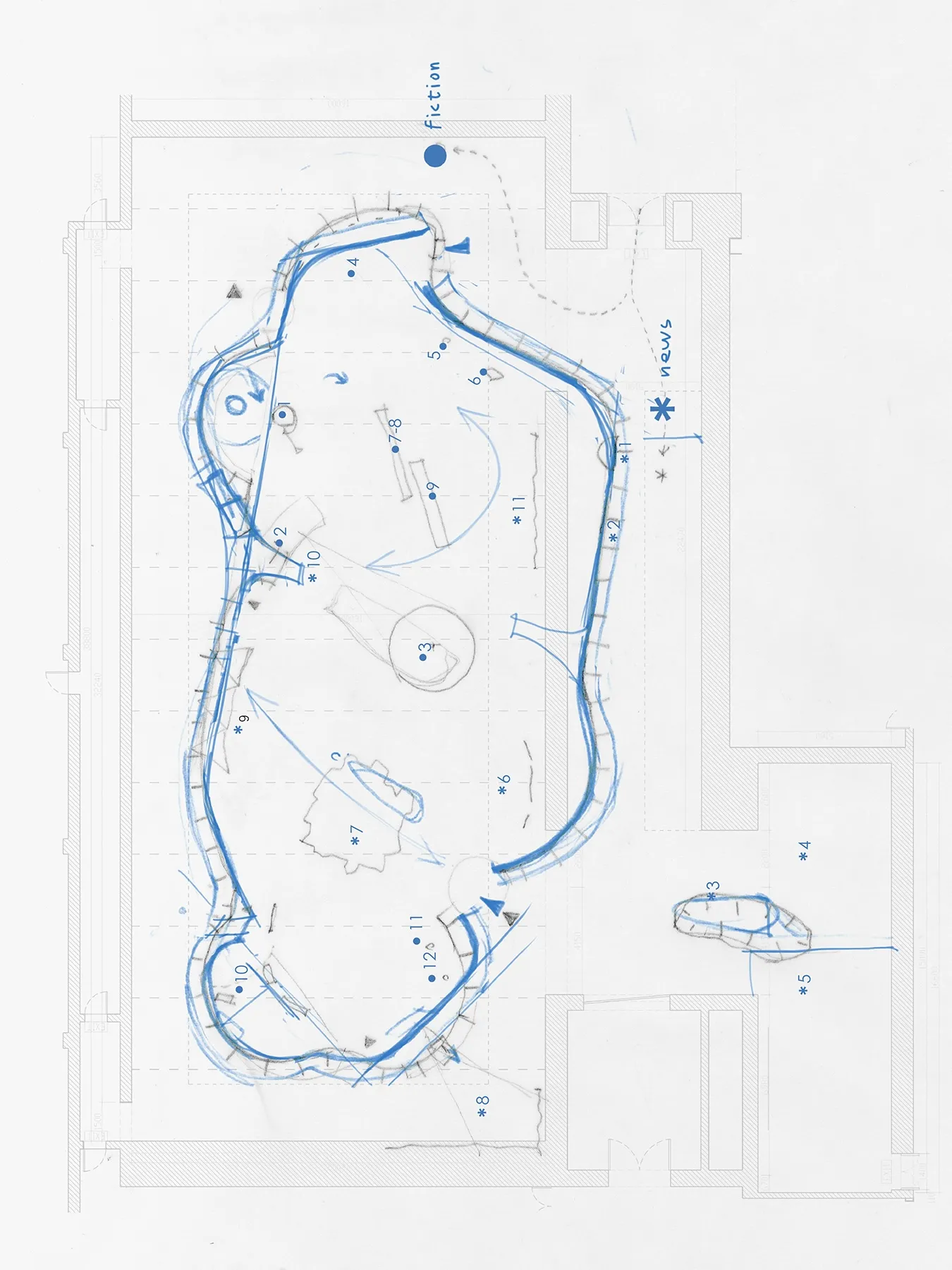
For an exhibition on text and art, the Chinese design team turned the idea of a carrier bag into a room you can walk into. The curators started from the carrier bag theory of fiction, which sets aside the single heroic line of a story in favour of gathering small, everyday fragments. Continuous wooden panels unfold through the gallery into a curving “bag” that splits the floor into an inside and a periphery.
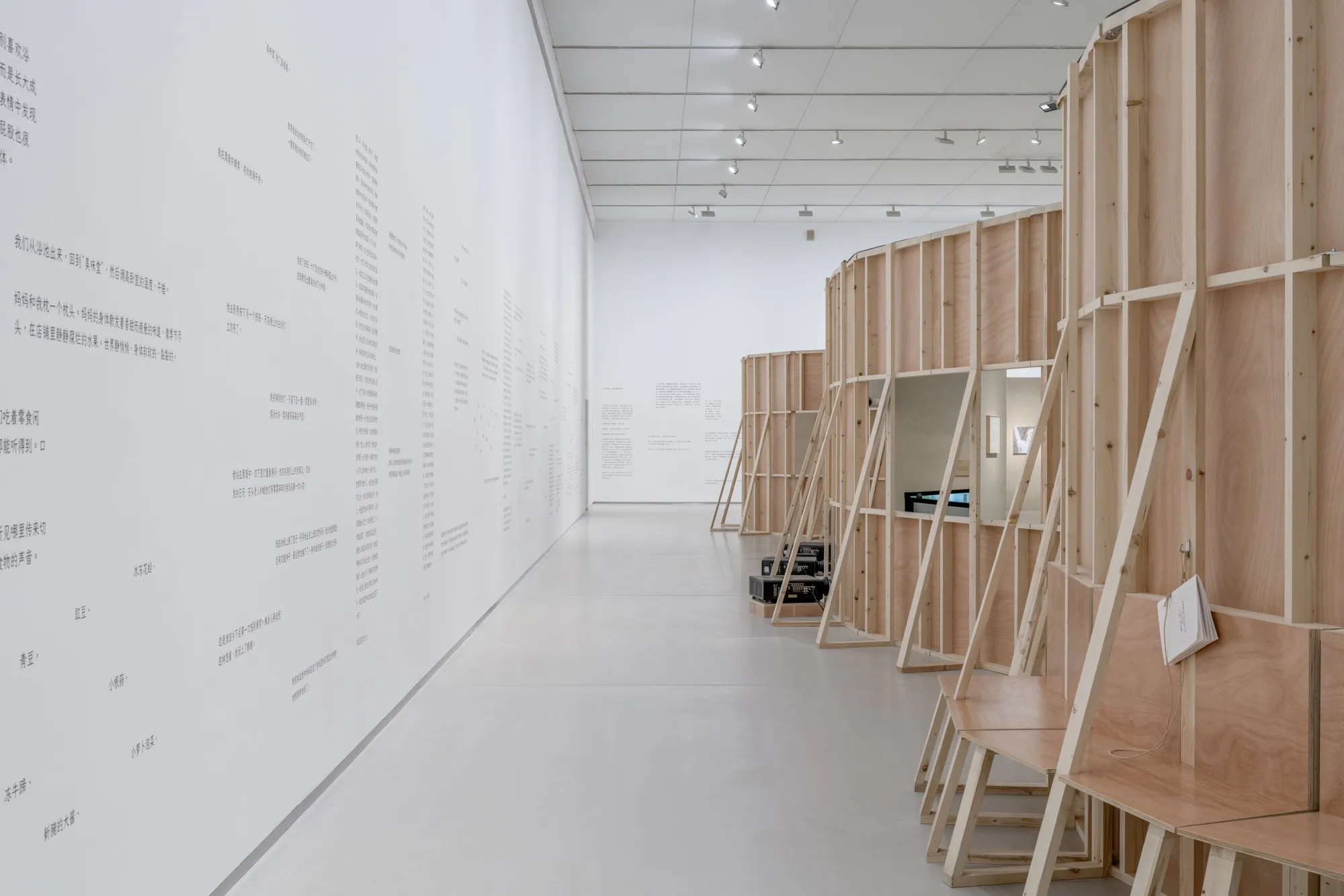
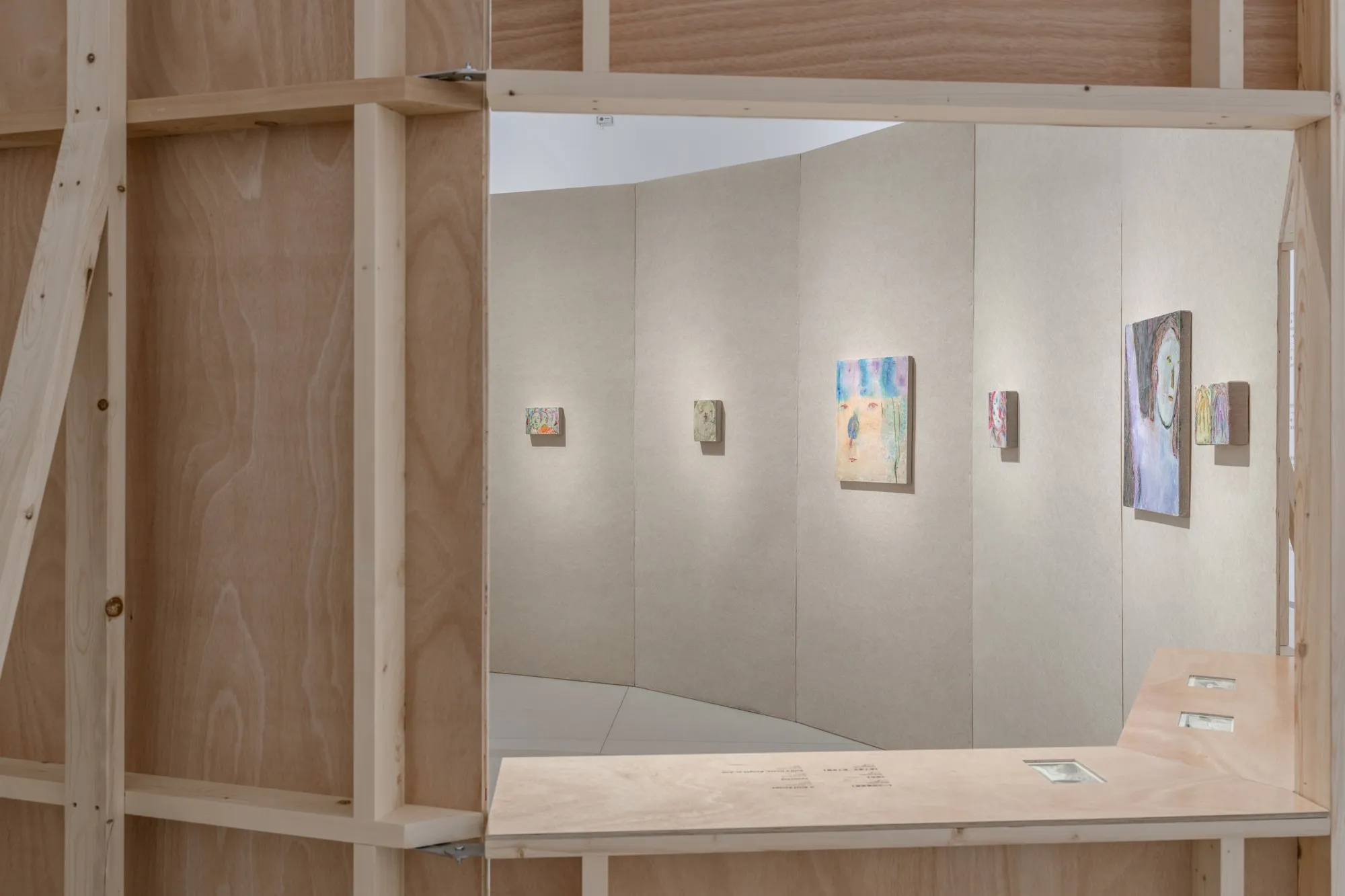
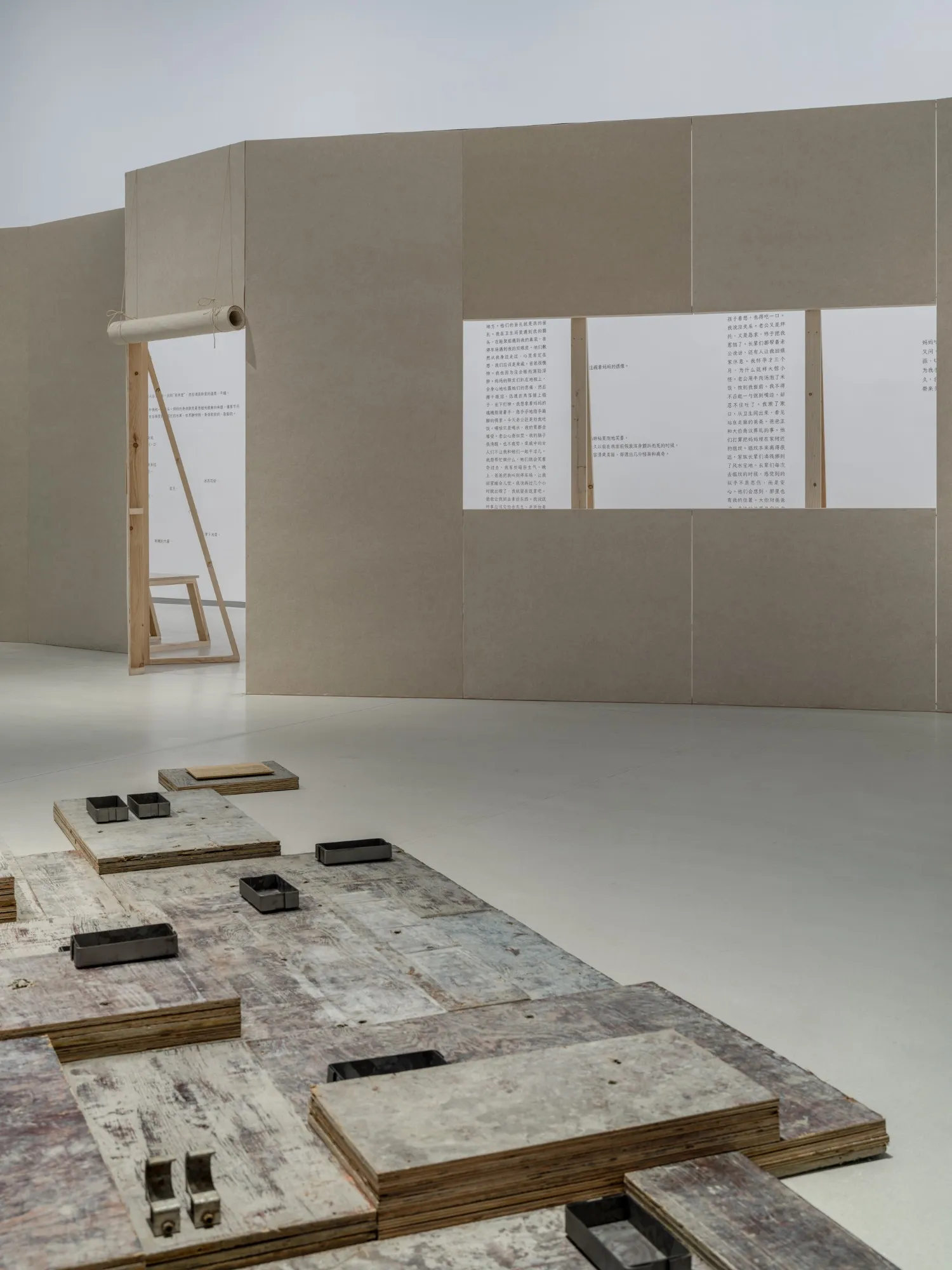
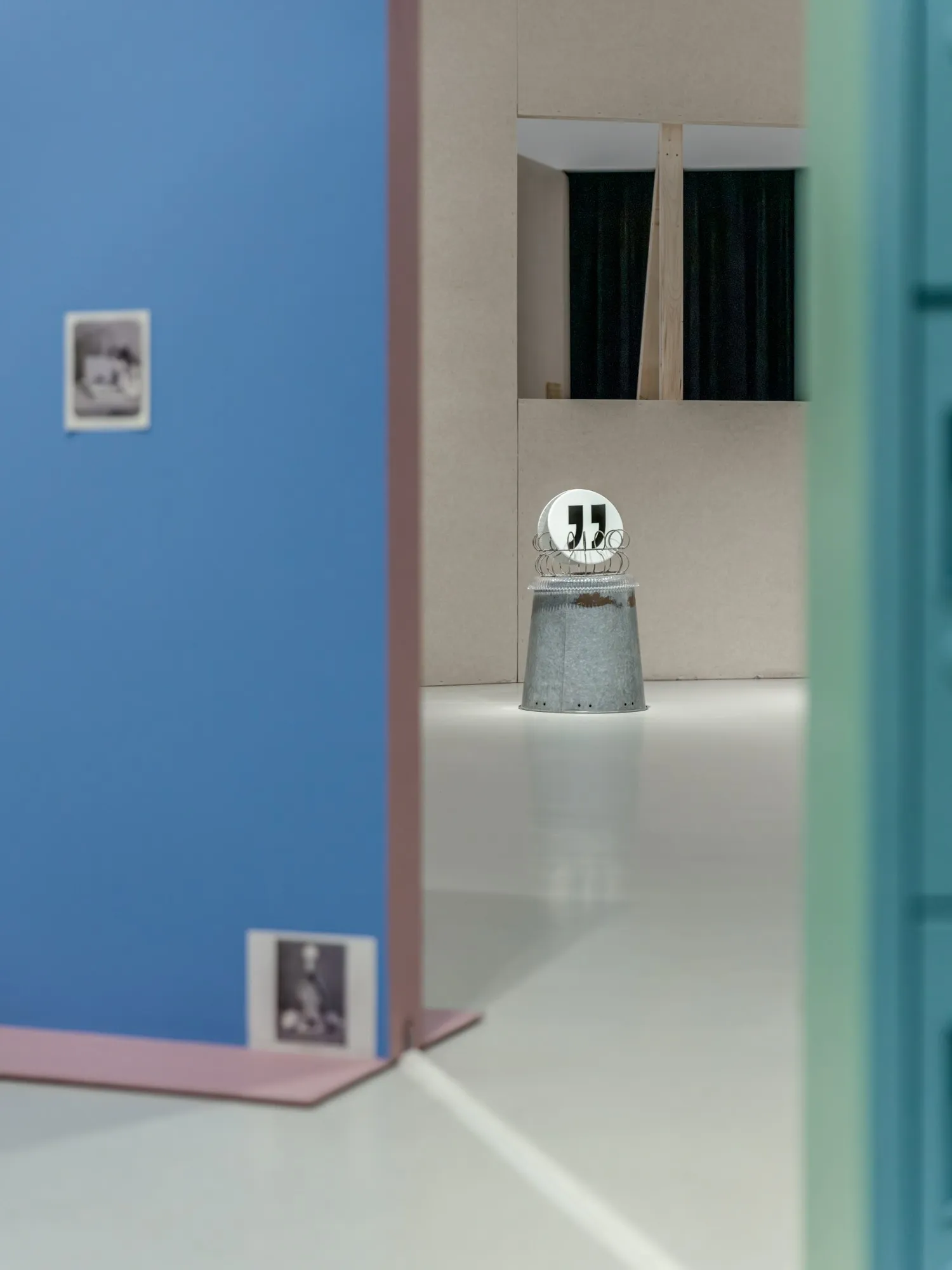
The visit begins outside the enclosure. Along the outer path, a long news report and a short story are printed directly on the gallery walls. Inside, thirty-one works from art, architecture and literature are held against panels lined with soft felt.
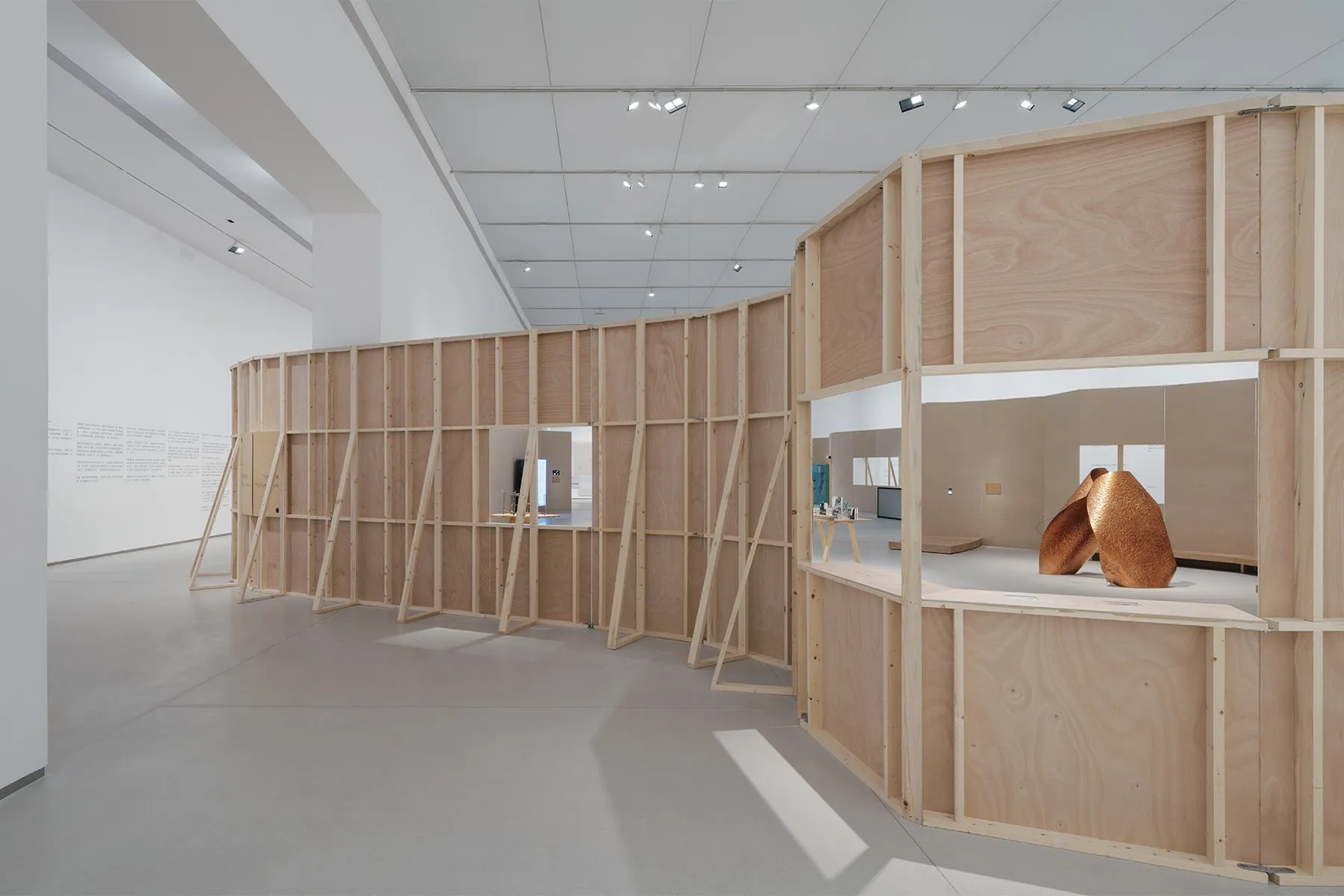
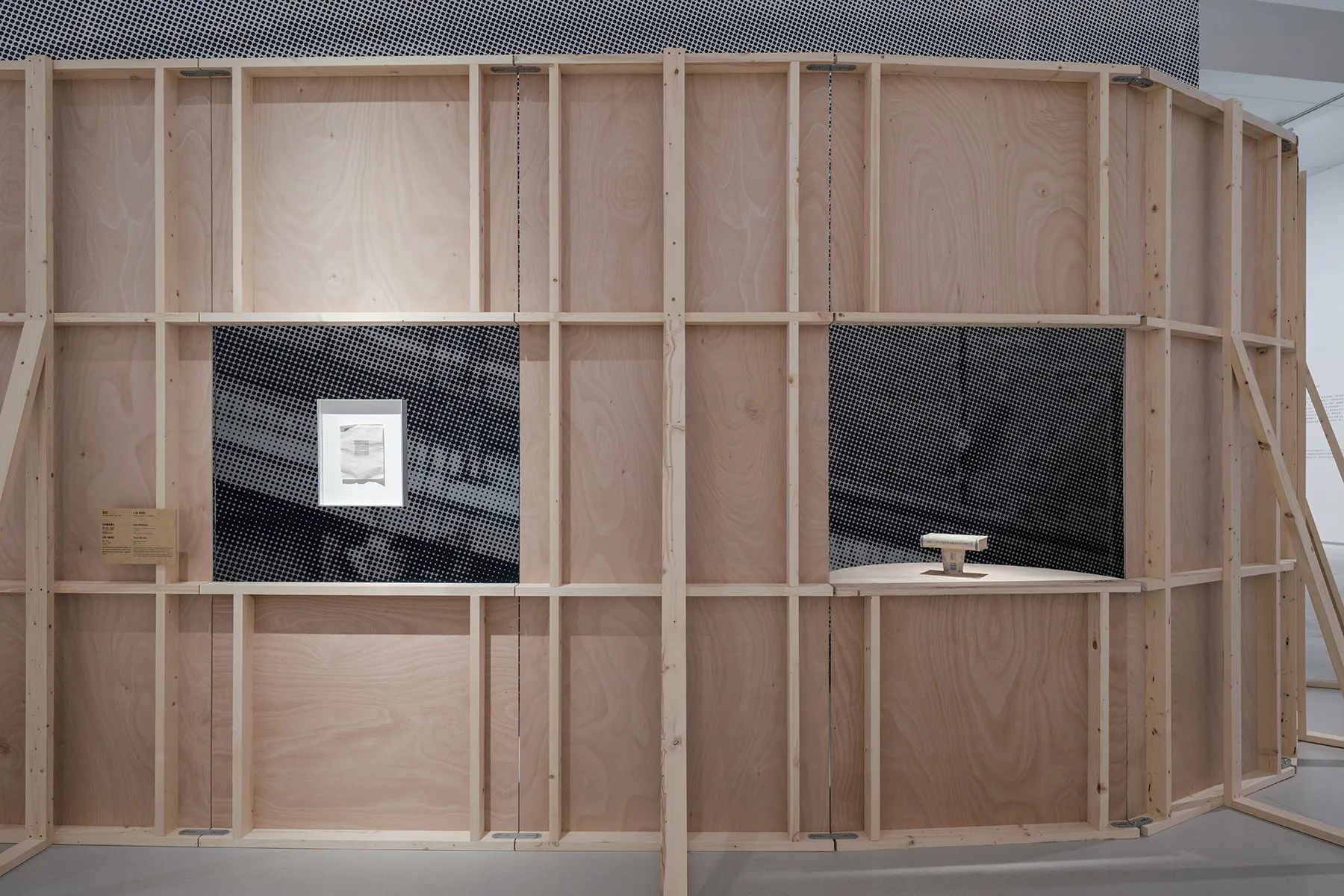
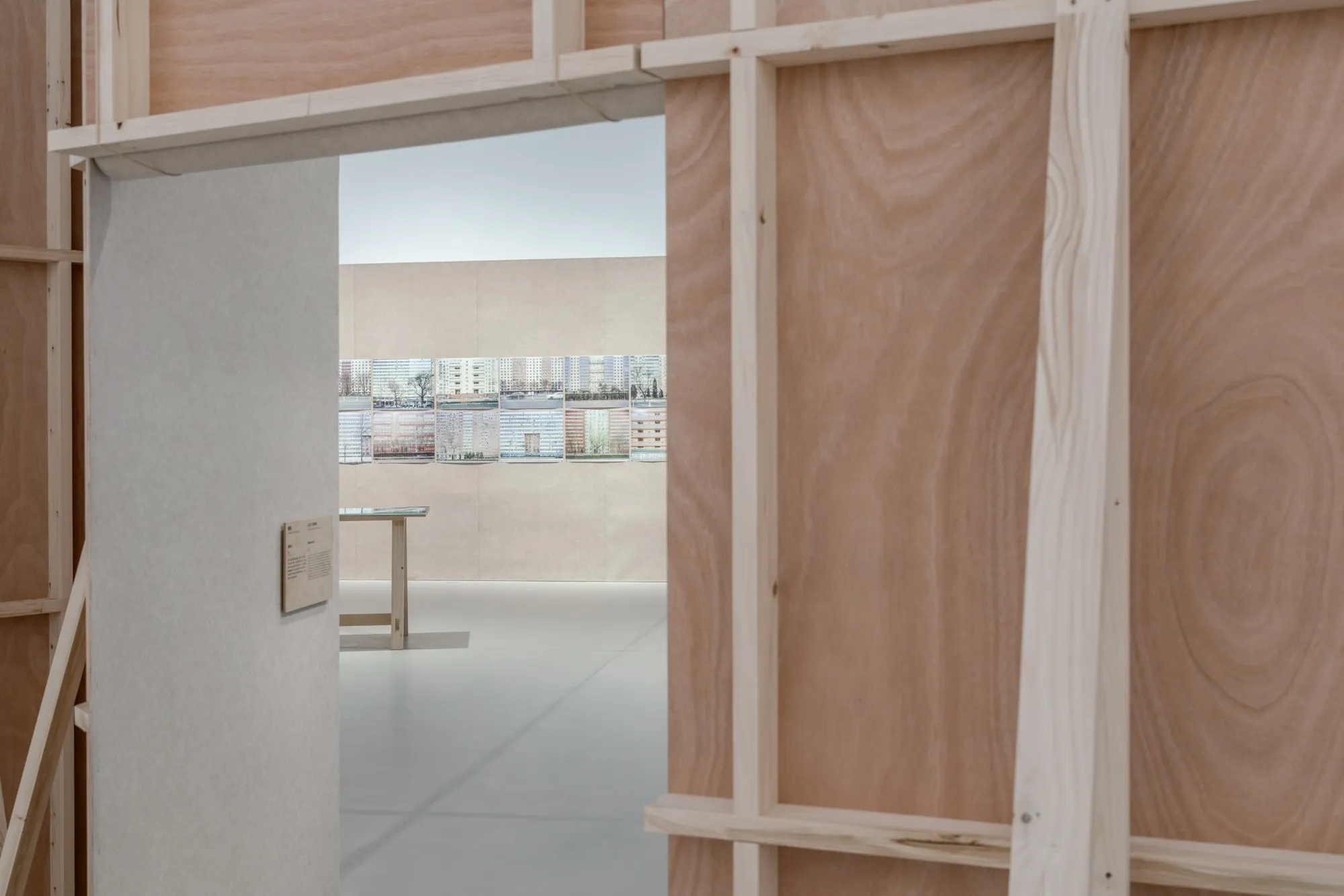
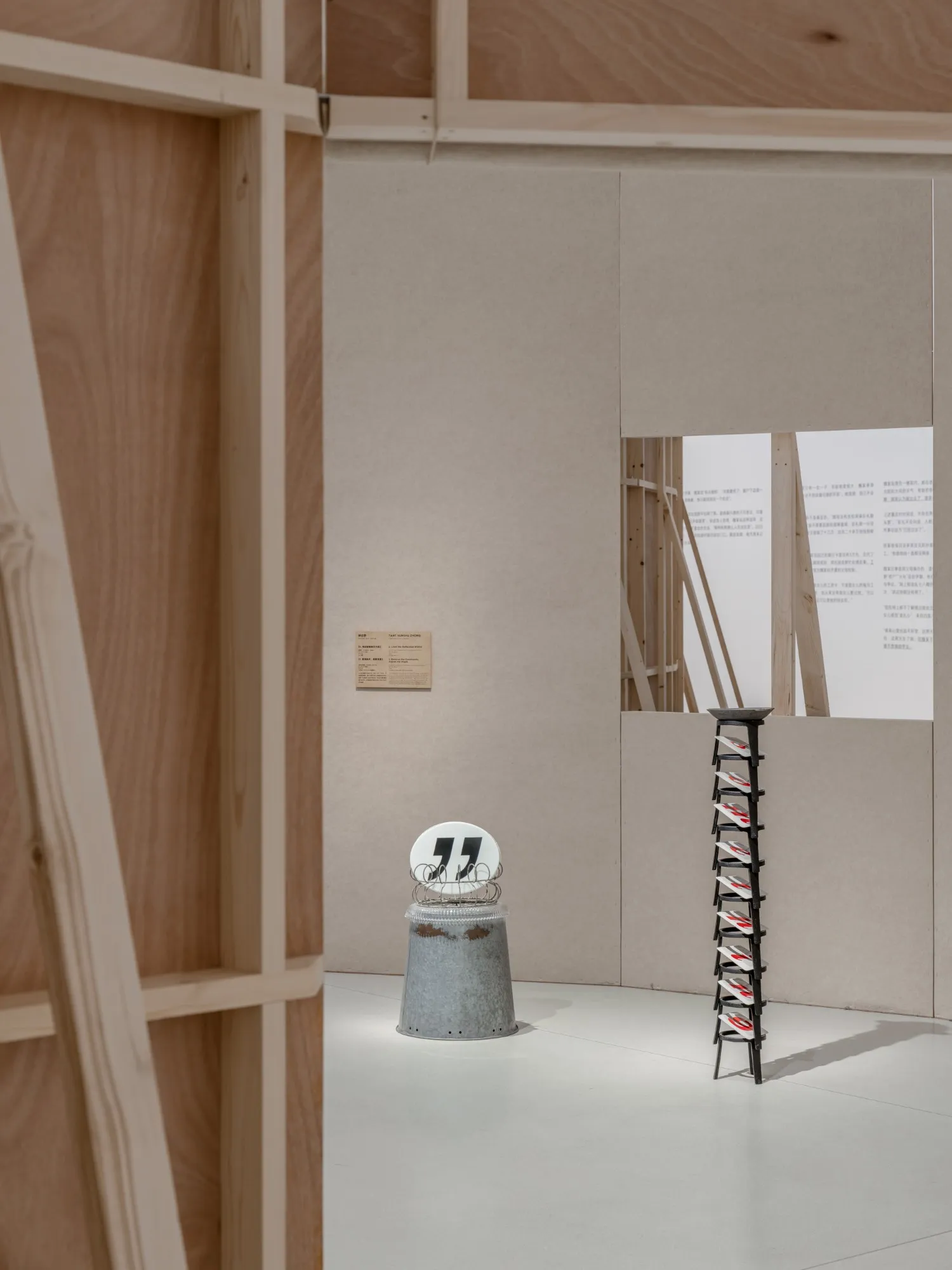
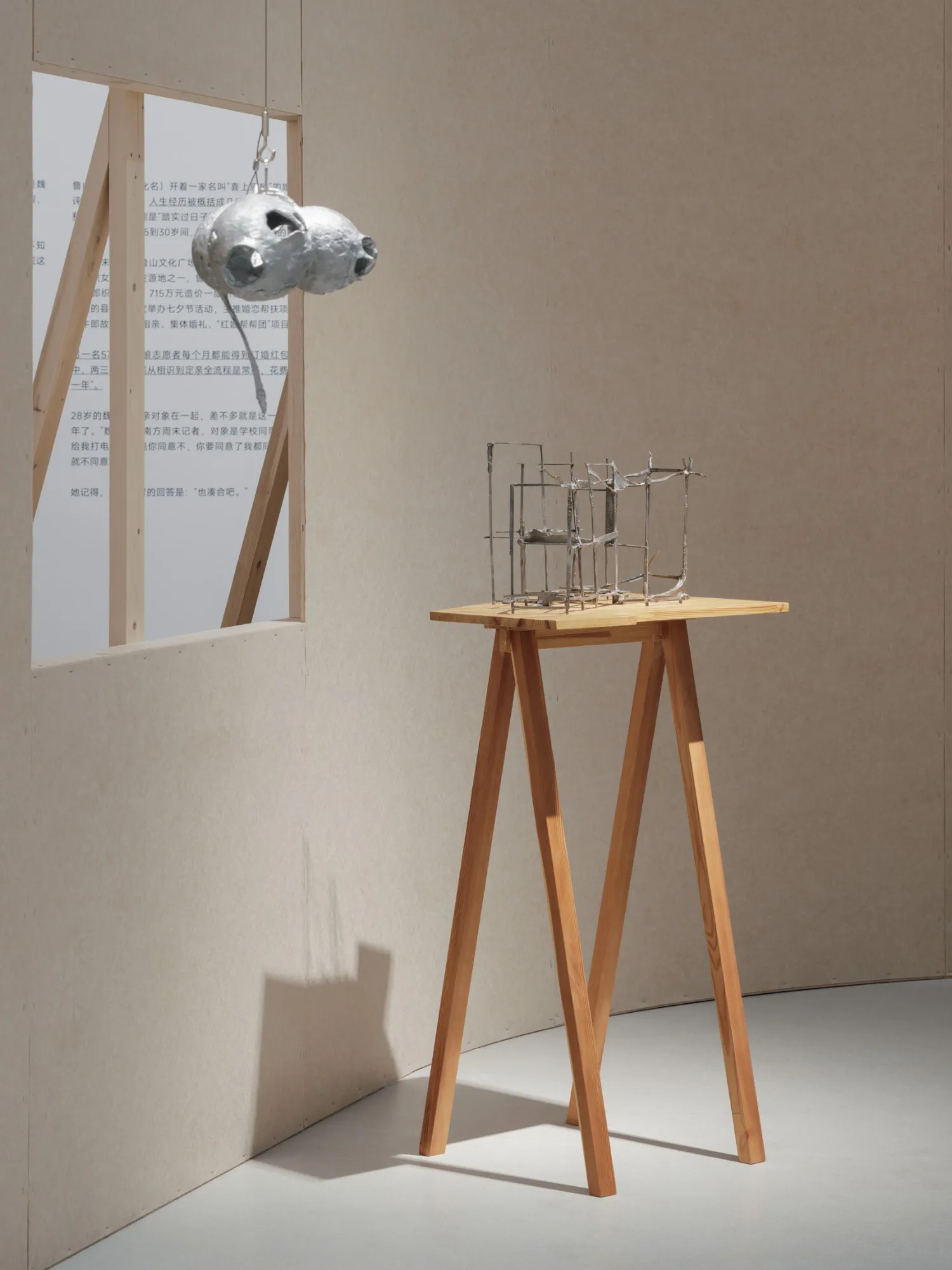
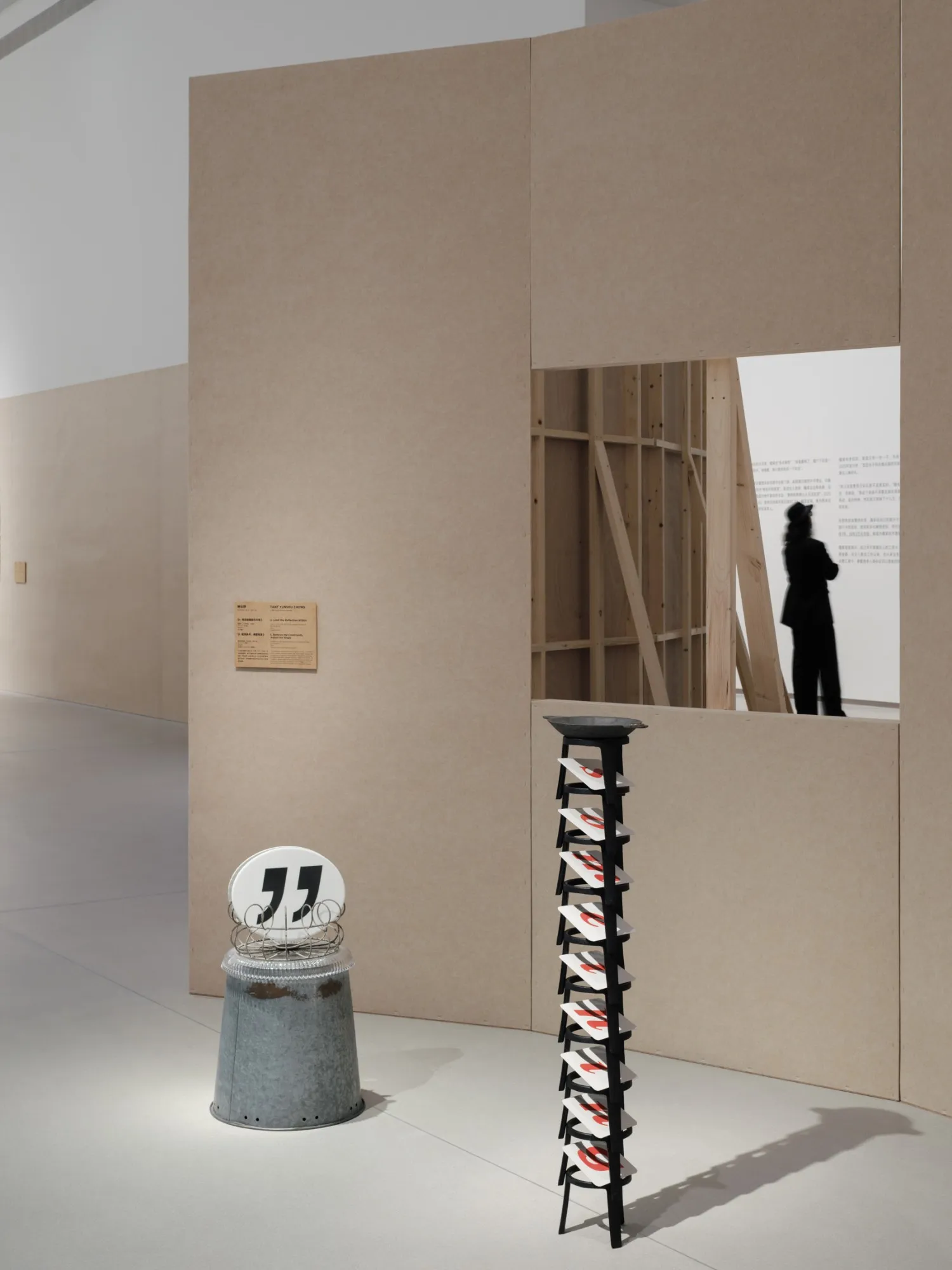
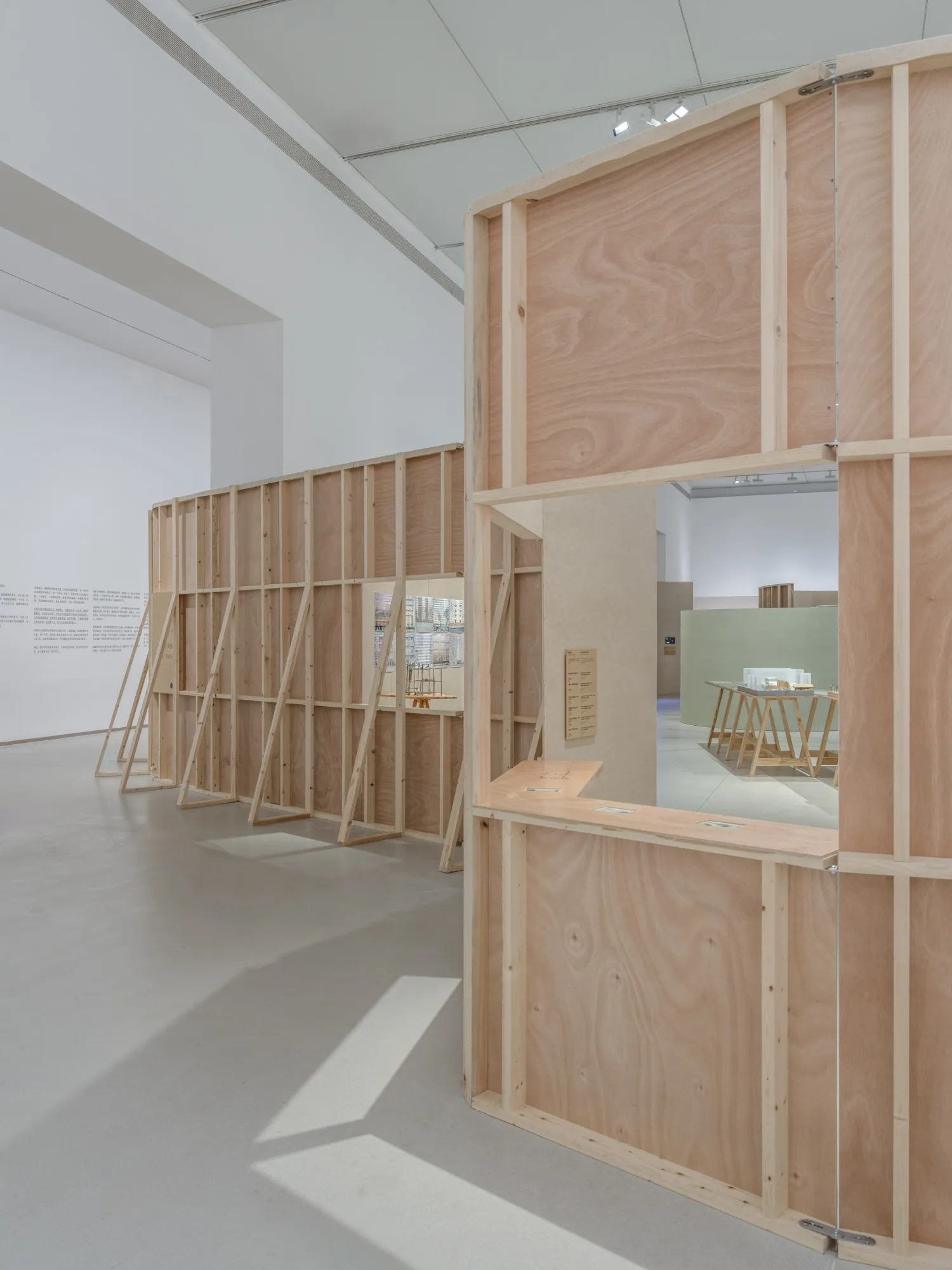
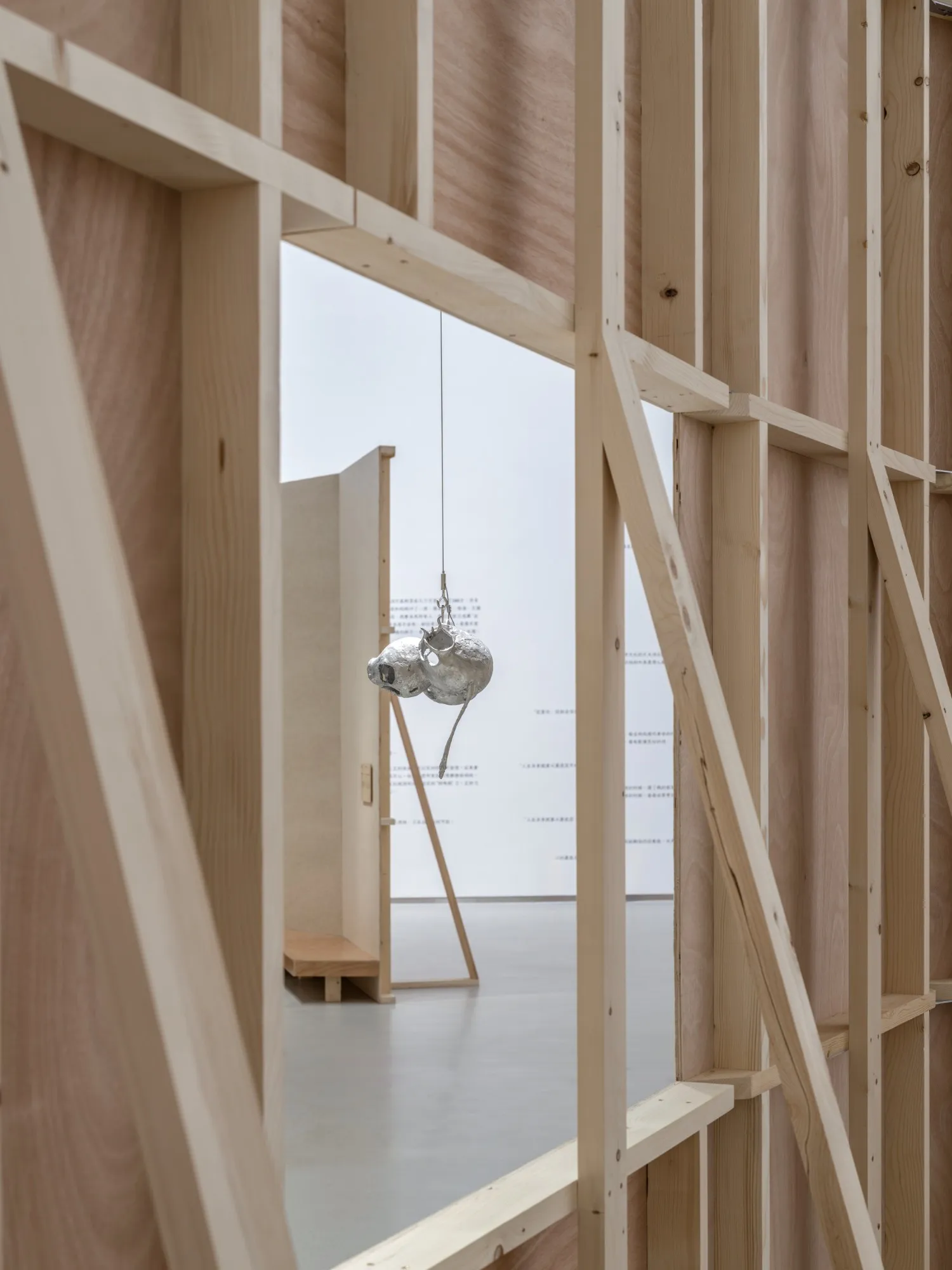
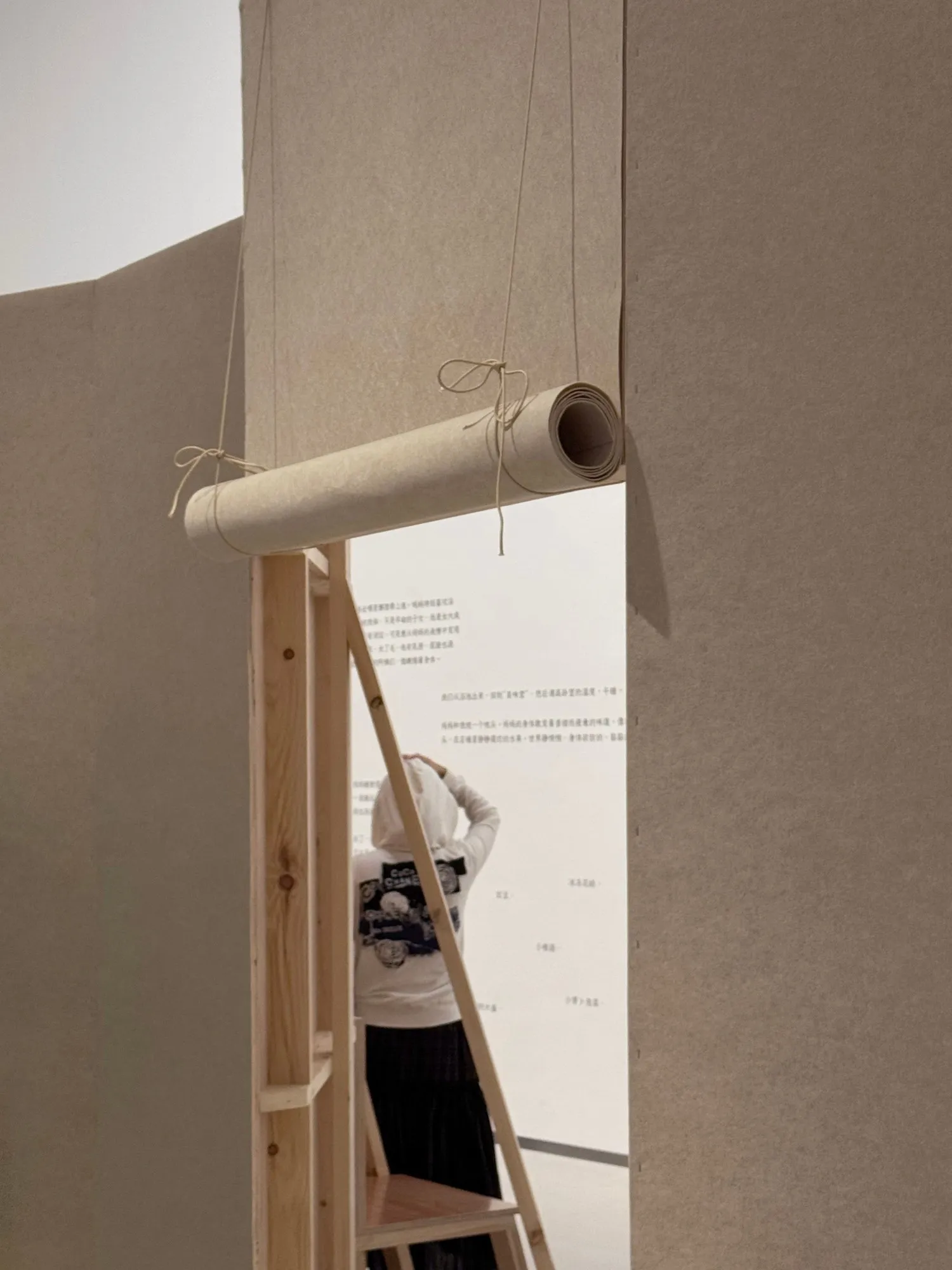
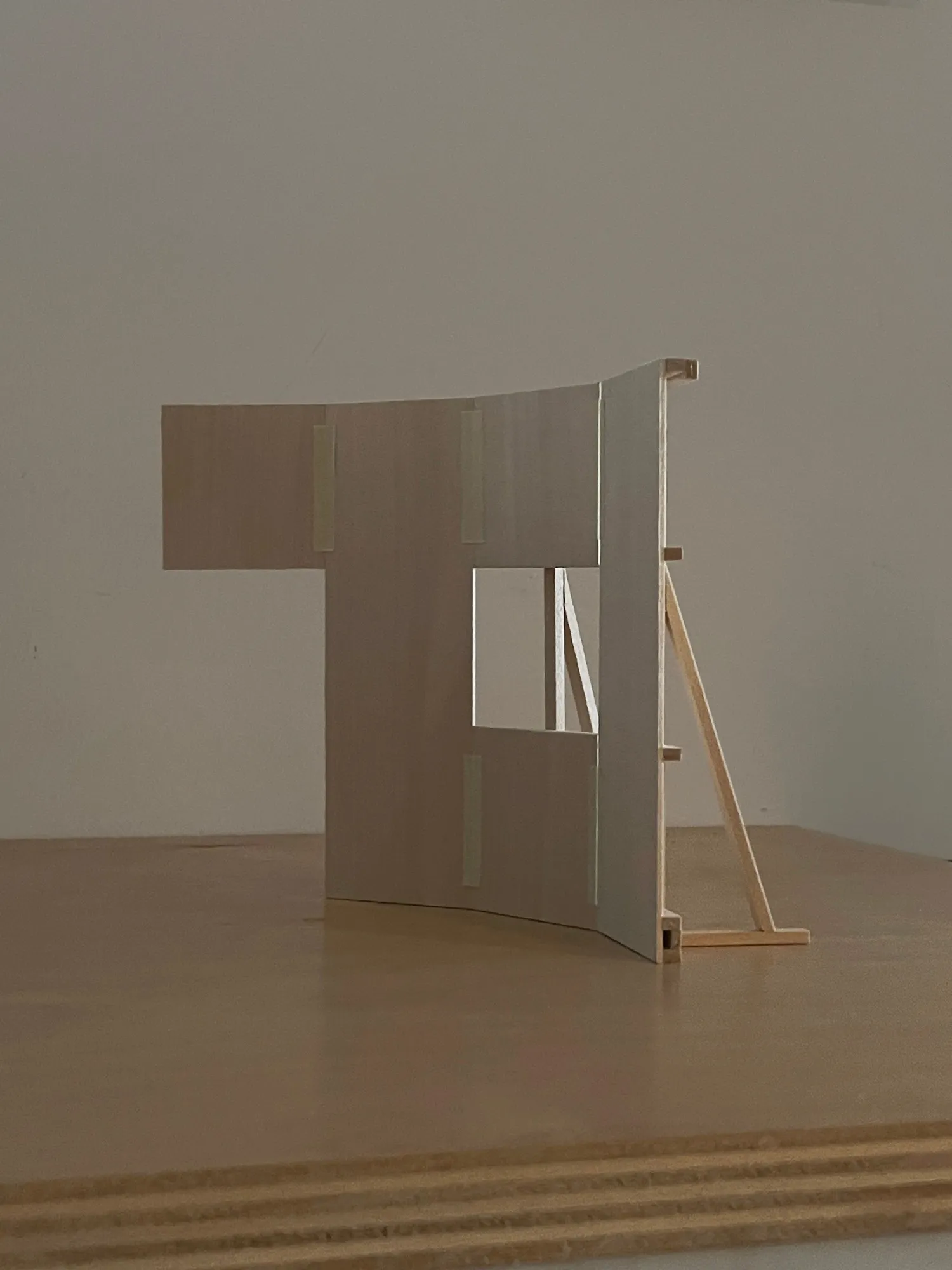
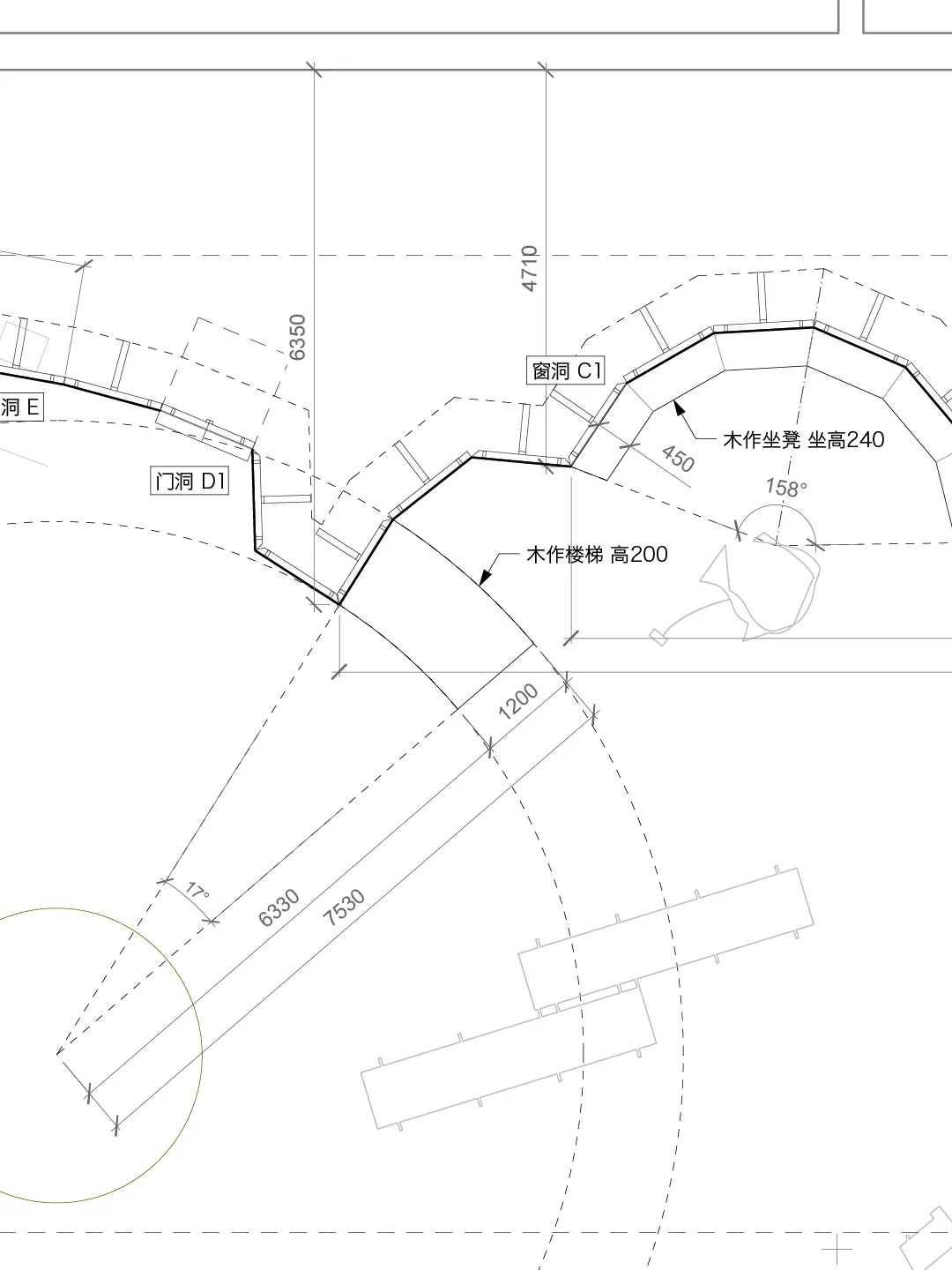
Window and door frames recur around the enclosure. They bring the wall down to the scale of a home and stitch the two sides together. Reading on the outside, visitors catch sight of the works and of other people; standing inside, they see framed passages of text and the moving shadows of readers. The openings act as stage sets and as picture frames at once, and their oat-coloured felt linings, softly lit, carry a memory of domestic rooms into the white gallery.
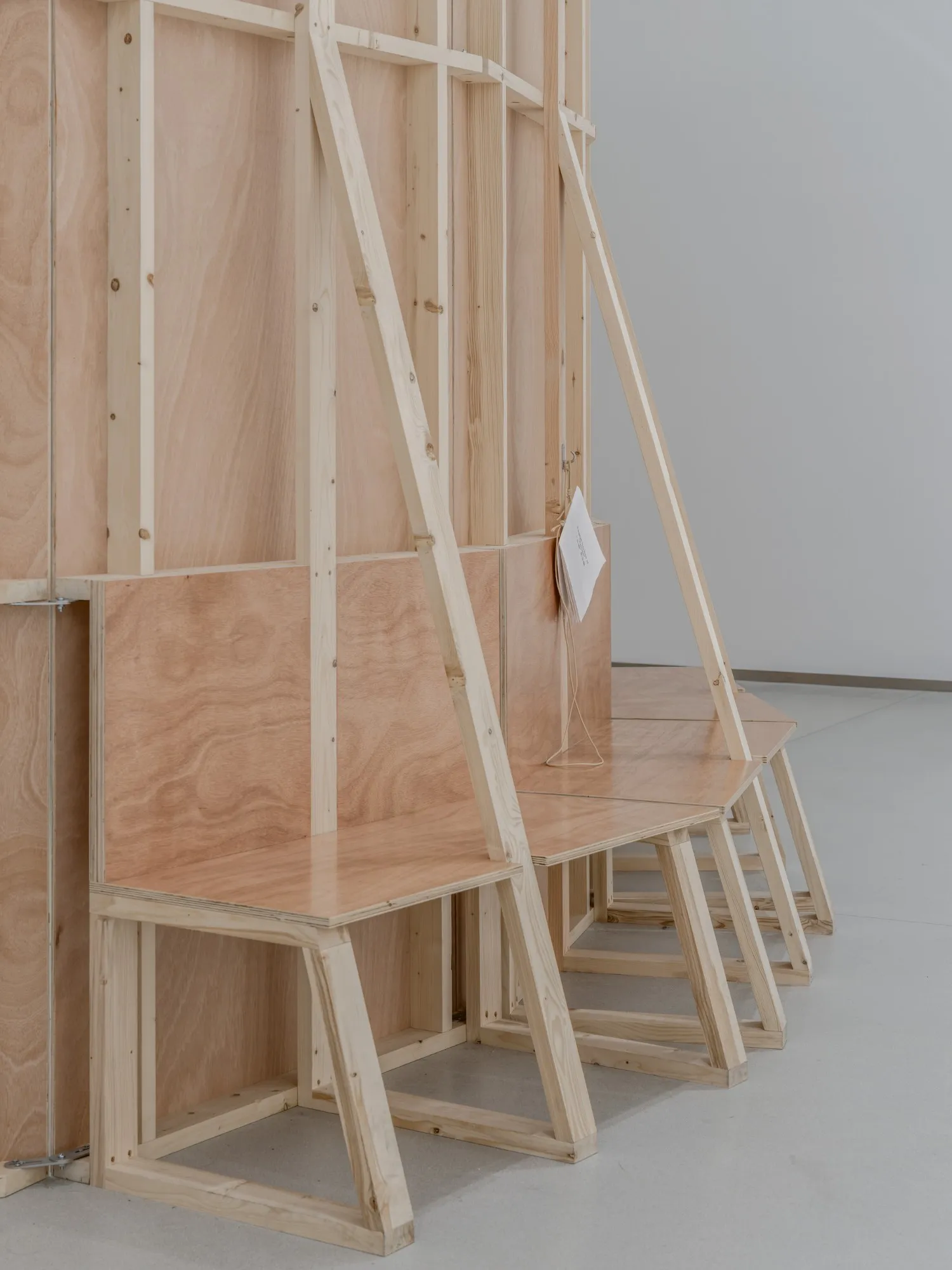
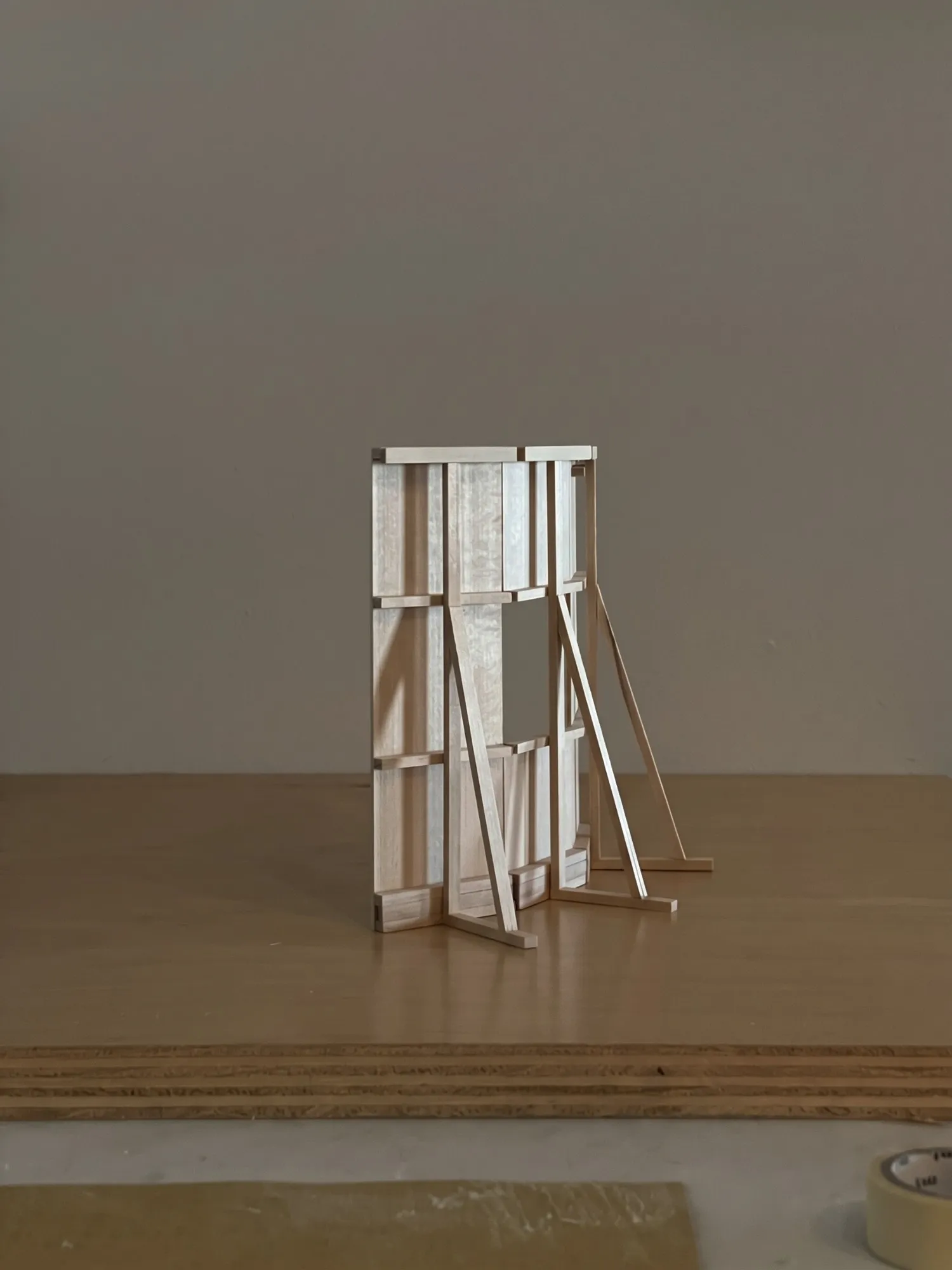
The construction speaks the same language of collecting. The modular panels are framed in pine and sheathed in birch plywood, in two types: one with a straight edge, the other chamfered at 45 degrees to take the convex and concave turns of the curve. Metal connector plates fixed to the framing work as forgiving hinges between neighbouring panels, so each angle could be set on site while the wall stays stable. Standard 1200 mm panels add up to a single undulating line.
On the inside, staples hold the felt to the plywood in a steady rhythm, like the lining of a temporary shelter. At the doorways, thin sheets of felt are rolled up and tied with straps, leaving the trace of whoever looks after the room. The panels are made to be taken down and used again.
Project Information
- Design studio
- Y+Y Studio
- Time
- 2026
- Type
- Cultural, Installation
- Primary materials
- Engineered wood, Fabric, Natural timber, Steel
Comments