Thanh Dao Pagoda
Known locally as Chua Dau, and also as the King’s or the Lady’s pagoda, Thanh Dao Pagoda is also called Phap Vu Tu. Many records place its founding in the time of Shi Xie, in the first centuries AD, tied to the legend of Man Nuong and the Four Dharma Buddhas.
Because of these origins, the pagoda drew the attention of successive royal courts and was restored many times. A stele dated 1639, under Le Than Tong, records that it was built under the Ly and further repaired and enlarged under the Tran, Le and Mac. These campaigns left many precious objects in its buildings.
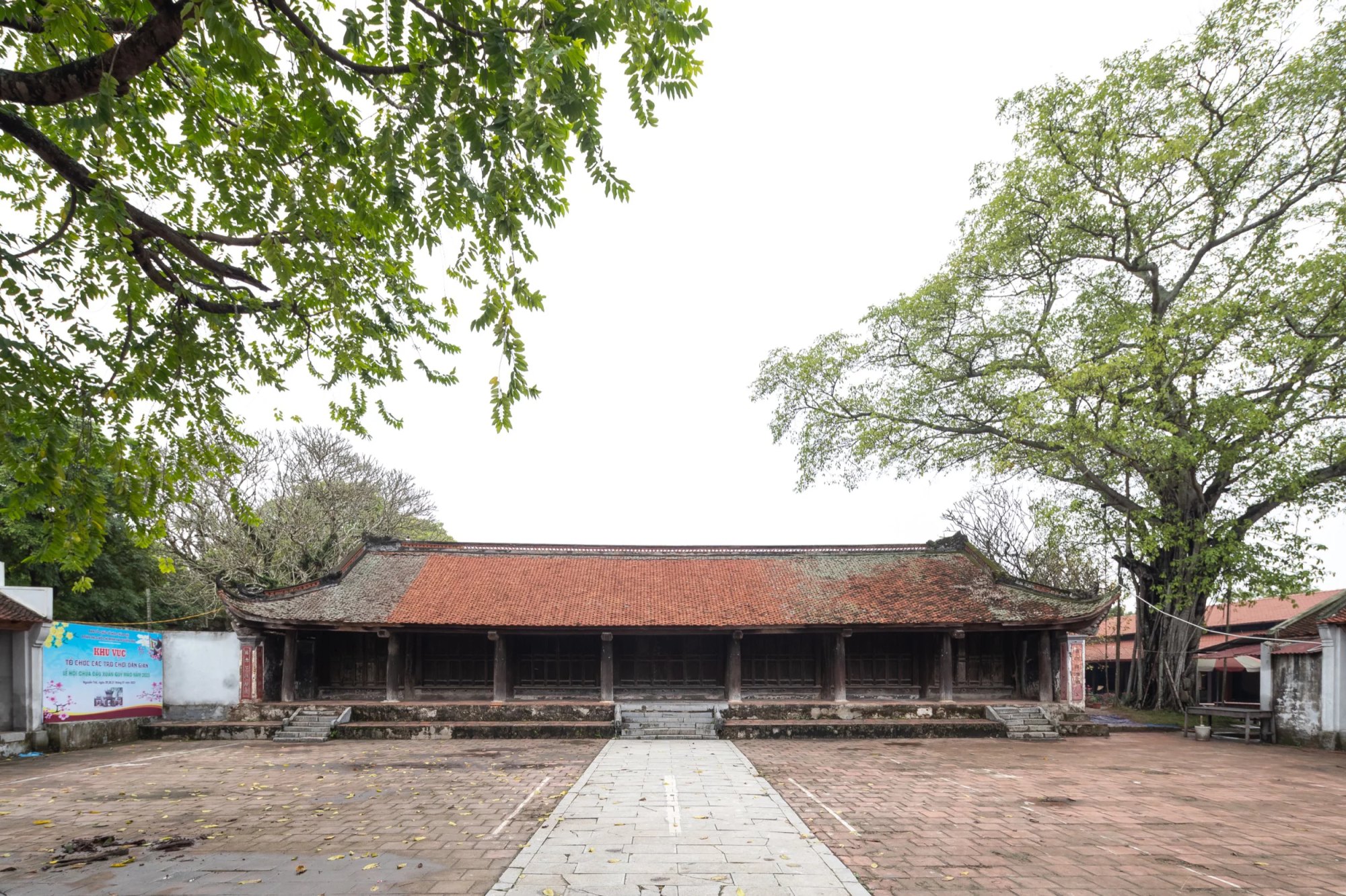
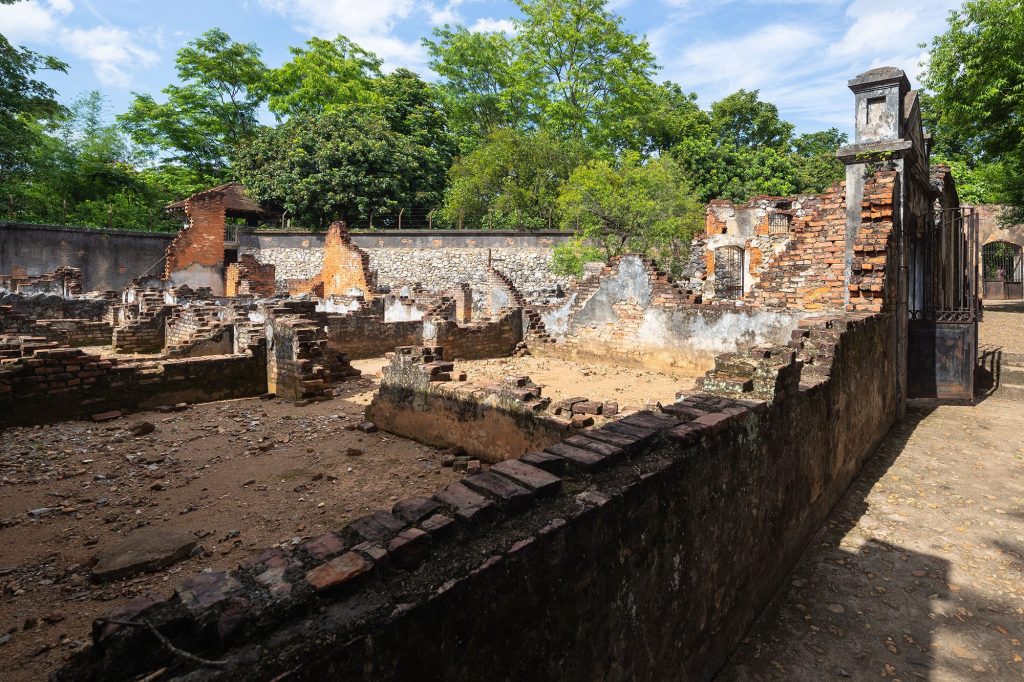
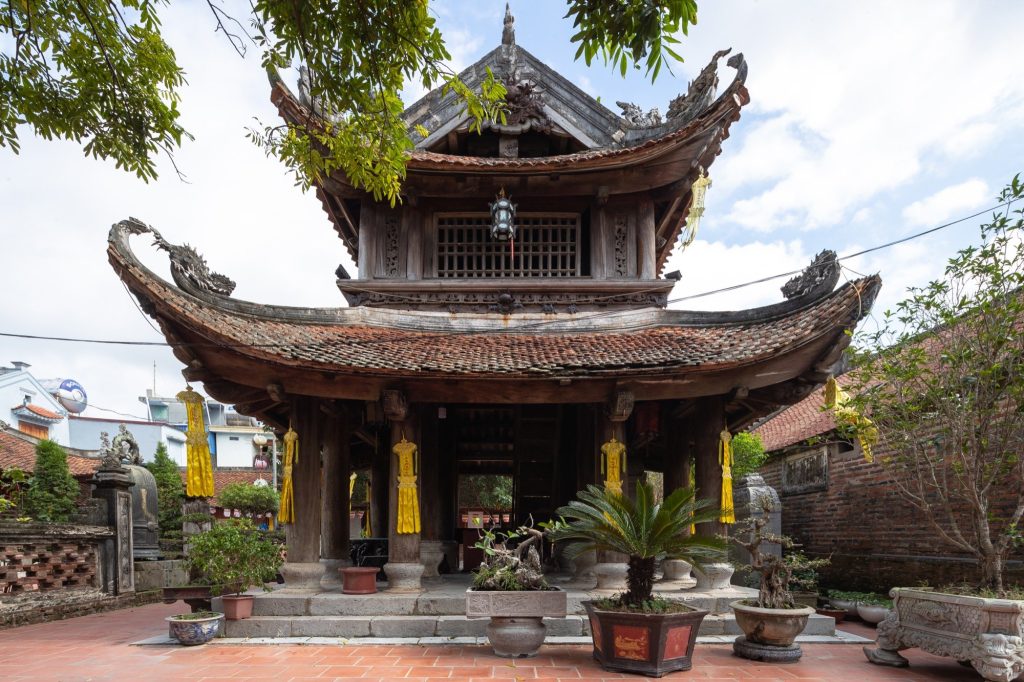
The pagoda is large. Its halls, Buddha in front and saints behind, form the shape of the character cong, enclosed by other buildings in the shape of the character quoc. Behind the gate and a two-storey bell tower about eight metres tall, with eight roof slopes, lies a rectangular brick courtyard of a few hundred square metres, shaded at one corner by an old banyan tree. Beyond it is the front hall, flanked by parallel galleries holding statues of the arhats and five stone stelae.
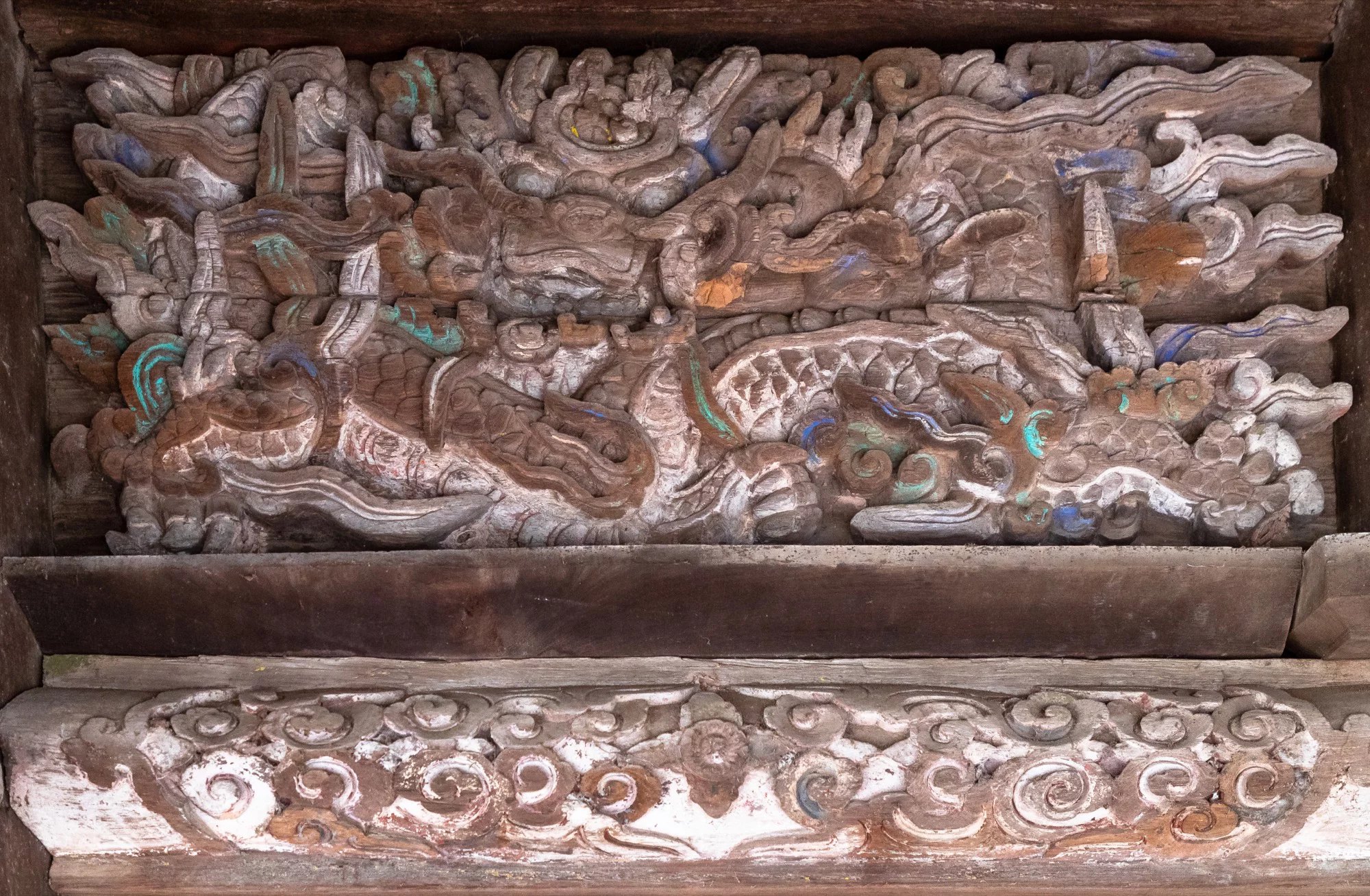
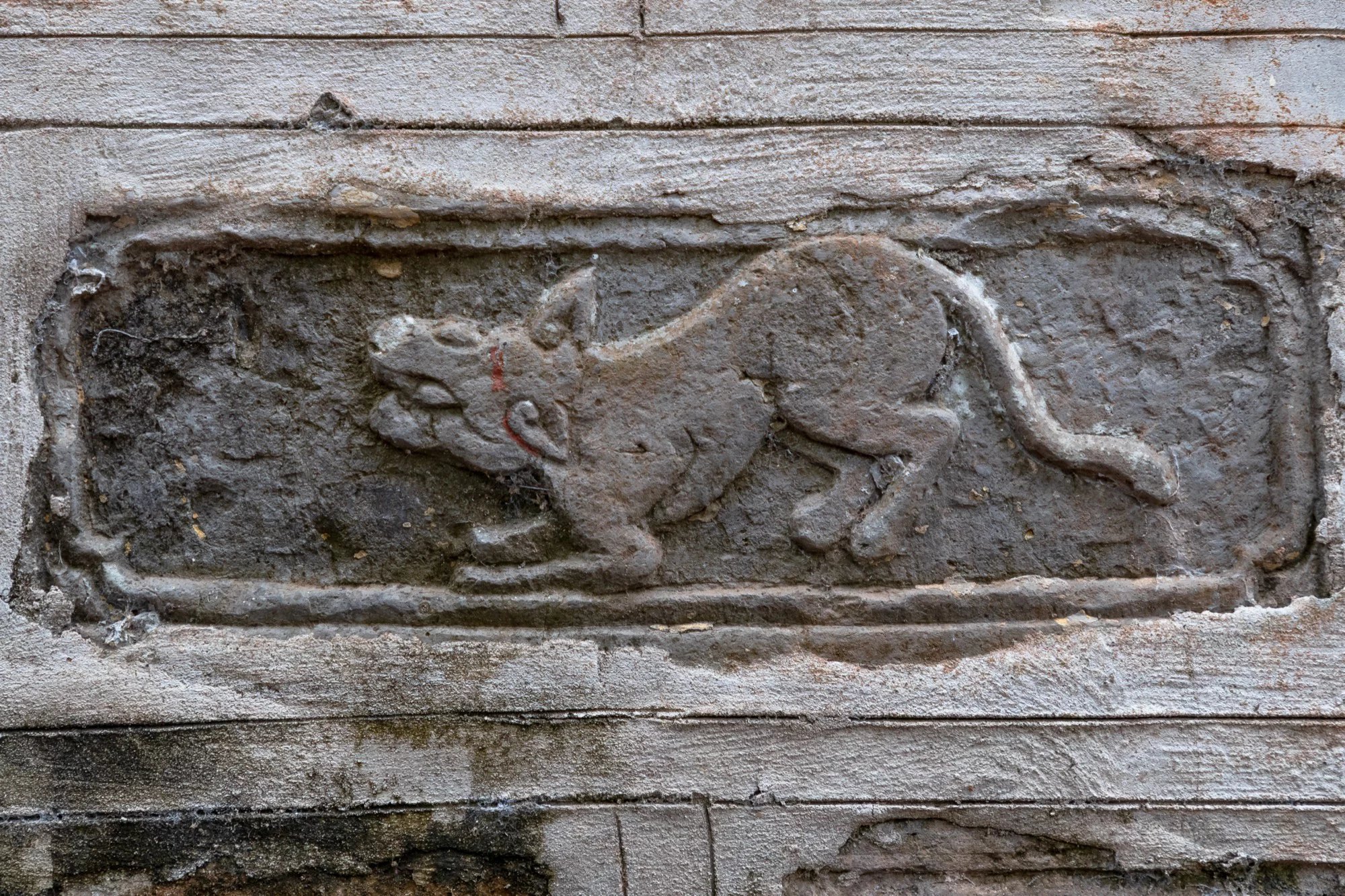
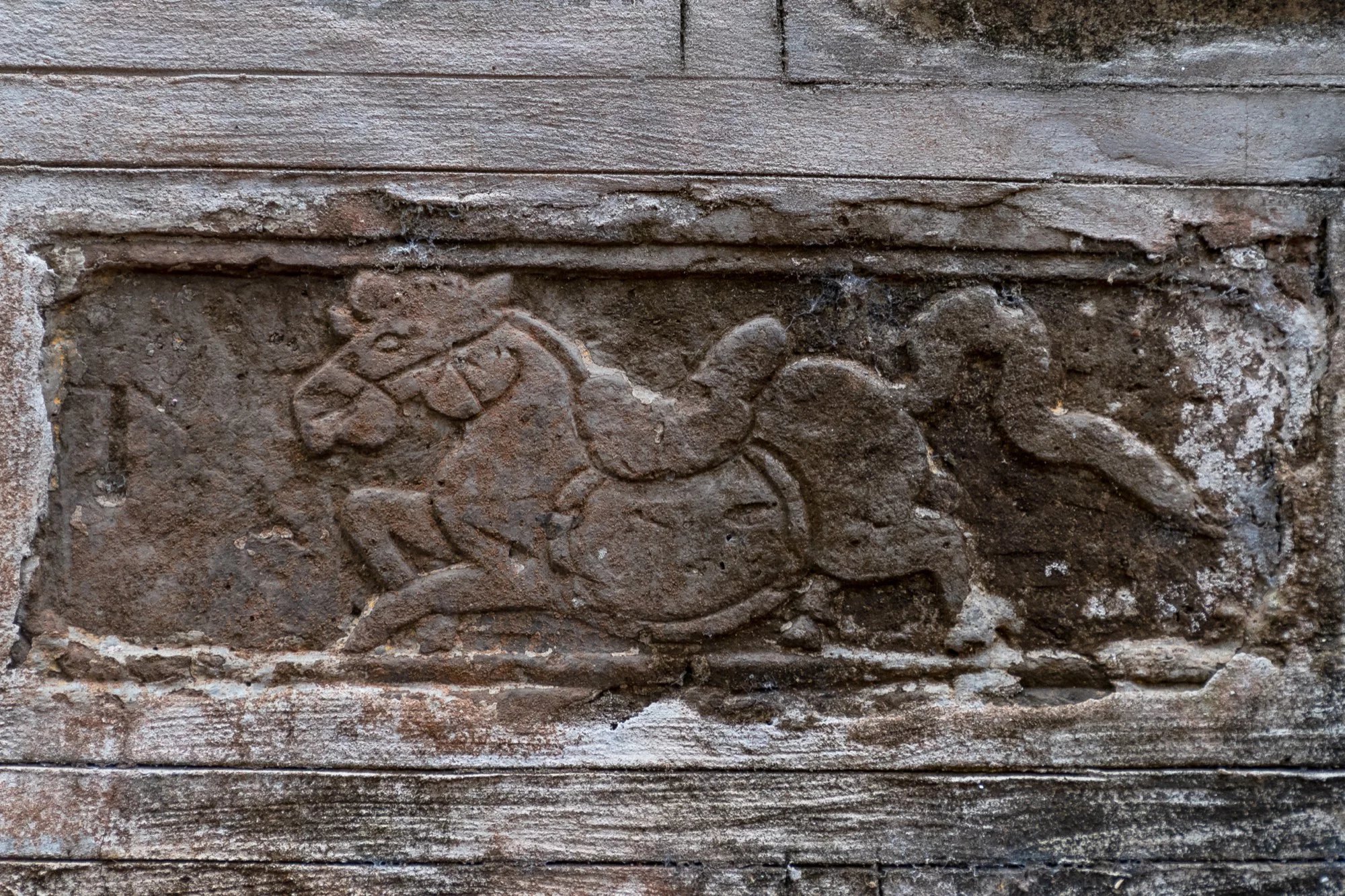
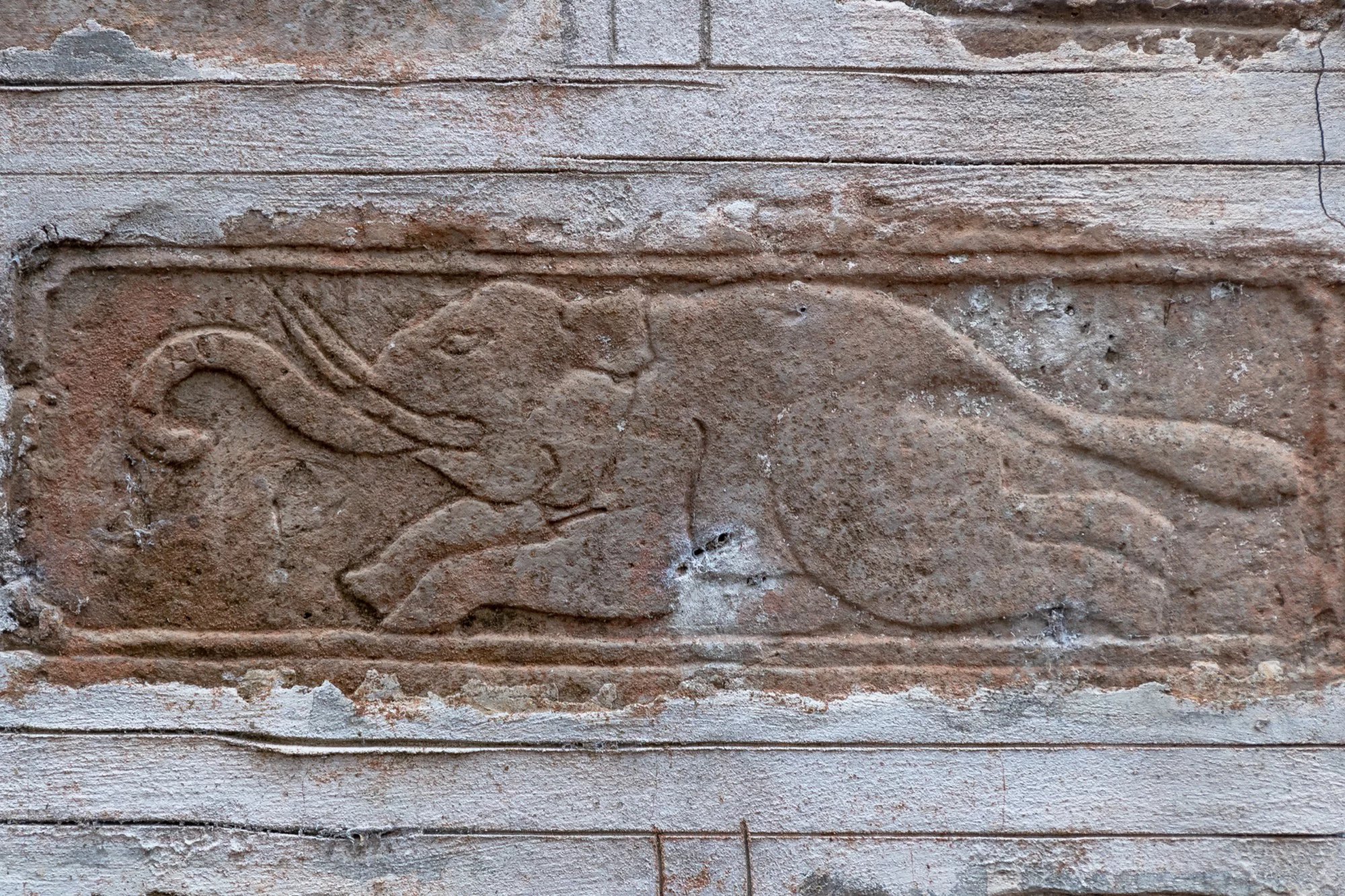
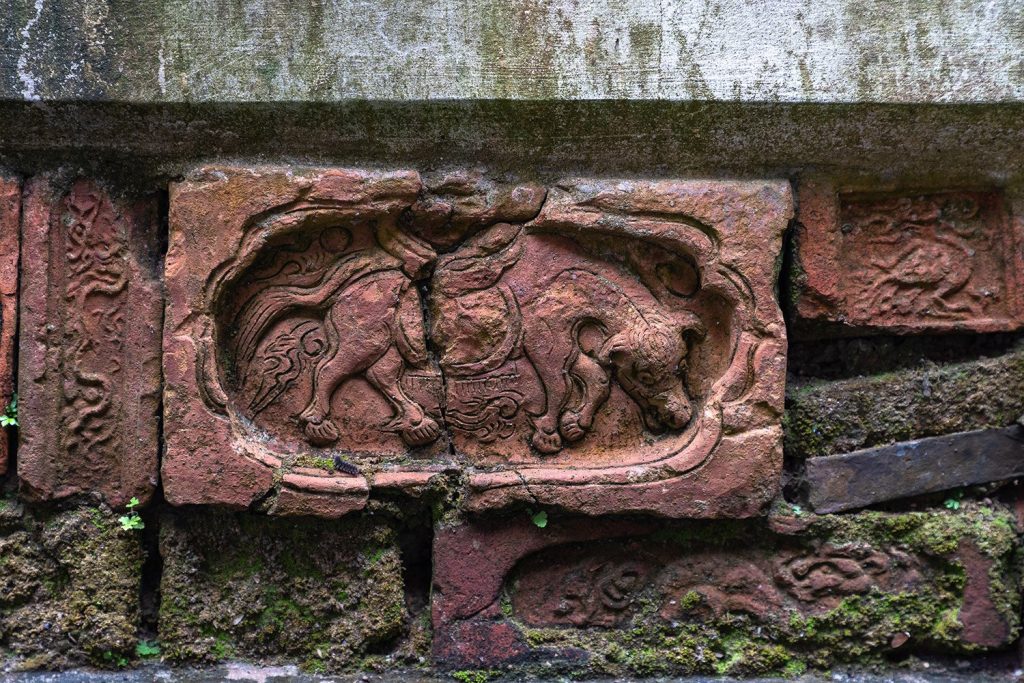
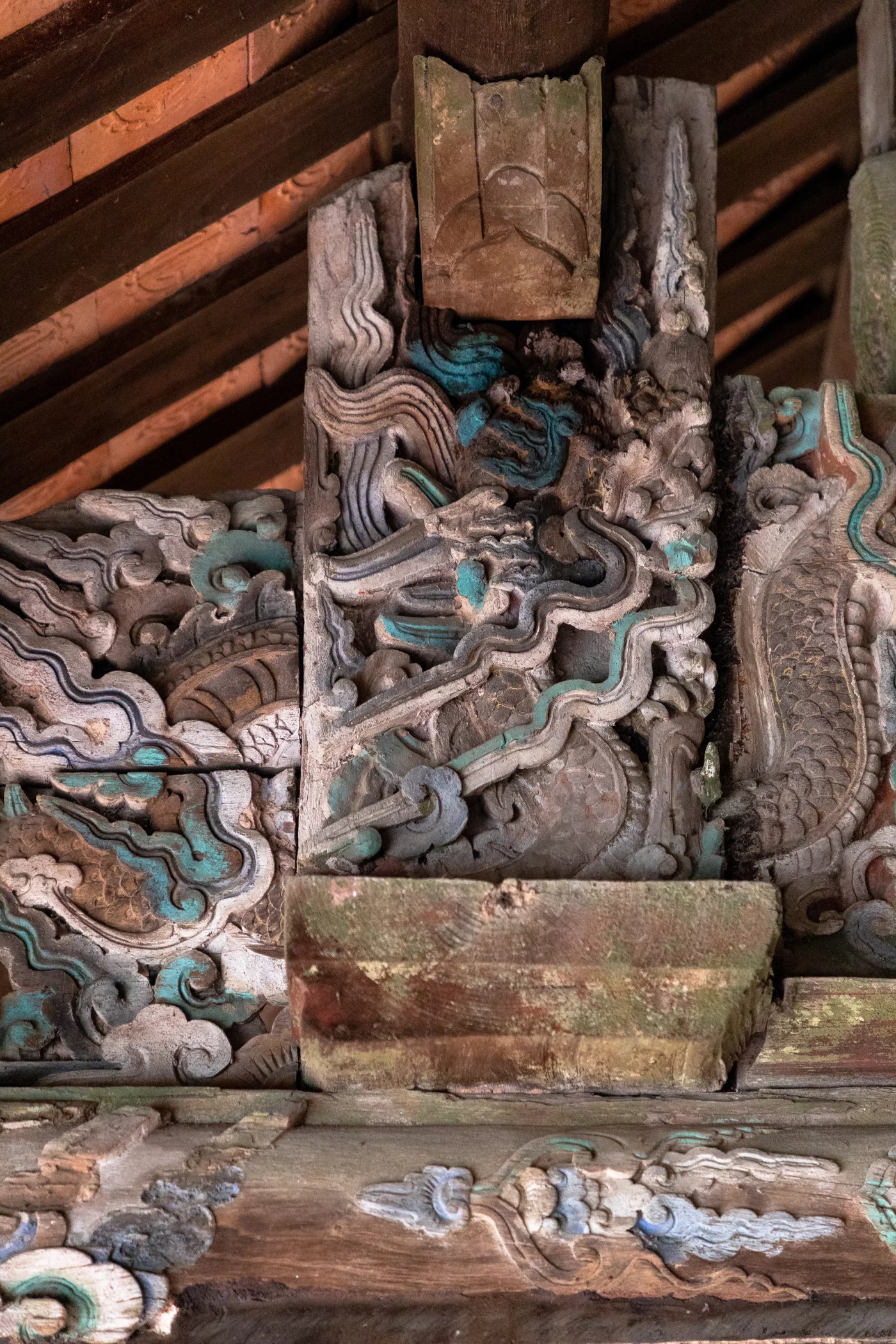
The main sanctuary sits in the middle: Buddha in the outer bays, and within, the altar of the Holy Mother, the bodhisattva Phap Vu, a dark red bronze statue cast in 1950 by the sculptor Dao Van Can, known as Cuu Ben, set in a red and gilt shrine. The sanctuary, a work of the Le and Mac periods, was destroyed in the war against the French. What remains are Mac dragon bricks, sixteenth-century carved stone column bases, seventeenth-century bricks stamped with tigers, elephants, horses and birds, and some old statues. At the back, a founders’ hall joins the two galleries into a closed double court.
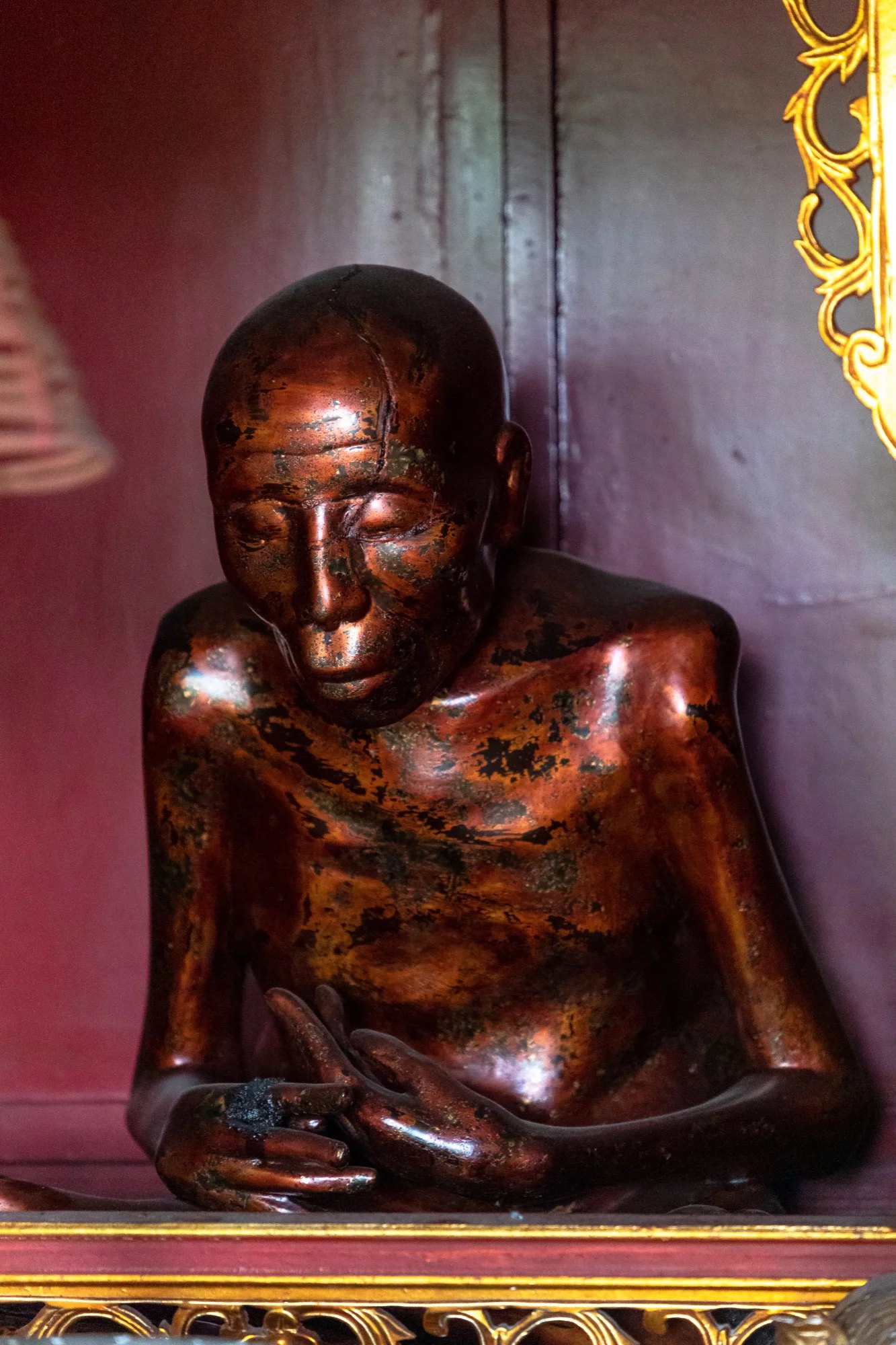
Most precious are two lacquer statues formed over the bodies of two monks who led the pagoda. The body of Vu Khac Minh, in the right-hand bay of the founders’ hall, sits in meditation, head bent slightly forward, 57 centimetres tall and weighing about seven kilograms, legs crossed and hands resting before the belly as if counting prayer beads, ribs and spine clearly visible. The body of Vu Khac Truong, on the left, sits upright, 70 centimetres tall, round-faced and painted white, close in form to a Buddha image, recently repaired with plaster that has since broken at the knees and elbows.
Project Information
- Time
- Ly dynasty (11th–12th century)
- Type
- Cultural
- Primary materials
- Brick, Natural timber, Red roof tiles