Ramsau am Dachstein, Styria, Austria
Enshrined
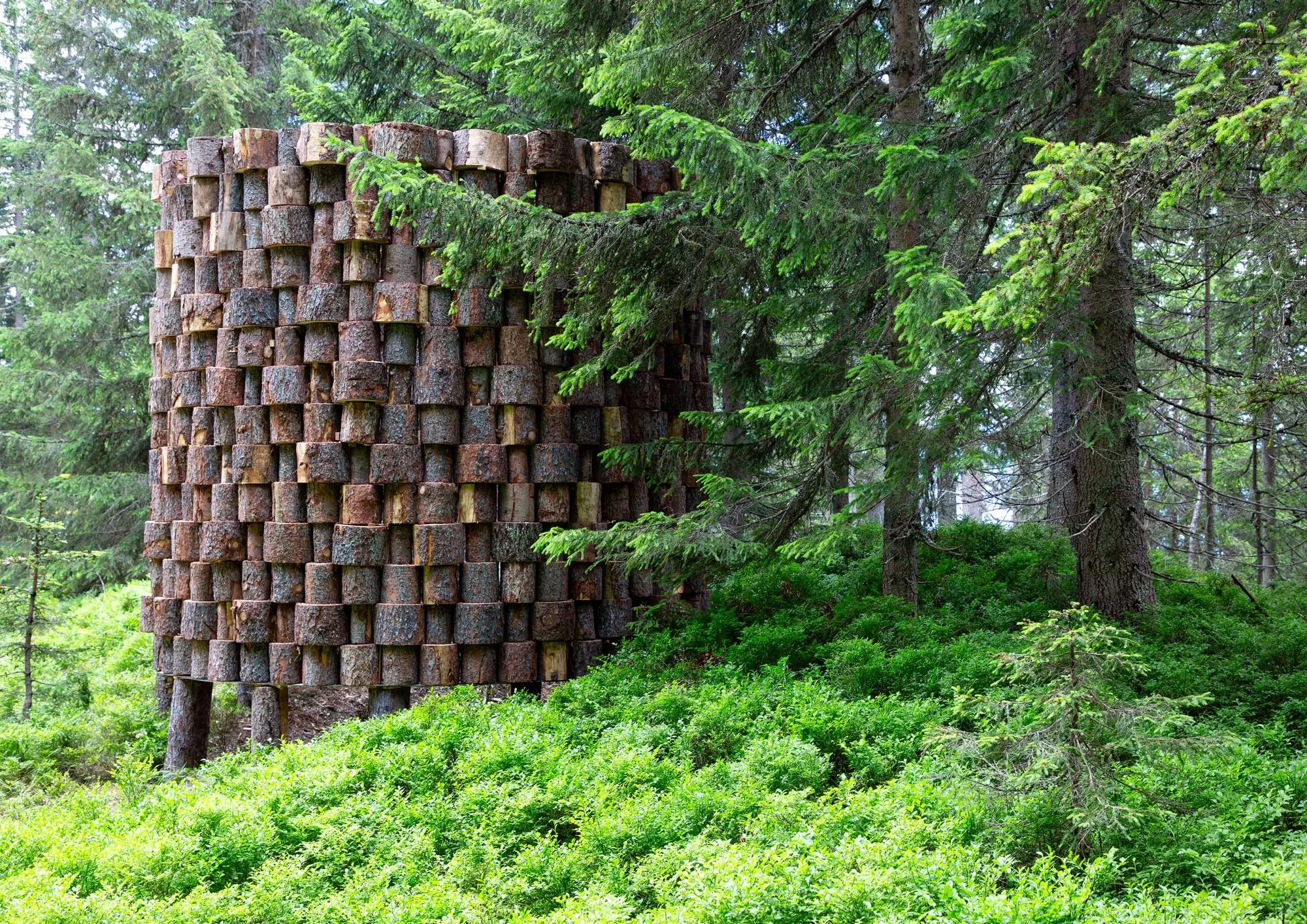
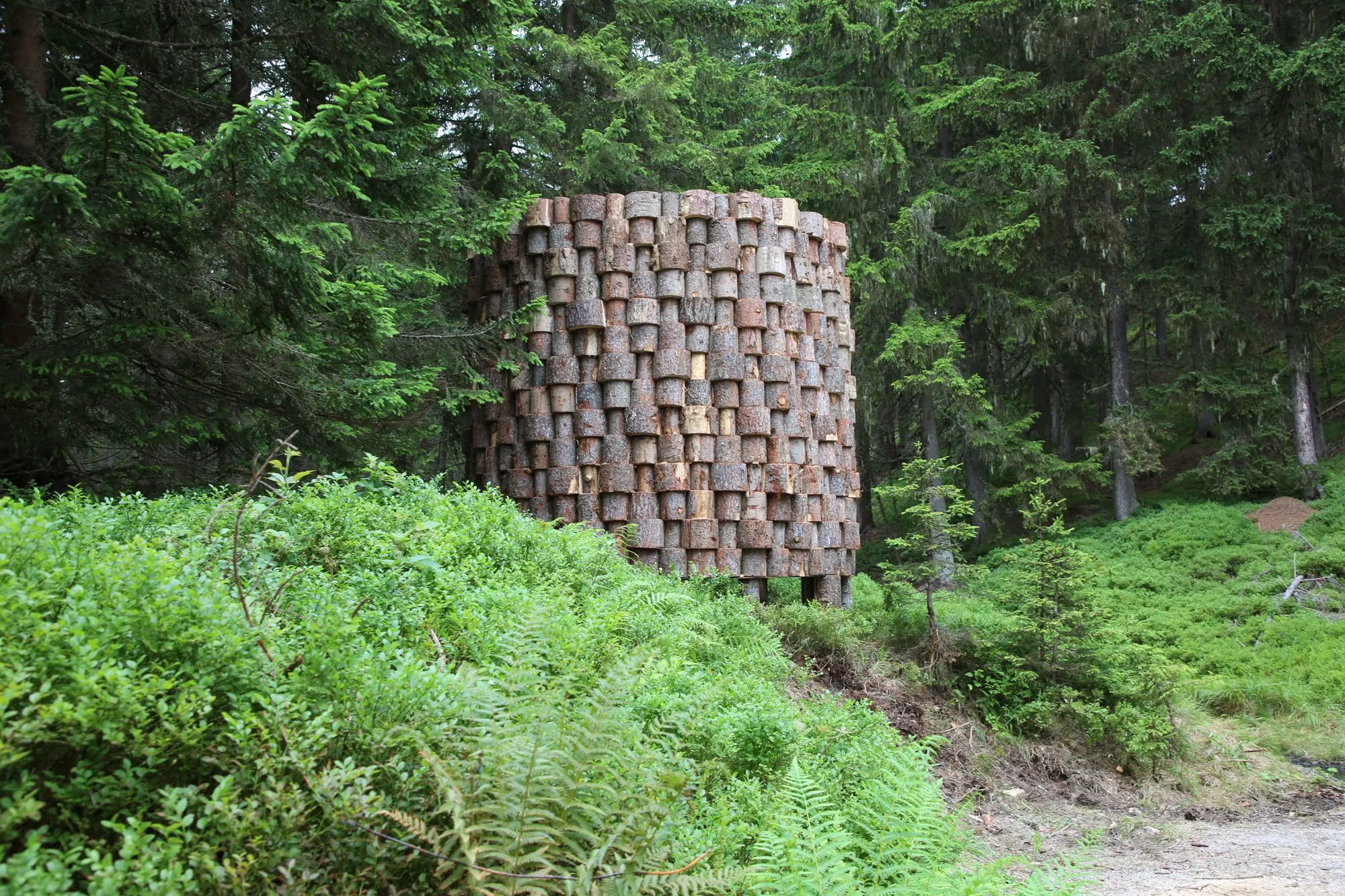
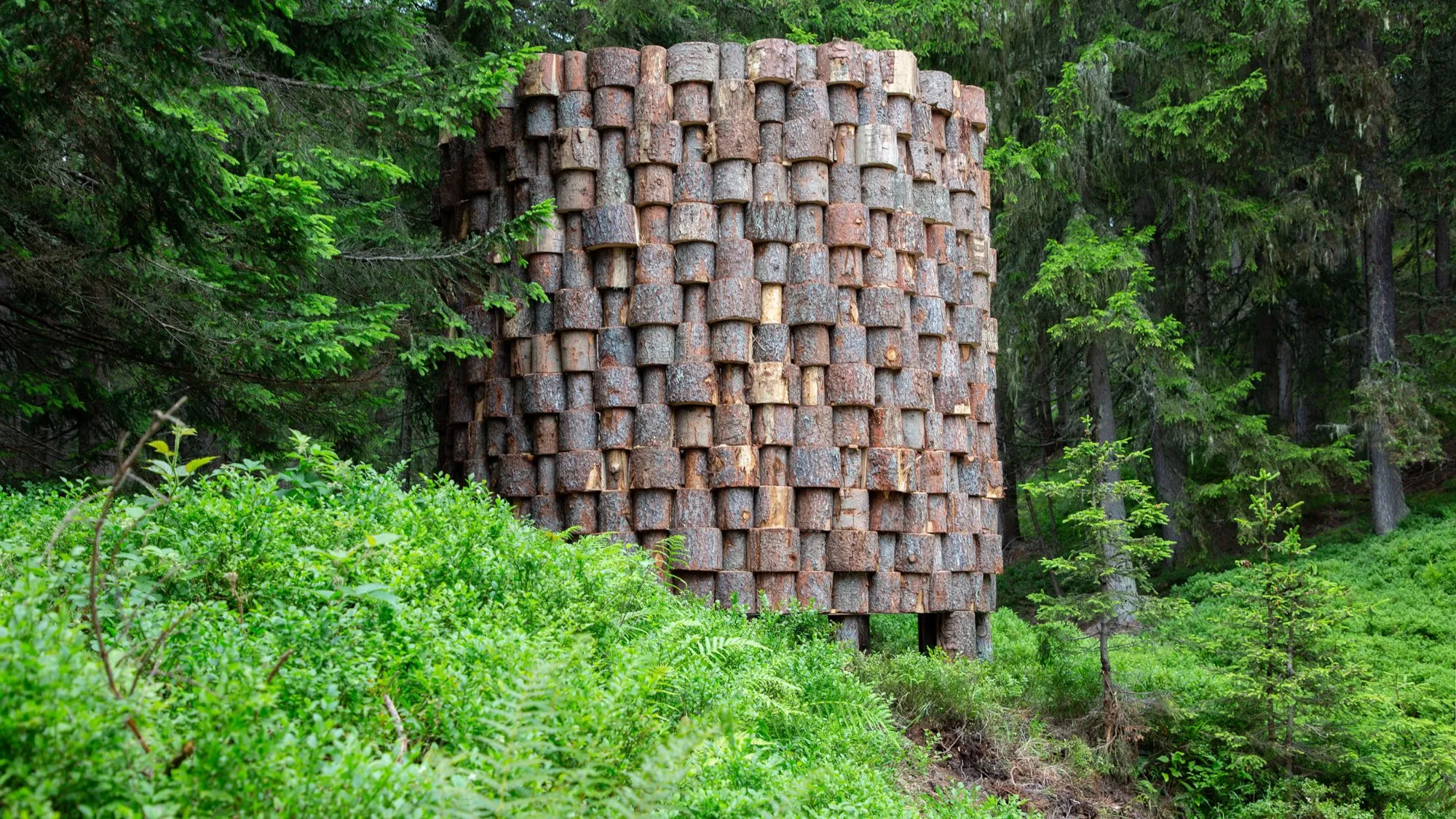
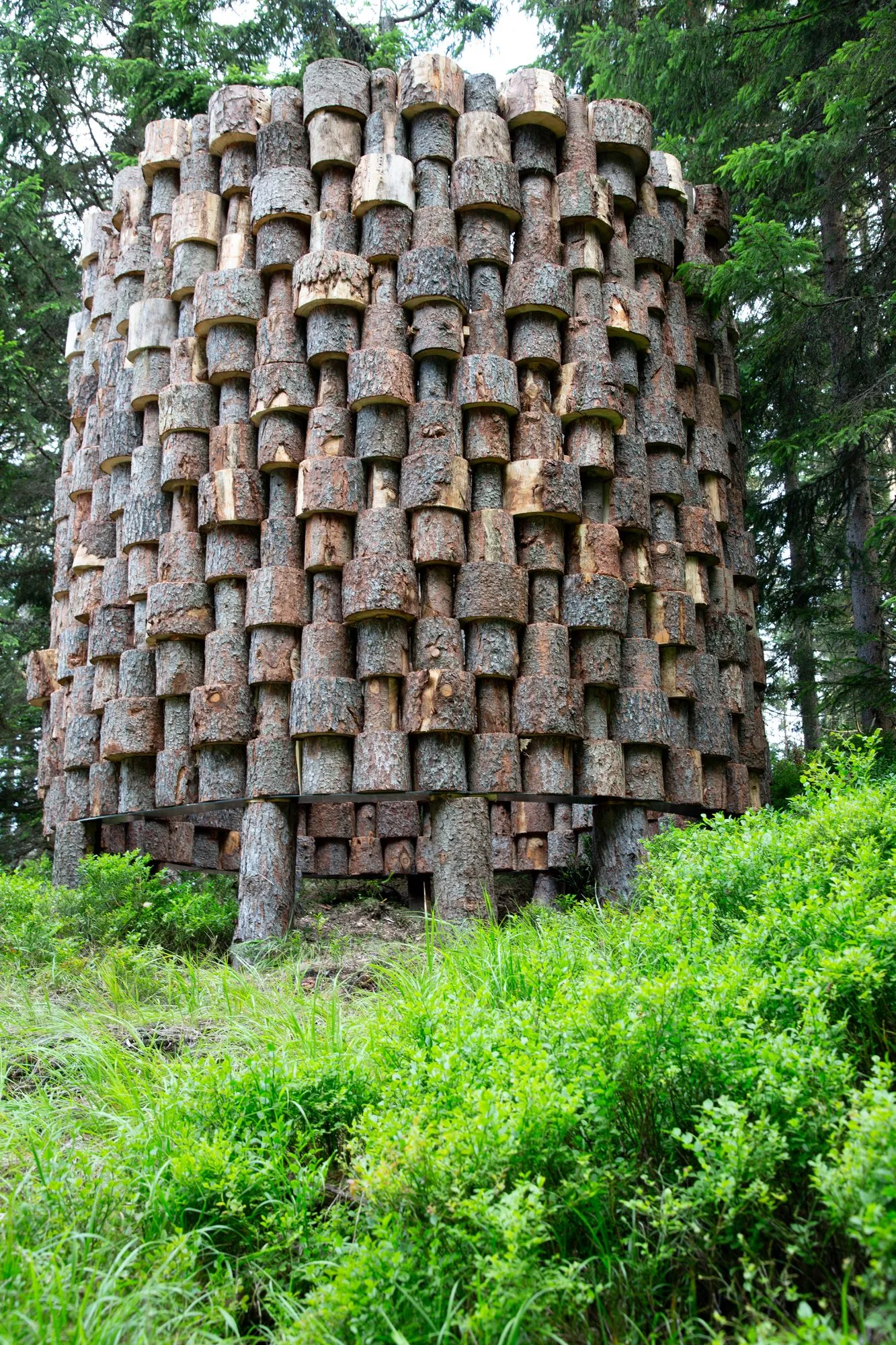
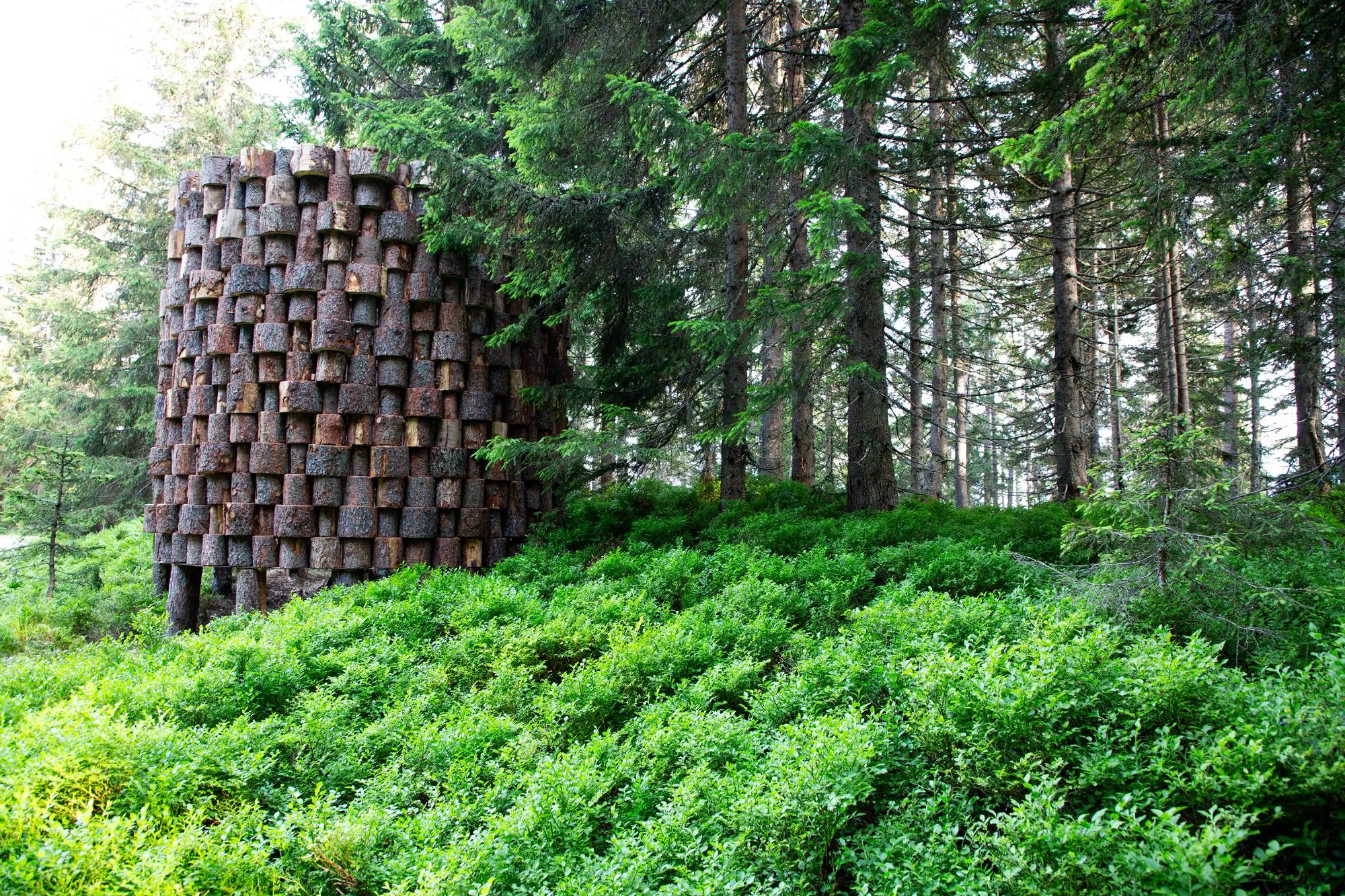
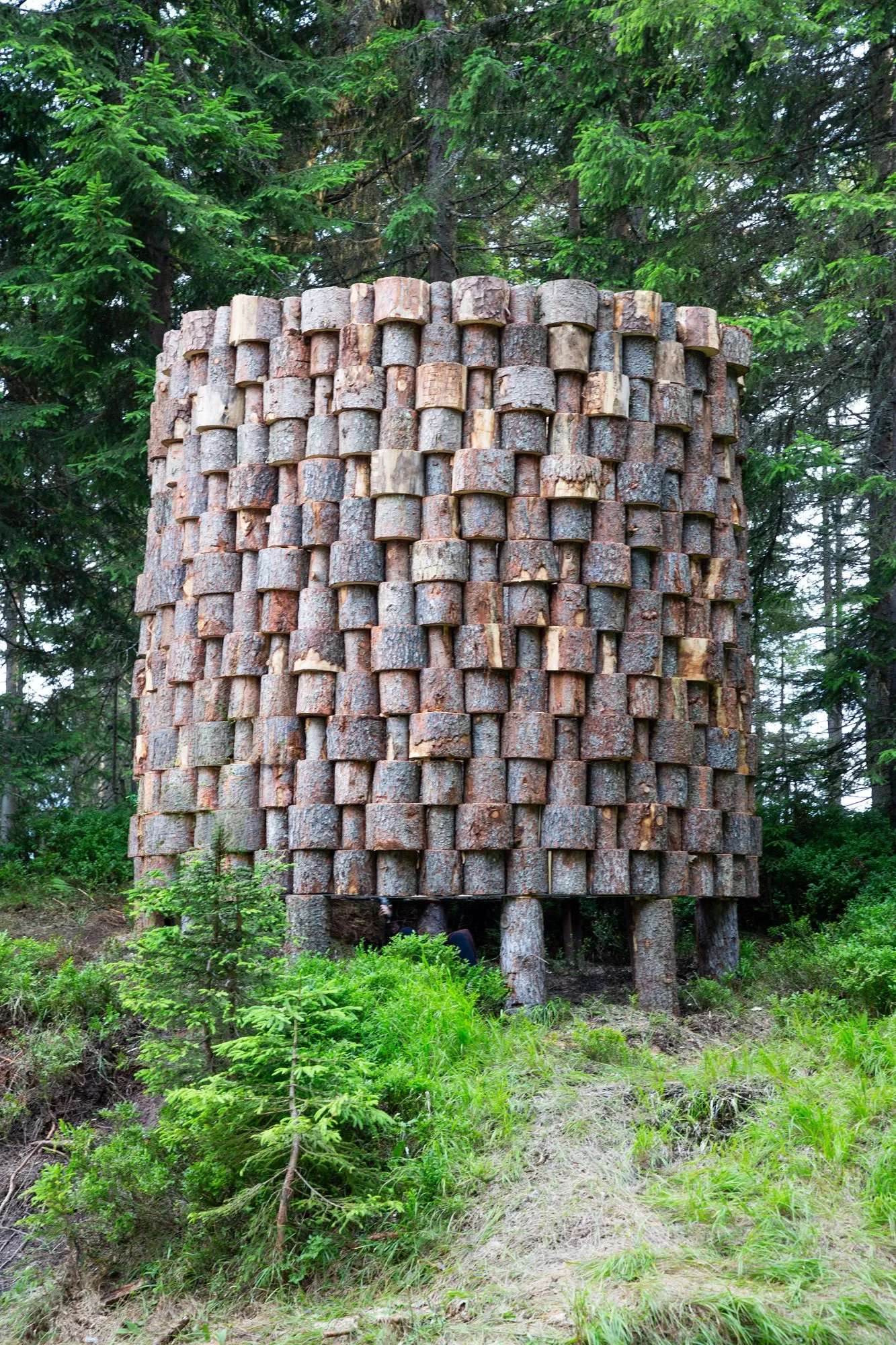
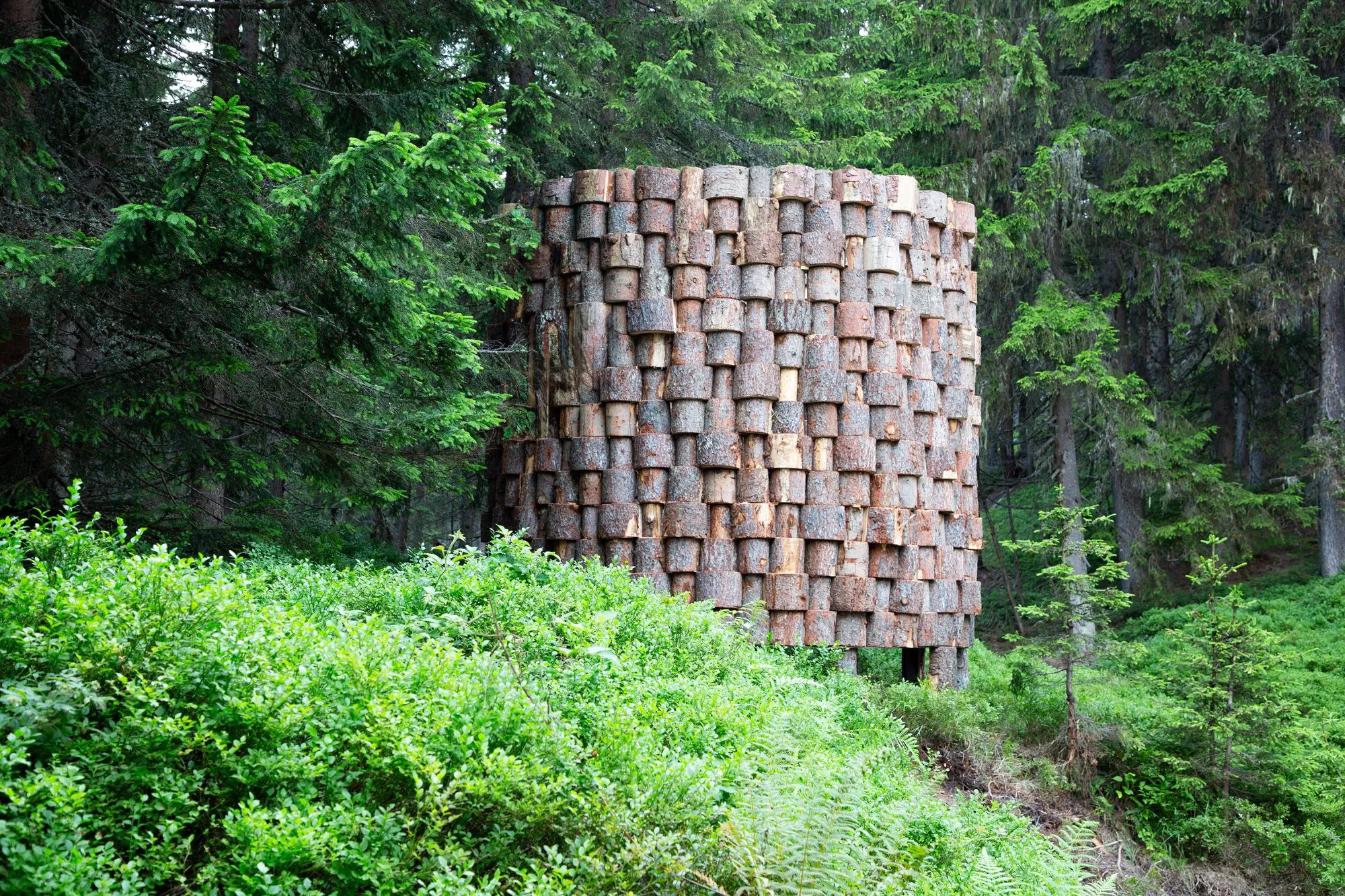
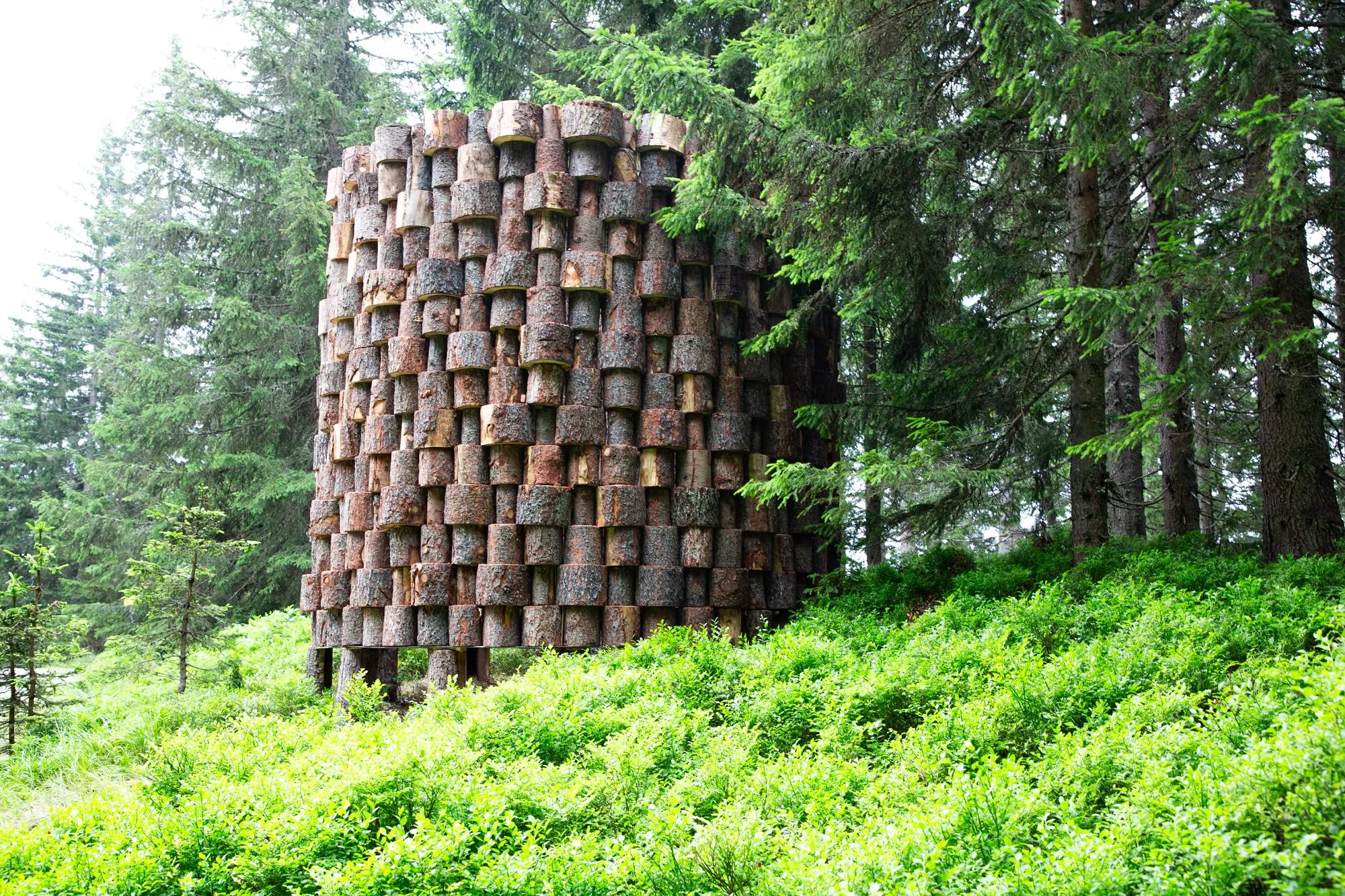
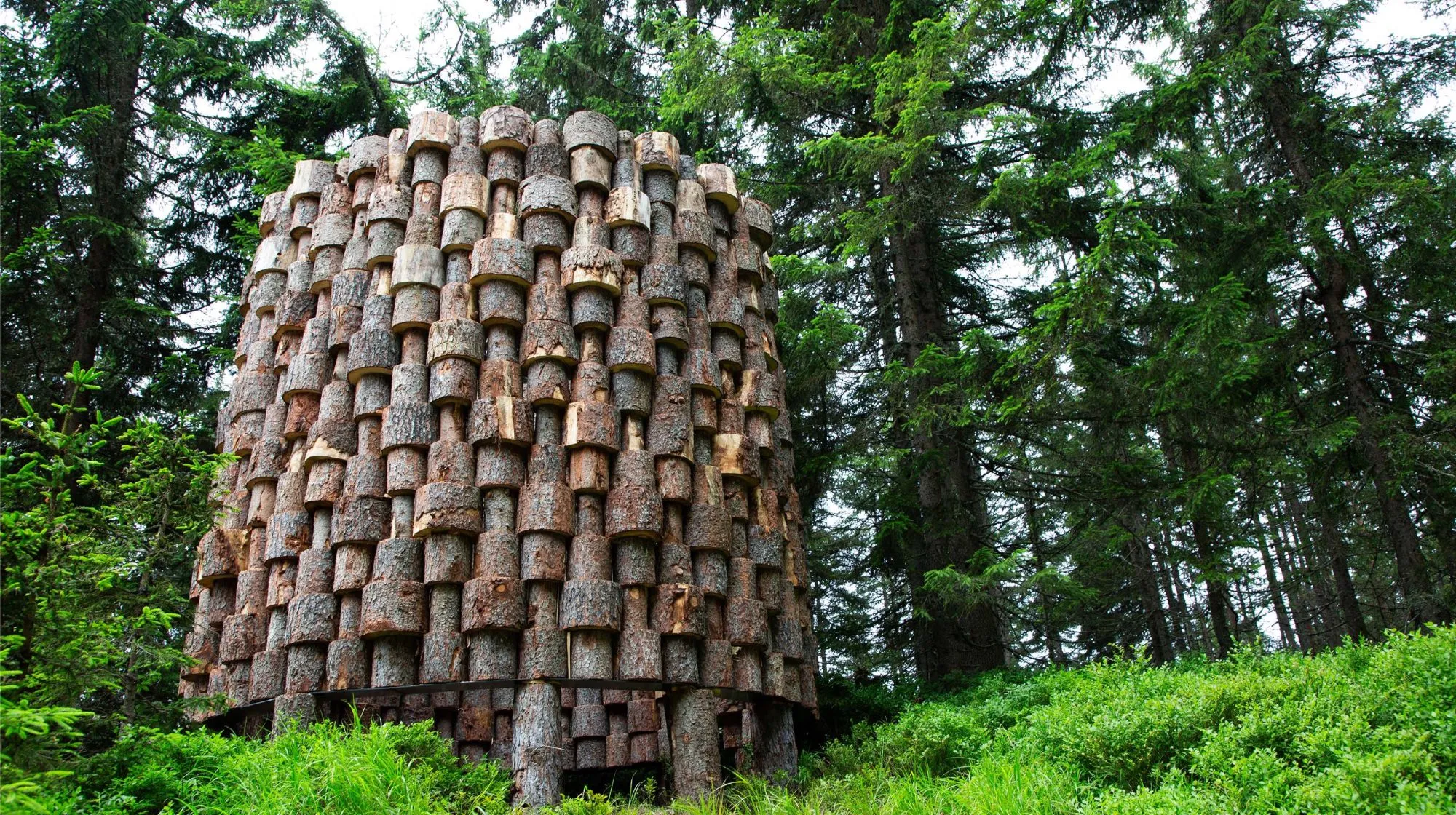
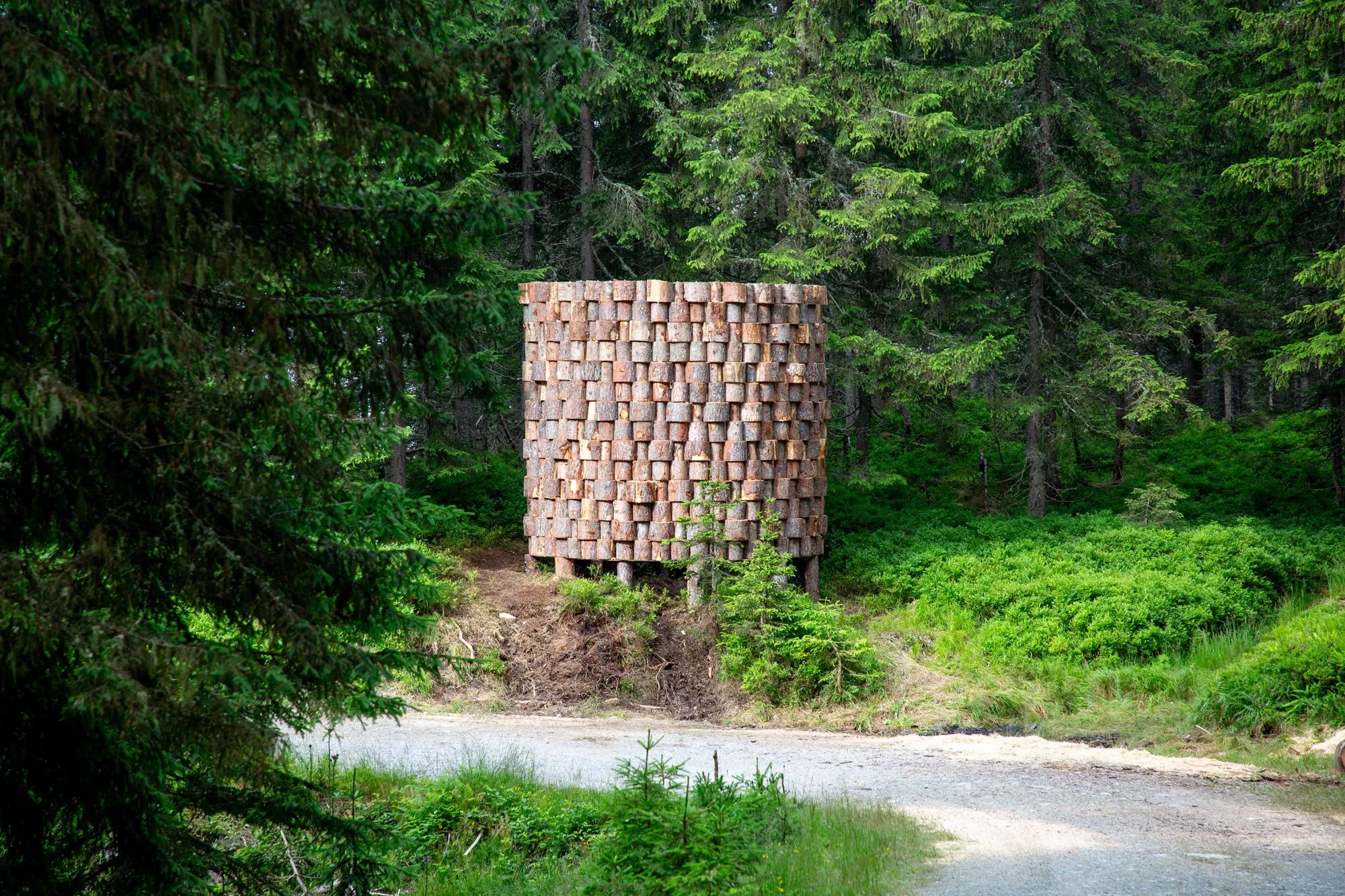
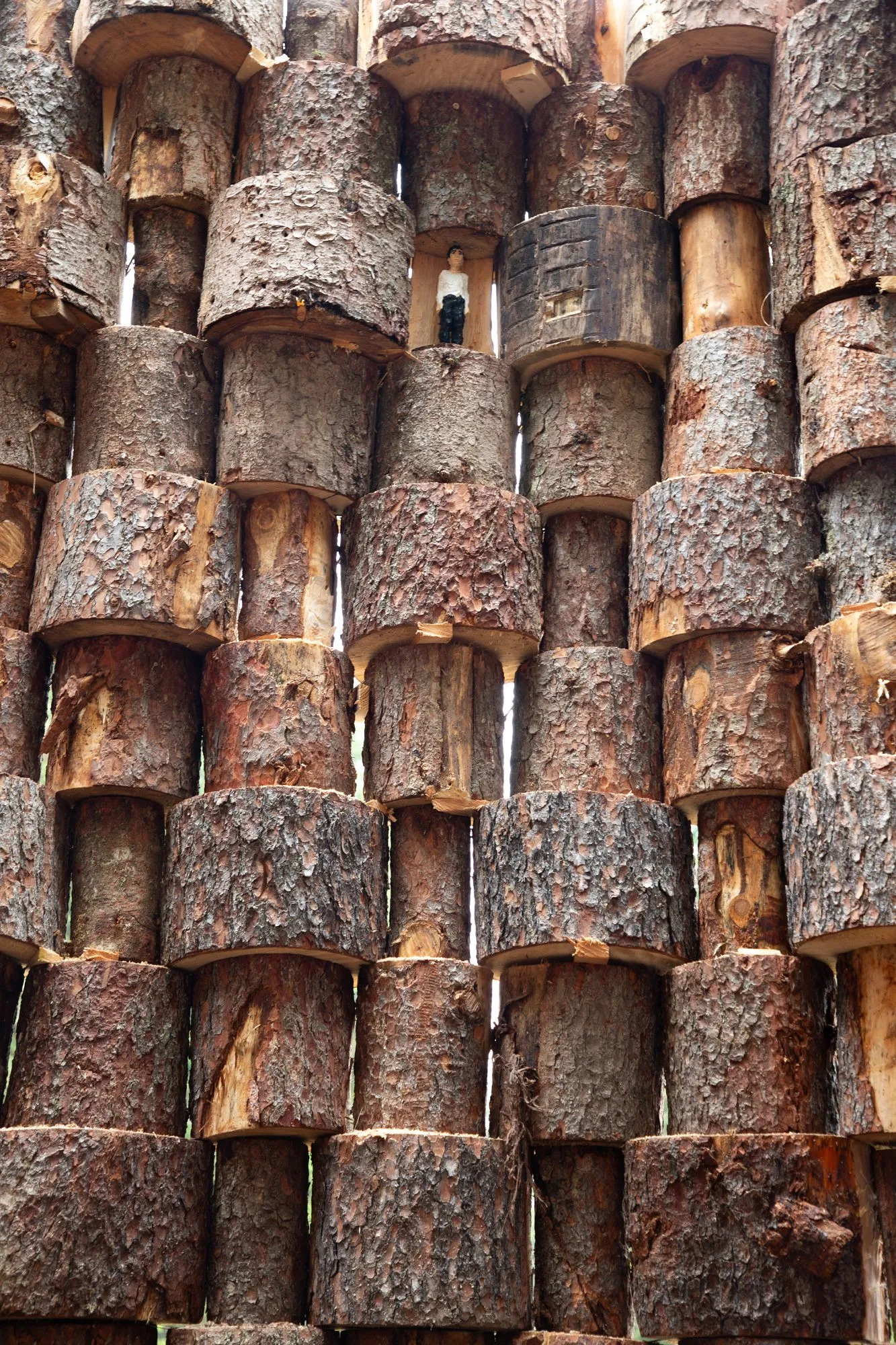
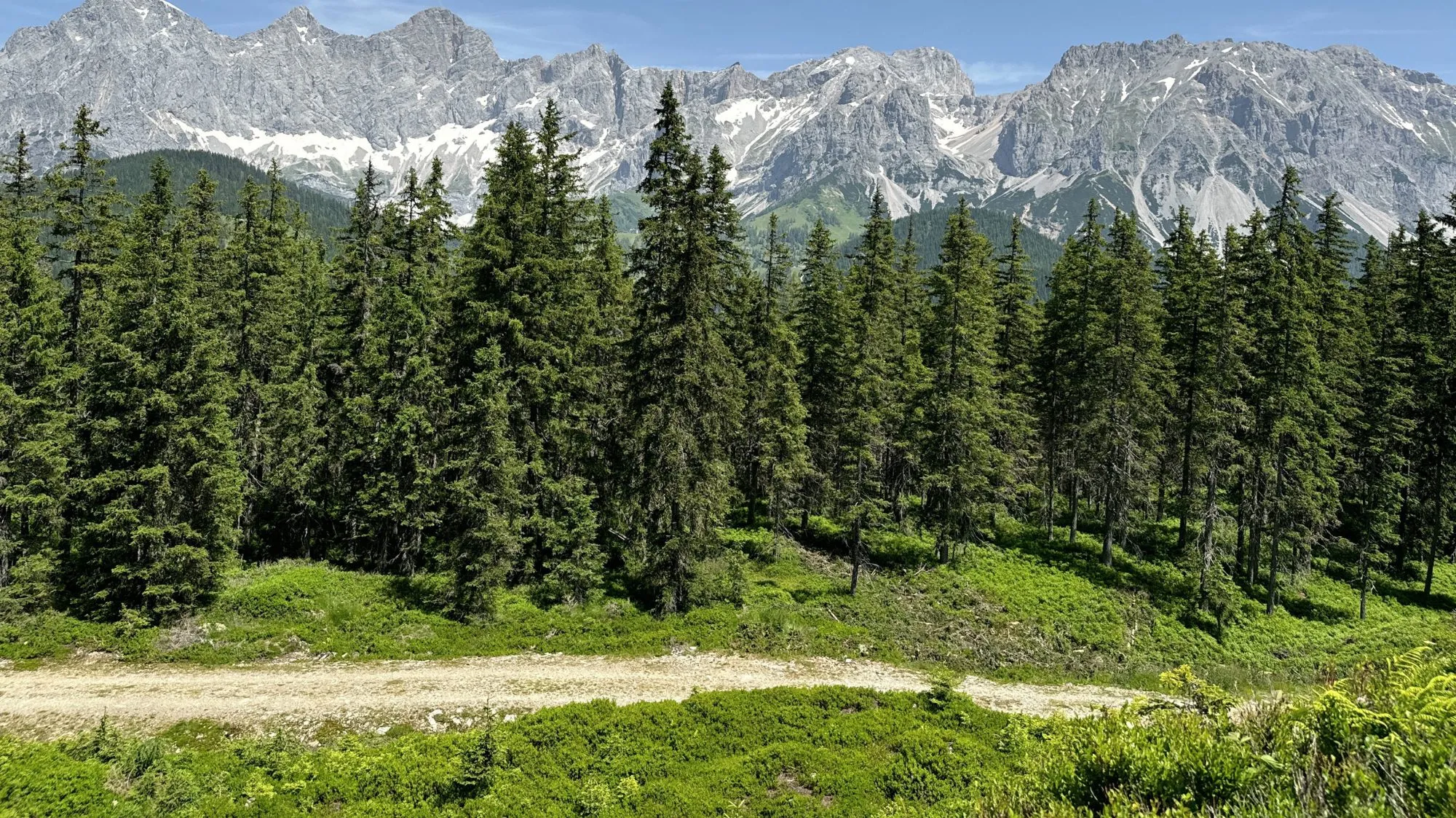
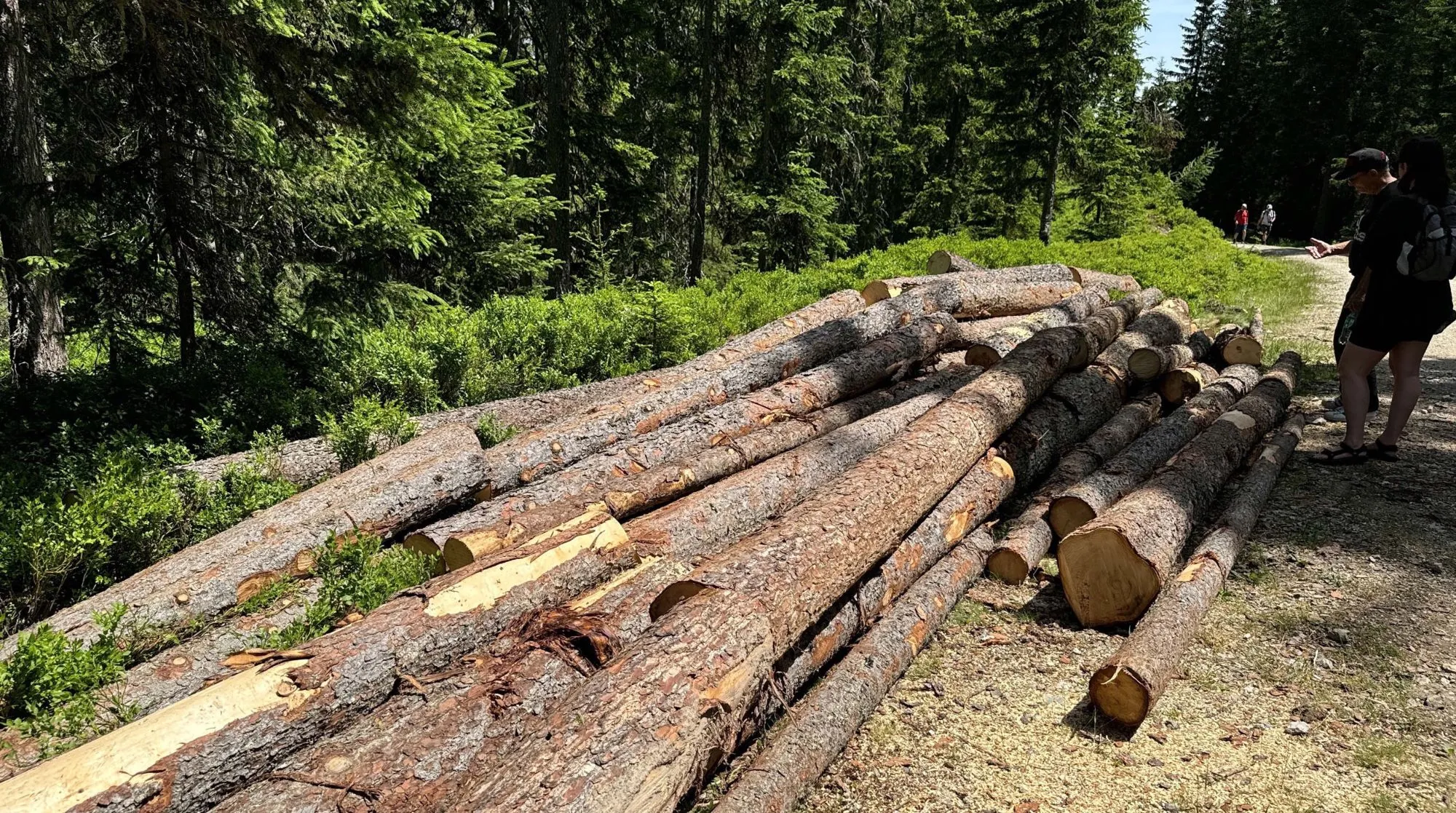
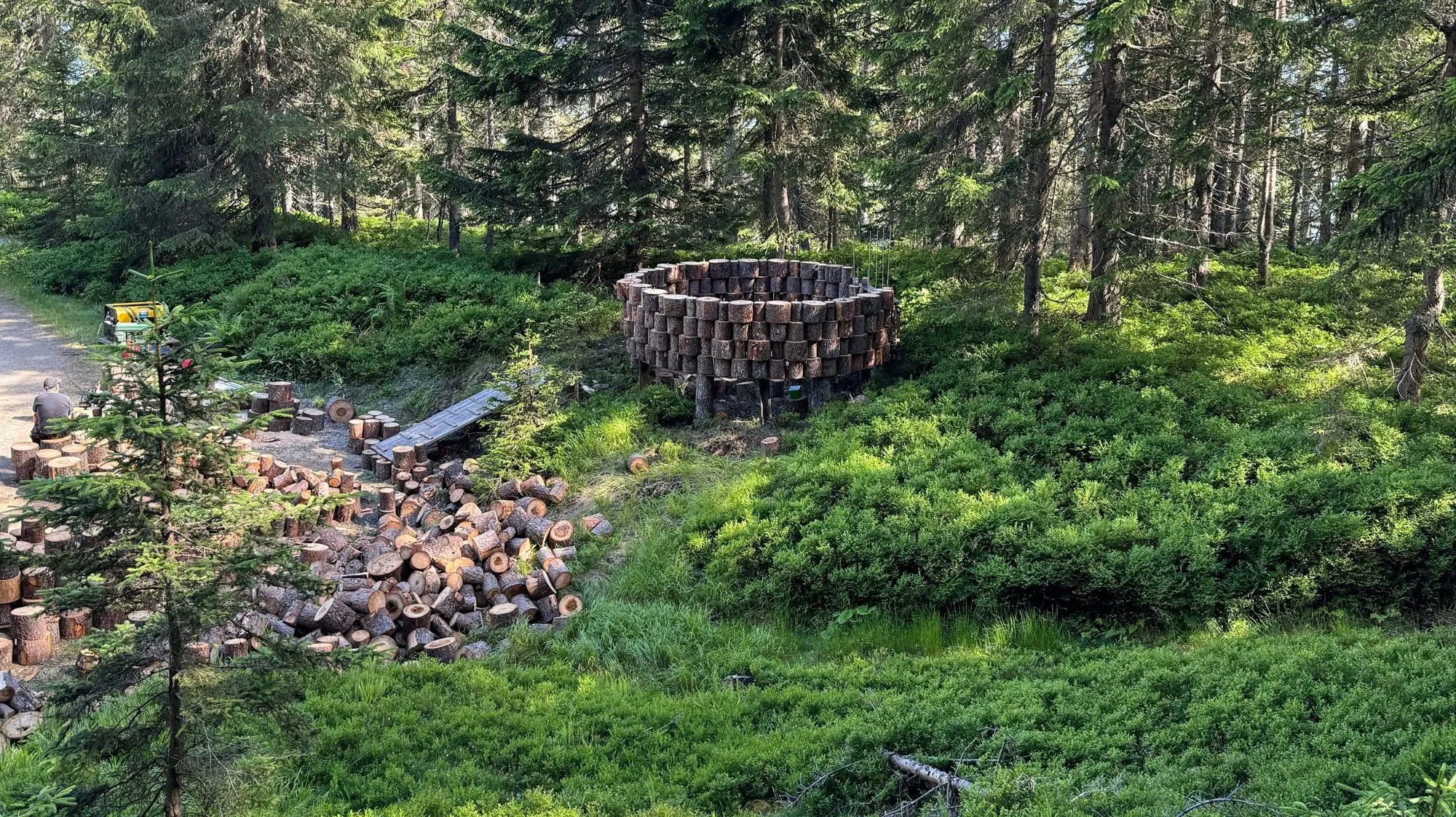
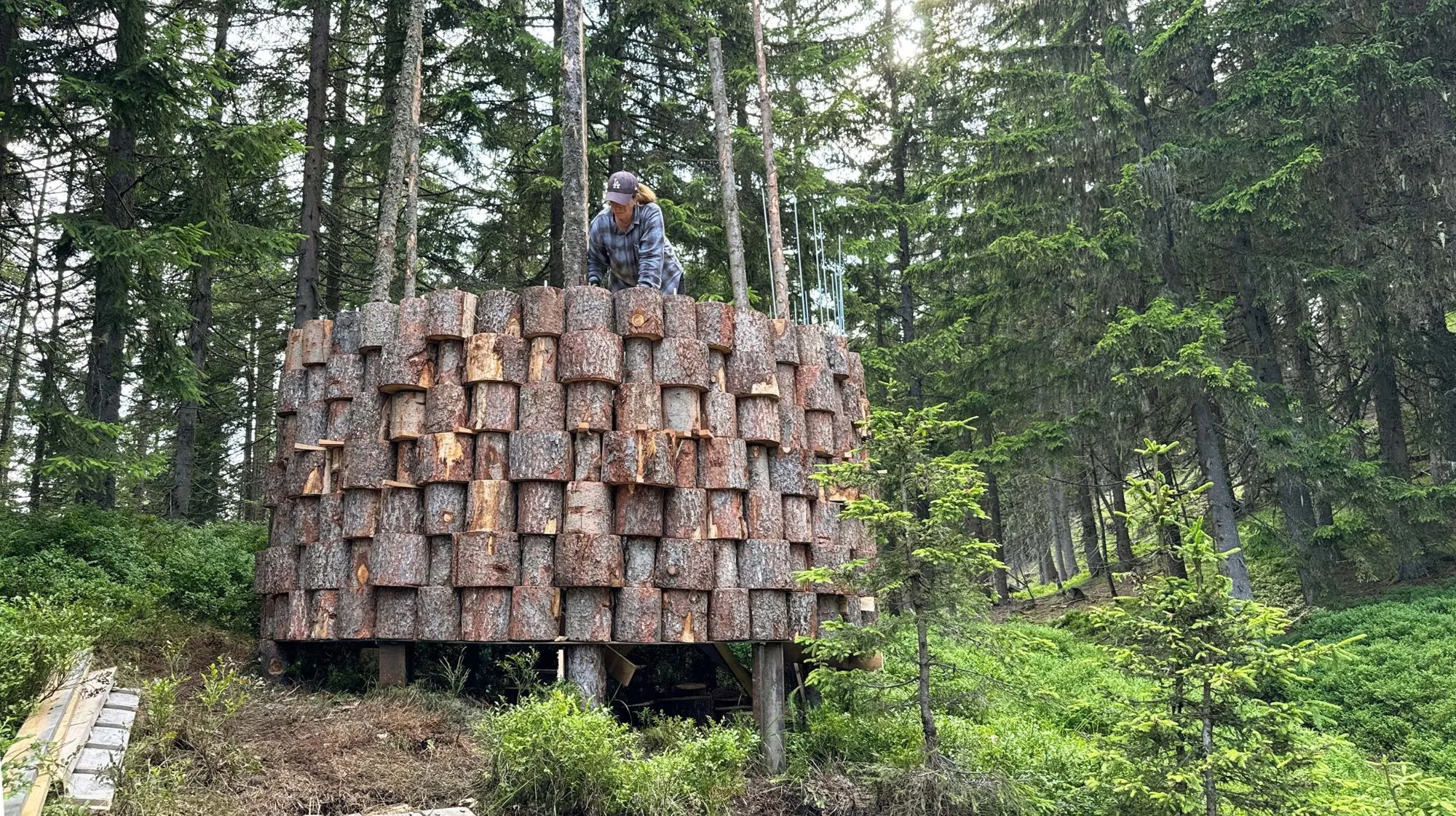
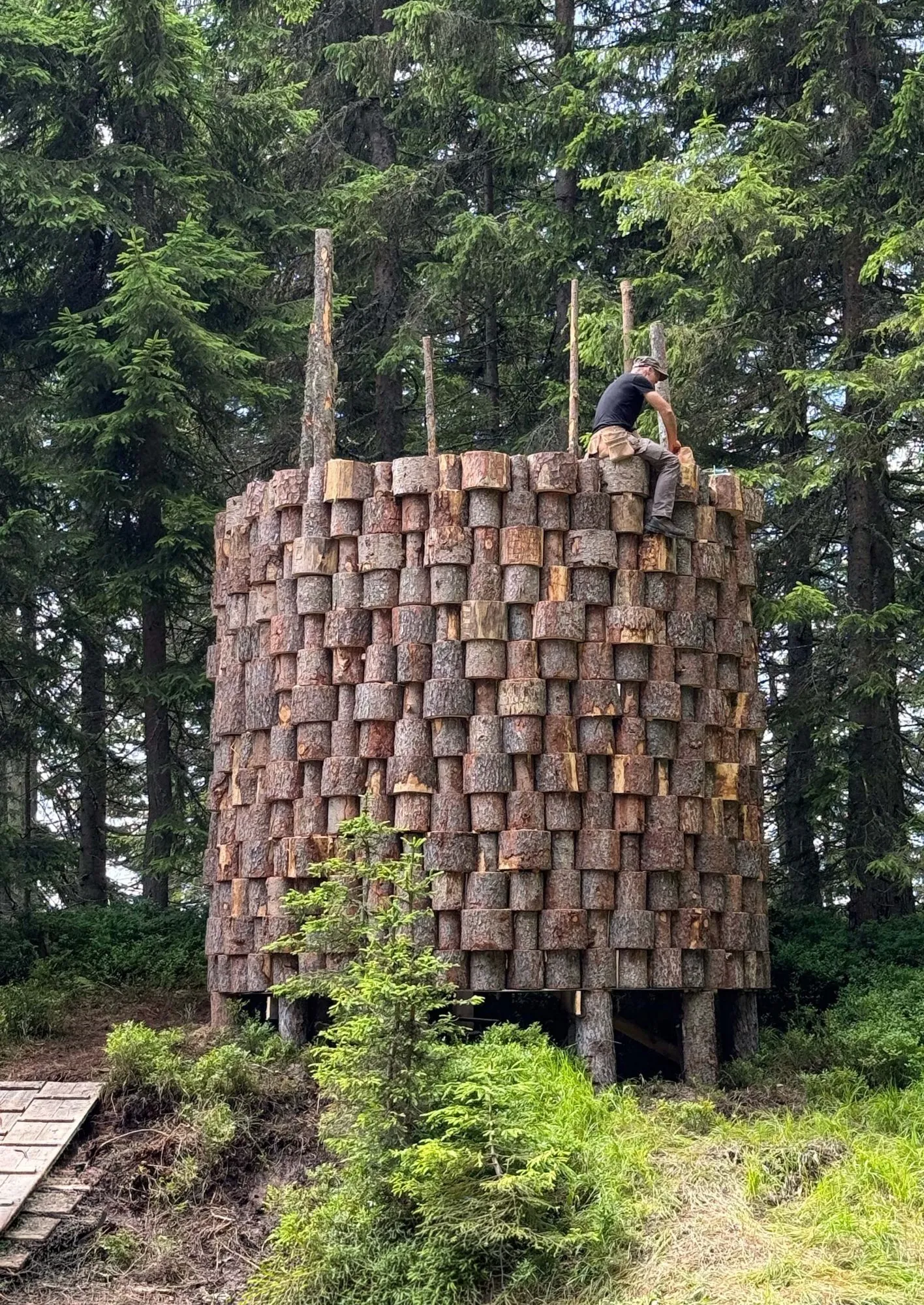
Enshrined stands in a spruce forest on an alpine slope, a timber cylinder 448 cm high and 407 cm across. The British and Norwegian artist duo built it in 2024 as a site-specific work of land art, using spruce from the surrounding woods and leaving the bark on every piece.
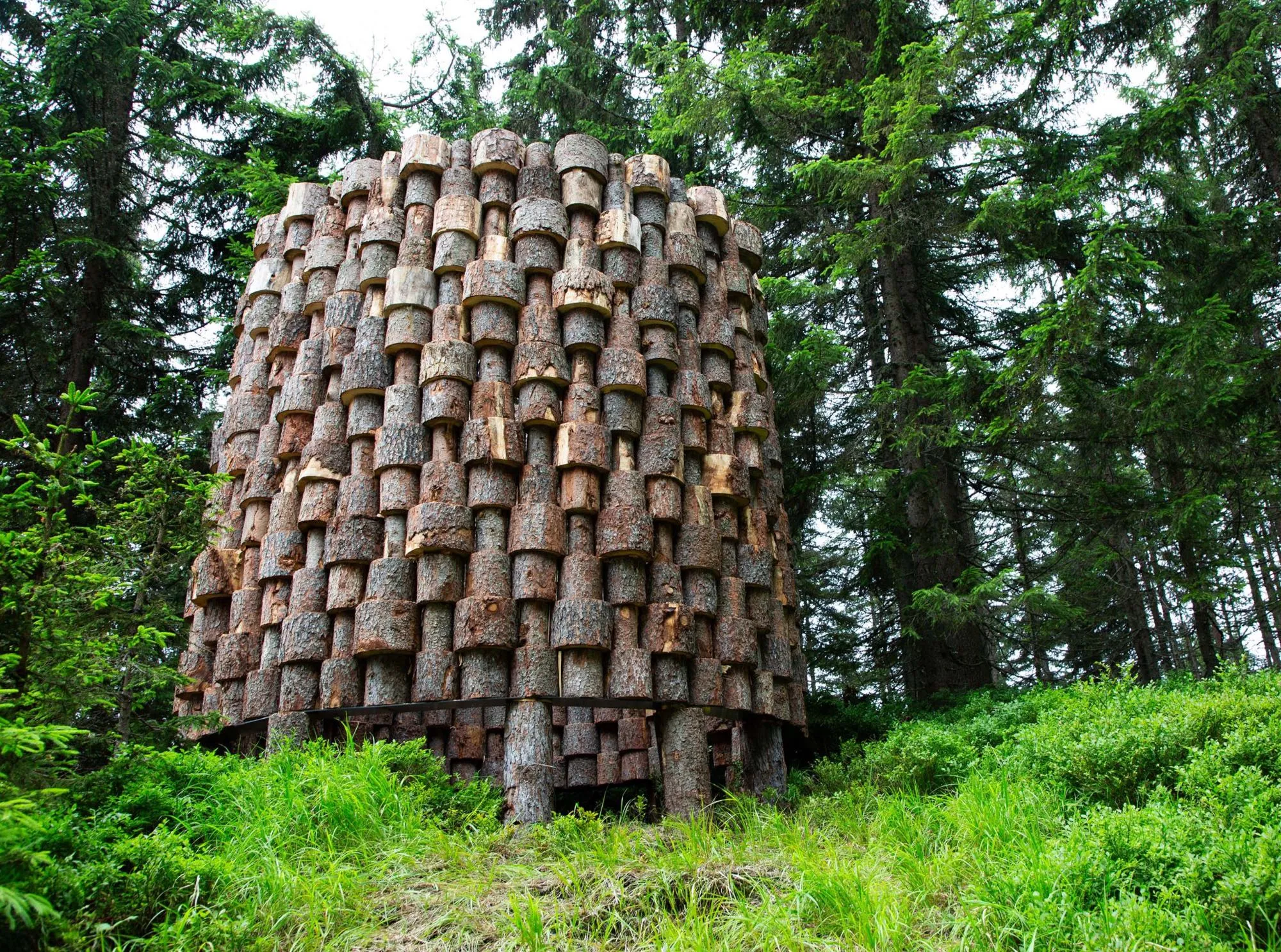
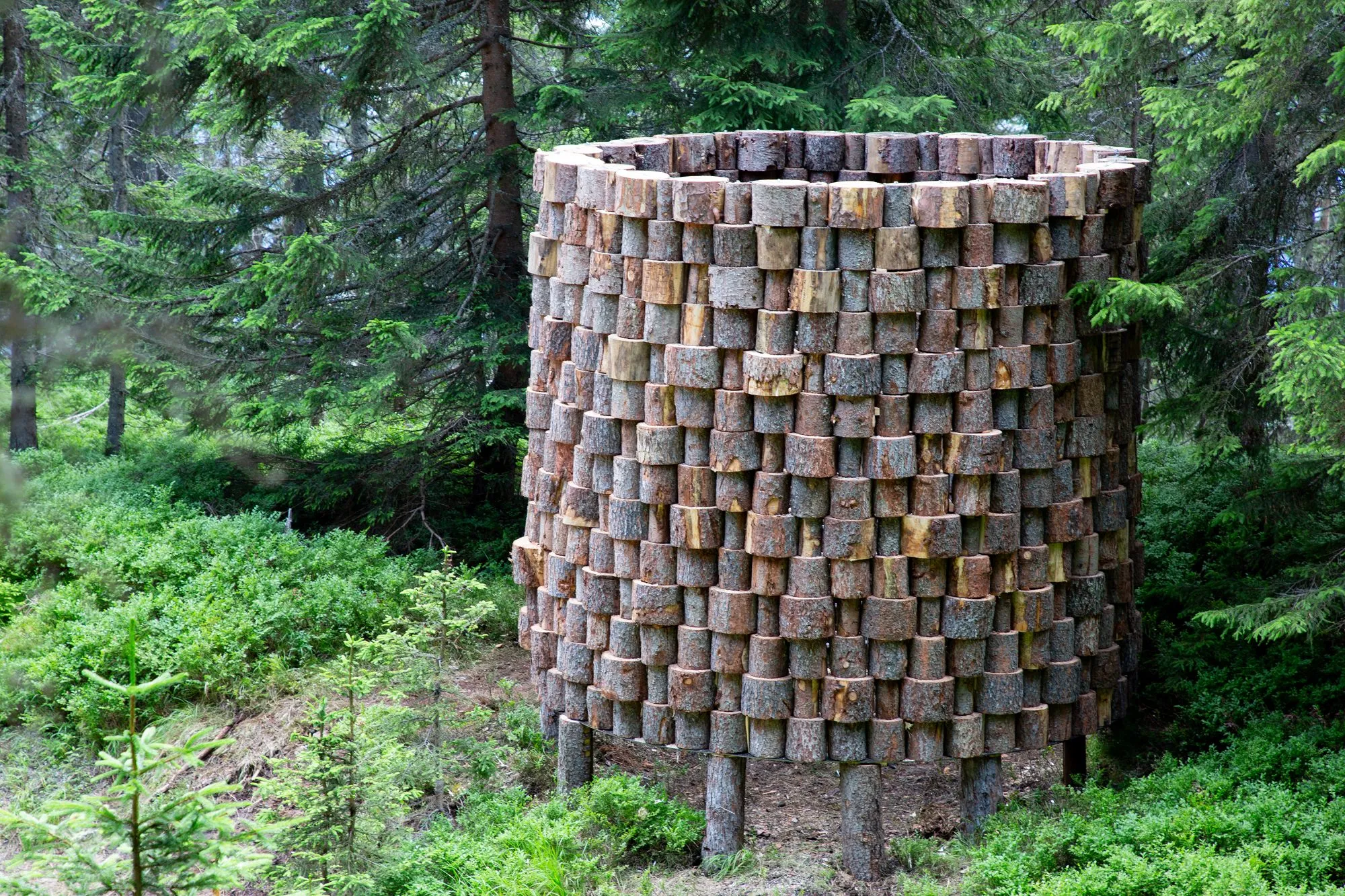
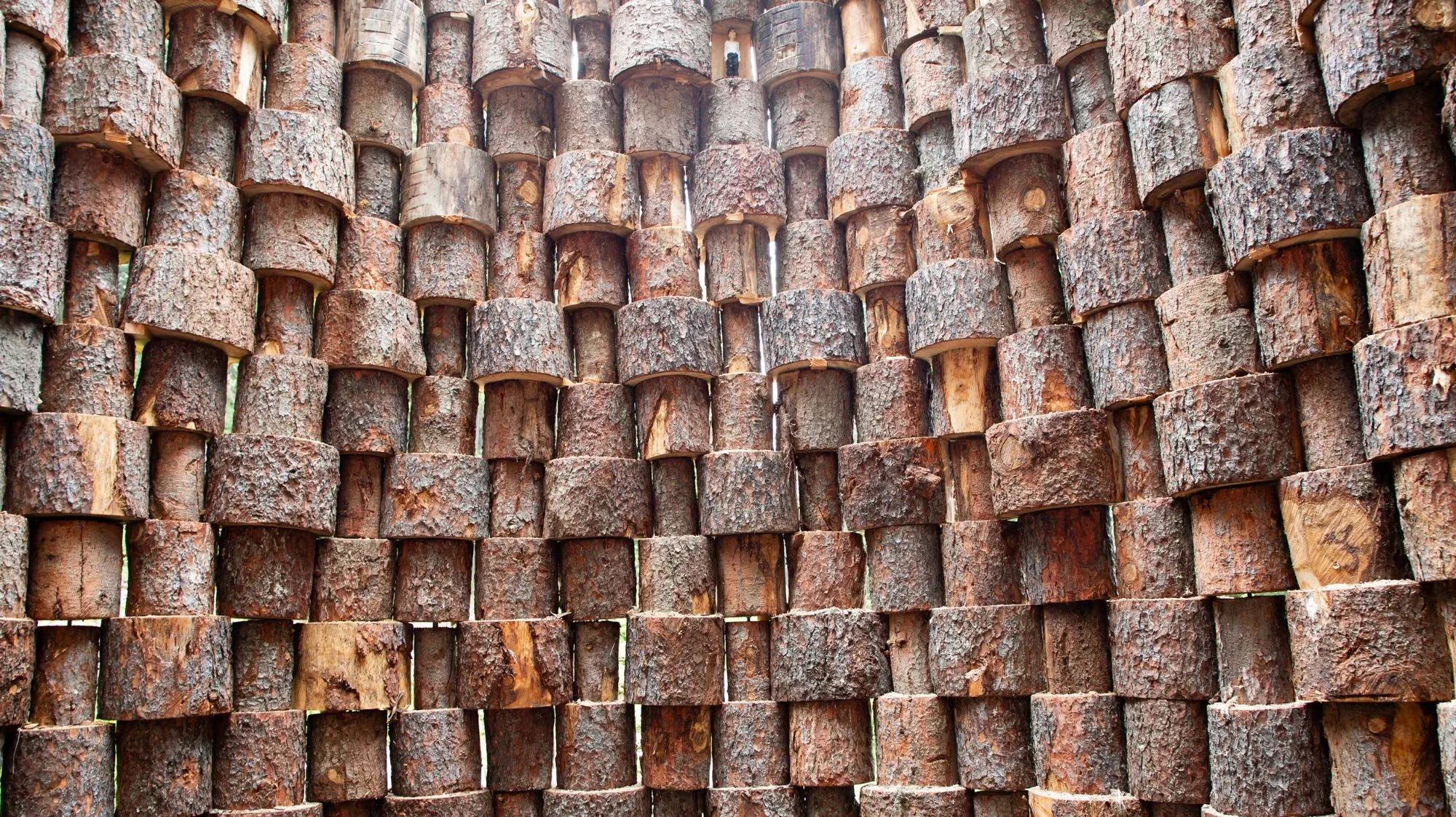
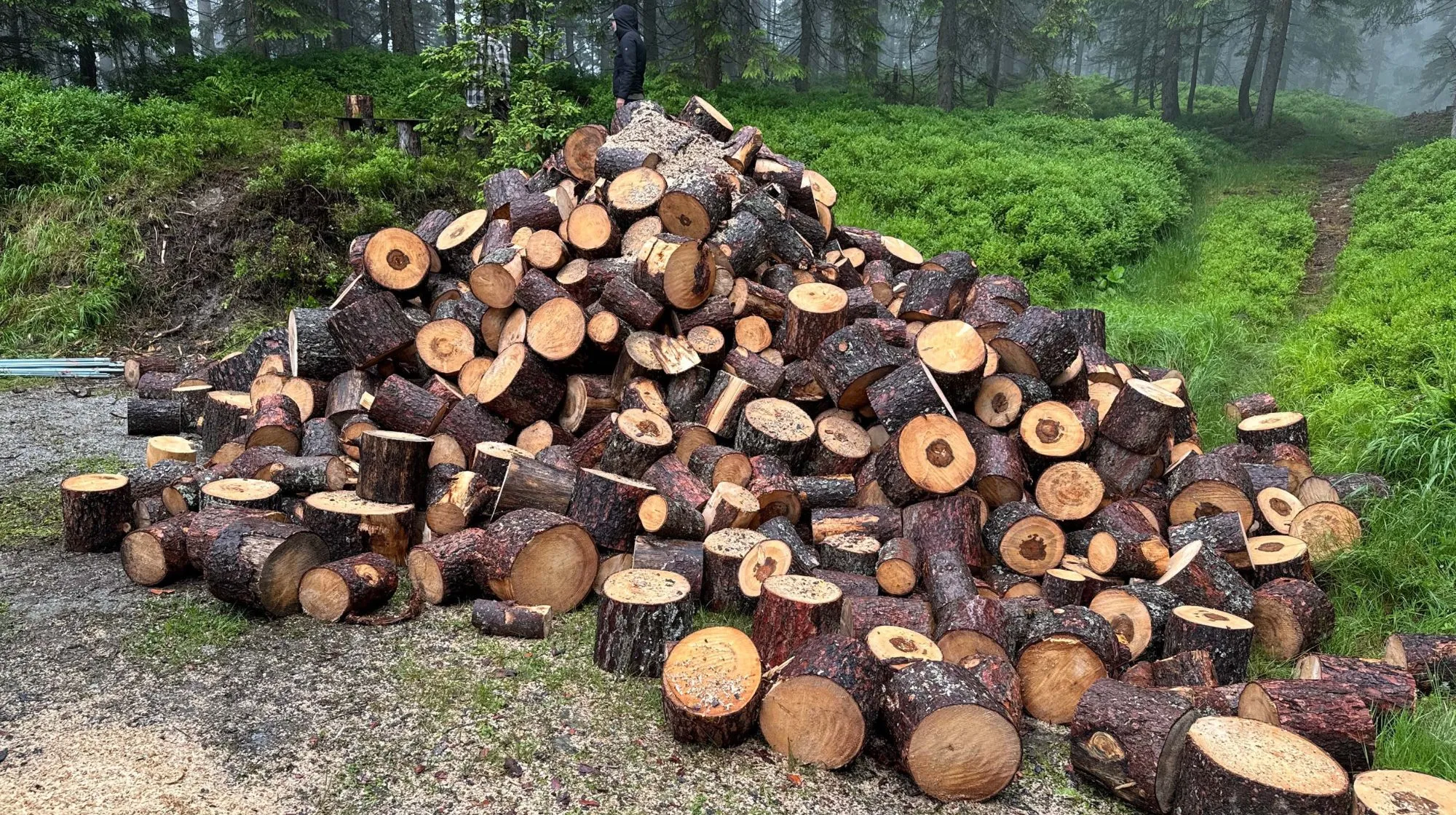
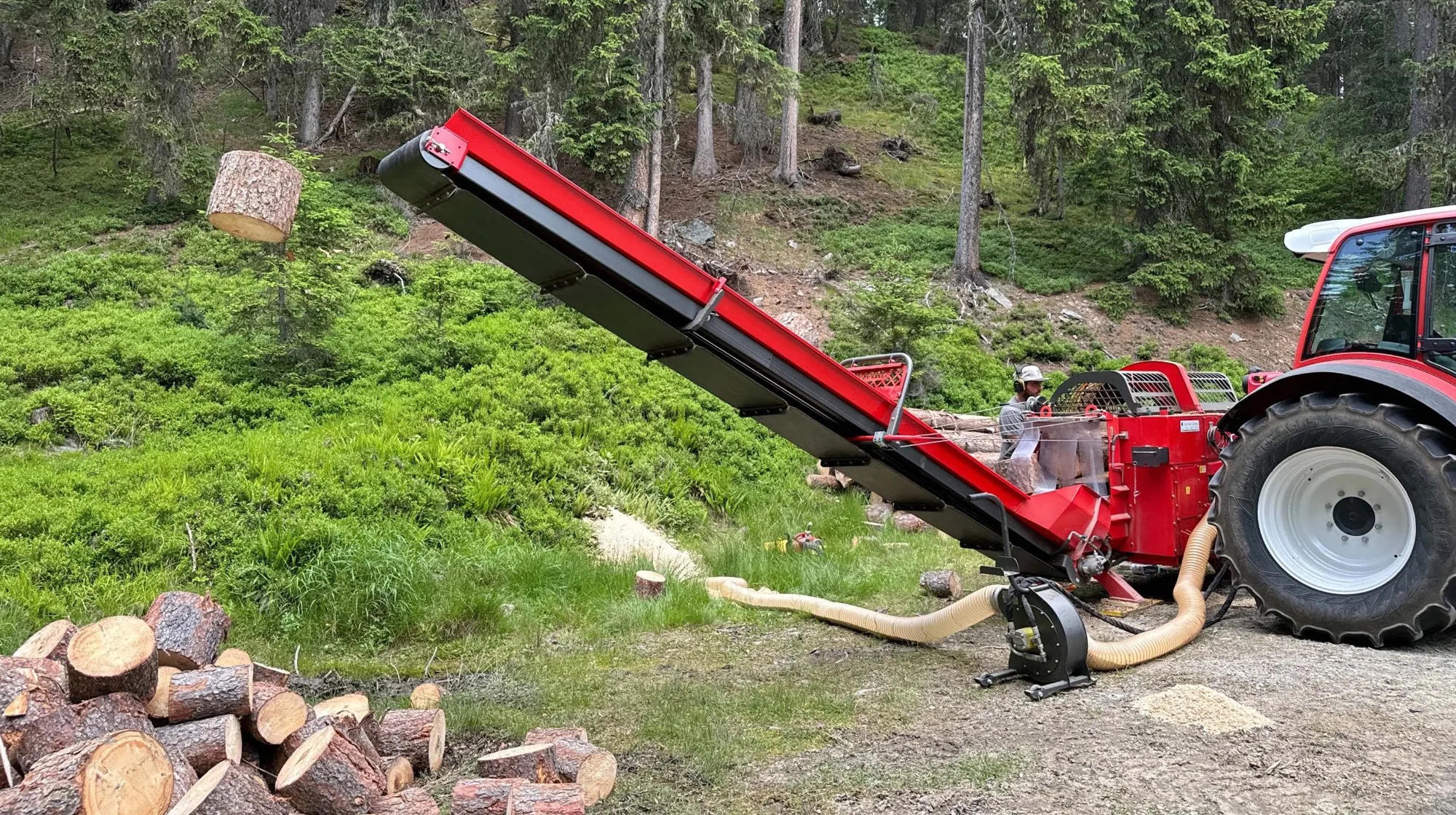
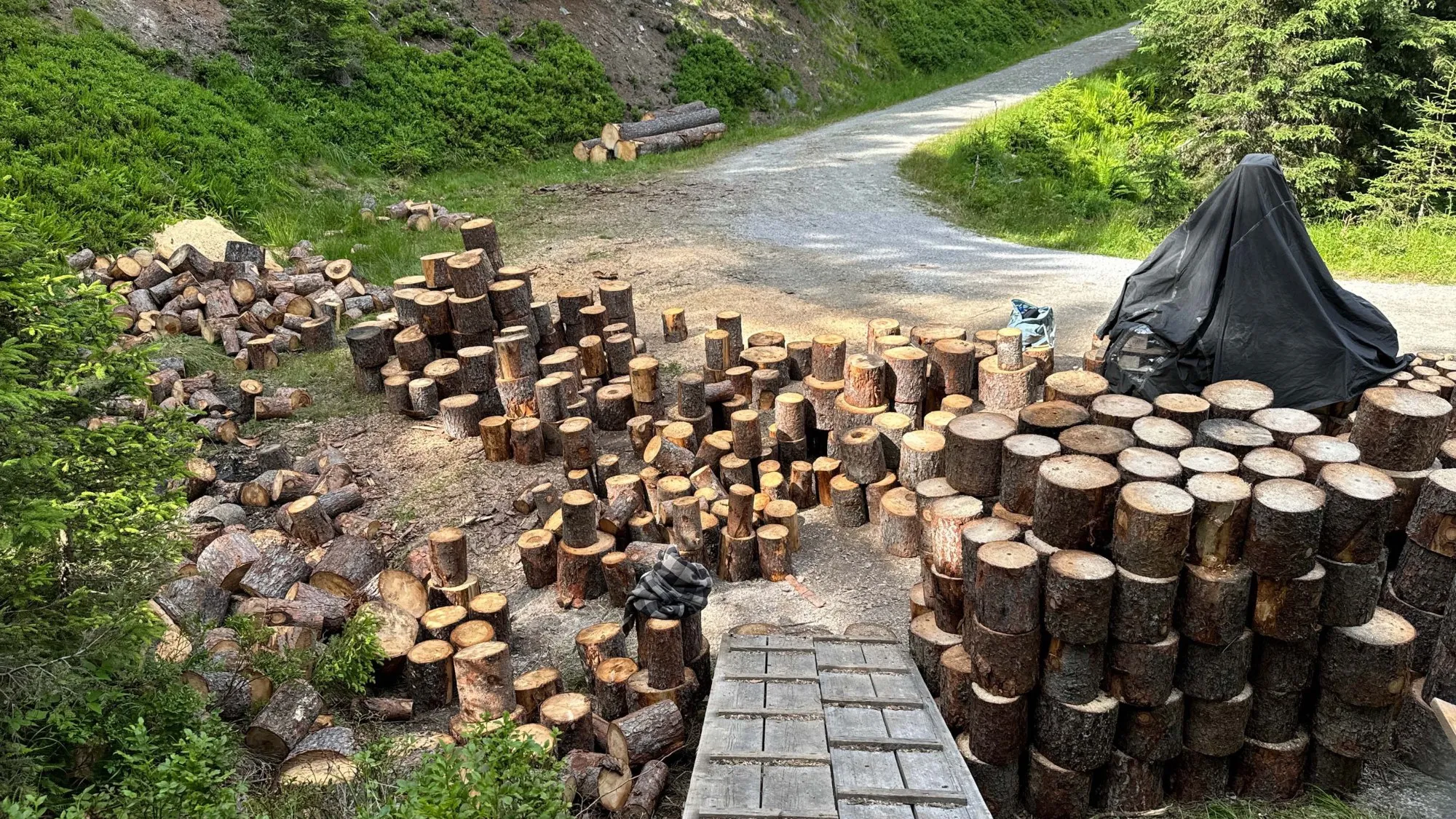
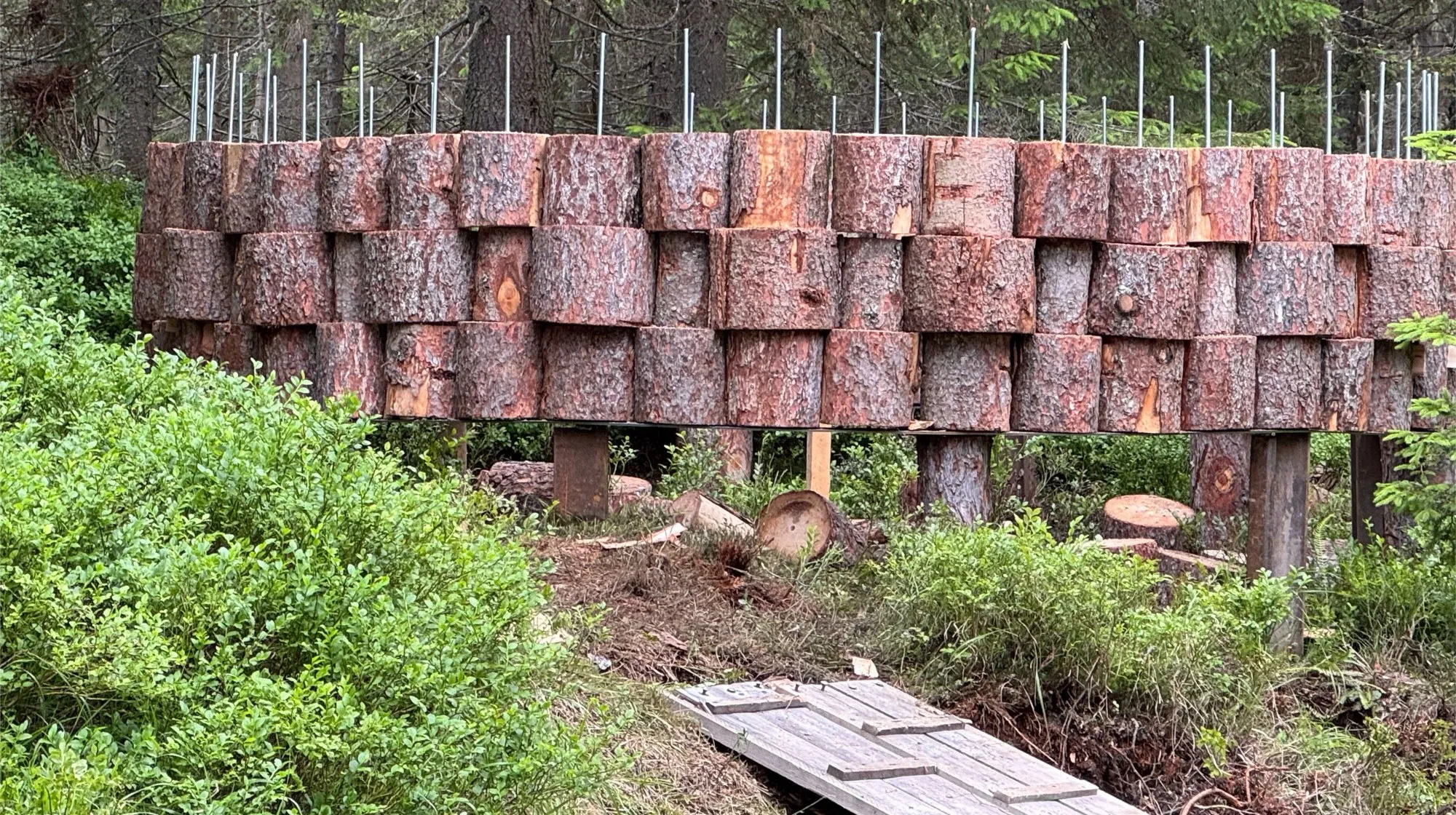
The surface is made of short sections of trunk, each about 25 cm tall, in three diameters of 15, 25 and 35 cm. A first ring of 25 cm pieces sets the base. Above it, larger and smaller sections alternate, so the wide ones push 5 cm beyond the layer below and the narrow ones sit back by the same amount. The pattern of projections and recesses seems to travel around the drum, though the object itself stays still.
The title refers to keeping something sacred. Summit crosses are a familiar sight in these mountains, and the artists propose another kind of shrine, one that honours the forest instead of placing people at the centre. The work also carries a contradiction it does not hide: to honour nature, it has to cut and rearrange part of it. The artists place this against the history of land art, from the large earthworks shaped by machines to quieter practices closer to the deep ecology of Arne Næss, which values non-human life for its own sake.
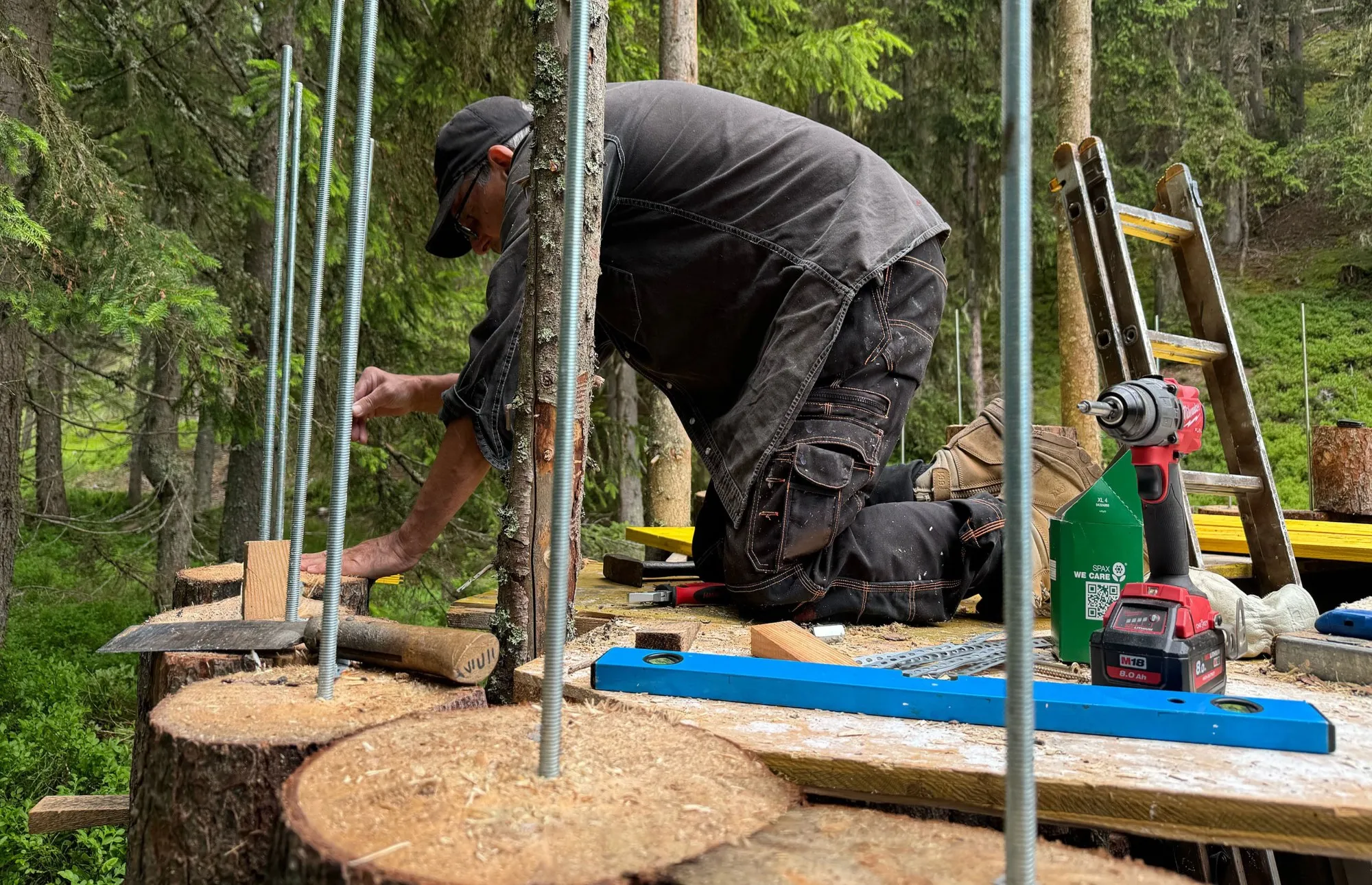
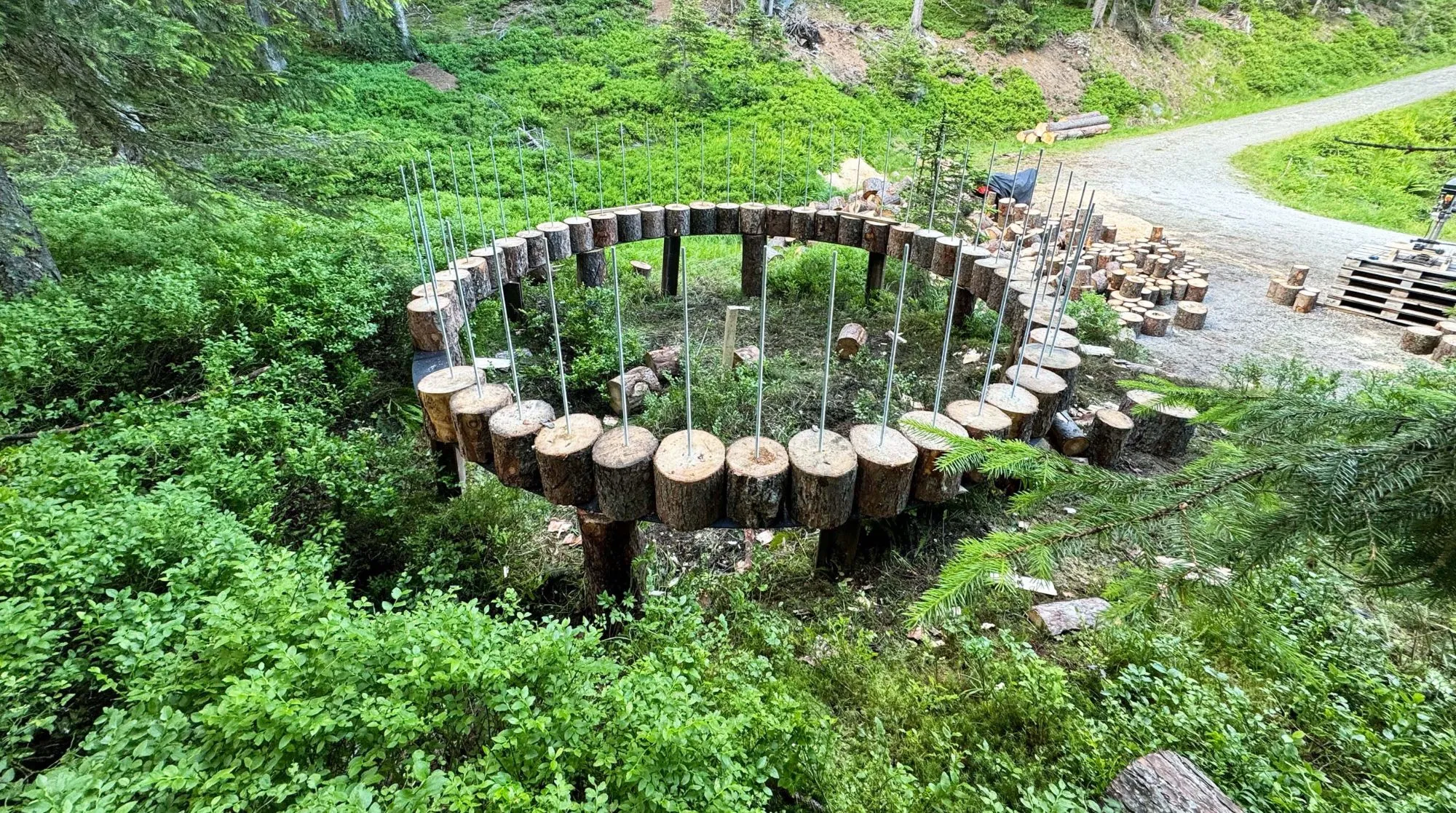
Work began with sketches, calculations and a 1:10 model in natural wood. On site, each timber section was drilled through the centre and threaded onto steel rods fixed to a circular base plate anchored in the ground. The threaded rods were extended in three lengths as the cylinder rose, so pieces could be placed, removed and adjusted, and the frame was designed for heavy winter snow. Temporary scaffolding inside gave access to the upper rows. The wood rarely matched the numbers, and many pieces were trimmed or shaped with an axe until they fitted.
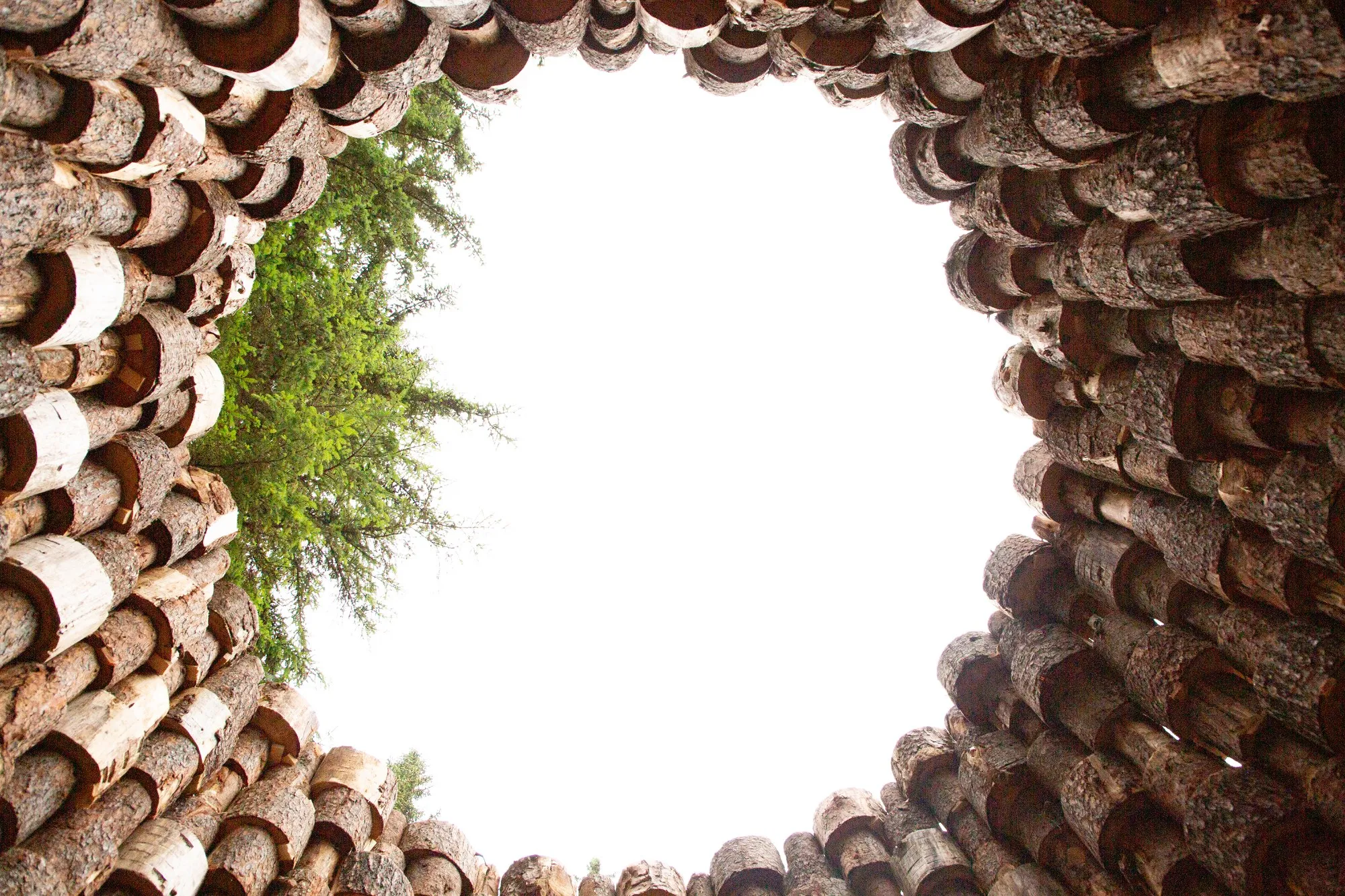
Rather than levelling the uneven ground, the artists raised the whole structure about 75 cm on its frame. This avoided digging into the site, kept the timber away from damp soil and slowed its decay, and left the heavy cylinder looking as if it hovers among the trees. Visitors can step inside, where the work changes from an object in the landscape into a room within it. A circle of sky and treetops opens overhead, the sound of the forest shifts, and the smell of spruce and resin comes close.
The untreated timber will weather in the alpine climate, and the artists accept that change as part of the piece. Like the forest around it, the sculpture is subject to time, and each visitor who walks into it brings a reading of their own.
Project Information
- Design studio
- Stuart Ian Frost & Gunhild Lien
- Time
- 2024
- Type
- Installation
- Primary materials
- Natural timber, Steel
Comments