Capannone 15
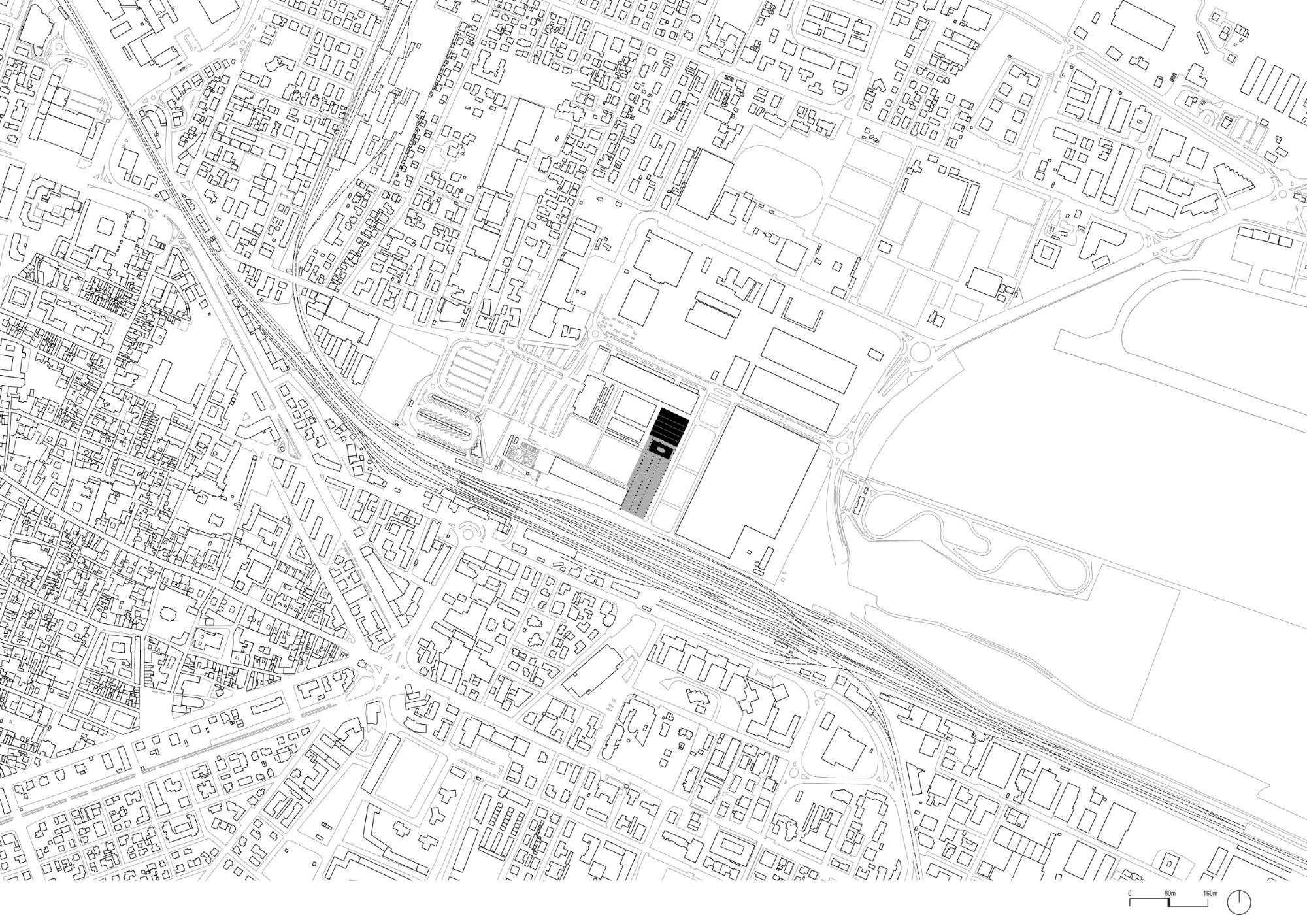
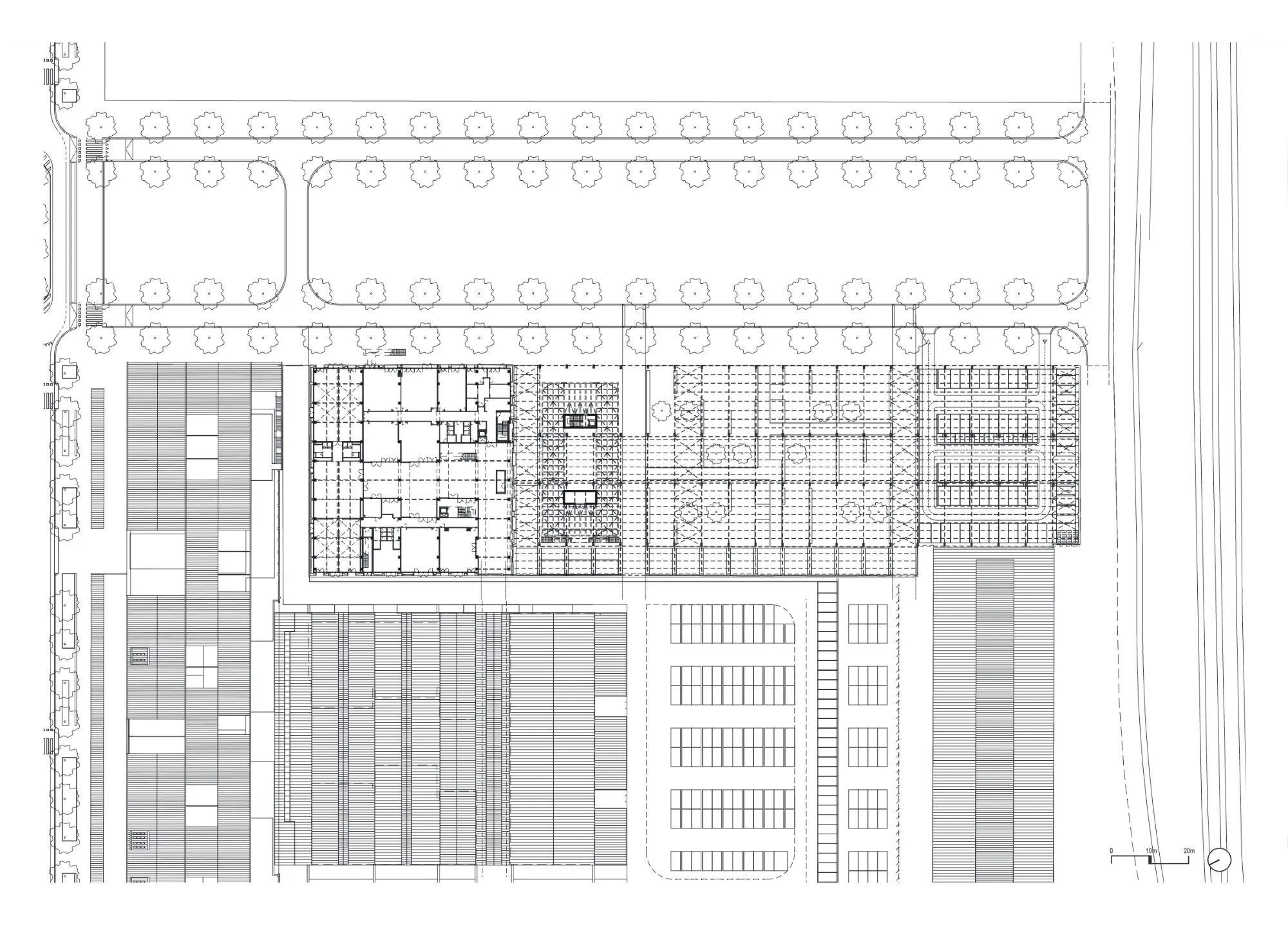
On the northern edge of a historic centre, a 60-hectare industrial site lay abandoned for decades after the factory that had built locomotives, railway carriages and aircraft since 1904 stopped production. The site is now being turned into a district for research, enterprise and education, and one of its key pieces is this conversion of the largest disused hall into a university campus, an innovation incubator and a public park.
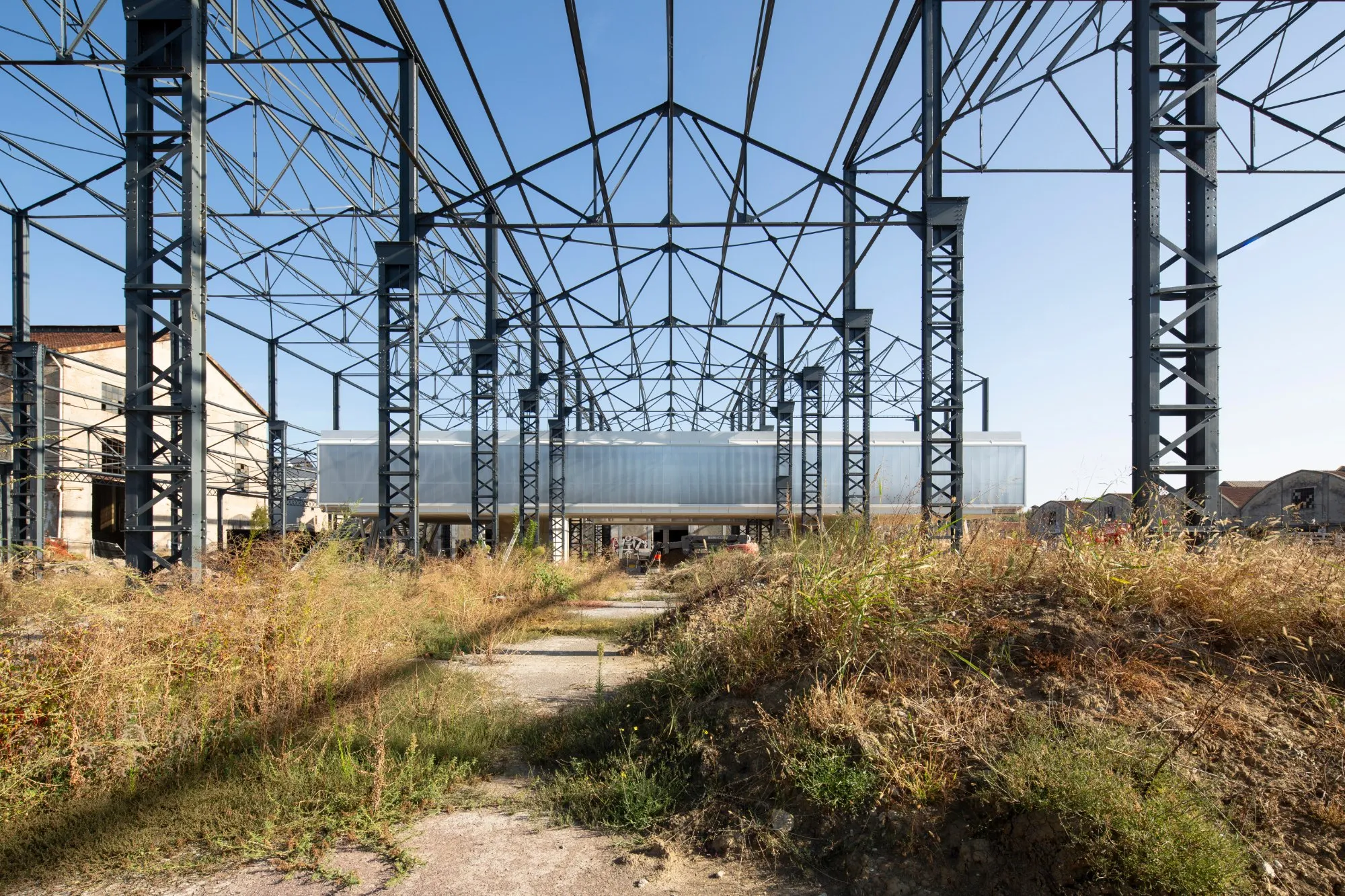
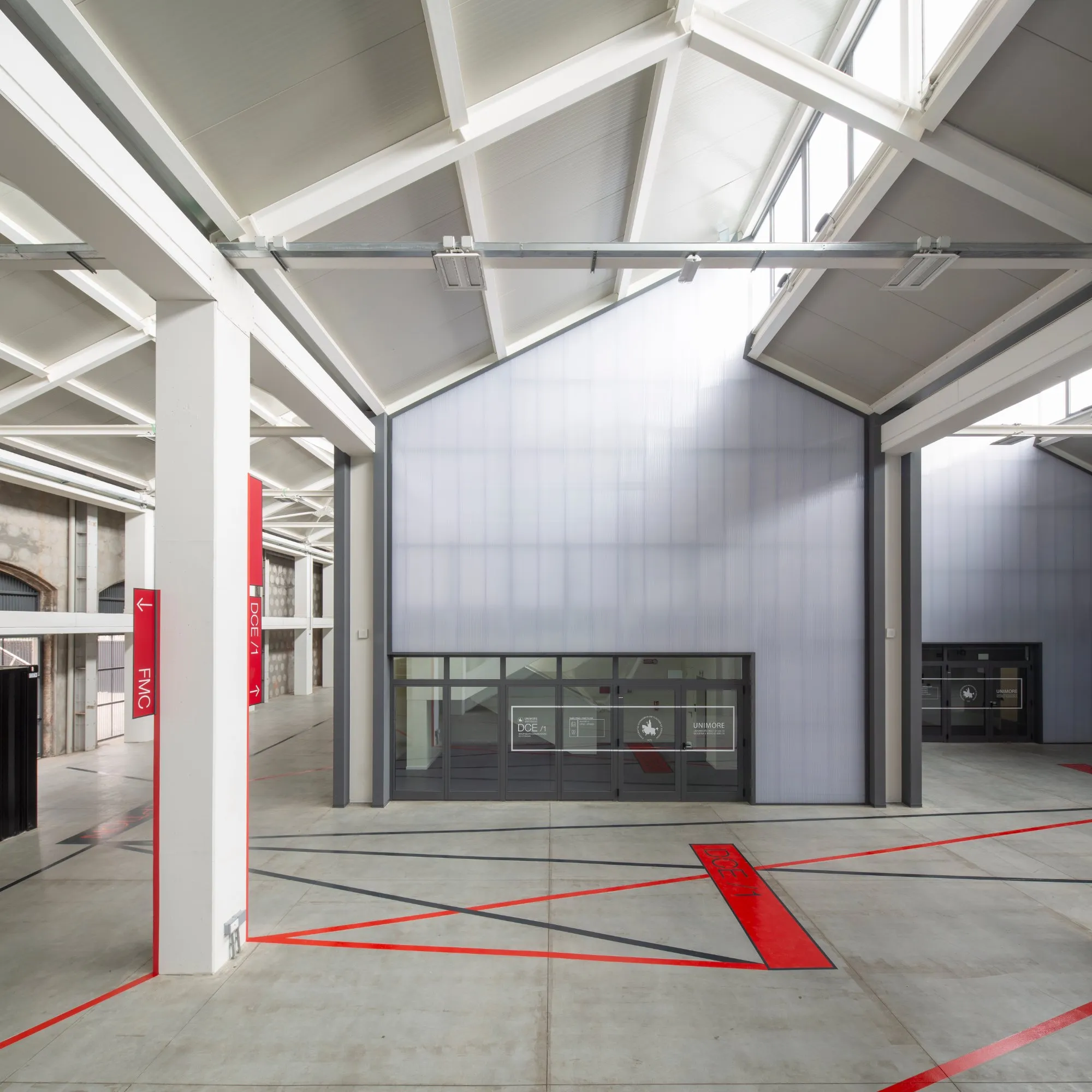
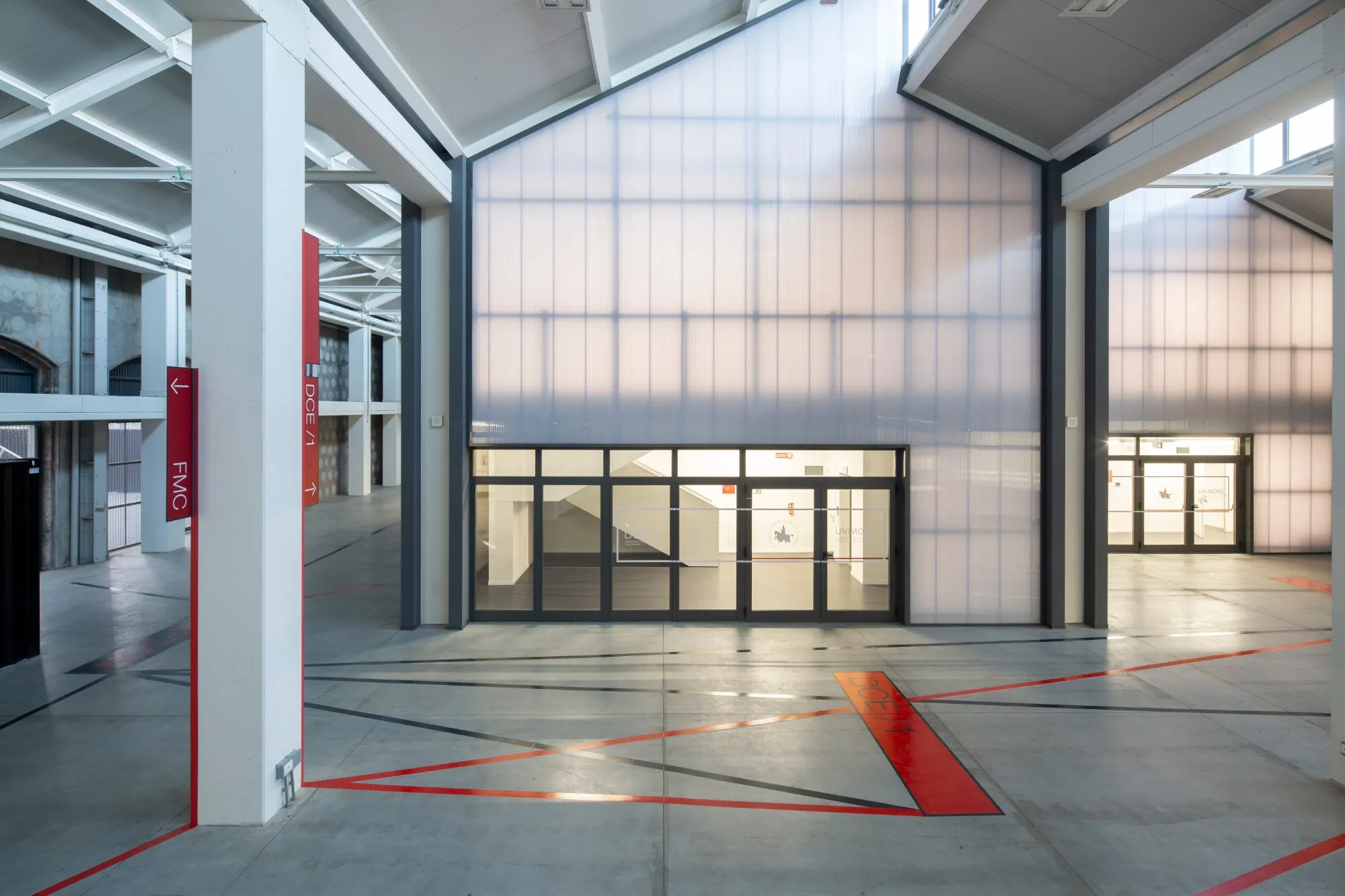
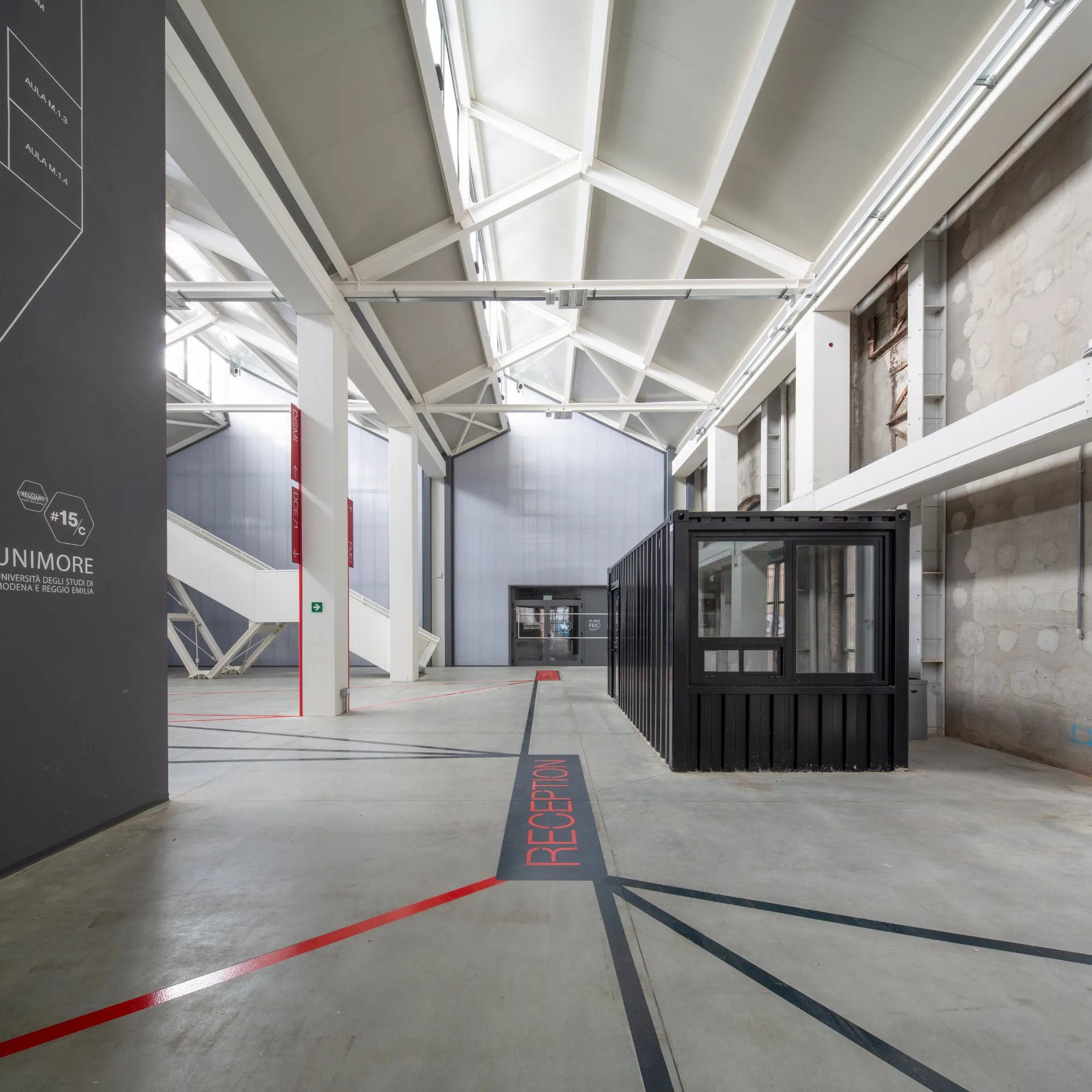
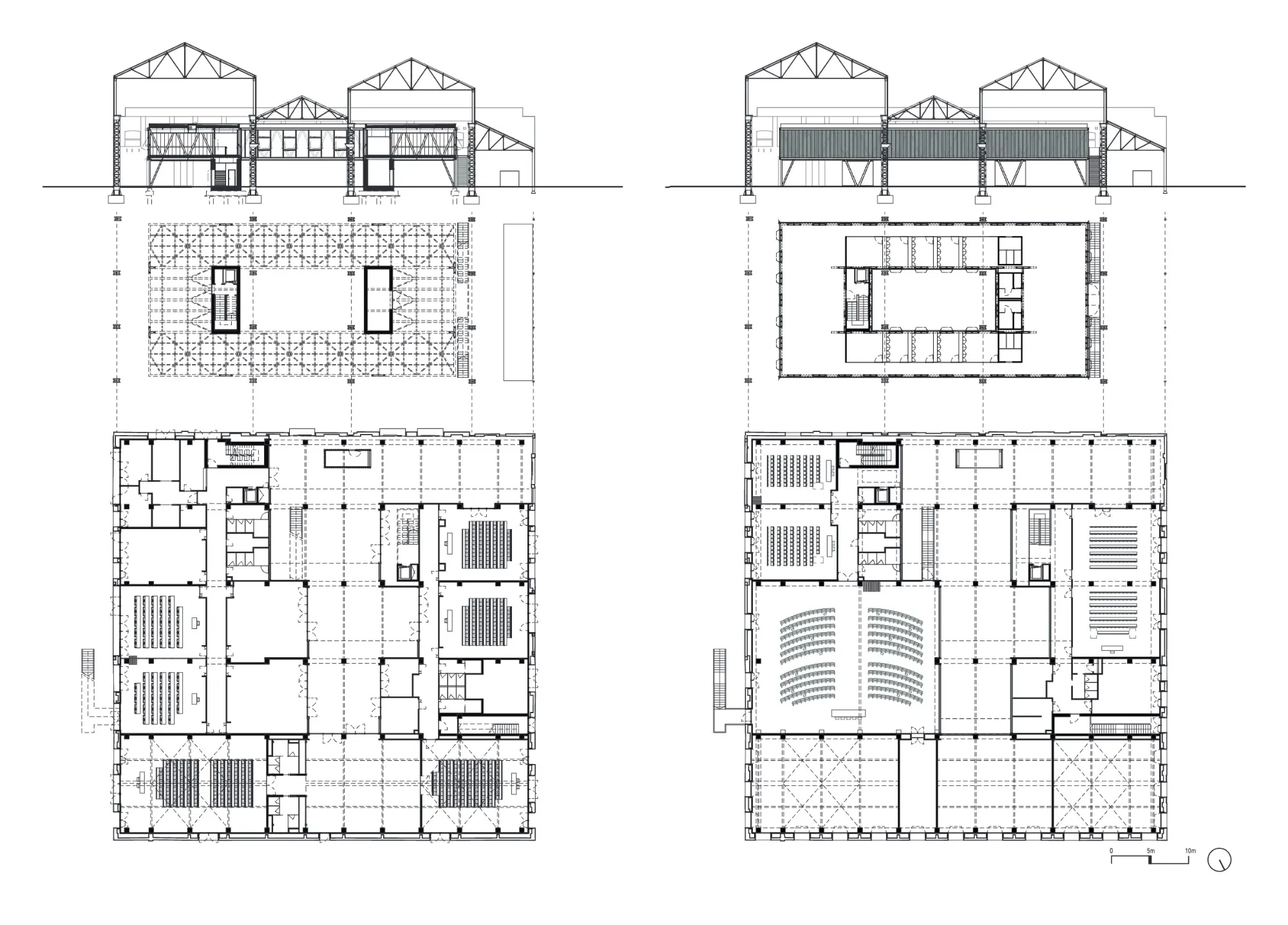
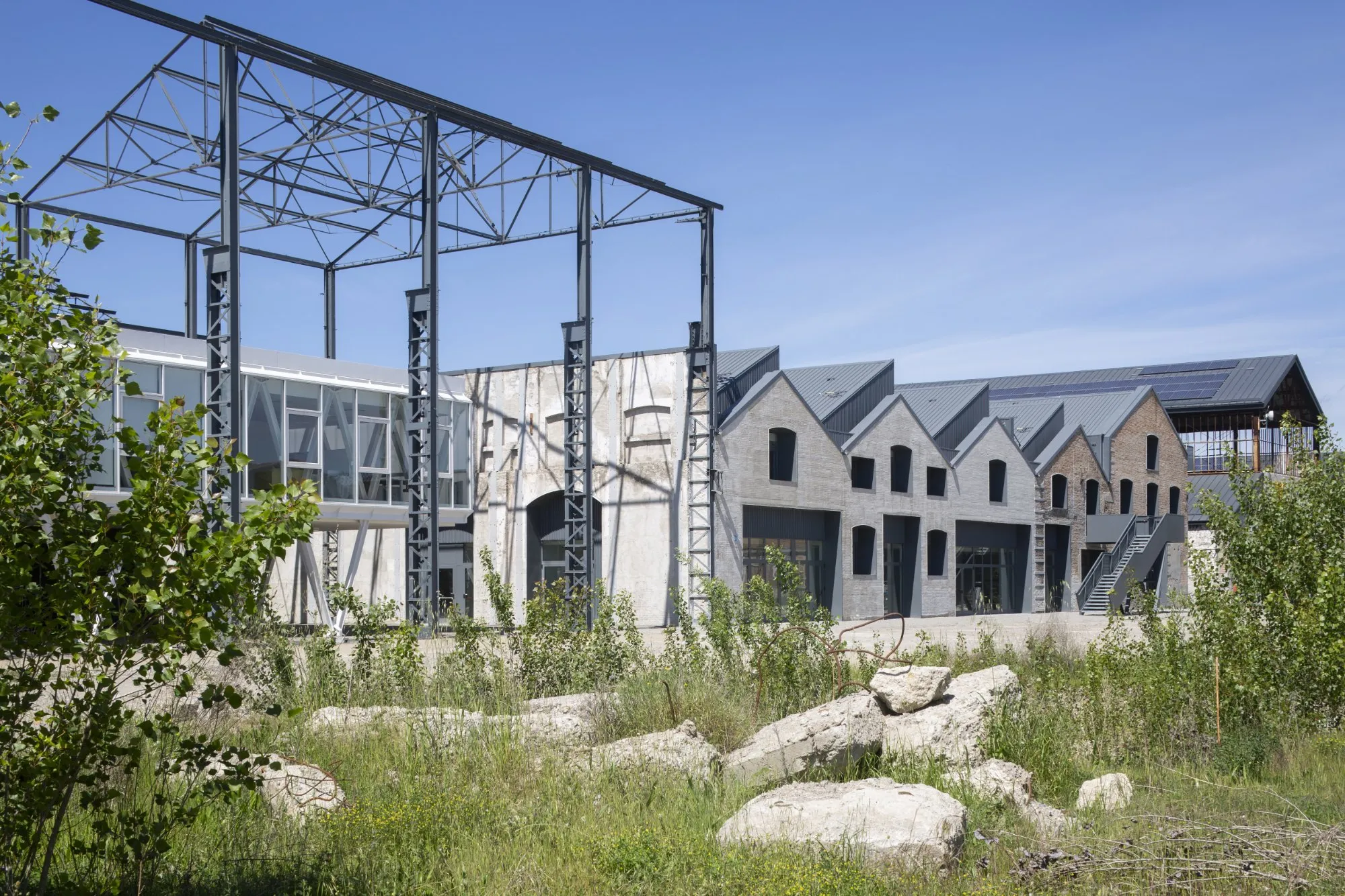
Visitors first cross a tree-planted garden enclosed by bare steel columns and beams, the surviving frame of the factory, stripped of its infill walls and structurally consolidated. At the far end of the nave, a suspended volume spans the space like an overhead travelling crane. It houses the incubator, a self-supporting pavilion whose position comes from an archive photograph of a railway carriage hanging from the cranes inside this same building. It never touches the historic frame, so the whole length of the hall stays visually open.
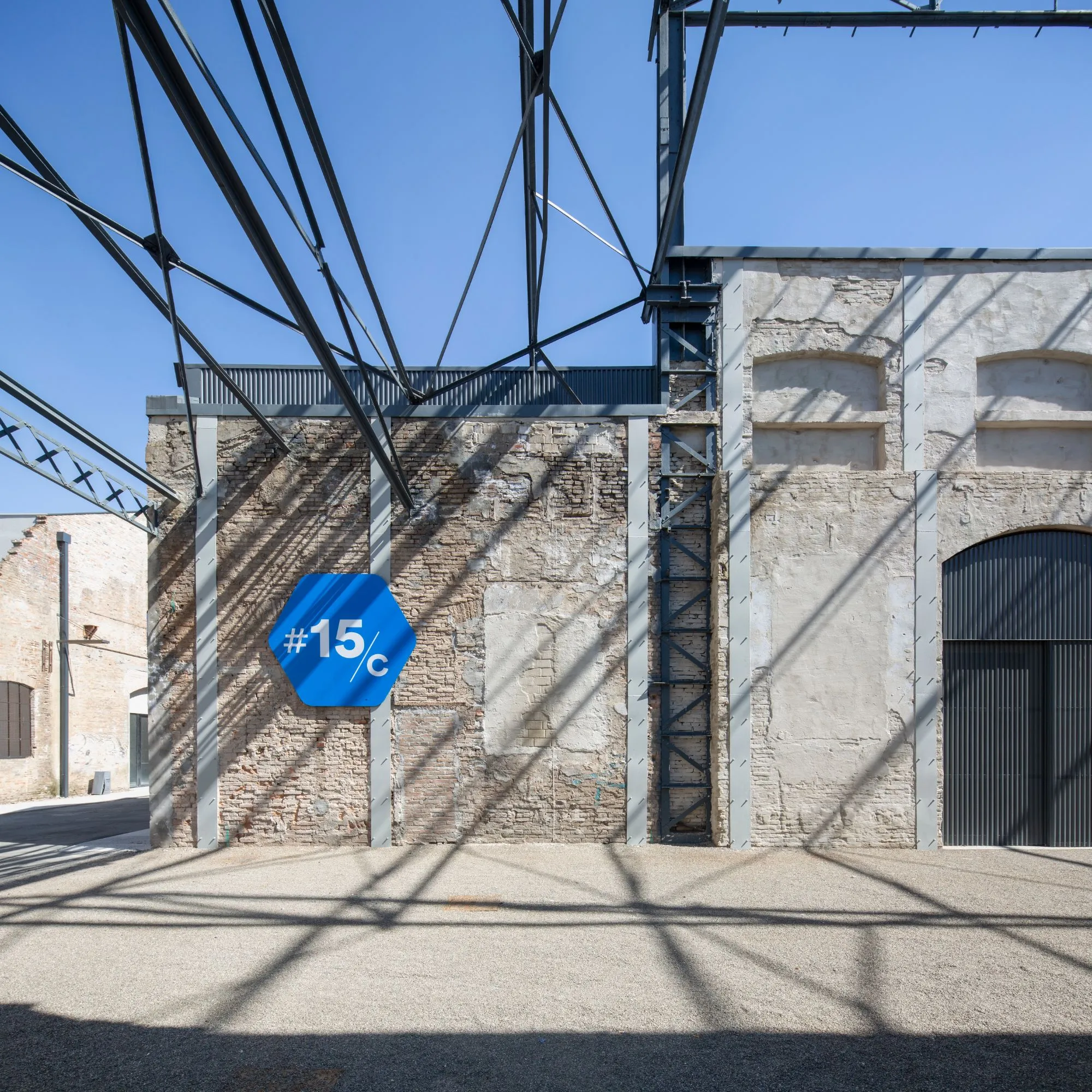
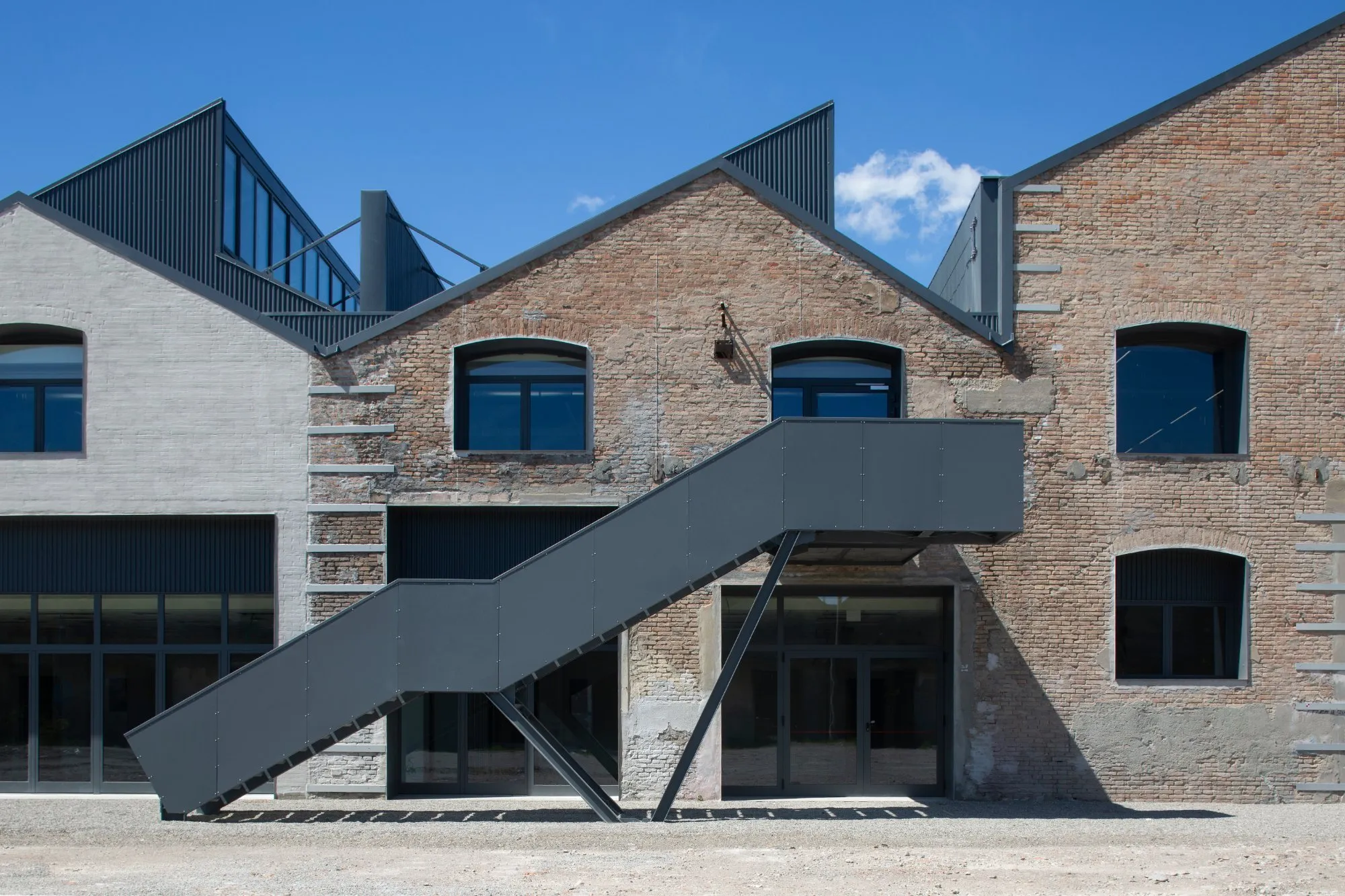
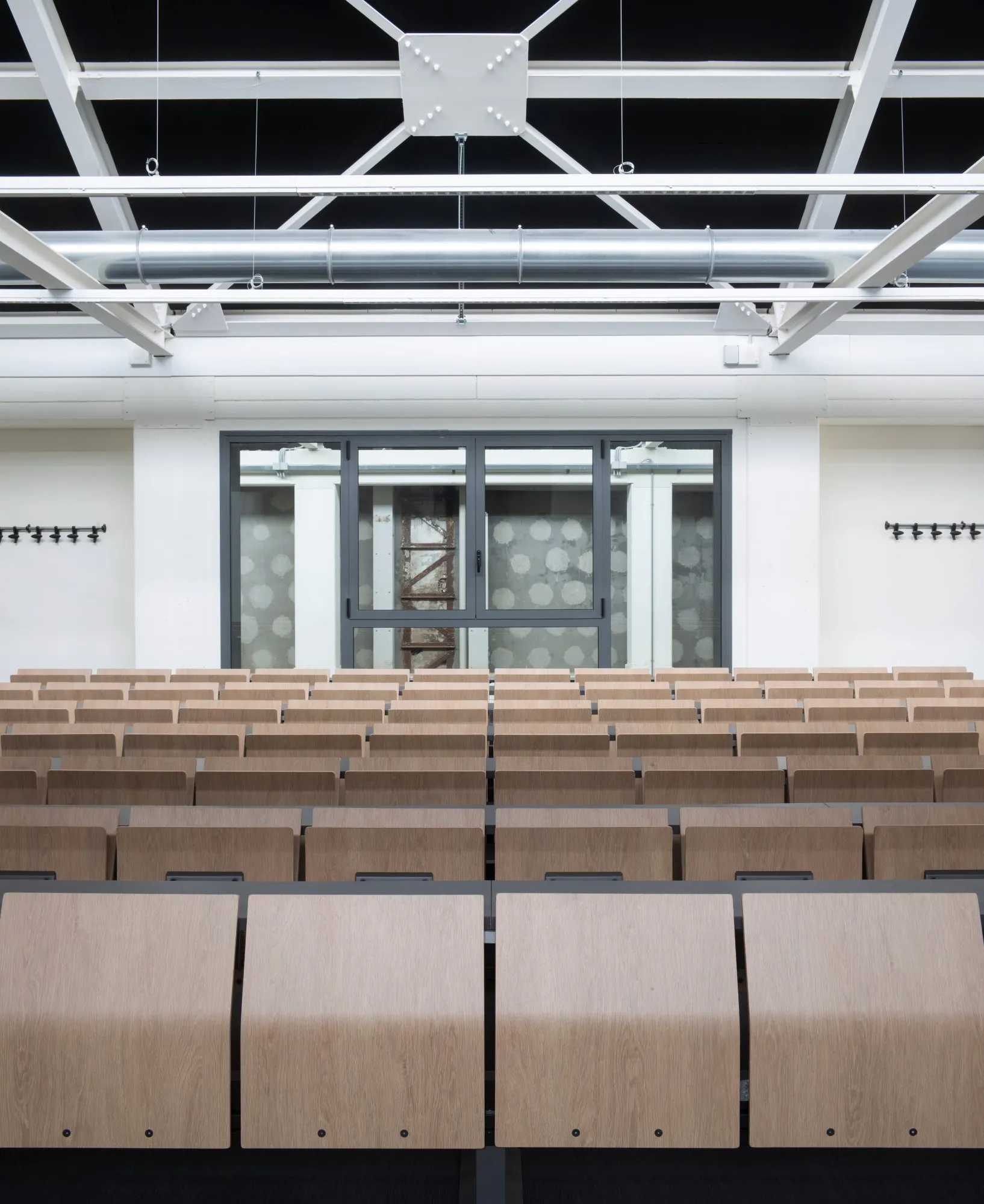
The design team used two strategies for two structures. In the three-aisled steel hall, only the frame was kept, holding the park and a freestanding building within it. In the neighbouring hall, the reinforced-concrete frame was too deteriorated to save, so its perimeter brick walls were preserved and are now carried by a new concrete structure built inside them, reproducing the original layout. Above the old brick, the sawtooth roofs bring into classrooms and laboratories the same even, diffused light that once lit the factory floor.
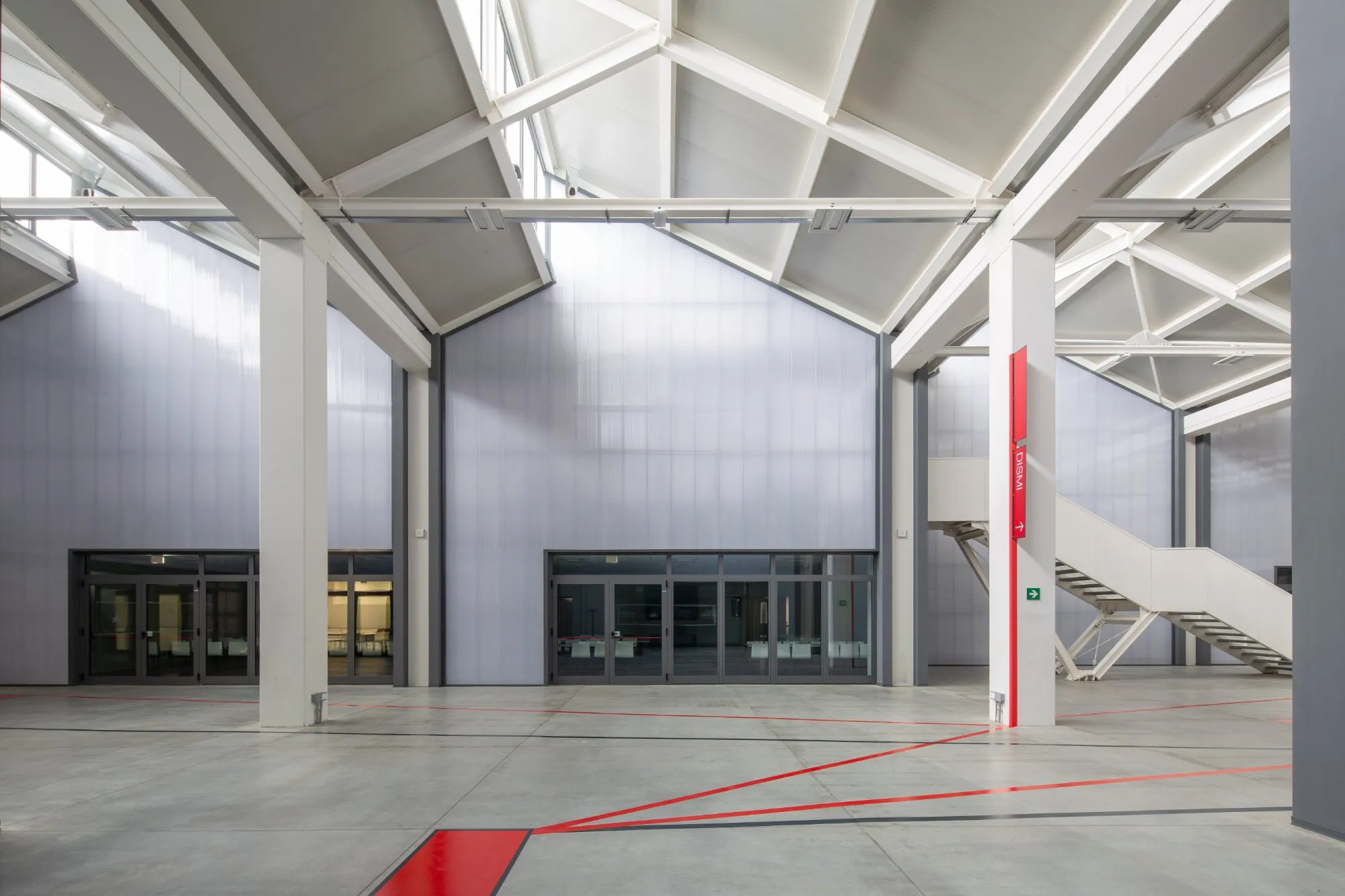
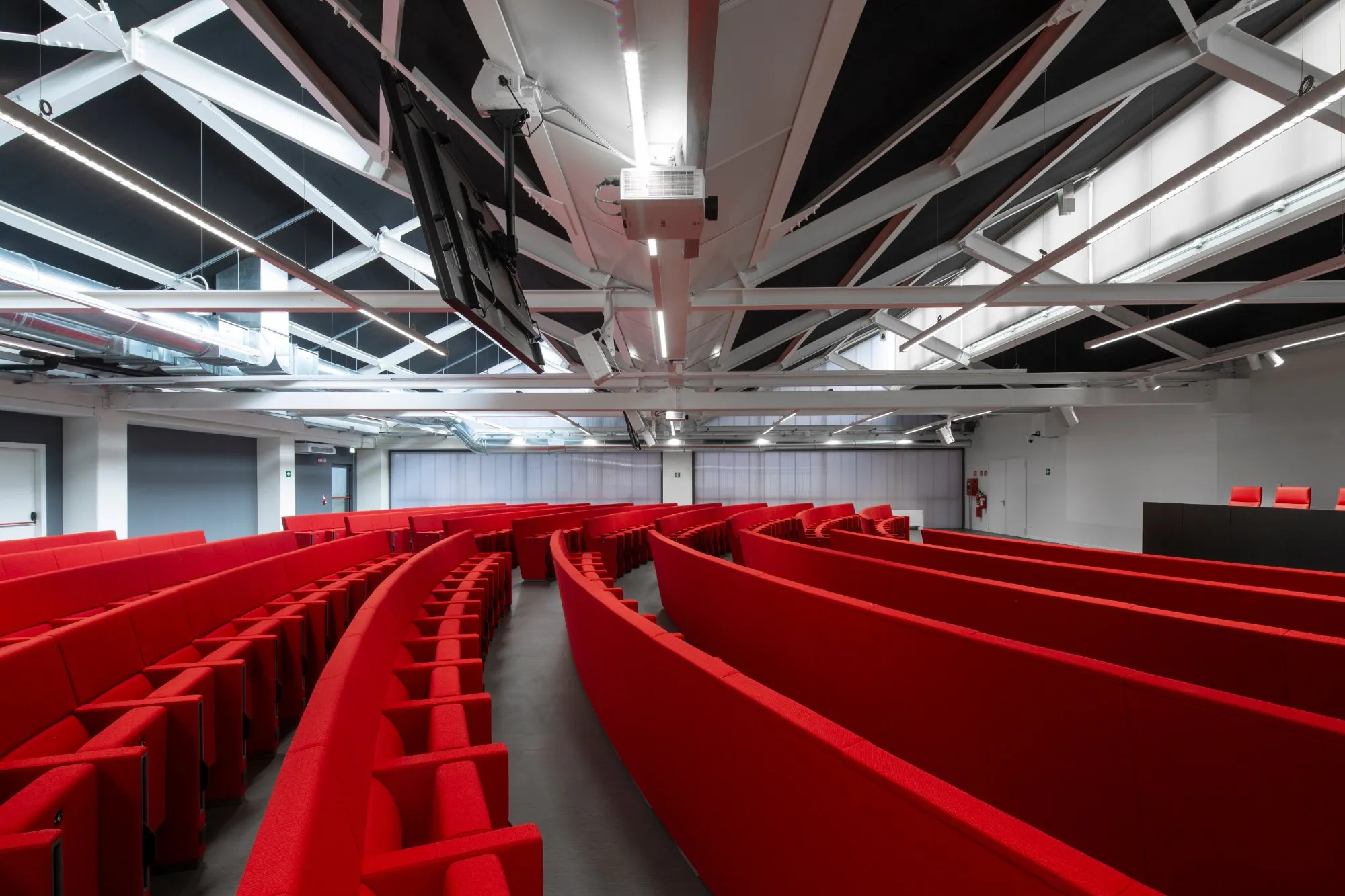
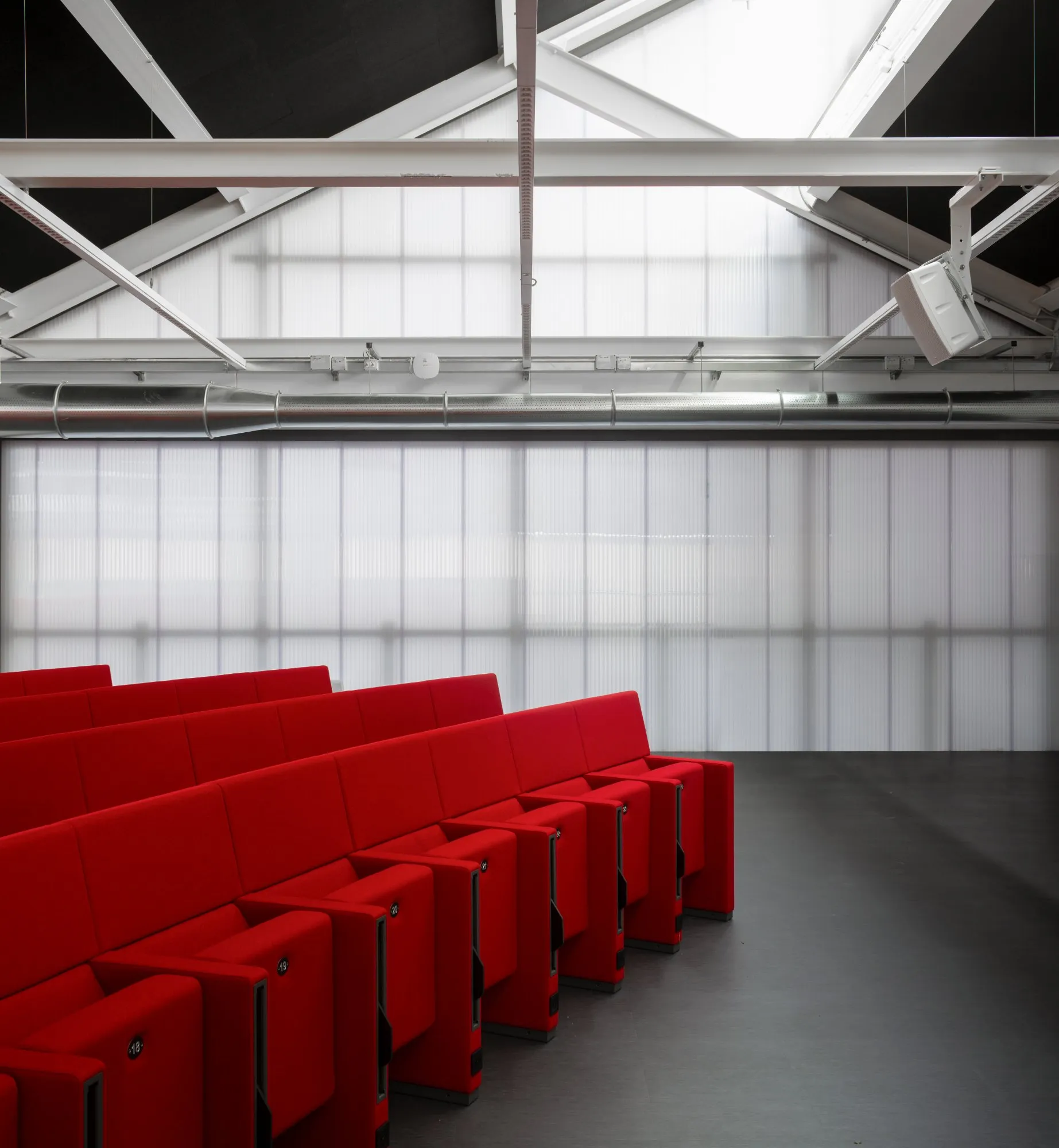
The result is a continuous sequence of public spaces: the inner garden, the entrance building and a covered piazza that leads to the university departments. The piazza, with its workstations and meeting areas, is where students meet the research work of the incubator and where the campus opens to the city during public events. A 300-seat auditorium is also available for civic use. Classes began in September 2024, for four degree programmes in digital disciplines and around 2,000 students.
Project Information
- Design studio
- Zamboni Associati Architettura
- Time
- 2024
- Type
- Educational, Renovation
- Primary materials
- Steel