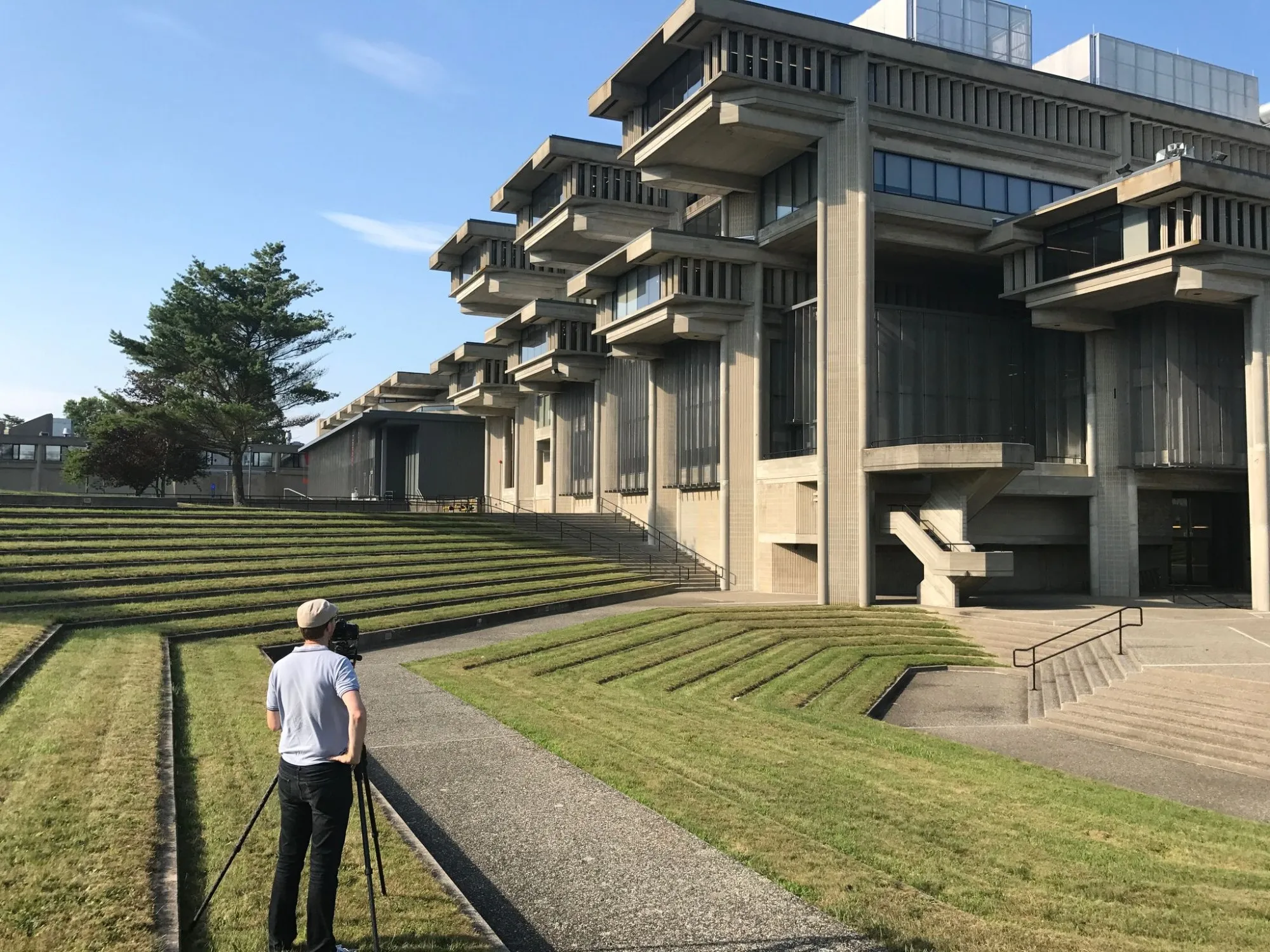
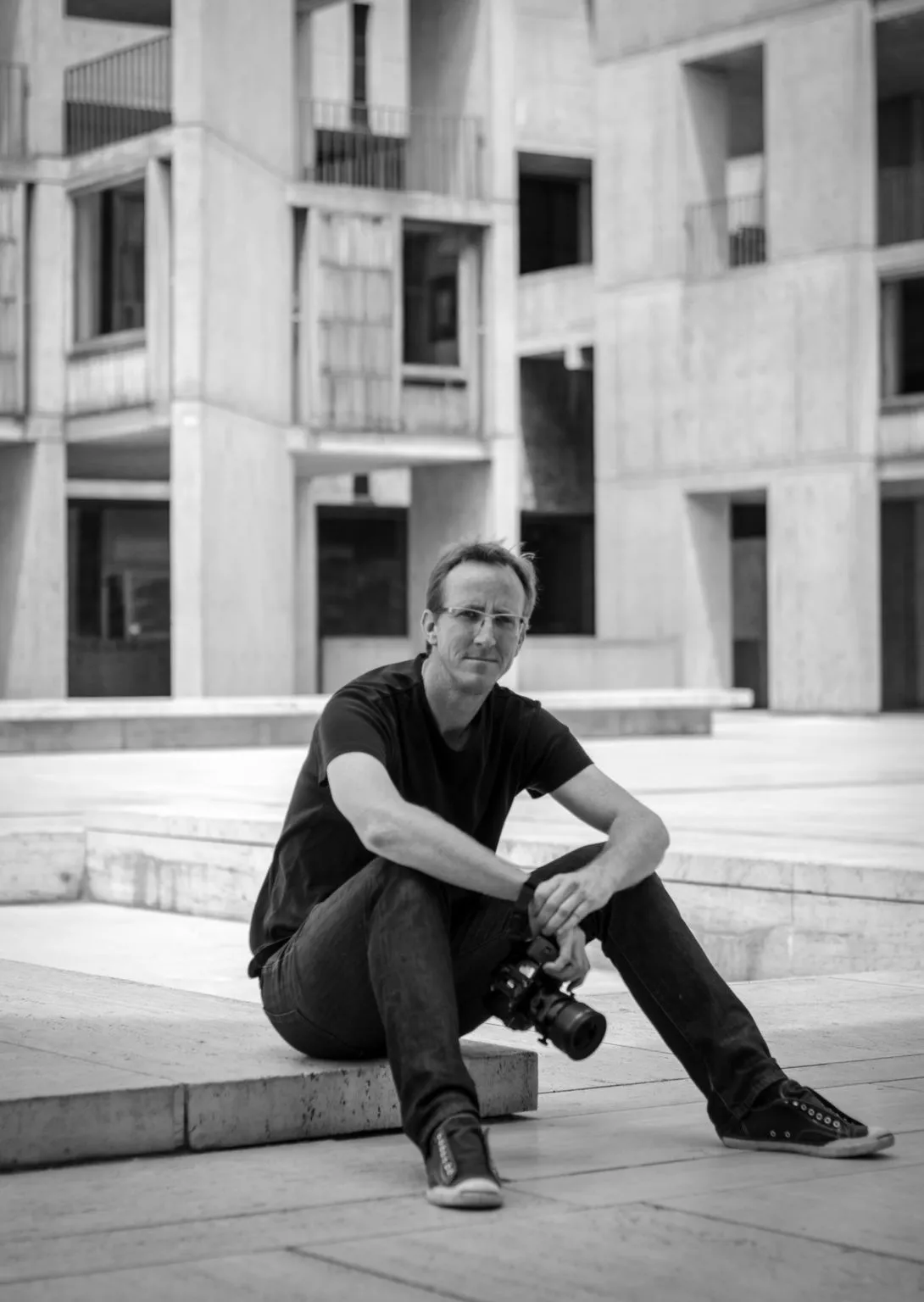
With NOTES, photographer Darren Bradley has become a close friend of us since his first trip to Vietnam. Although being an architectural photographer has never been Darren’s main job, the value he brings to the field of photography, both in the United States of America and globally, is immense. A man of few words, he travels the world each year, dedicating more time to observation than capturing images. Darren believes that photography is not just a tool for documentation; more importantly, it serves as a bridge, helping readers understand the history, context of each region, and the messages conveyed to the future by every designer. Our conversation with Darren Bradley is a journey back to the past, discovering insights of this American man connection’s with photography. Architecture demands for many dedicated souls, like Darren.
I have learnt that you have just returned from your trip to Ukraine.
That is correct, I have had such a memorable time in Ukraine. This country gave me an utmost normal feeling as any other European countries that I have been to. Yet it was impossible to overlook the lingering effects of an ongoing and unresolved conflict. In reality, there were numerous buildings and architectural structures severely damaged, and multiple security checkpoints established. Despite Ukraine’s earnest efforts to uphold a positive and ordinary way of life, the palpable tension resulting from the enduring war they confront was unmistakable. I empathise with their plight, and this nation necessitates the collective assistance of all.
Did you visit any architectural structures?
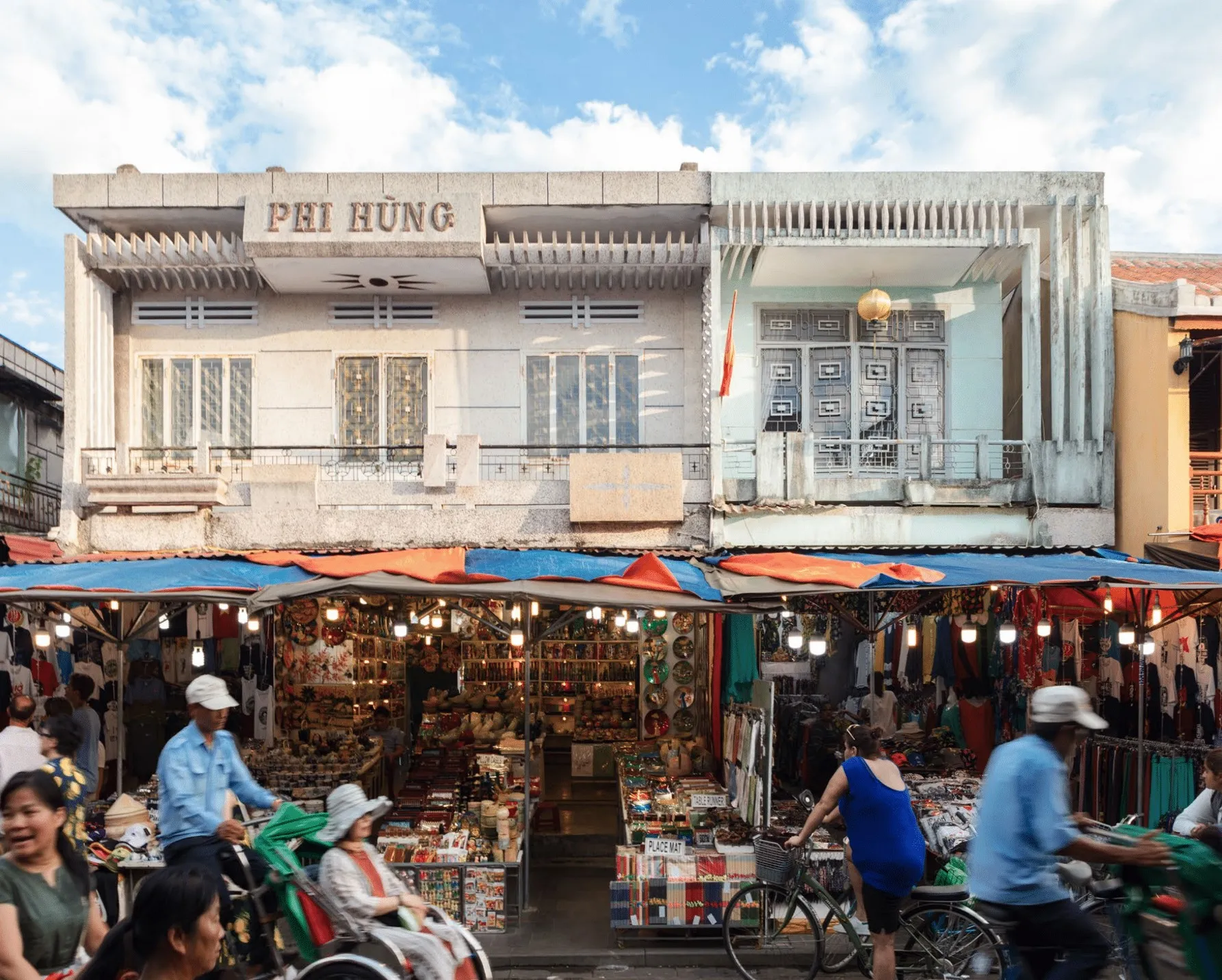
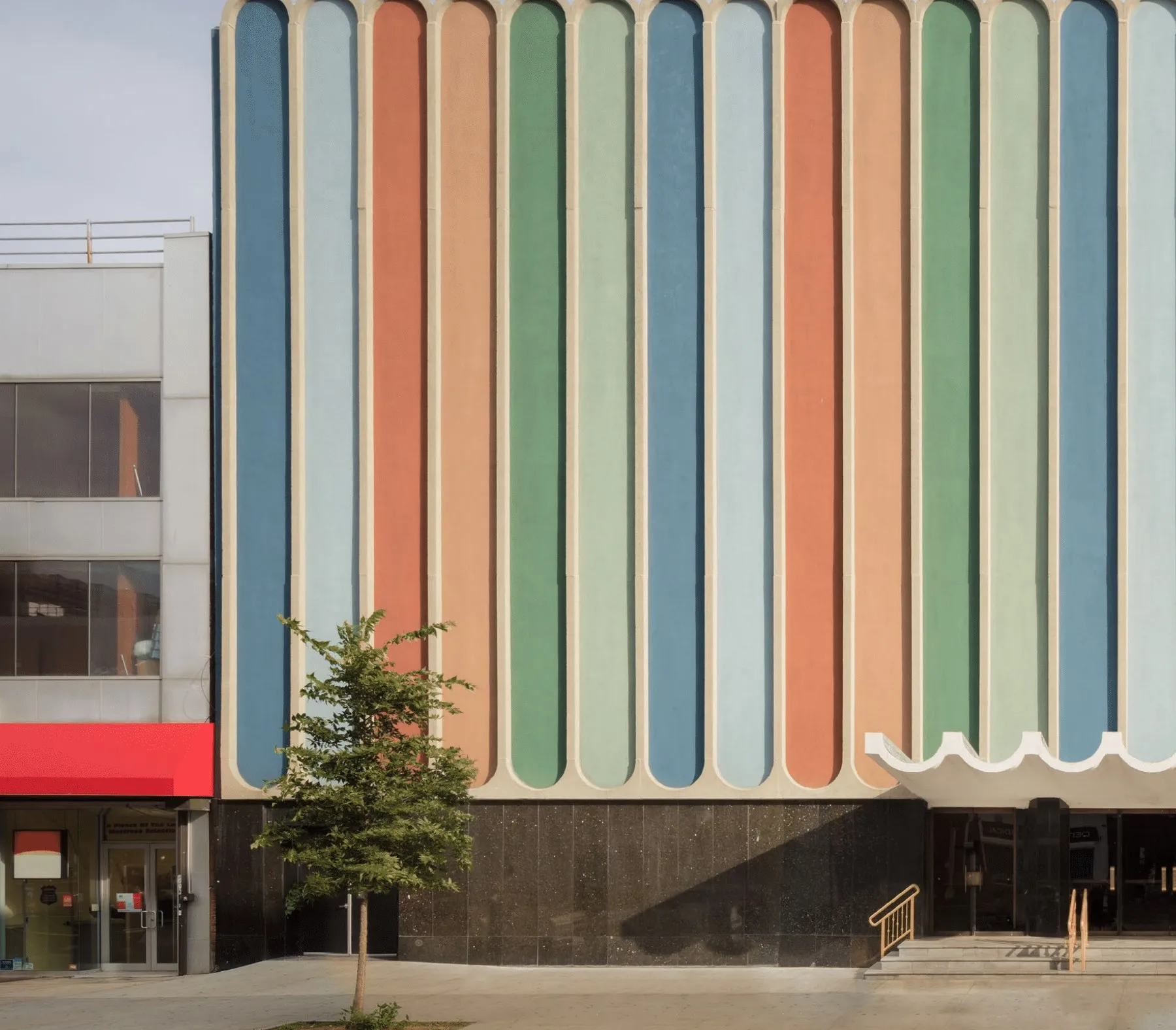
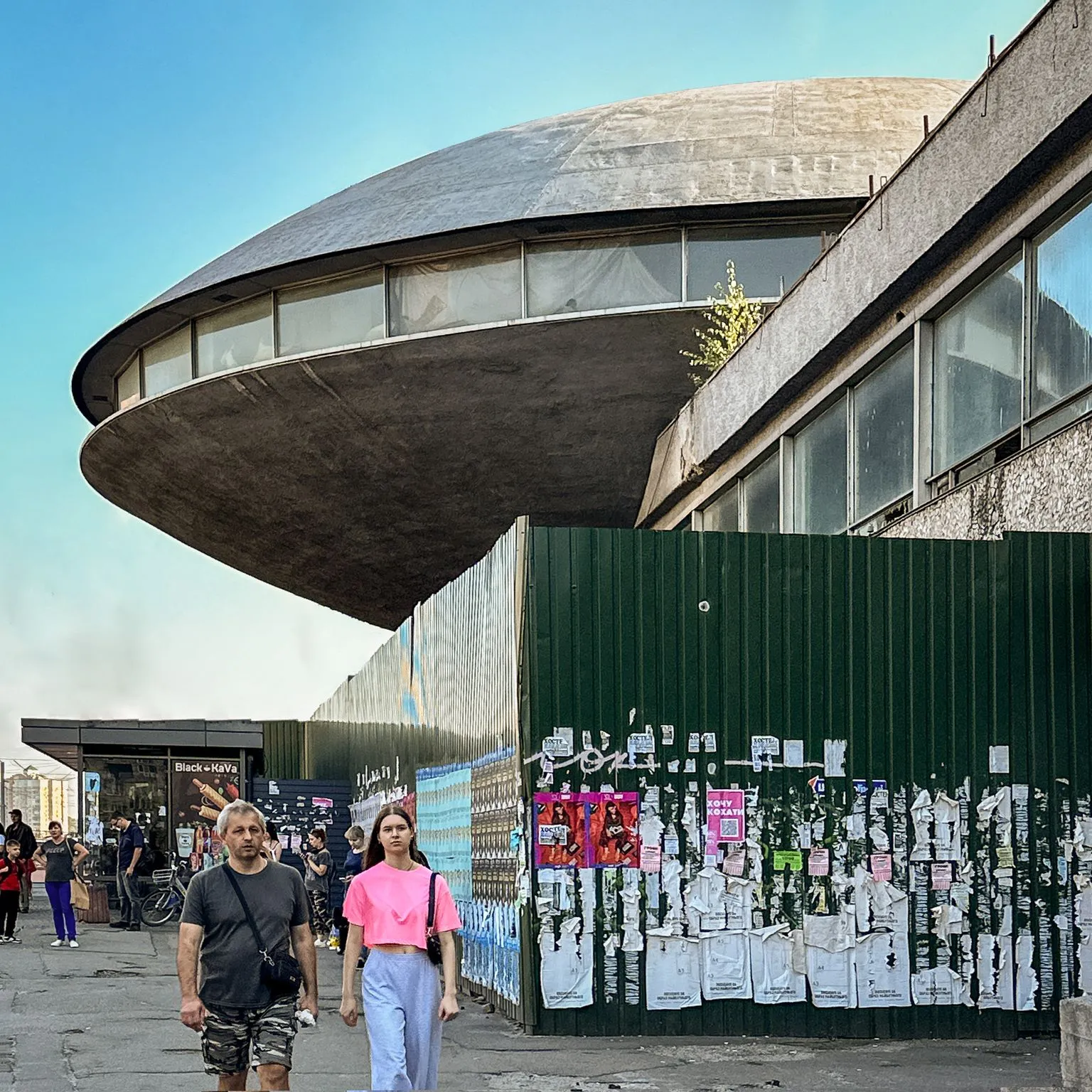
I came to Ukraine to support the Ukrainian government in Defence and Security in communications. I neither had time nor my camera and equipment with me. On some occasions, I even left behind my own phone, relying on the kindness of others to borrow their devices for capturing necessary photos. Nonetheless, I made it a point to visit and photograph several renowned landmarks that had caught my attention, including the intriguing UFO-shaped building, a hotel with a striking resemblance to a colossal cylindrical tower, and other noteworthy architectural marvels. Fortunately, I was fortunate enough to enjoy a delightful afternoon exploring the vibrant centre of Kyiv, capturing captivating images to share on Instagram, allowing others to join me in the experience.
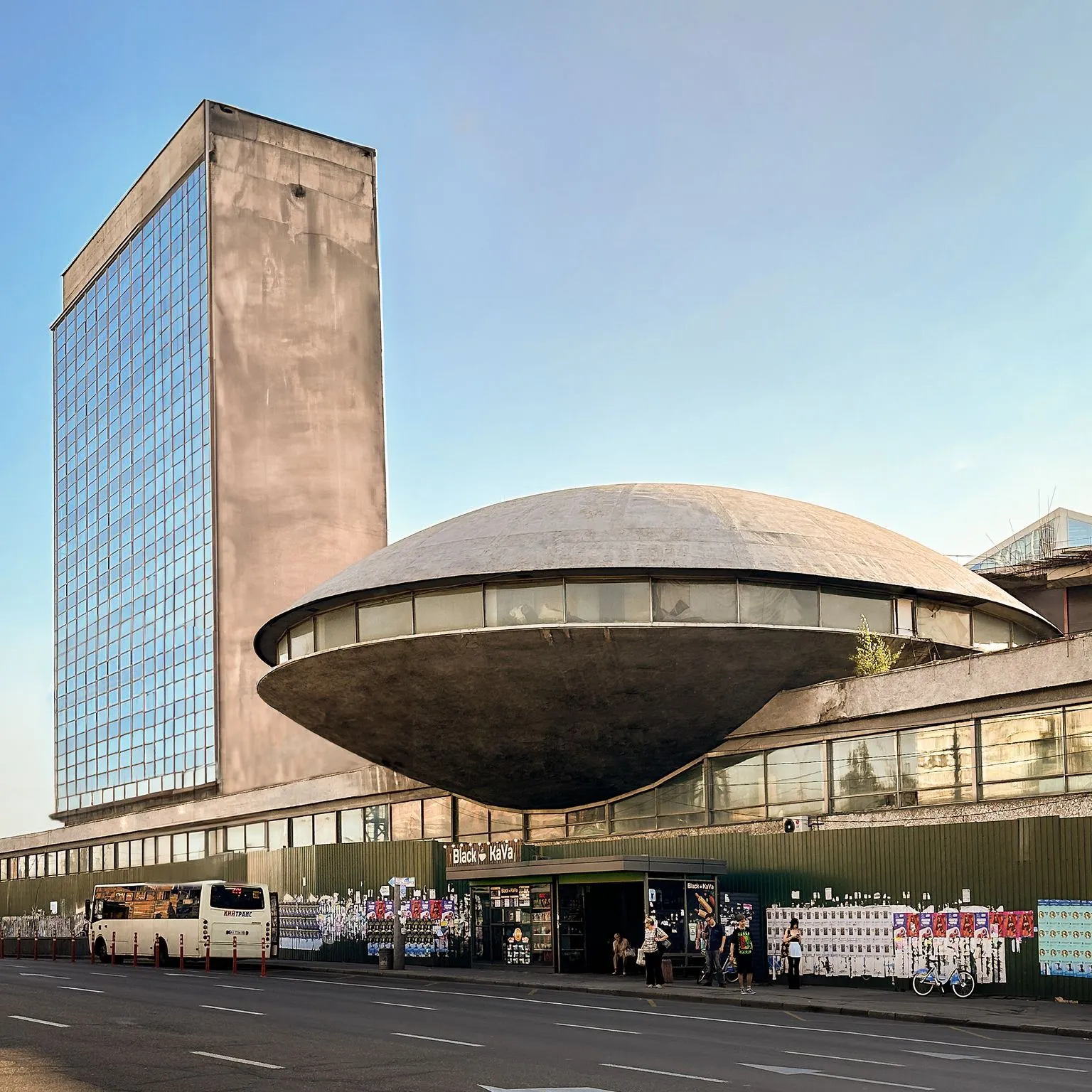
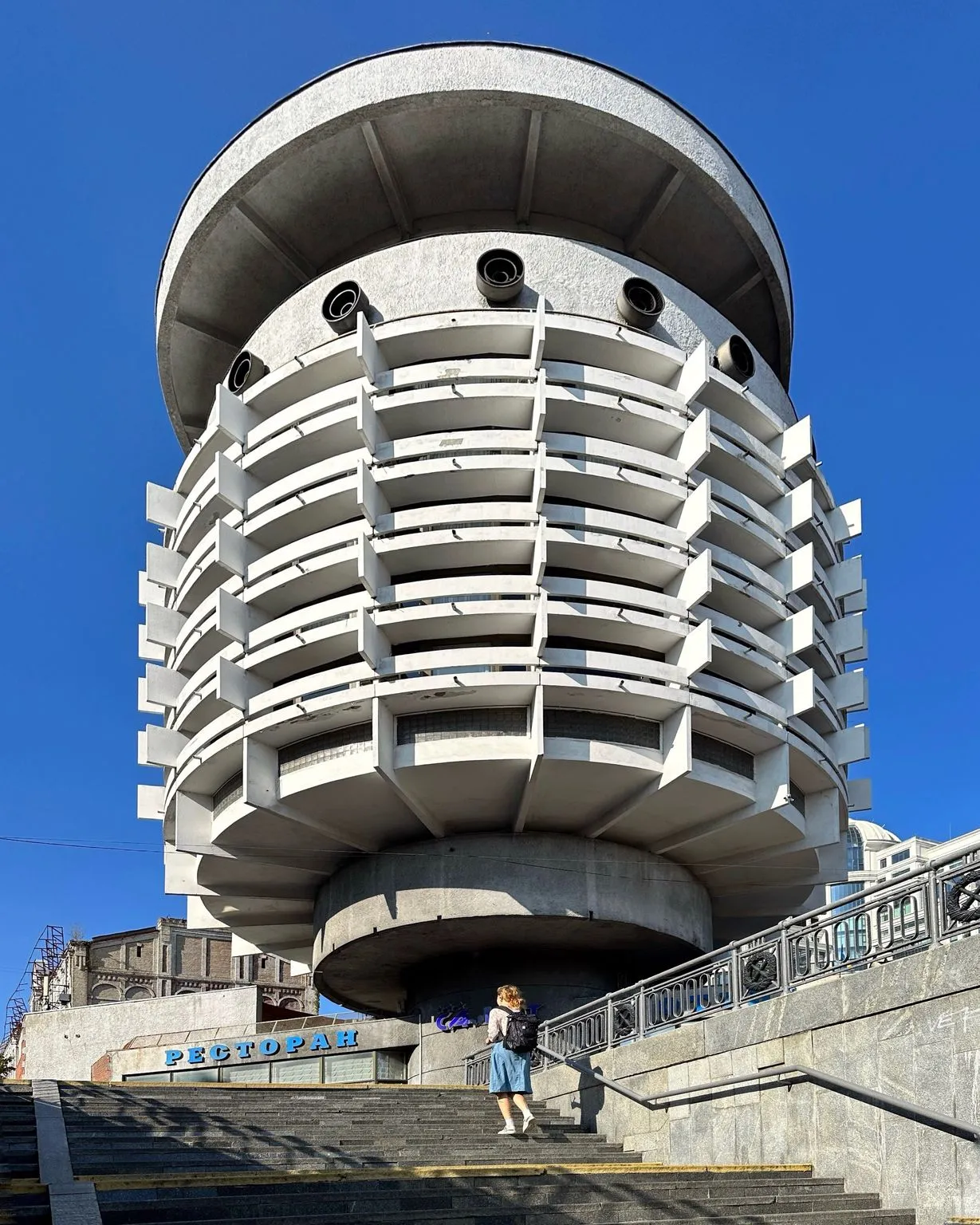
Some architectural structures in Kyiv, Ukraine. Photo: Darren Bradley.
What do you think about your photography profession?
I have never formally studied professional photography or architecture. My university degree is in history, which includes some knowledge of architectural history. Photography has simply been a personal hobby of mine, and I never pursued it. It was not until I have officially become an architectural photographer that I began to cultivate it as a dedicated and professional pursuit.
Darren, let us talk about your first architectural photo.
Well, let me see. It is quite a task to remember my first photograph taking of an architectural work! (Smiles) Since childhood, I have always been aware of the emotions that each architectural structure evokes when given the opportunity to step inside and admire it. It could be a sense of mystery and awe, immersing oneself in a vast and expansive space, or experiencing a feeling of claustrophobia when standing in a confined and suffocating place. I have always yearned for these natural reactions and emotions when visiting any artwork.
Some of the earliest architectural structures I could remember photographing when I was younger include the Eaton Centre in Toronto (Canada), a commercial centre with an exceptional glass ceiling, the John Portman-designed Hyatt Regency in San Francisco (the USA), and Paradero, a rustic concrete-structured hotel. I have always been drawn to large-scaled architectural works due to their almost monolithic nature, resembling sculptural masterpieces. My initial admiration for architecture perhaps stems from projects of this essence. Another unforgettable experience was visiting the Expo 86 international exhibition held in Vancouver, Canada. It was truly a showcase of pavilions, and I was captivated by the spaces on display. I captured all of it with my trusty install film camera. Those might be the first architectural photographs that still linger vividly in my mind.
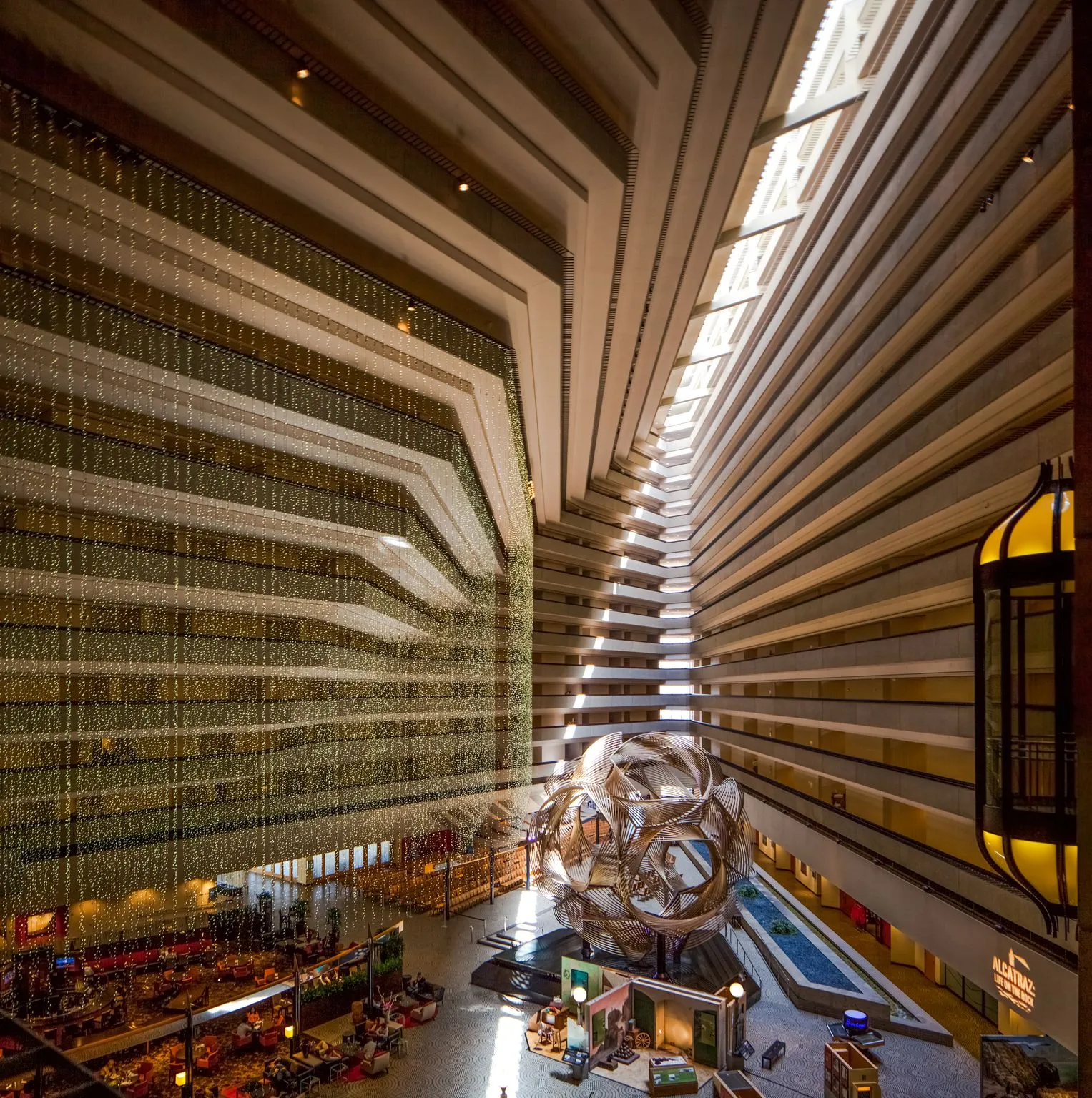
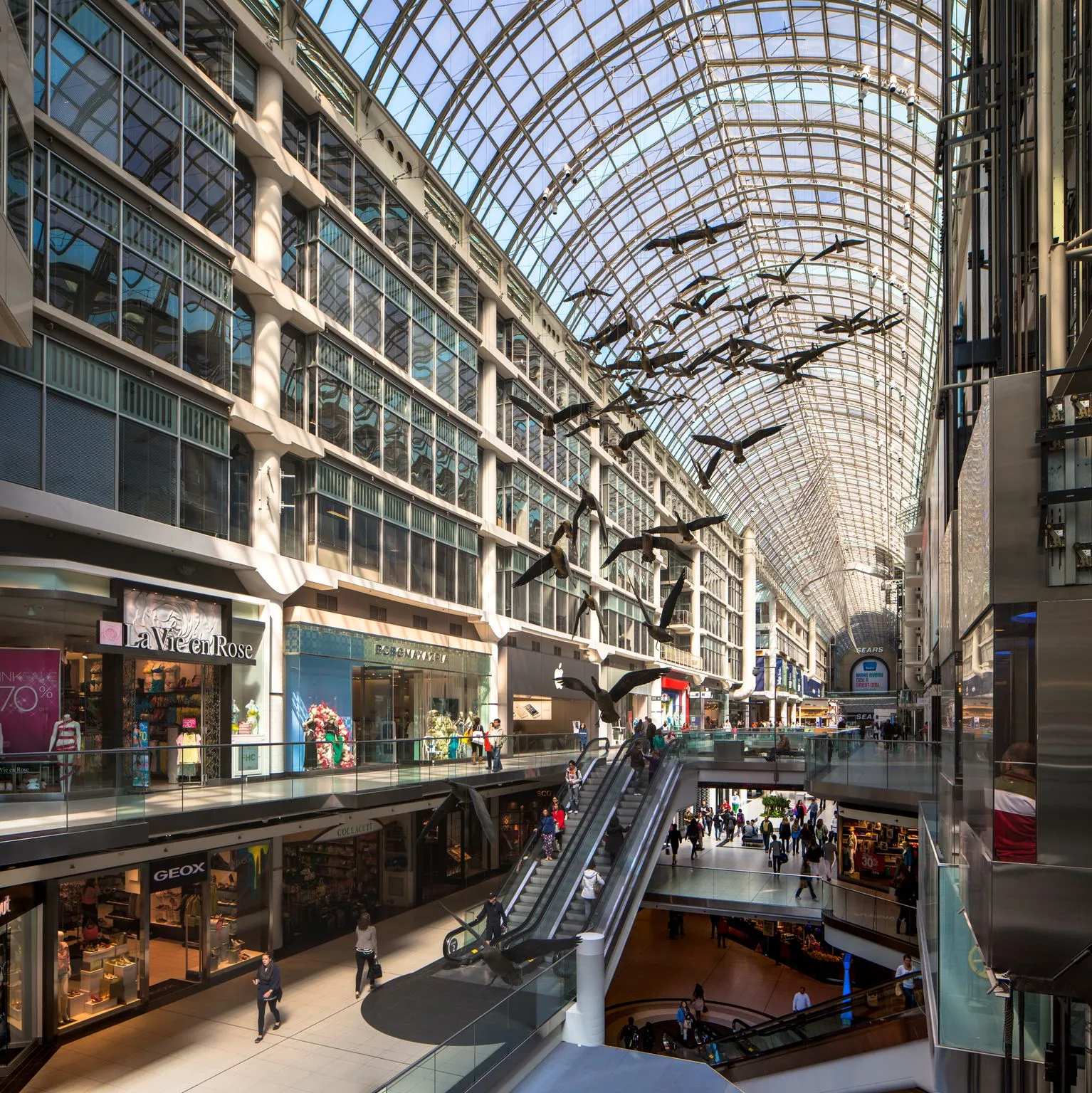
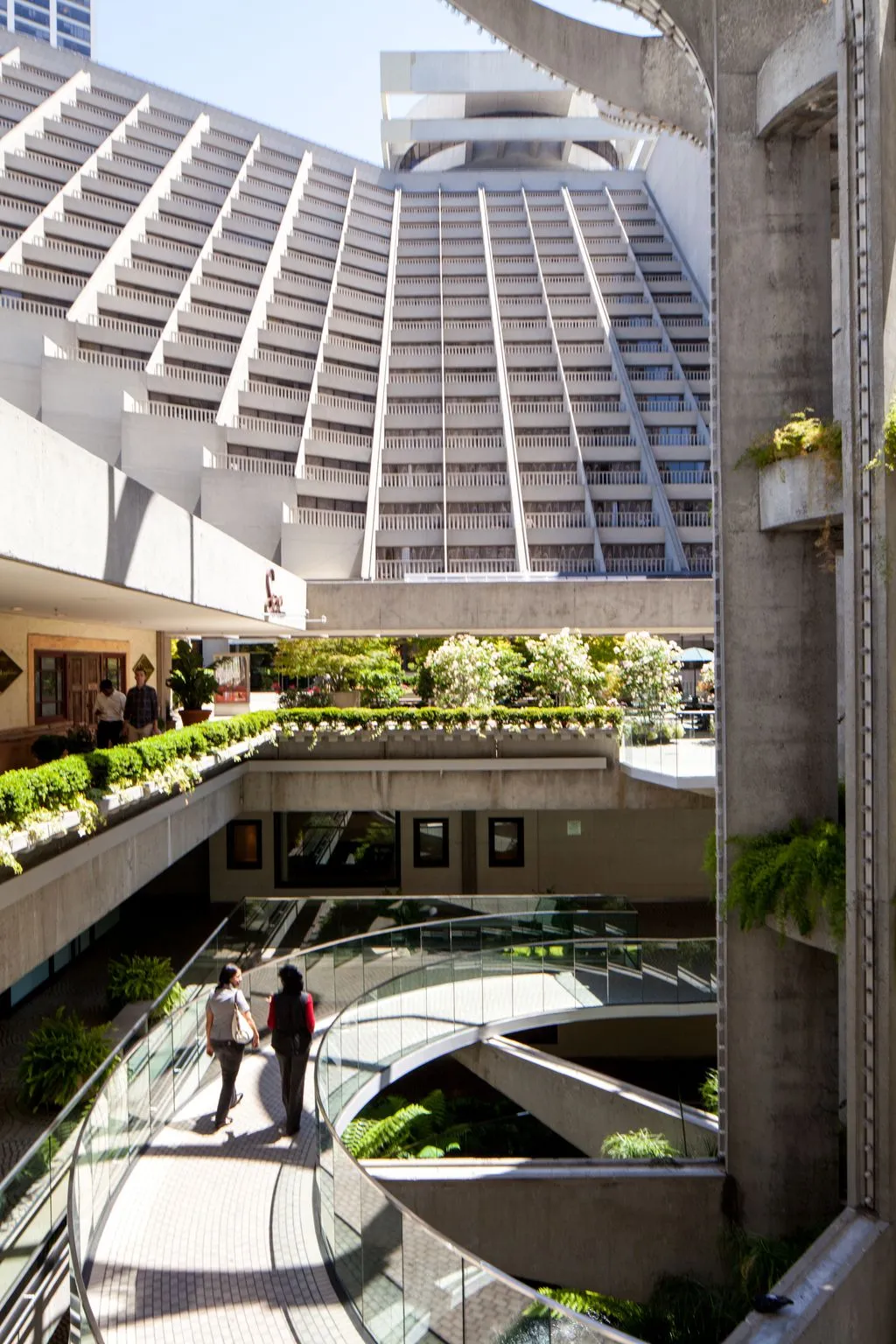
Eaton Centre in Toronto (left) and Hyatt Regency in San Francisco (right). Photo: Darren Bradley.
You have a very big fond of modernist works, it must have some reasons or perspectives to it?
In fact, I appreciate architecture in all forms, as long as it is genuine. People are often surprised to learn that I capture both Victorian architecture and ancient structures; yet, I do have a particular admiration for modern architecture. I have been very interested in this genre since a time when very few photographers pursued capturing images of modernist works. My motivation is rooted in showcasing the beauty and unique characteristics worth preserving in modern architectural works. I have noticed that many people have built their reputation by photographing historical subjects, but few choose to document for the pure purpose of conservation efforts. Personally, I find this reality somewhat unjust!
You mean that you want to preserve them because it might be gone afterwards?
Exactly! In my first days working on photographing, it was the time that I lived and studied in France. In high school, I studied Photography and was taking photo for our school’s news; however, I did not have much interest in this job. I find myself quite limited in that field back in the day. On the way back to the United States from France, I noticed that many of the precious structures in my hometown of San Diego were either gone or on the verge of being demolished. I felt that a significant part of the city’s character was being lost along with the disappearance of these architectural landmarks. That was when I began photographing these structures, solely for the purpose of preservation rather than any other motive.
After capturing the images, I often shared them with others, showcasing some of my favourite shopping centres or gas stations. I told them the story of how these places would soon be demolished and it would be such a terrible loss. We should preserve them… Sadly, no one truly understood or empathised. They looked at the photographs and simply saw an old, outdated shopping centre, not worthy of keeping. I understand their perspective when looking at the images; personally, I felt that I had done a poor job capturing them. It was at that moment I realised that in order to persuade viewers to understand the value of a structure, I had to learn and practice architectural photography in a thoughtful manner. Photography should highlight the beauty and worth of architecture to truly convince others.
As what you are talking about, it requires different approach to capture different structures, is it correct?
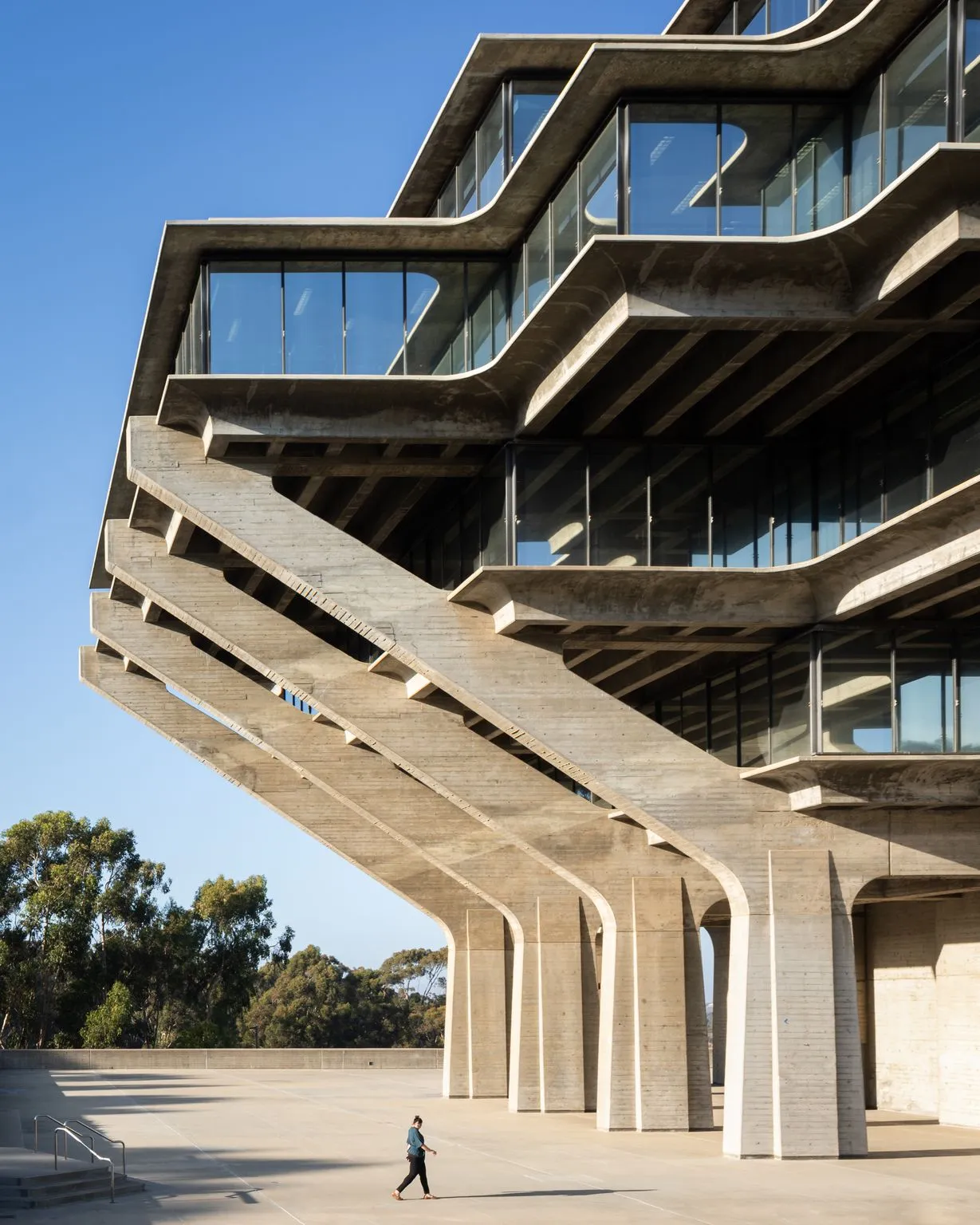
Absolutely! If we look at architectural photographs from the past, such as those captured by the great photographer Julius Shulman in the 1950s, we can see that the structures were relatively new at the time of photography. There were often fewer trees, signage, cars, or other elements obstructing the view. In many cases, there were no other buildings adjacent, making it easier to capture a beautiful structure. However, in today’s world, even in a city like New York, which is relatively compact with moderate density, capturing photographs of certain structures in their current state can be challenging due to various visual and aesthetic factors in the surroundings. Additionally, architecture may have undergone renovations or noticeable replacements. As a result, I find it difficult to reuse the same angles and techniques used in previous shoots. I always have to seek out the most original and distinctive aspects to capture the prominent elements of the architecture while minimising the changes that have occurred over time.
Throughout years of working in this field, how has architecture been changing according to you?
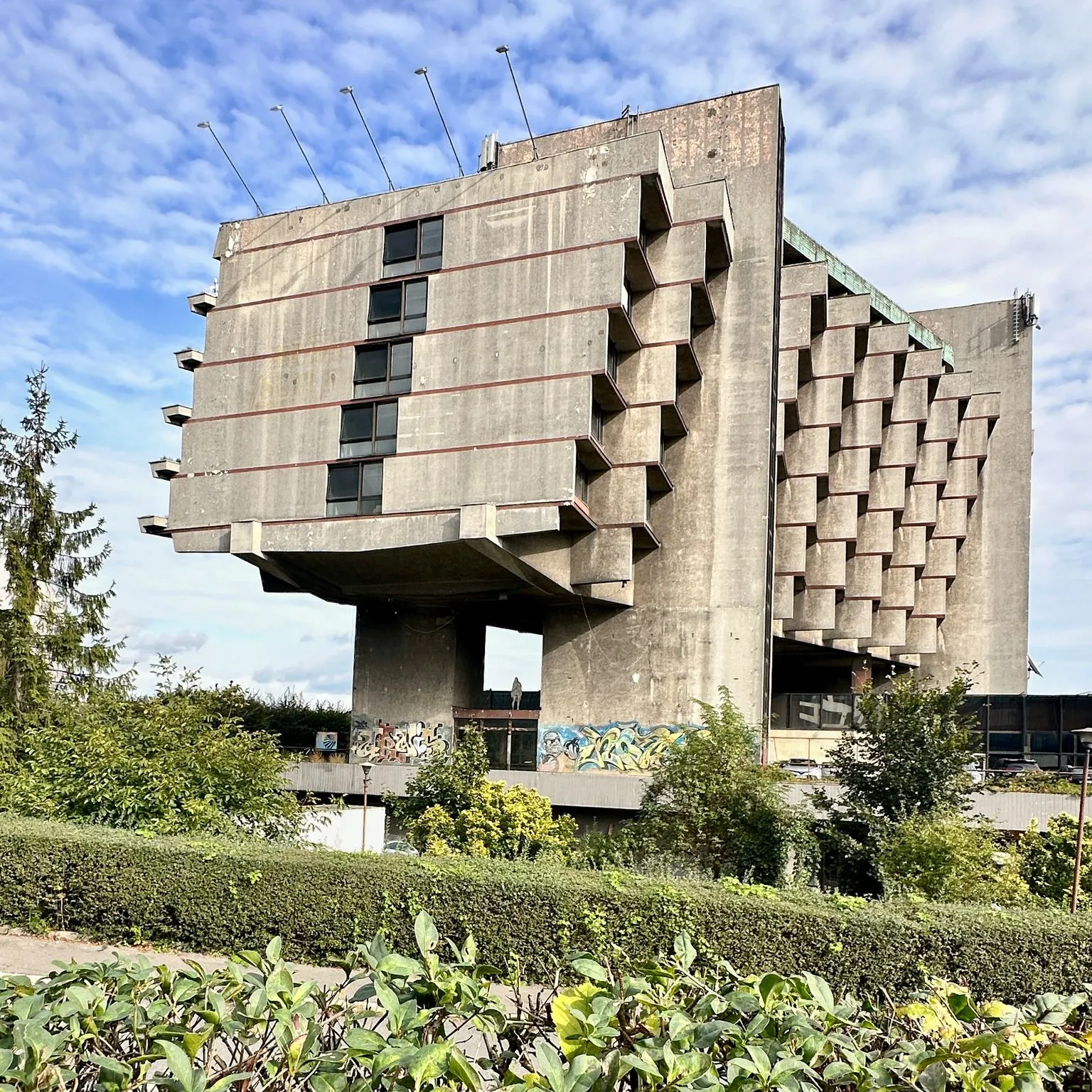
I am not particularly observant in the field of architecture in general, but in the field I am pursuing, the elements of technology and social media have truly transformed architectural photography. The number of people photographing architecture nowadays is much higher than before, and you can see this just by looking at Instagram. When I started in 2010, at that time, I was the only architectural photographer on Instagram, or at least the only one posting well-composed and professional images, while most other users only shared blurry and low-quality photos taken with their phones. As a result, my account stood out and quickly gained a large following.
Indeed, in recent times, there are many architectural photographers on Instagram who employ similar techniques but bring innovation to their approach and documentation of architectural structures. The increased number of individuals engaged in architectural photography is a significant change. As for the research and documentation of modern architectural structures in general, I have observed that the raw and unrefined architecture from about 5 to 10 years ago, which seemed to be overlooked entirely, now has dedicated websites and specialised Instagram accounts. In my opinion, this is a very positive development.
Has your foundation of history of architecture influenced the way you feel or capturing photos of the buildings?
I think so. Architecture is not abstract. The difference between architecture and other art forms is that architecture always serves a specific purpose and function. This is both interesting and disadvantageous because humans feel entitled and capable of altering architecture through continuous changes in functionality.
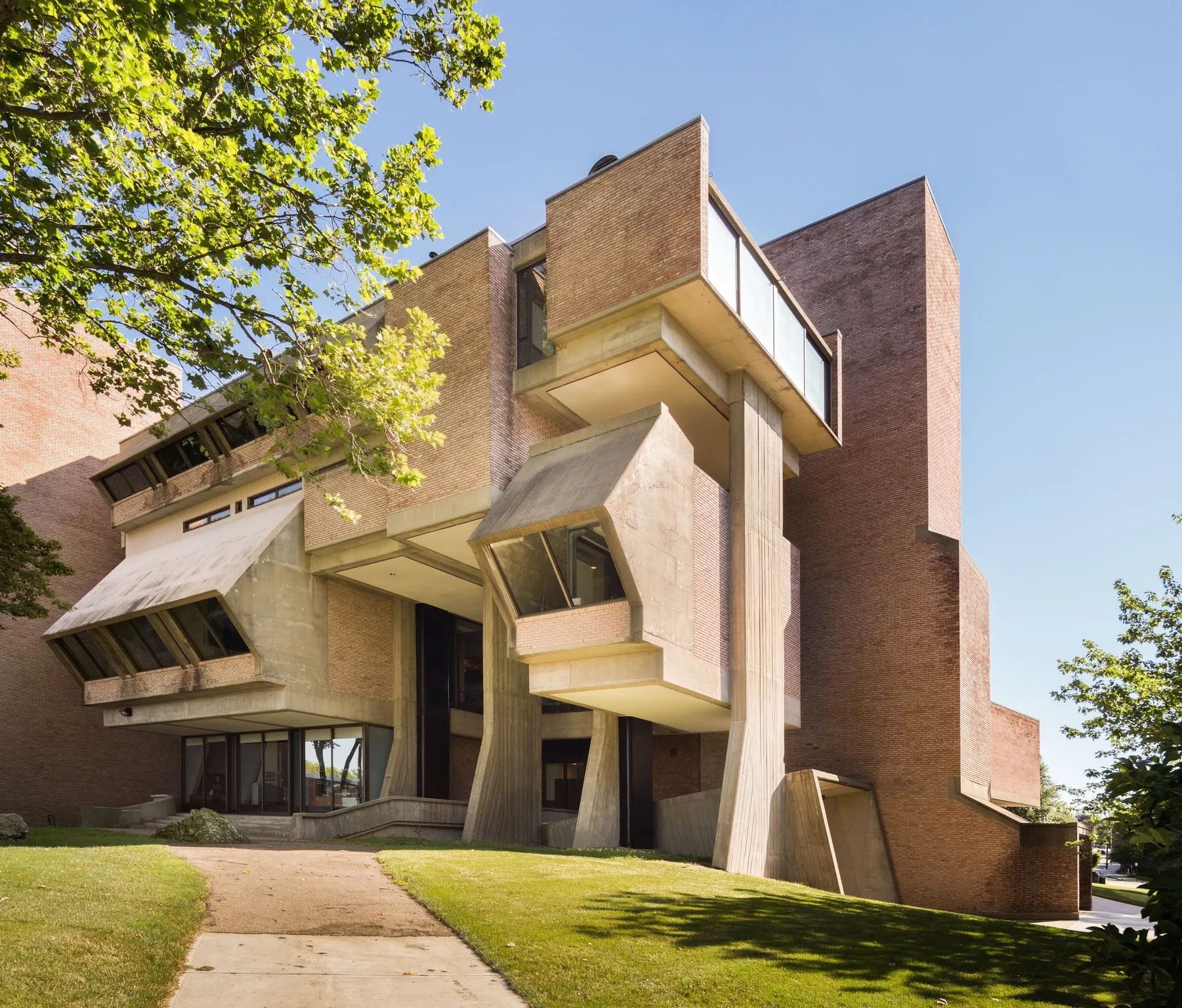
History helps me clearly see that each architectural structure is a snapshot of a specific social theme at a given time, revealing the priorities of people in that era and what they care about. For example, in the tumultuous context of the 1960s with political upheavals, many buildings constructed around American universities were specifically designed to prevent potential riots and protests. Social history is recorded alongside the history of an architectural structure. Therefore, when I enter the interior of an older structure, I often pay attention to certain details or spaces that have been later modified. They serve as a mirror reflecting the changes in priorities and the functionality of the building over time.
In all the architectural works that you have photographed, which is the most remarkable and memorable for you?
There are quite a few. Whenever I visit San Francisco, I always take a stroll through the lobby of the Hyatt Regency hotel at Embarcadero. It certainly is a timeless pleasure. I always get goosebumps while admiring this architectural marvel while sipping my coffee in the lobby, absorbing the essence of architecture. Eaton Centre in Toronto is also a place where I often wander and explore whenever I have the chance. There are many other structures that evoke similar emotions in me, connecting with my childhood memories and places I have visited.
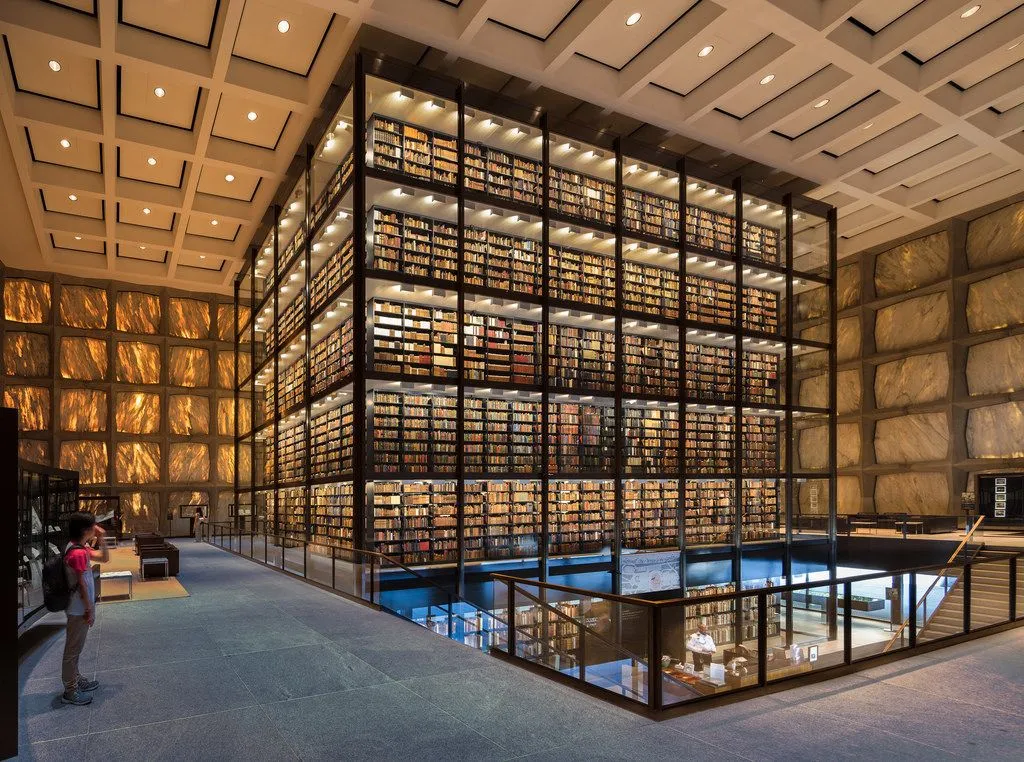
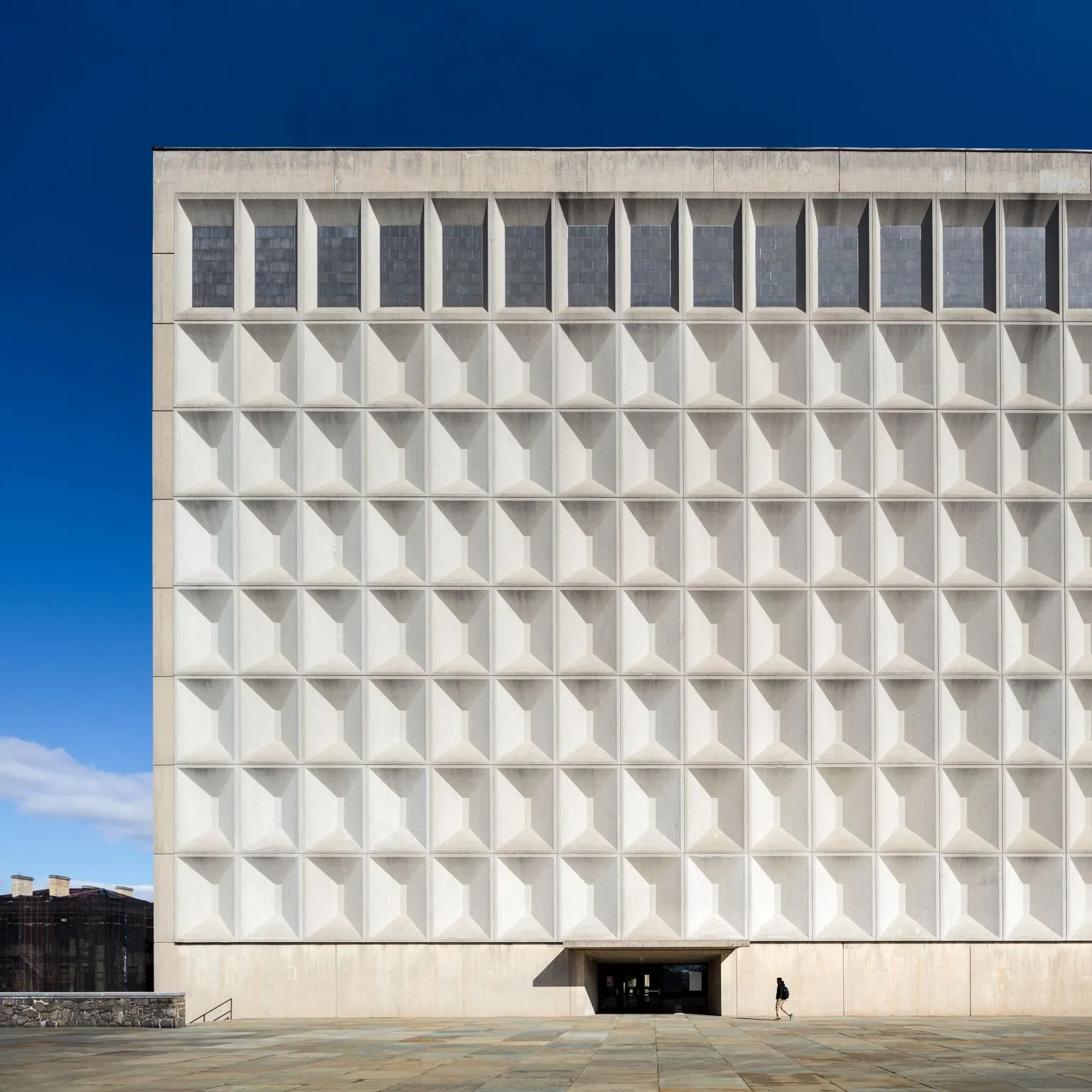
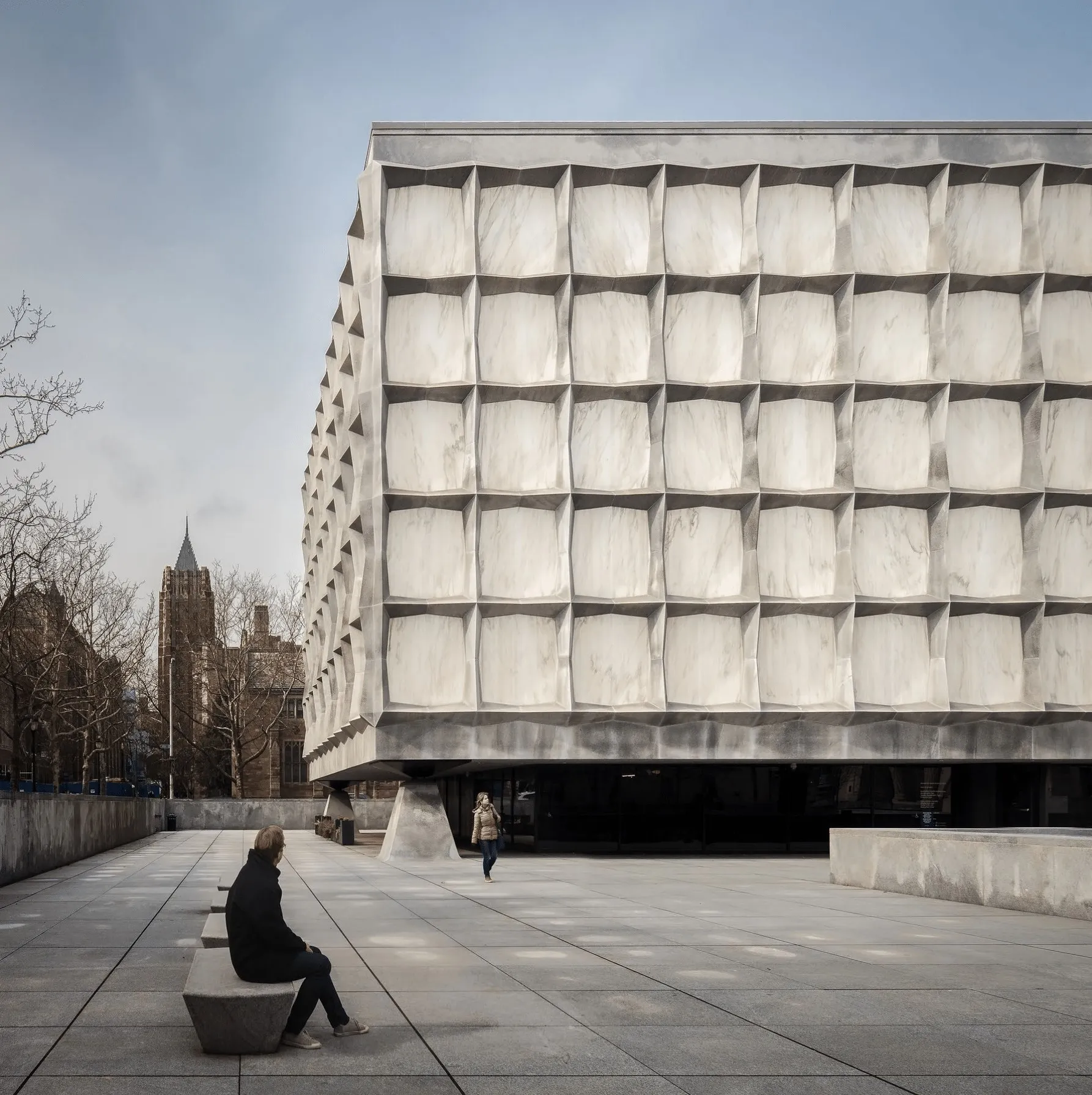
But there are also some buildings that I have no chance to visit in a while. When I was working on a travel guidebook for the East Coast, I had the opportunity to visit the rare book library and the handwritten manuscripts of Beinecke at Yale University. I had seen pictures of this building before, but seeing it in person for the first time was truly special, and now I have been there around 7-8 times. Whenever I go to New Haven, I always make sure to visit and admire the beauty of this library even more.
What is the difference of contemplating the work in real life and through your photos?
Yes, for sure! There will always be an element of surprise when I photograph a structure. I never know for sure how I will feel when looking back at the photos I have taken. Many times, immediately after taking a shot, I am quite satisfied with the result. However, a few days later, when I review them on my computer, I often find myself self-criticising if the photos fail to capture the memories and emotions I experienced at the time of shooting. I have tried spending a lot of time in post-processing to recreate at least some of what I had hoped for, but it is often impossible. That was when I realised that the most satisfying photo is not the one I took during my first visit to a structure, but the one I captured after revisiting it several times. So, my favourite photo is always the one taken tomorrow. (Laughs)
Do you photograph the same building over and over?
There are a few instances where I have never felt satisfied with capturing a particular architectural structure, and in fact, I enjoy photographing the evolution of a building over time. For example, I frequently visit London around 6-7 times a year, and I have been to Barbican about 50-60 times just to capture more photos and wander around to see what catches my attention. The lighting may fall differently, there may be an interesting scene with new characters, or a certain detail that has completely changed. So, it is possible that I have taken photos of a structure, but each time I return, I always discover new things to capture.
Can you share something about your book ‘Mid-Century modern architecture travel guide’? I am quite curious about it.
This project originated from a lecture at Modernism Week in Palm Springs. I was the speaker, sharing about architectural history through photographs. After the lecture, an audience member who happened to be an editor from Phaidon Publishers reached out to me, inviting me to collaborate on publishing a series of travel guidebooks focused on Mid-Century Modern architecture. Joining me in this endeavour was architectural historian Sam Lubell. I felt incredibly honoured to work with Sam. We went on a journey together, traveling across the United States to capture materials for our project.
Initially, both Sam and I created a preliminary list of modern architectural structures that we found interesting on the West Coast of the United States. We then generated a map to navigate and drive to these destinations. At each location, we independently conducted research and took notes on the series of structures. The trip lasted for four weeks. Soon after submitting the draft, we received the exciting news that Phaidon had approved it for publication, and the book sold quite well. As a result, Phaidon expressed interest in collaborating with me and Sam on a similar volume focusing on the East Coast.
After 2018, all three of us had plans to continue documenting and publishing similar content in the Southern, Midwest, and other regions. Unfortunately, the outbreak of the COVID pandemic caused the project to be postponed, and it has not yet resumed until now. Due to my hectic timetable, I have also not been able to find common ground with the publishing unit. I will continue to wait for further developments.


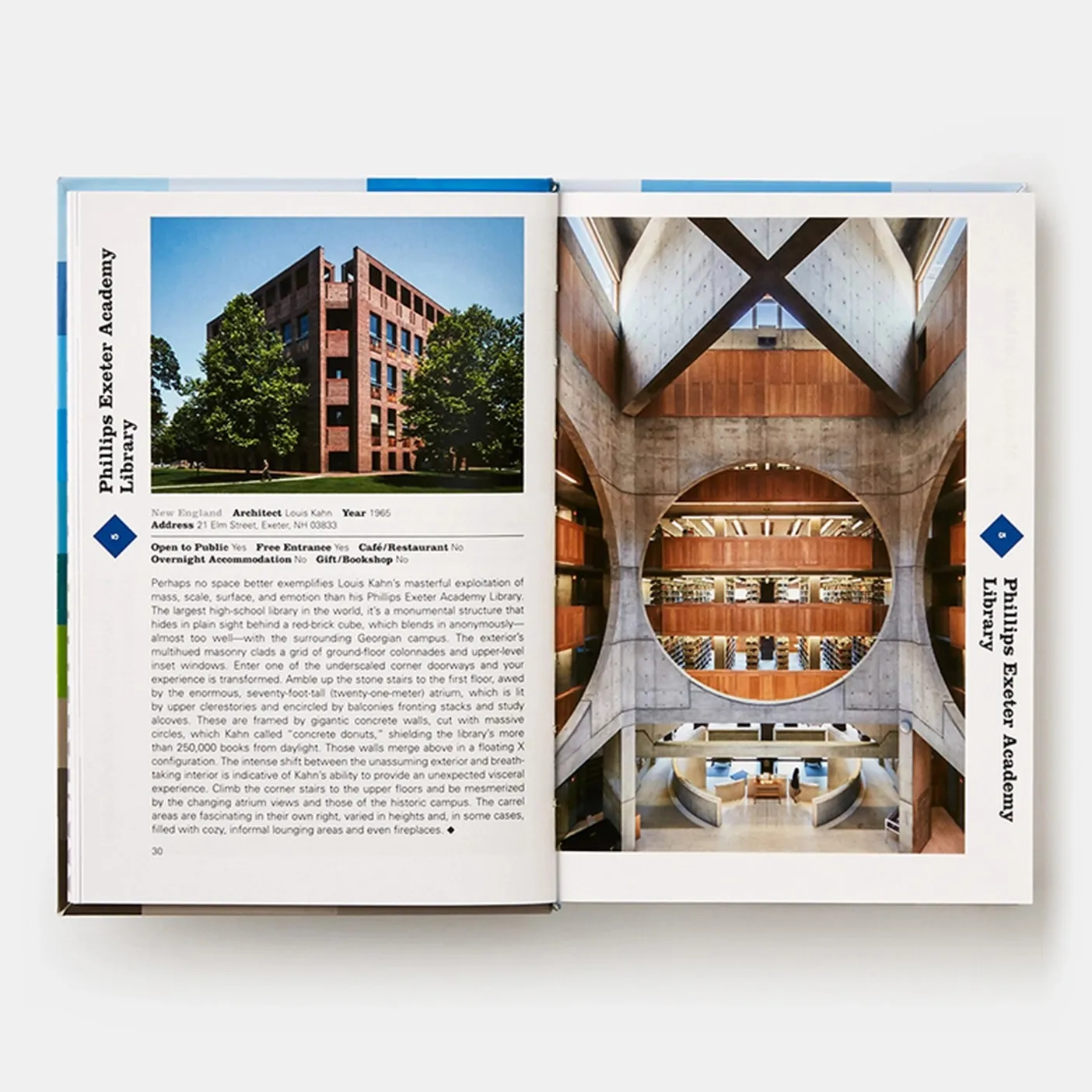
Pages from the travel guide. Courtesy of Darren Bradley.
It seems like the book ‘Brutalism’ is your personal collection.
This book can be more accurately described as an accident. From the outset, I had no intention of releasing it for commercial purposes. The book was originally created with the purpose of being a gift, but due to some individuals expressing interest, I took the initiative to print additional copies. However, two years later, I coincidentally discovered that the book ‘Brutalism’ was being sold in some undisclosed location. During an unrelated event, some approached me with the book and ask me for my autograph, which caught me completely off guard. Honestly, it was an unexpected turn of events.
Your book was indeed warmly received by the public.
I was quite happy. At the time of creating that book, there was already a substantial “fan” of brutal architecture photography. However, this architecture style was not yet fully appreciated and preserved as it is now. I never imagined that the number of books sold would reach several hundred copies, a figure that definitely surprised me and indicated a profound impact. If I had known from the beginning about the publishing aspect, I might have approached it slightly differently. Nevertheless, I am still pretty pleased with the outcome!
Are there many “accidents” like that, Darren?
It might be many! (Laughs)
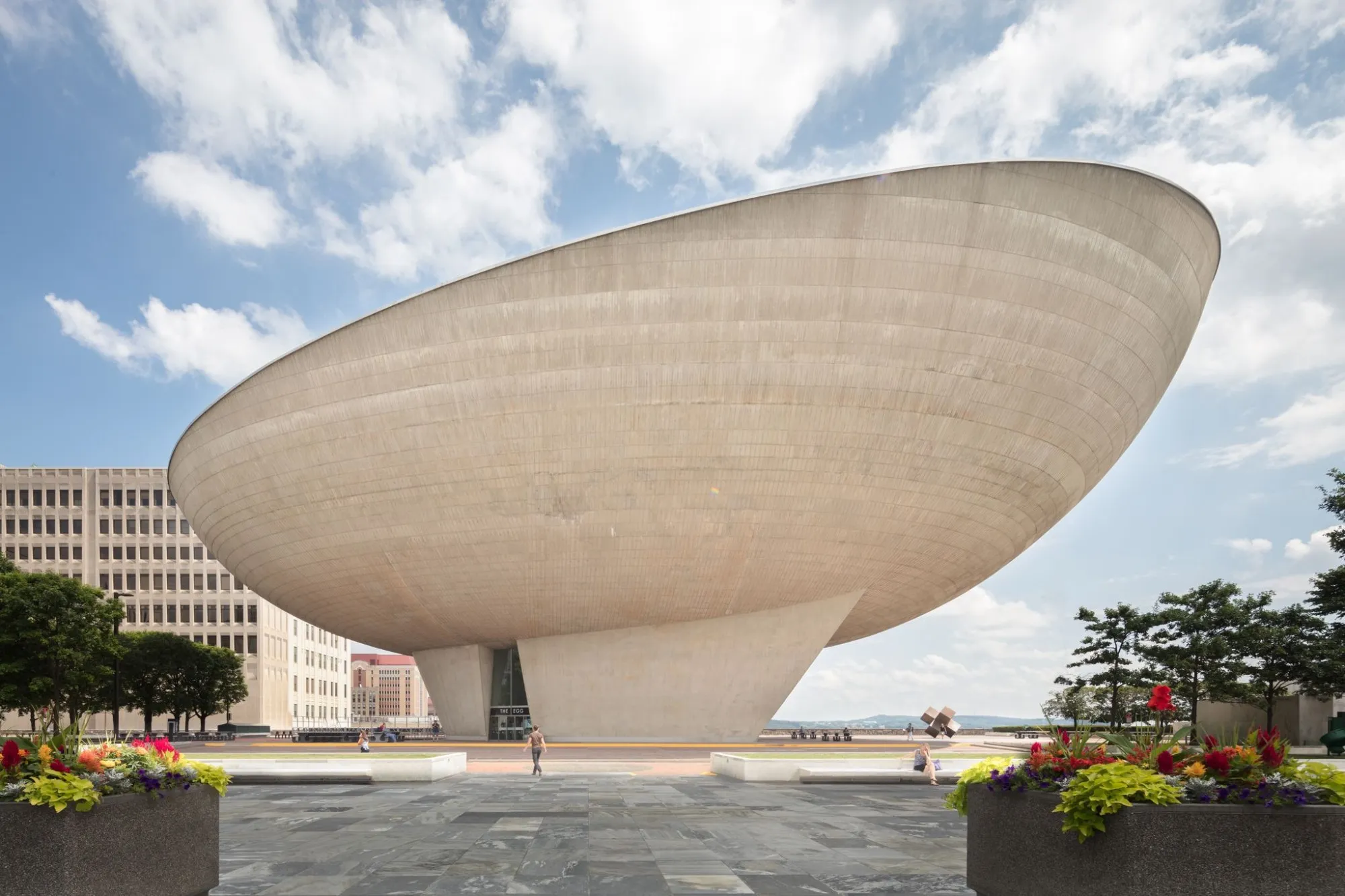
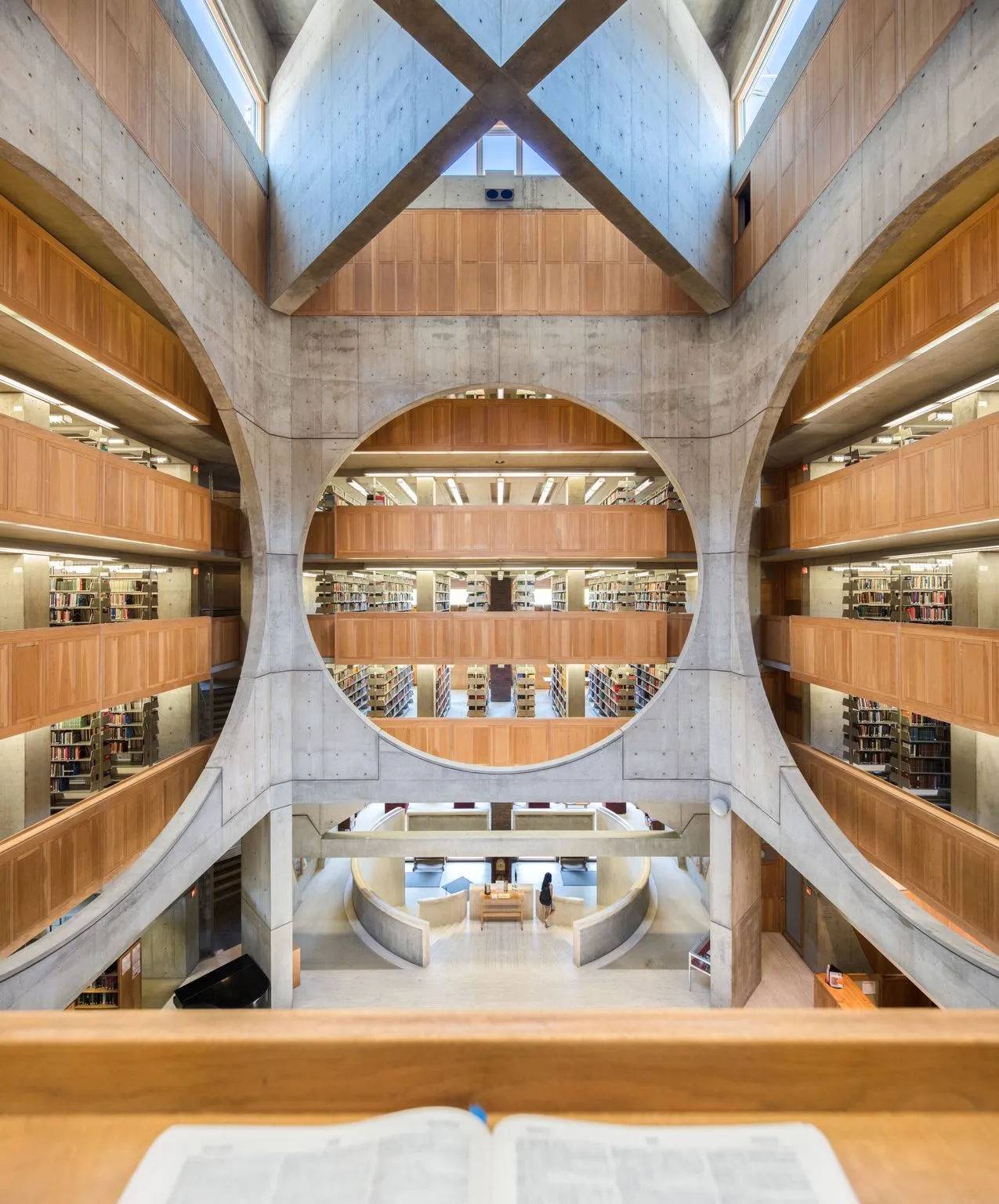
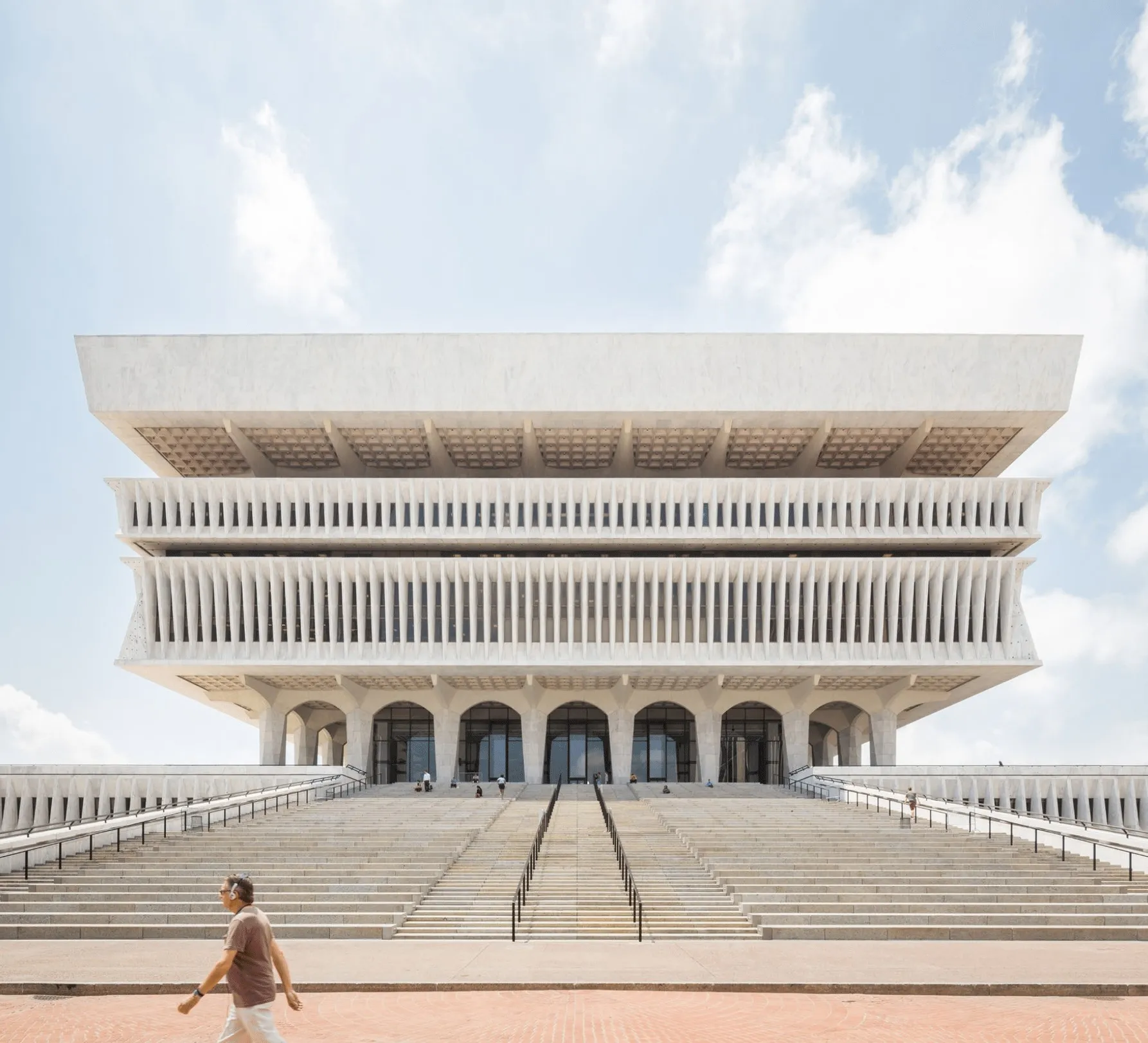
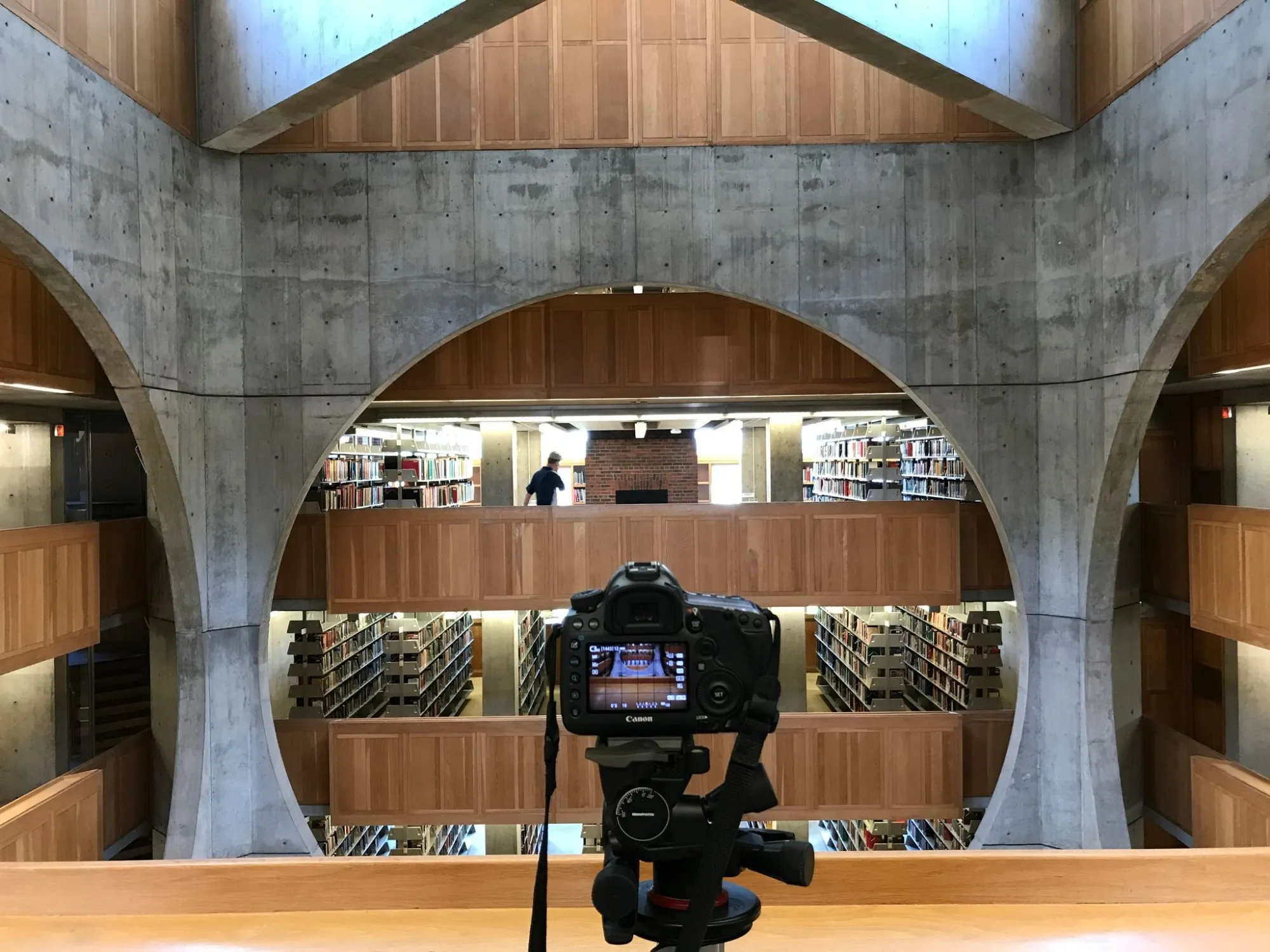
Louis Kahn’s Exeter Library (left) and another Modernist structure in the US (right). Photo: Darren Bradley.
What is the thing that you are proud of the most in your career?
I do believe that I have helped a number of people who previously had little interest in architecture to start to have an appreciation and even a passion for this art form. This, for me, is the ultimate purpose. Numerous individuals have approached me, expressing that they had never been interested in modern architecture before, but after seeing my photographs, their curiosity and enthusiasm towards it have been awakened. It is the most profound sense of gratitude I have experienced throughout my career.
How about your regrets?
I have always felt a sense of regret for not having the courage to turn photography into my primary profession. Photography is a field I have pursued and continue to pursue, but the demands of daily life have always been presenting challenges that make it hard for me to completely dedicate myself to photography. It is thanks to my current job that I am able to sustain my love for this art. In spite of this, I believe that in the future, I will spend more time on focusing solely on photography, particularly architectural photography.
Would you consider yourself an artist and see your work as an artistic activity when taking photographs?
I am not quite sure anymore. It should be better for others to assess. As I have mentioned that my goal is not only to objectively capture architectural works. There are photographers who excel that type of work. For the purpose of preserving historical records, they meticulously photograph all aspects of the buildings, carefully measure and document every detail. I have never been so interested in that thing. Instead, I focus on capturing the sensations and emotions experience within each space. Therefore, I prioritise the artistic element over the functional aspects of architectural buildings.
I understand that you value the ability of a photograph to reflect personal emotions and perspectives towards a particular architectural structure, rather than focusing solely on its authenticity. How do you think about this thought?
I think that it depends on the purpose of the photo. There are times when I capture images to document the challenging phases a building goes through, such as deterioration, neglect, or inadequate signage. In these cases, I approach the photography in a documentary style, preserving everything as it is, including even the trash bins placed right in front of the building. However, in most cases, I try to take photos that help viewers understand the true beauty of the architectural structure and the original intentions of the architect who designed them.
I do have a feeling that behind every building, there is a message that the designer wishes to convey to the audience. Often, this message may become blurred during the construction process due to regulations, conflicts between the client’s desires and the architect’s vision, or improper maintenance and care by the users of the building. I find it essential to uncover the intended message that the author wants to communicate. To achieve this goal, I am willing to duplicate certain elements in the photograph or use Photoshop to edit signage, fire extinguisher stands, debris, or remove a newly added door. My focus is not on the current image of the building but rather its past image and its potential in the future.
Does the editing process depend on the purpose of why you take those photos, Darren?
Certainly! I am willing to duplicate or intervene in the post-processing of the photos to help audiences see the original condition of the architecture. I typically do not alter the fundamental structure of the building, but I may remove electrical wires, drainpipes, or external air conditioning units. I have the ability to see through the layers obscured by humans and time to reveal the original beauty of the structure. I believe not many people possess this quality, which is why they may not appreciate or visit architectural blocks that appear chaotic to them. This is partly why many people no longer value old buildings and are willing to demolish them, removing them from their lives.
Interview by NOTES’s Editor.
Photos Darren Bradley
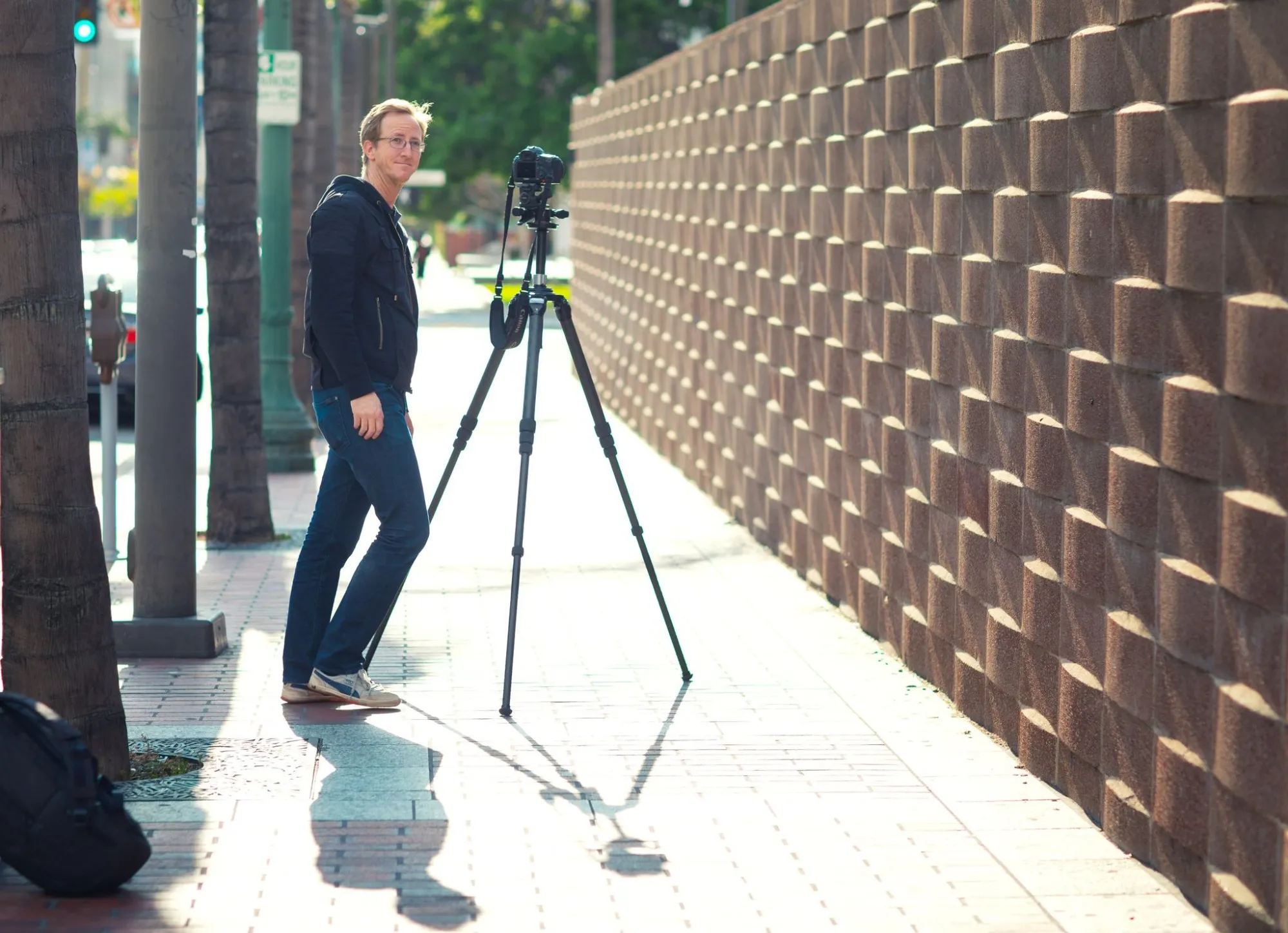
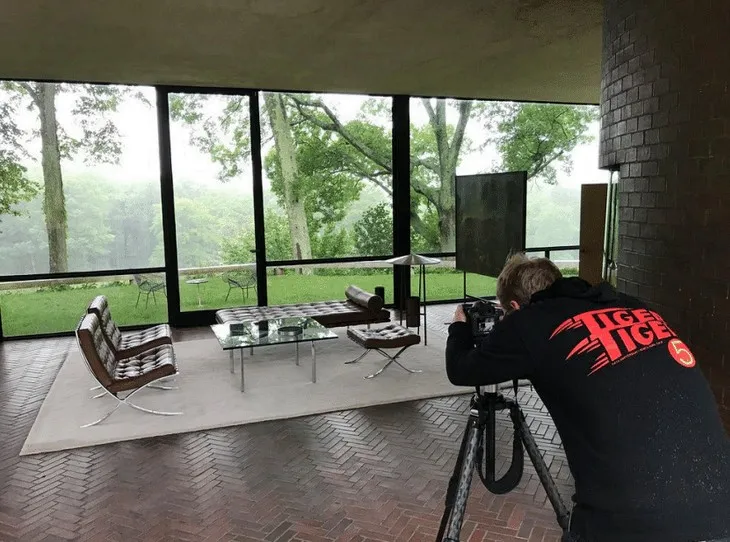
Cover Darren Bradley at work. Courtesy of Darren Bradley
Comments