
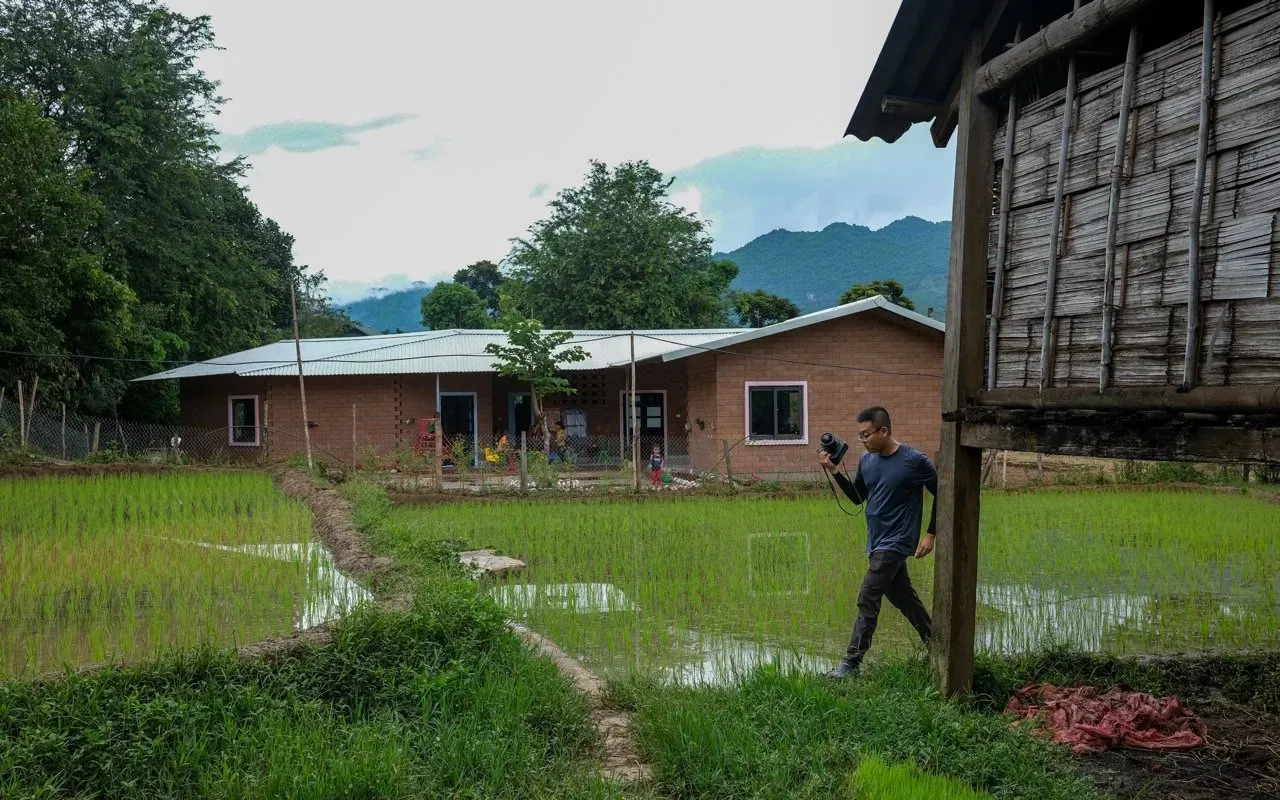
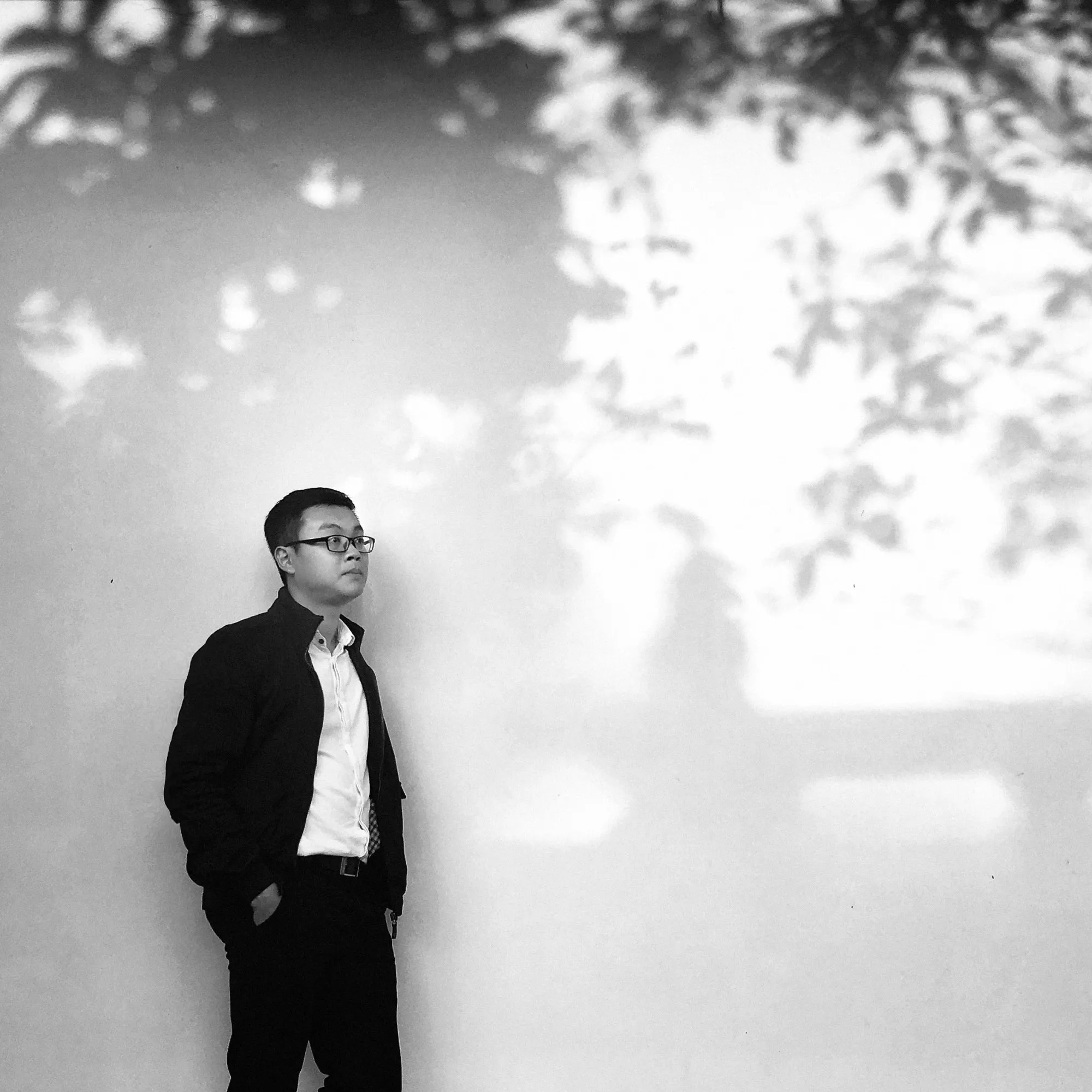
A conversation about architecture, and about photographing it, with Trieu Chien, a Vietnamese architectural photographer based in Hanoi.
Over the past three years you’ve travelled to many provinces to photograph modernist buildings. You gathered them in Ghé 01 and now Ghé 03. You seem very interested in modern architecture in Vietnam. Why do you photograph these buildings?
Trieu Chien: I travelled a lot before, but mostly for fun, without a clear intention of recording the buildings on each trip. The biggest change was probably in 2016, when I lost all the photos on a hard drive, everything since I first picked up a camera. Around then, my home town of Nam Dinh began demolishing a factory from the French period. I was lucky to go in and look at what remained one last time before it came down. What I still regret is that I didn’t photograph the whole factory with a proper camera. It was beautiful. A pity. Only a few phone pictures are left.
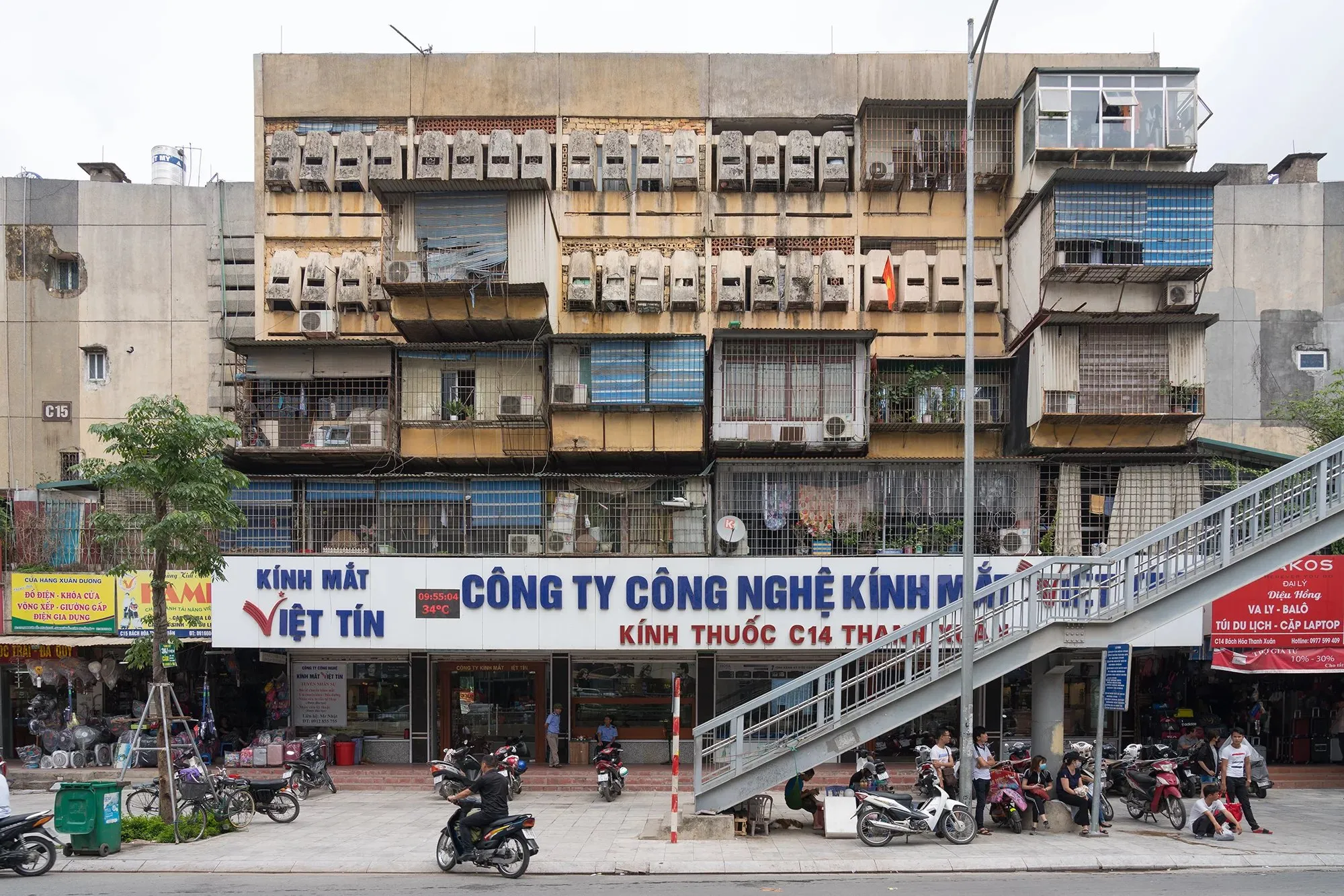
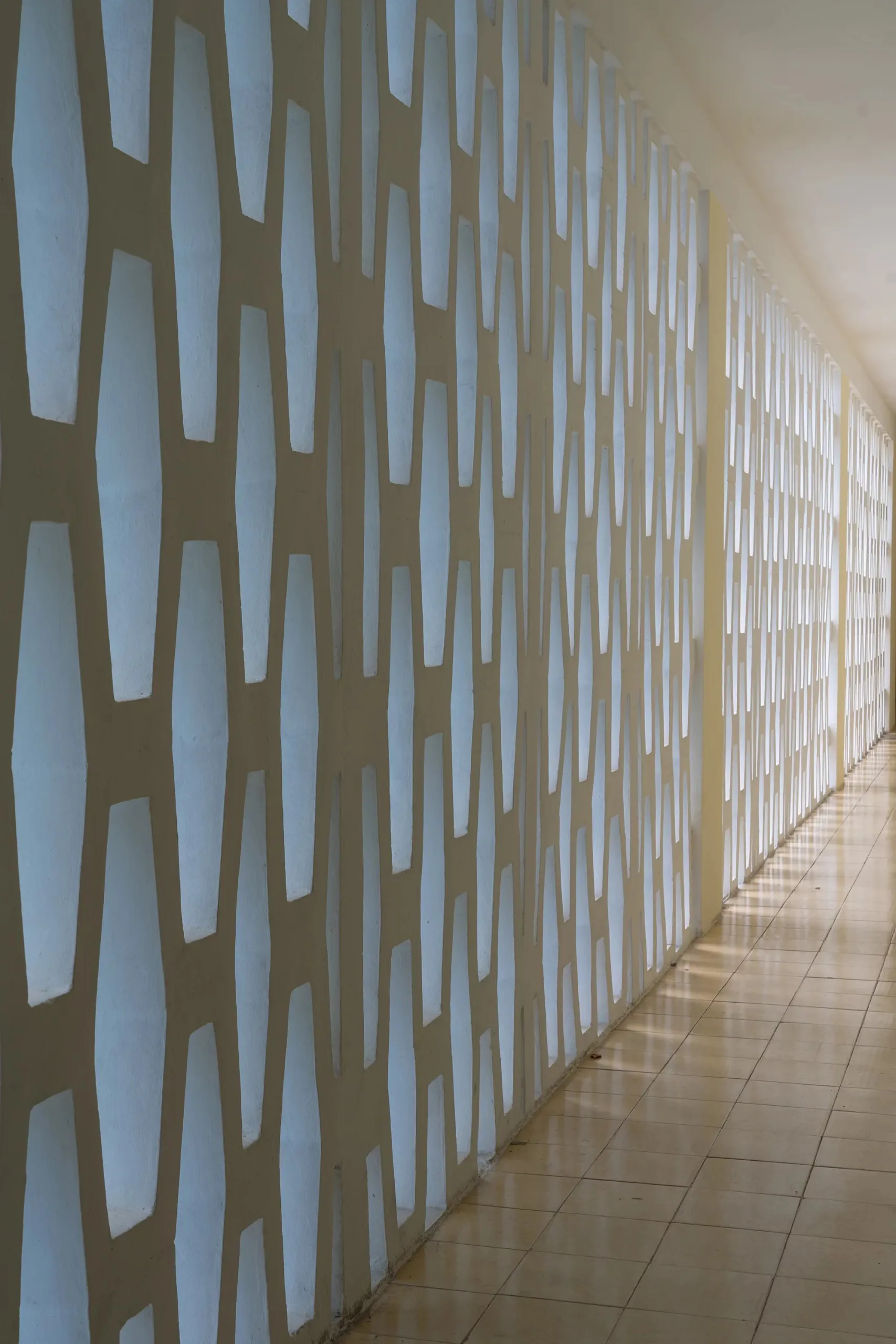
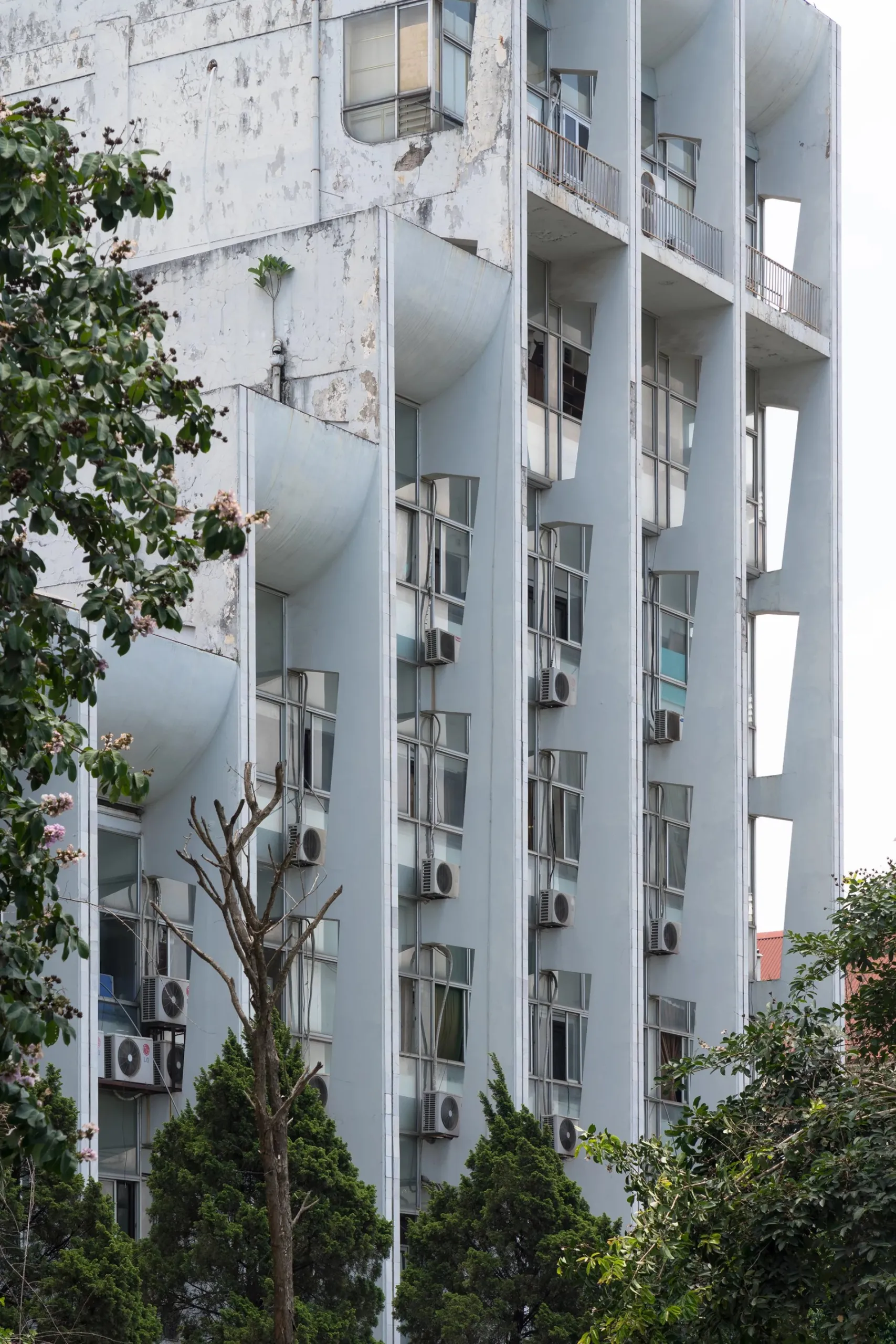
I decided to forget what I had shot before and start again, by documenting the buildings I visited. Not only modernist ones, many other kinds too, but I’m especially drawn to the forms of modernist buildings, strong masses that show their structure; their facades, modules repeated again and again; and their materials, simply washed stone or concrete. As cities grow so fast, the functions of old buildings no longer meet people’s needs. As they decay, people change their use by pulling them down and replacing them, turning them into storerooms, or, with no solution yet, leaving them empty.
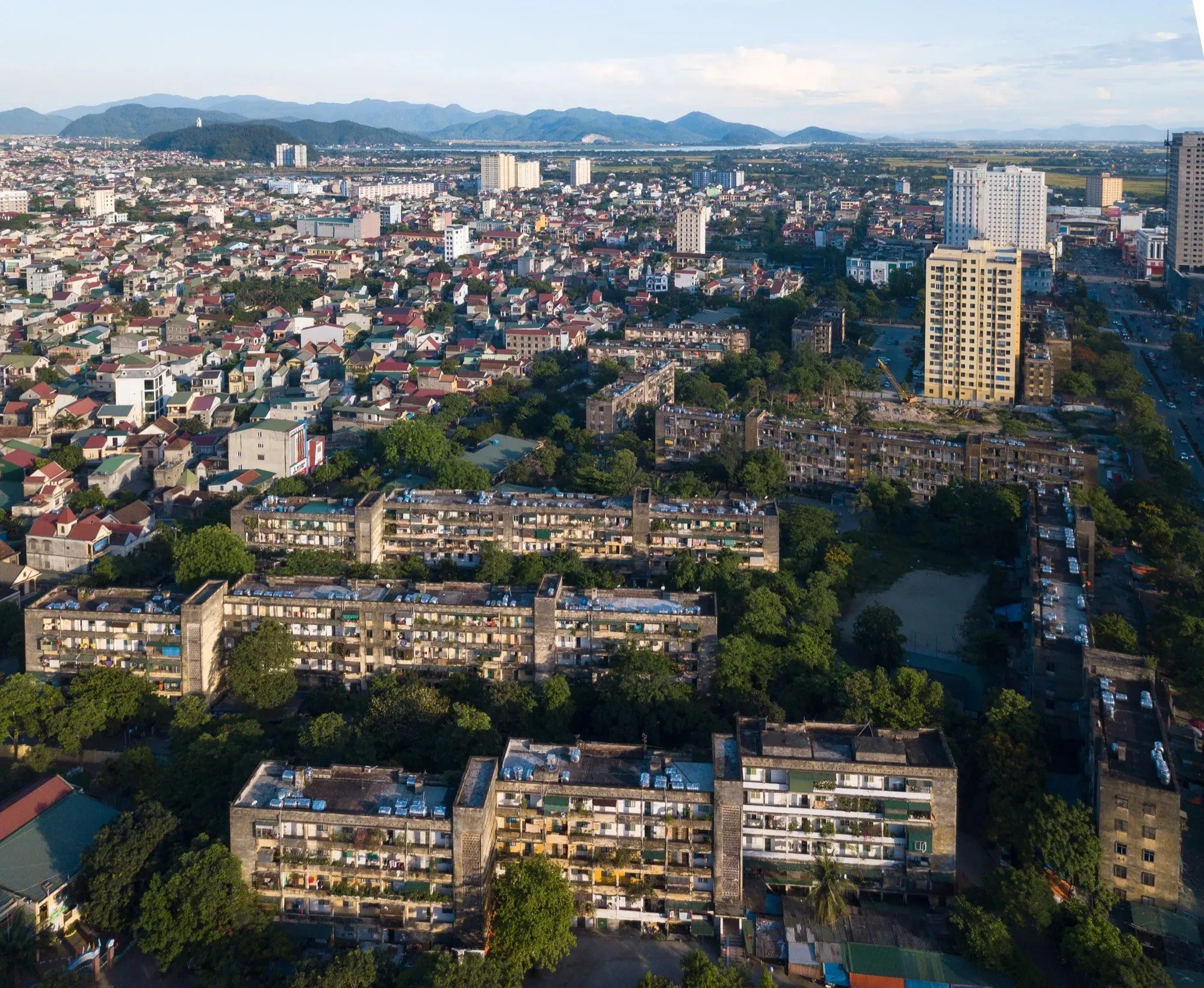
These buildings were mostly built between the 1970s and the 1990s, so they are part of my memory too. It’s a pity to see them torn down, but there’s nothing I can do except what I’m able to: photograph and record them while they still exist, so there’s something to look back at later.
I’m still grateful for what happened in 2016. It pushed me to photograph more.
Tell us more about making these photographs. What has been hard, and what has been easy?
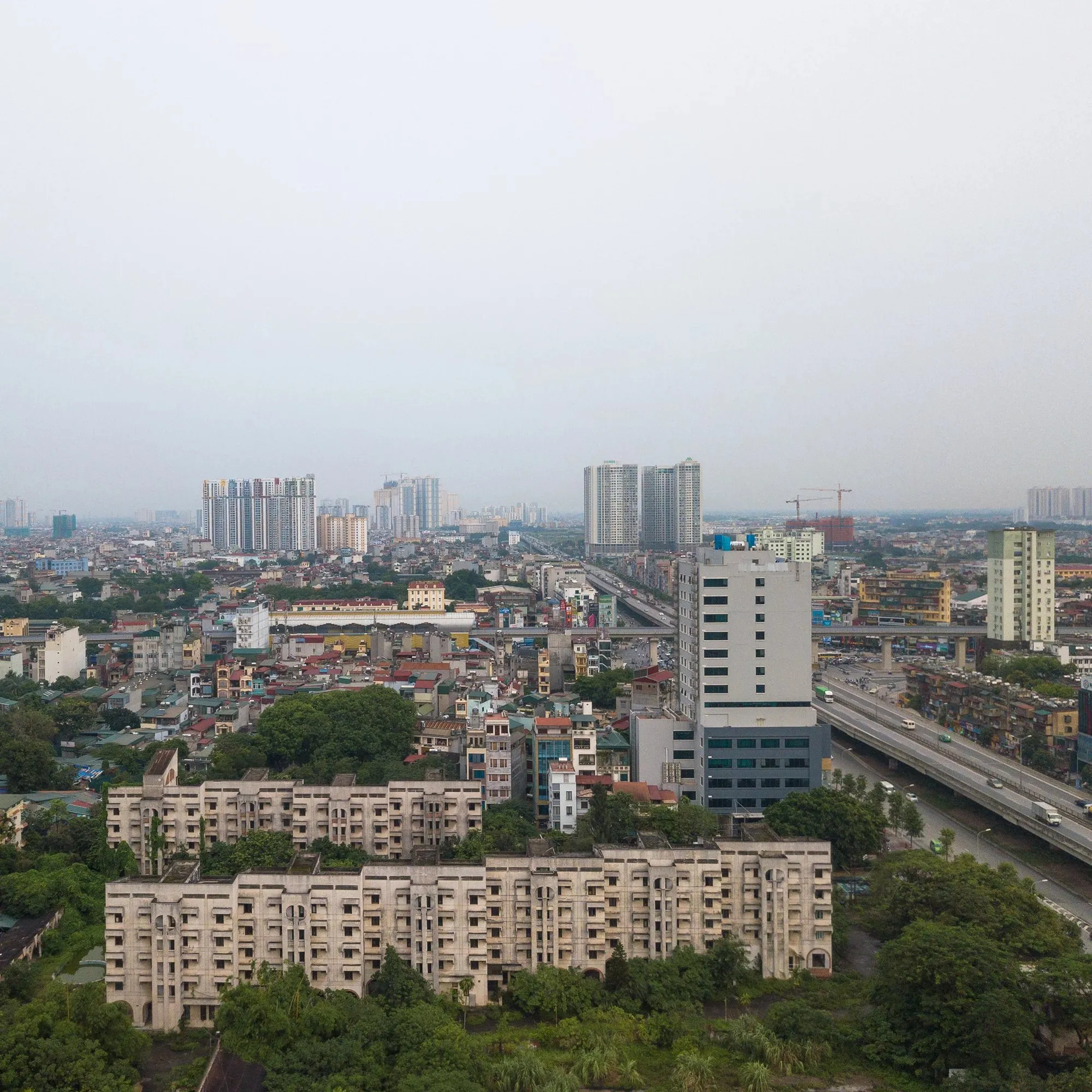
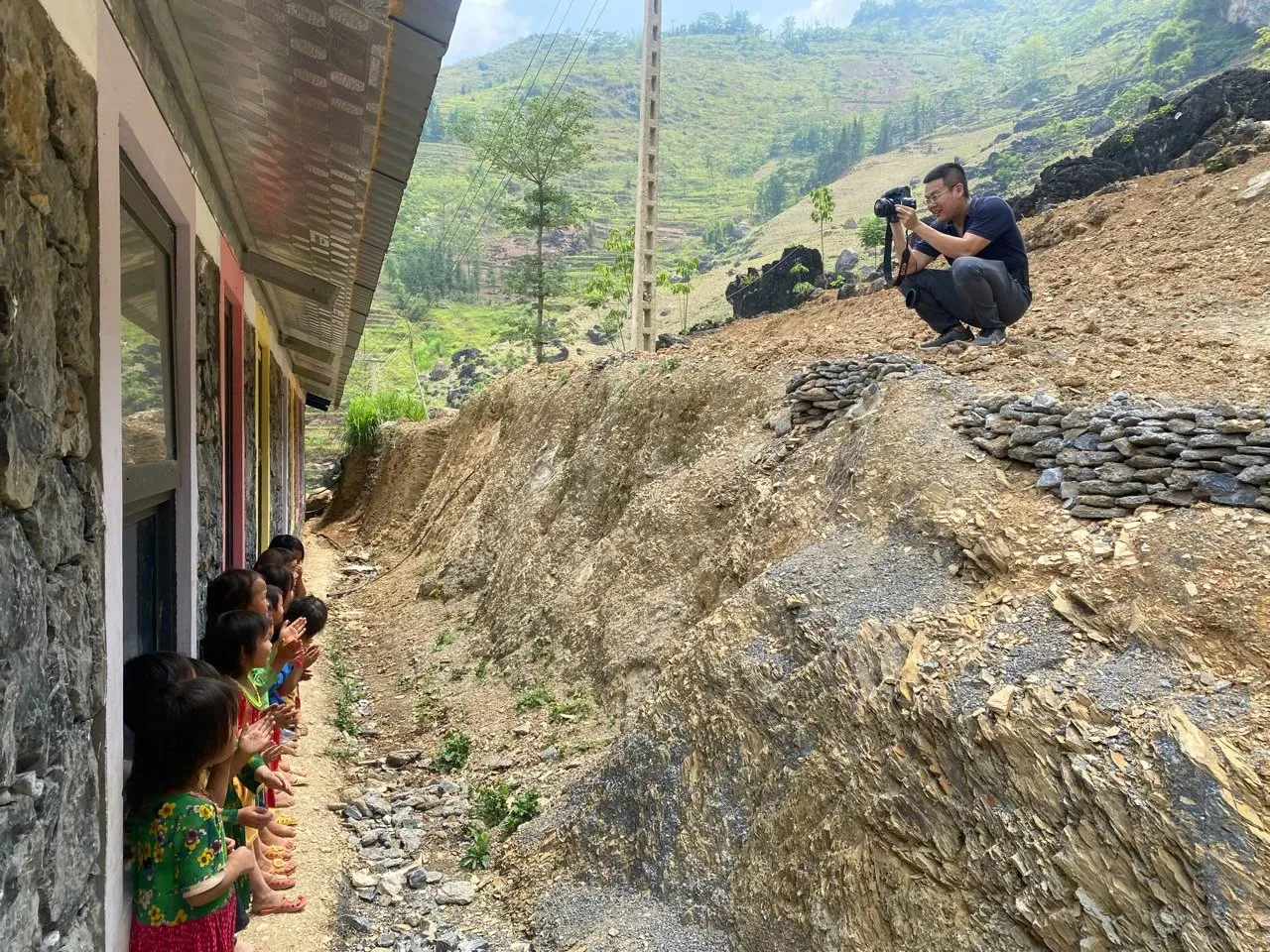
Trieu Chien: Going out to shoot is a lot of fun. The buildings I photograph are hard to get into, because most are managed by the state. I’m a freelance photographer, so getting inside is a whole process. In some places I have to ask and plead with the guards before they let me stand outside to shoot. Where I can’t get in, I find a way up onto a nearby roof to shoot across. And climbing has given me plenty of memories, half tears and half laughter. I’ll never forget photographing the Russian Embassy. I had to climb to the roof of the fifteen-storey National Children’s Hospital to see the whole embassy. It was a good day and I got a lot of shots, but when I reached the roof terrace I was so excited I forgot to hold the door, and it shut and locked itself. After a long time I found my way out through a window. Another time I squeezed through a square hole about 50 centimetres wide to get onto the roof of an old collective block and shoot across to the Hanoi television station. By the time I got up there, my lens was scratched all over.
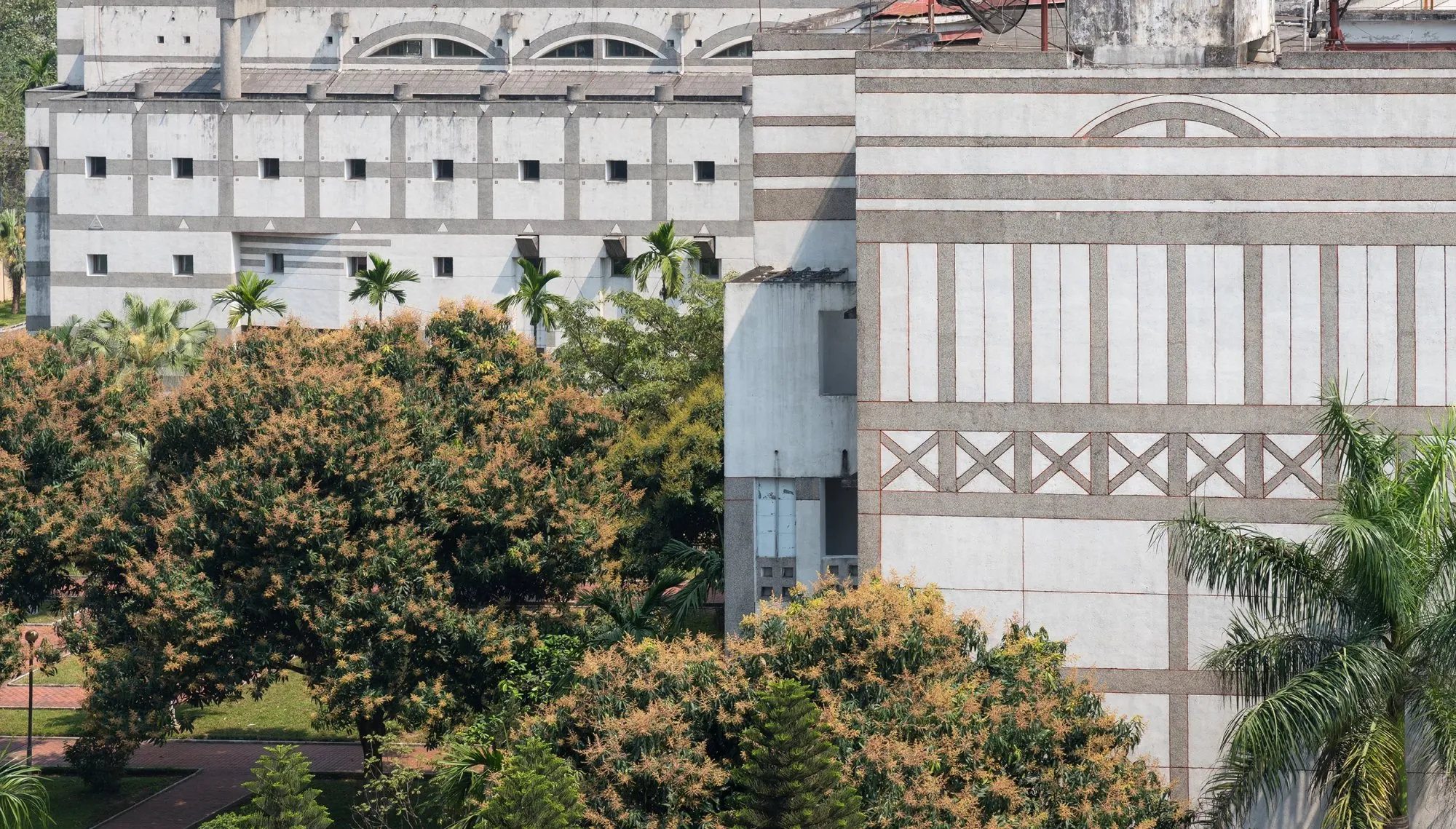
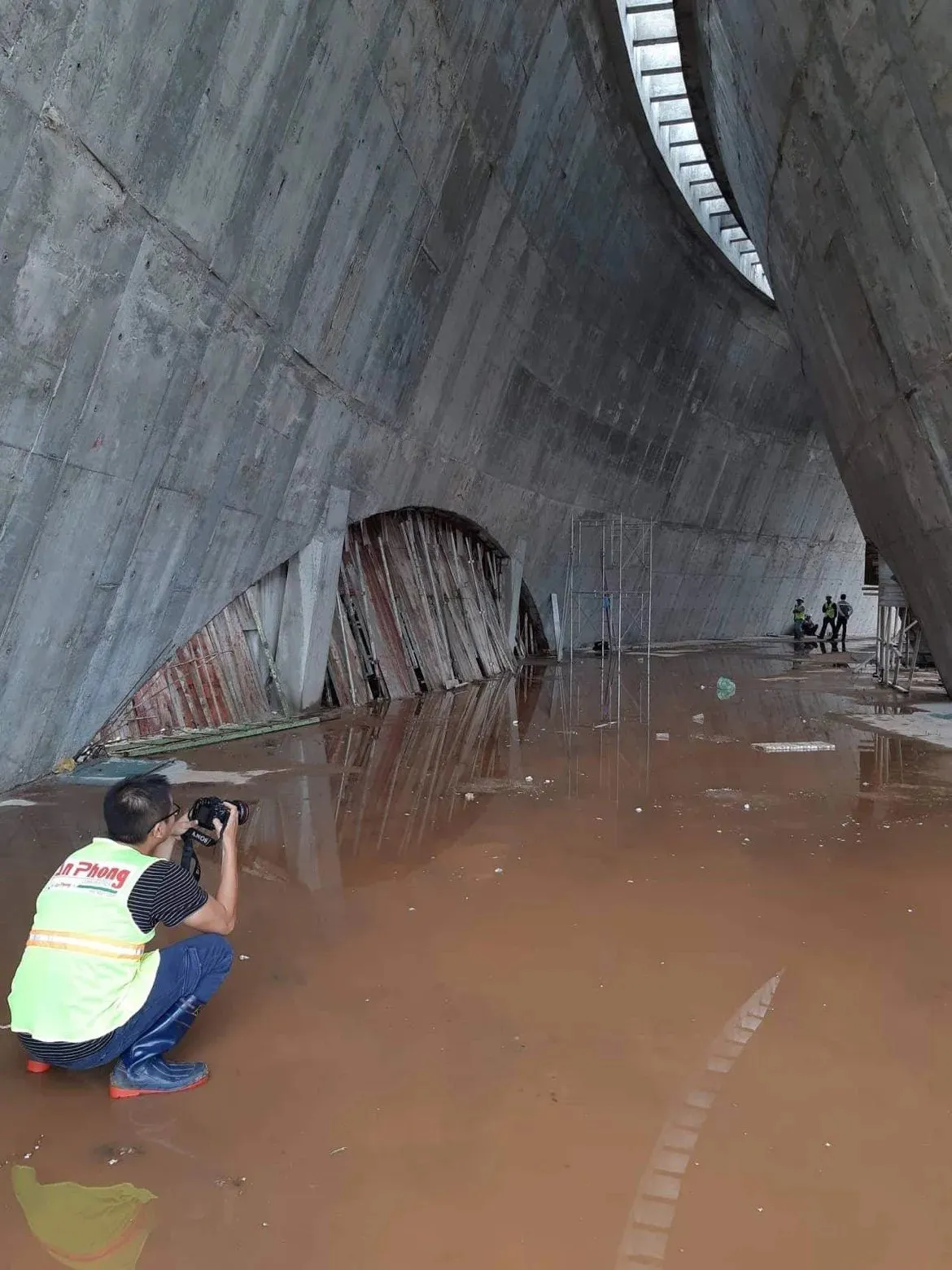
When I photograph abandoned buildings, people always say it’s been empty for ages, what’s there to photograph? Friendly people stop and chat; others chase me away. The abandoned building that has stayed with me most is the Nam Dinh Antiquities Museum, designed by the architect Nguyễn Cao Luyện. As a child I often played in Tuc Mac park, and when I passed it I wondered why someone had put a giant rockery in the middle of the park. Only in 2018, reading about it, did I find there had been an antiquities museum by the lake, and that answered my childhood question. Now I understand a line from a rap by Đen: some things are valuable but don’t shine at all.
How do you feel about the buildings of earlier generations of architects compared with today’s?
Trieu Chien: It’s hard to compare, because I’ve only been able to meet today’s architects. Earlier generations have passed away or are very old, so I only know them through books and articles.
Photographing modernist buildings, I noticed something they share: they were built in the period of reconstruction after the war, so architects then didn’t have many building solutions or choices of material. They had to design creatively with what they had. Most of the modernist buildings I’ve photographed are simple in material and strong in form.
Architects today have more chances to practise. There’s a lot of information online, building technology has developed, materials are available, and above all there’s the enormous body of traditional architecture our ancestors left us to inherit and carry forward. Each period has its own difficulties and advantages, but each has outstanding people.
Is there a modernist building, in Vietnam or elsewhere, you’d like to photograph but haven’t yet?
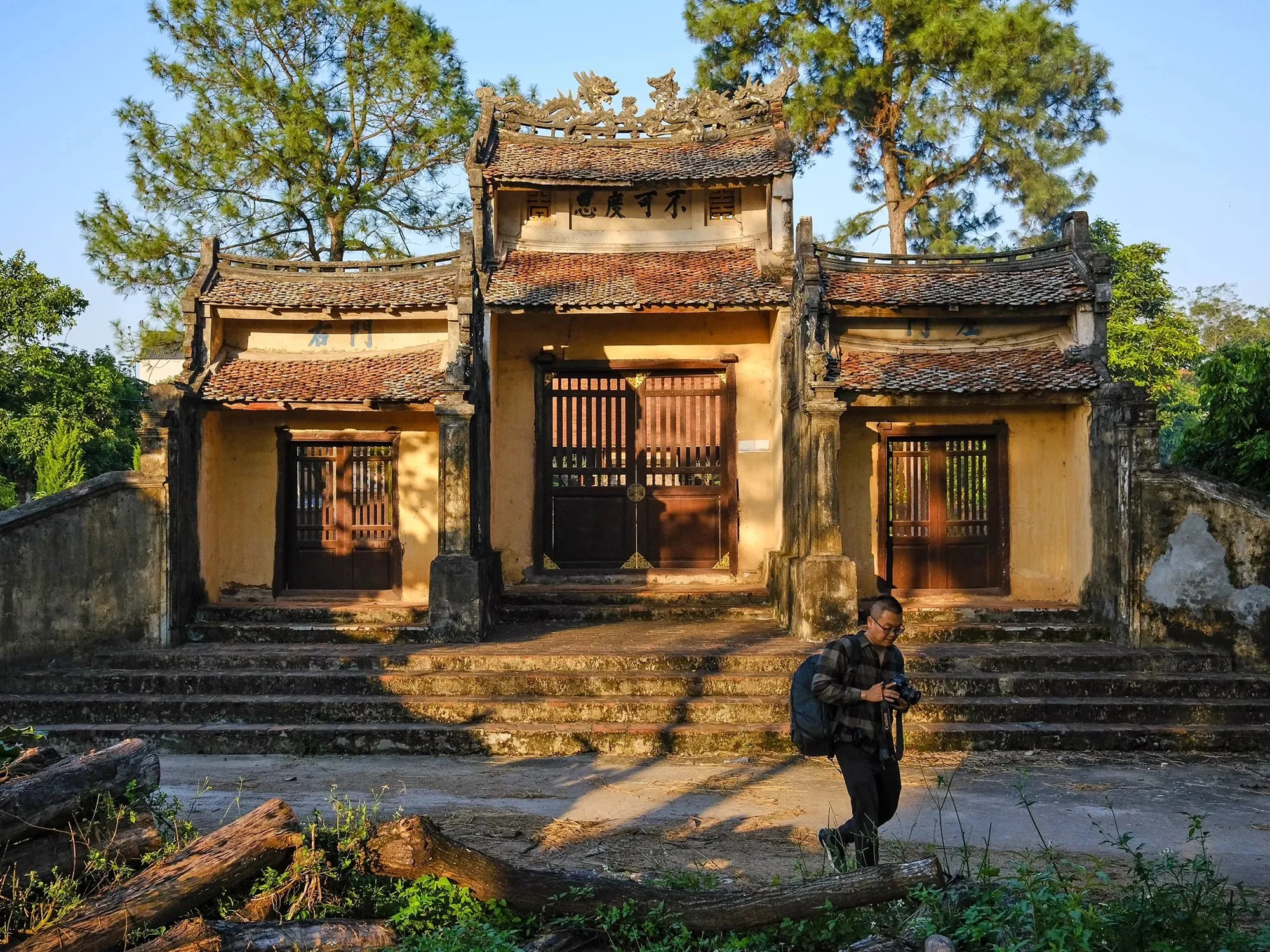
Trieu Chien: There are many modernist buildings scattered across Vietnam that I don’t know about yet, and many I know but haven’t photographed, because there’s so little information about them online. There’s no other way than to go and explore on your own. I prefer it that way, though. If everything were already online, there’d be nothing interesting left.
There are many buildings in the world I’d love to photograph too, but I’d like to shoot series of buildings by great architects: Le Corbusier, Louis Kahn, Kenzo Tange, Paul Rudolph, John Portman. I want to see, after so long, whether their buildings still stand and what life is like there now. Photographing an architect’s series would also help me understand architecture from the masters, something I lacked when I was at school.
What first made you want to become an architectural photographer, and what keeps you going today?
Trieu Chien: When I graduated, choosing between becoming an architect or a photographer was hard, because I loved both. I decided to pursue architectural photography in 2015, because it was still quite new in Vietnam then. The more I shoot, the more I see there’s so much I don’t know, so every trip is a lesson. What keeps me going is probably just a fierce love of architecture.
What makes a good architectural photograph?
Trieu Chien: When I started, I cared a lot about beautiful and ugly. If someone praised a photo I was happy; if they criticised it I was sad. Gradually I realised that a photographer taking beautiful pictures is a given. What I care about now is whether a photo, or a set of photos, brings value. With that, approaching a building becomes easier, and beauty or ugliness is no longer the issue.
Are there photographers you follow? How have they affected your work?
Trieu Chien: Three people inspire me every day: Iwan Baan, and Hufton & Crow. They are much older than me. Every day they travel the world photographing buildings, traditional and modern. That drives my own work in Vietnam today.
What are your plans?
Trieu Chien: Plans? Plenty, but I’ll just keep shooting. Only after shooting do I know what to do with what I’ve shot.
Interview by Hạnh Nguyễn, March 2020.