
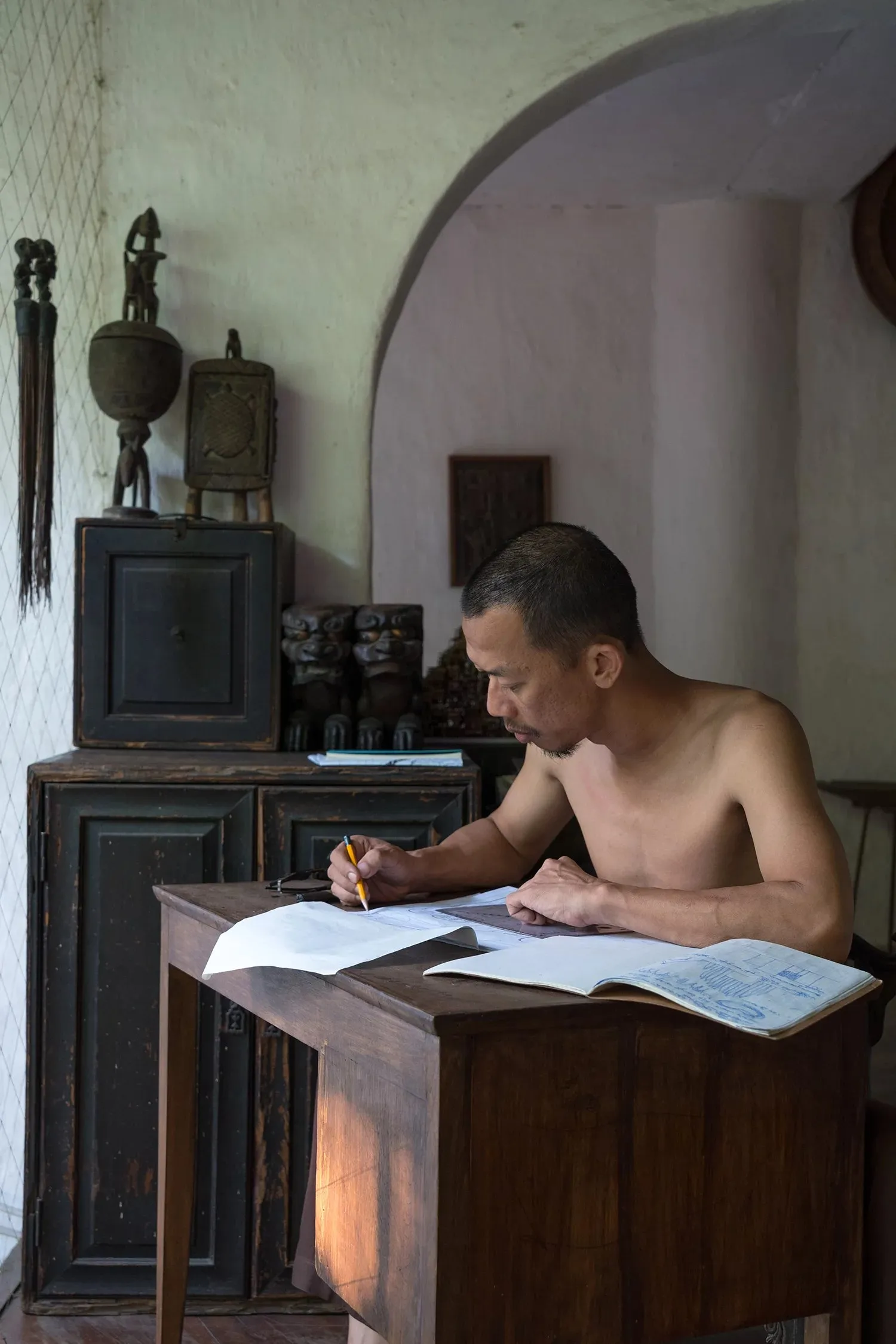
We sat at a21gallery, at a drinking table out in the garden, where a few bottles of beer and something salty were enough for a long, rambling talk. In his forties, the Vietnamese architect Nguyễn Hòa Hiệp, founder of a21studio in Ho Chi Minh City, has been in the profession for nearly twenty-one years.
That afternoon, we talked about the last ten.
What does a typical day look like for you?
Nguyễn Hòa Hiệp: I don’t know. It’s rarely the same; there are always surprises.
Many people call you Hiệp “Khùng”, Crazy Hiệp. What do you think of that name?
Nguyễn Hòa Hiệp: I don’t remember. Maybe friends called me that at school. I think it’s quite stylish. It sounds like someone with a reputation.
You don’t go out much and see only a few people. Is there a reason?
Nguyễn Hòa Hiệp: Probably because I’m not good at talking to people.
You often call yourself a “player”. Why?
Nguyễn Hòa Hiệp: Because I’m always thinking about play. Not going out, but in work or whatever I do, I rarely think in a serious way.
How long have you lived in Saigon?
Nguyễn Hòa Hiệp: I came to Saigon in 1996 after passing the exam for the University of Architecture. Of all the places I’ve been, this suits me best and I like it most.
How much of your day do you give to your family and yourself?
Nguyễn Hòa Hiệp: All of it. That’s why I put the office at home.
You buy books almost constantly and never mind the cost. How did that start?
Nguyễn Hòa Hiệp: I’ve loved reading since I was a child. In the evening, or when I’m lying around thinking, I pull out a book. Often when something bothers me, I pull out a book too. After 2000, as a student, whatever money I made went on books from Amazon. Whatever I liked I bought, without caring much about the price.
You started working at 21 and often skipped class. In those days hardly any of your designs were built. Were they really hard to use? How did you feel about it then?
Nguyễn Hòa Hiệp: Back then I could have boasted that nobody understood what I drew, but now I think it just wasn’t good enough to use. My drawings from last year, even last month, don’t look good enough now. If they were, I’d remember all of them. Luckily none of the buildings I drew then were built. I still have the sketchbook from that time. Then, what I drew looked beautiful. Now it looks ordinary, far behind what I’ve done recently. So there was certainly nothing good to use back then.
After founding a21studio, did the work always go smoothly?
Nguyễn Hòa Hiệp: Plenty of people came to ask me to draw for them, but it wasn’t smooth in terms of money. I rarely sign a contract or take an advance. I just draw until I know for sure they’ll build. There’s never been a case of meeting, talking, signing, taking money, and only then drawing. That hasn’t changed. So compared with when the office started, there are more opportunities, but it’s not that easy.
Over ten years of practice, what has changed in you, and what hasn’t?
Nguyễn Hòa Hiệp: I’m not as harsh as I was, maybe because I’m not as good as I thought. Before, when something wasn’t how I wanted it, I got very angry, and the kids at the office were the victims. Now I see I’m not good enough to fix everything, nor patient enough to do it.
What hasn’t changed in ten years is probably how I look (laughs).
You used to draw very few buildings, mostly for family and friends. Now a21studio takes on a lot every year, and you accept them all. Why the change?
Nguyễn Hòa Hiệp: I want to see my limits, how I’ll draw in the next stage. The more buildings come to me, the more I want to draw. There are other reasons too. Before, people who came to me were probably just curious, since I had no buildings to prove anything. I used to be very rude in turning people down, to see who really needed it. Now many clients understand me and indulge me, so whoever comes is lovely, and I don’t get the chance to say no.
We see two important stages in a21studio’s work, before and after 2014, each about five years. Was the shift a natural result of a very successful 2014, or something else?
Nguyễn Hòa Hiệp: I don’t think 2014 was any kind of success, because none of the people I draw for know whether I have any award or achievement. An award, if there is one, is only recognition at that moment, while a career is very long. I rarely stop to look back after an award or a good building. I forget those things quickly, because I don’t think they need attention.
Why do you use salvaged materials in your architecture?
Nguyễn Hòa Hiệp: For three reasons.
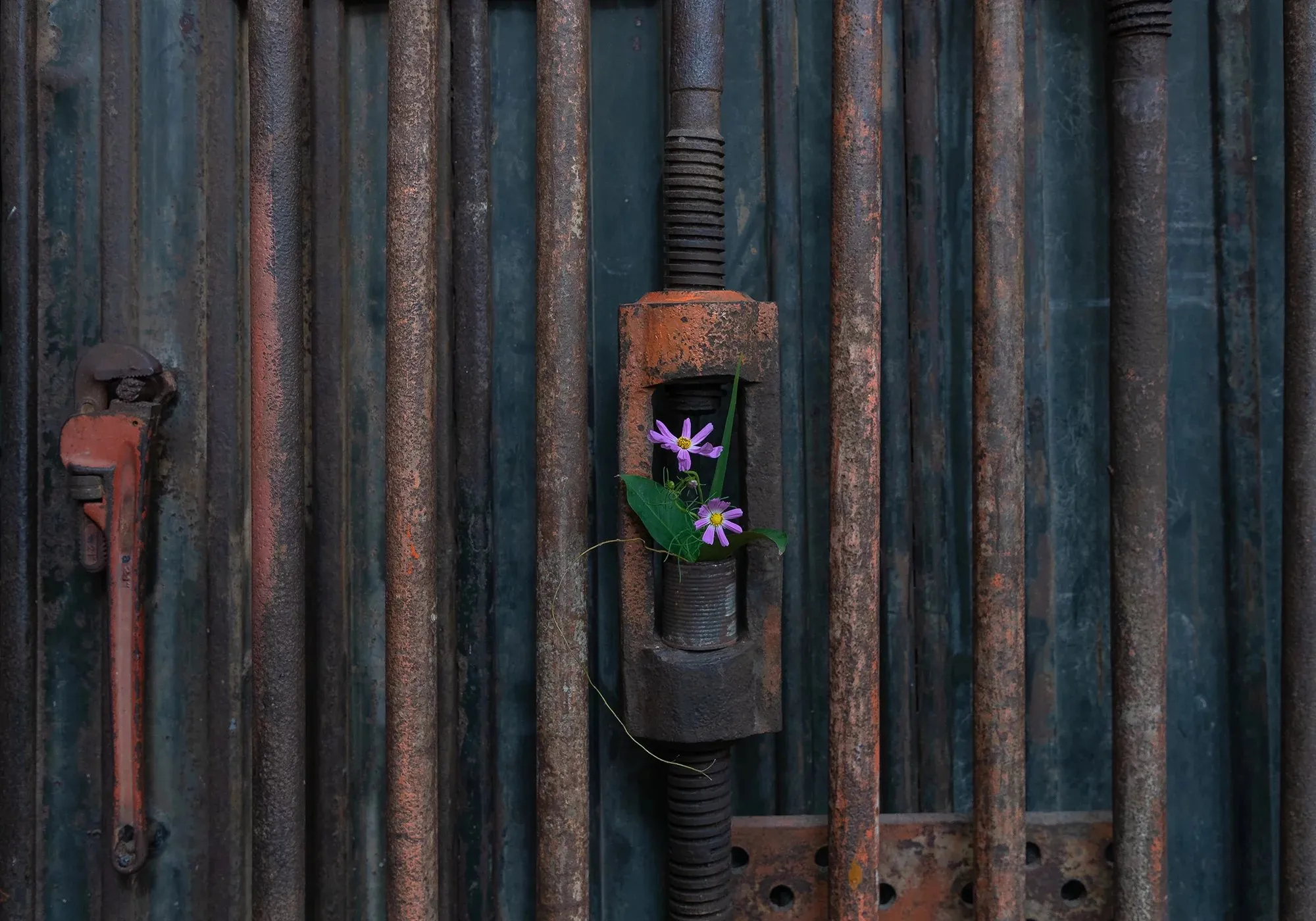
First, I don’t want to consume new things. For every item I ask whether it’s really needed, because architects often use materials out of habit and under the influence of business. I find it usually isn’t needed, and if it is, I try to find things that aren’t newly made. Second, the old things and salvage I use are selected. In the past, production and raw materials were very good, so they are certainly better than new things today. Third, old things and salvage are usually very beautiful after years of use.
With all this work, you must earn a lot.
Nguyễn Hòa Hiệp: Right now I don’t care much. I do a lot, and people press money on me, but I don’t want to take it. I’m just tired of transactions, of contracts with binding clauses. It’s all for people’s own sense of safety: if I take the money, they feel sure I’ll draw for them, rather than caring together about the thinking I put into the design.
I value what I design more and more. Some buildings turn out very well, beautiful and just as I wanted, but the people using them don’t use them properly. After a while they sell them on, or change them until they no longer hold the spirit I aimed for. I live as far as my strength goes. I don’t need a sum of money to feel secure. I try to take the client’s money as late as possible, even when they push it on me, so I can keep control of everything I intend for the building. If in the end I can’t, I can walk away from it at any time without regret. I don’t care much how much I earn. Contracts are a formality between us. If a client gives me money, I spend much of it finding and buying the best things for their building, and they usually don’t know. I want to undo every tie, because when we make a building, both the client and I have to invest for it to be good.
Looking at it the other way: when I have a design, the client has to spend so much to buy land and build it. They give me the chance to test what I’ve thought of. They invest so I can play my crazy games. They pay for my play, so often I don’t want to take their money. I’ve even thought that if I were rich enough, I should pay them extra, for finding me and giving me the chance to show what I think.
In that frame of mind I rarely think about money, and focus only on making something as good as possible, so that the client and I both have the chance to earn more and do the next good things together. That’s also why I work for very few clients. Not many people understand this, or have the patience for it with me. It’s quite ordinary, so I rarely say it. I’ll say it once here and leave it.
After ten years and many buildings in Vietnam, quite a few clients only want you to draw for them. I know one even made you promise to. How do you deal with people “hoping Hiệp will draw for them”?
Nguyễn Hòa Hiệp: I note every project in a notebook, and when there are still many on the list, I tell myself and the team not to take any more. I try to talk to people as little as possible and refuse from the start, because I’m afraid they’ll bring me an interesting site or brief that sets me thinking, and once I have a good idea, I tend to say yes.
I’m not proud of that idea, nor do I think much about it. People gossip, and plenty think I’m arrogant: that because they want me to draw for them, I can impose everything, and they have no right to interfere or question what I do. That’s completely untrue. An idea without questioning, without collision, isn’t good. I want clients to question and take part as much as possible. Without argument a building isn’t good. Some say I’m imposing and stubborn and listen to no one. I really don’t care what they think of me. Many clients, after I draw them a house, say it’s beautiful, stop changing it and let us build. But I keep drawing until I think it’s right, and then we build. I don’t see that as stubbornness. If I can still think further, I’ll think until it feels right.
I know many of your clients, and most say their lives changed for the better after you designed for them, whether a small house or a large hotel. What would you say about them?
Nguyễn Hòa Hiệp: I always draw a building for a client as if I were drawing for myself. If many people change for the better, I’m glad for them, but I don’t do it to make them better. Sometimes you need to stay clear-headed: you’re only hearing one side, the good things. I’ve heard plenty of abuse about my designs too. I hope the share of good that comes from my influence keeps growing, but I have to stay alert and not be complacent about praise.
a21studio never recruits. Why?
Nguyễn Hòa Hiệp: I never wanted a21studio to be an office or a company. I think of it as a motley group, each one different, working together like a band. From the start I didn’t like the idea of an office gathering only talented people by advertising for them. Here, whoever likes it comes round, talks, and if it fits, we work together.
What are you looking for in architecture?
Nguyễn Hòa Hiệp: In 2009, when I opened a21studio, Minh, the owner of M11, asked me what my five-year plan was. I said in five years I wanted the whole world to know a21studio. Then I thought about the following five years: I wanted to close the office so nobody would know it any more. Not because I’m bored. The office is simply where people come to ask for designs. I want to close it to do small things, like the exhibition of 365 door handles, or 36 old wooden chairs for children. Last year I still meant to, but now I have to finish the big jobs first before closing it. What I’m looking for in this profession comes very slowly. I do it because I like it, and along the way I find a little something for myself. Just keep walking, and pick up whatever you find.
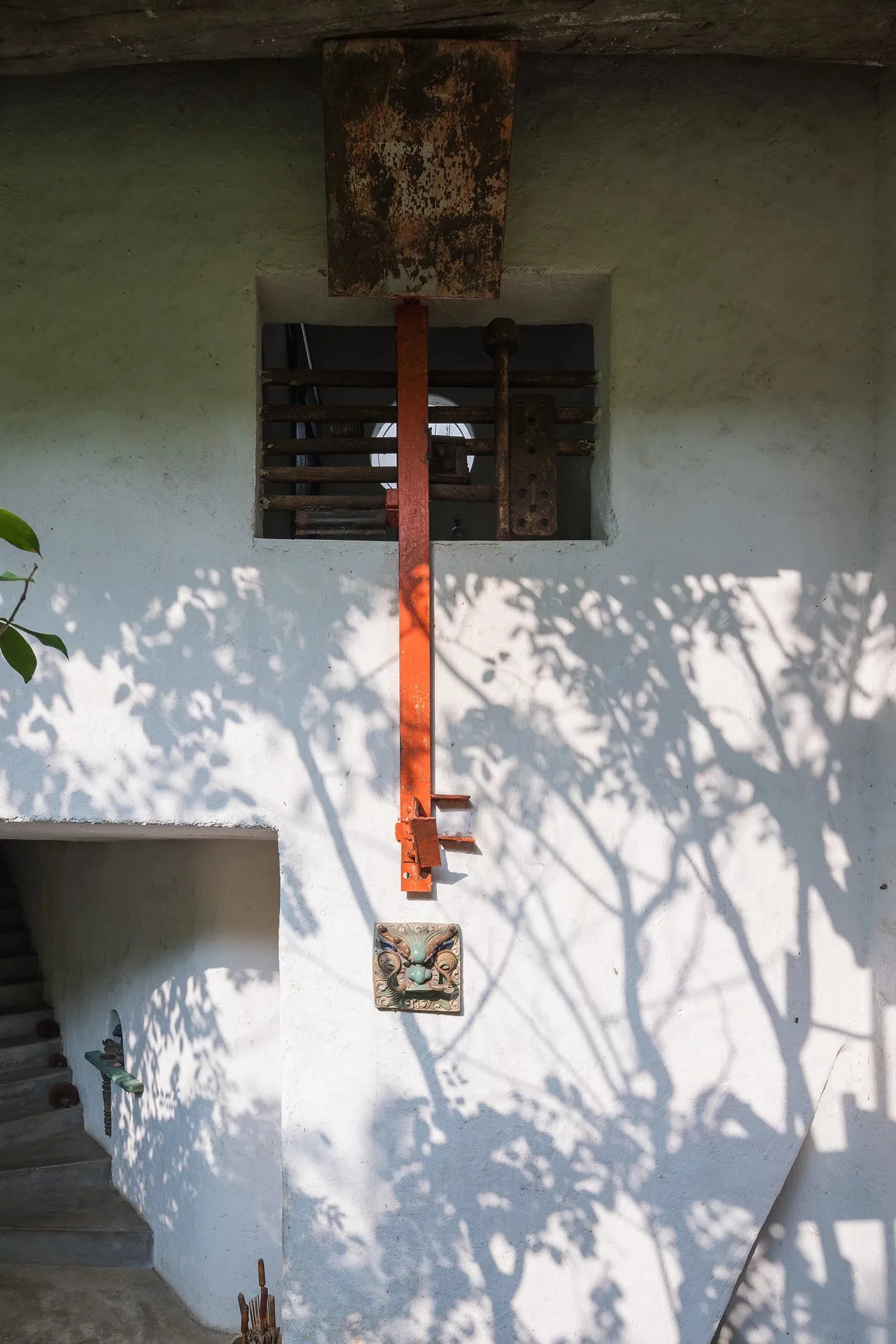
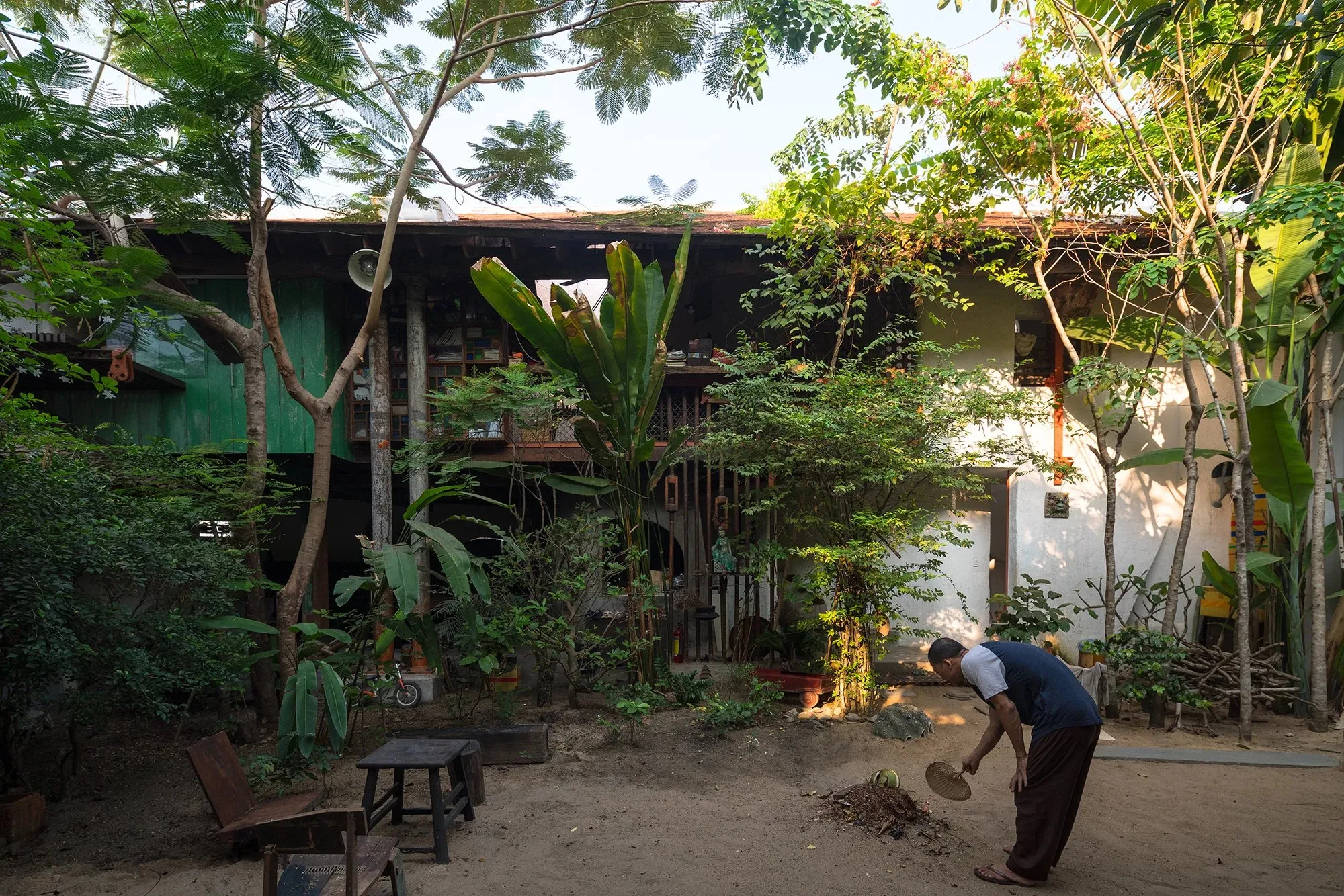
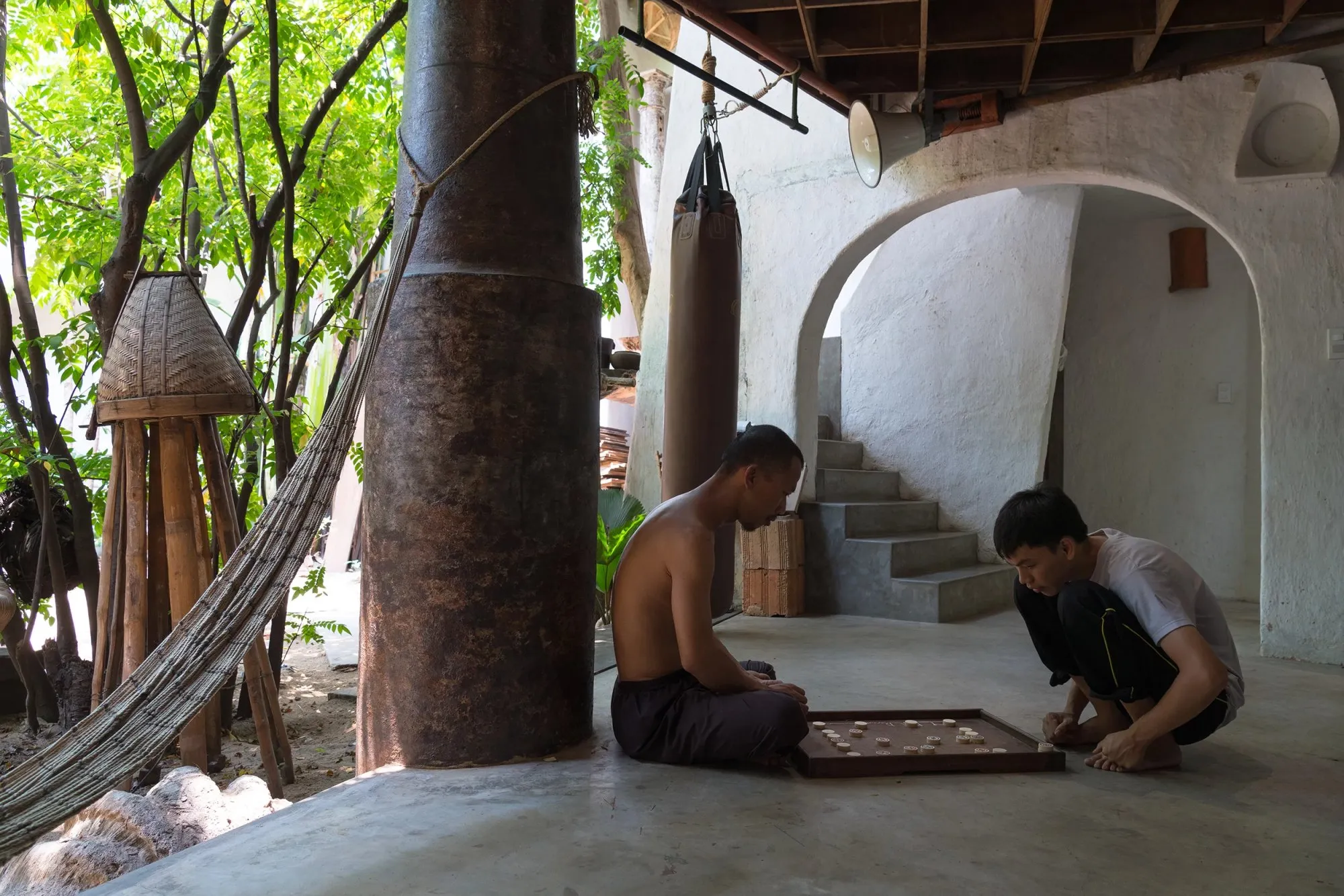
a21gallery is the house you live in. How does its architecture, and your freedom in designing it, differ from the houses you did before?
Nguyễn Hòa Hiệp: I live here every day. When it was finished I thought it was the most beautiful, but I still see so many faults. Freedom comes from yourself, from your own head. This house or any other only shows my view at one stage, and looking back, it’s still full of mistakes. It’s the first building where I used mostly salvaged things, and they have a new, very proud life.
What did you think about most when designing this house?
Nguyễn Hòa Hiệp: Bawa in Sri Lanka and Barragán in Mexico each have a house that has become heritage, a place people visit, growing in value over time. I thought about this house in the same way. I wanted it to become heritage later, somewhere you must visit when you come to Saigon.
The house is made mostly of salvage. How did you get so much?
Nguyễn Hòa Hiệp: Over many years I’ve gathered and collected salvage. If something is good and beautiful, I can see how to use it. For the 365 Door Handles exhibition in 2018, I saw more than 300 things that could be used as door handles. Maybe because my eye can see it, I pick up a lot of interesting things.
If you no longer lived here, what would you do with the house?
Nguyễn Hòa Hiệp: What would I do with it? I told the person who gave me the land that I’d give the land and the house back to them, but they wouldn’t take it, because they couldn’t control it. Maybe just leave it empty.
Interview by Anh Nguyen, October 2019. Photos by Trieu Chien.