
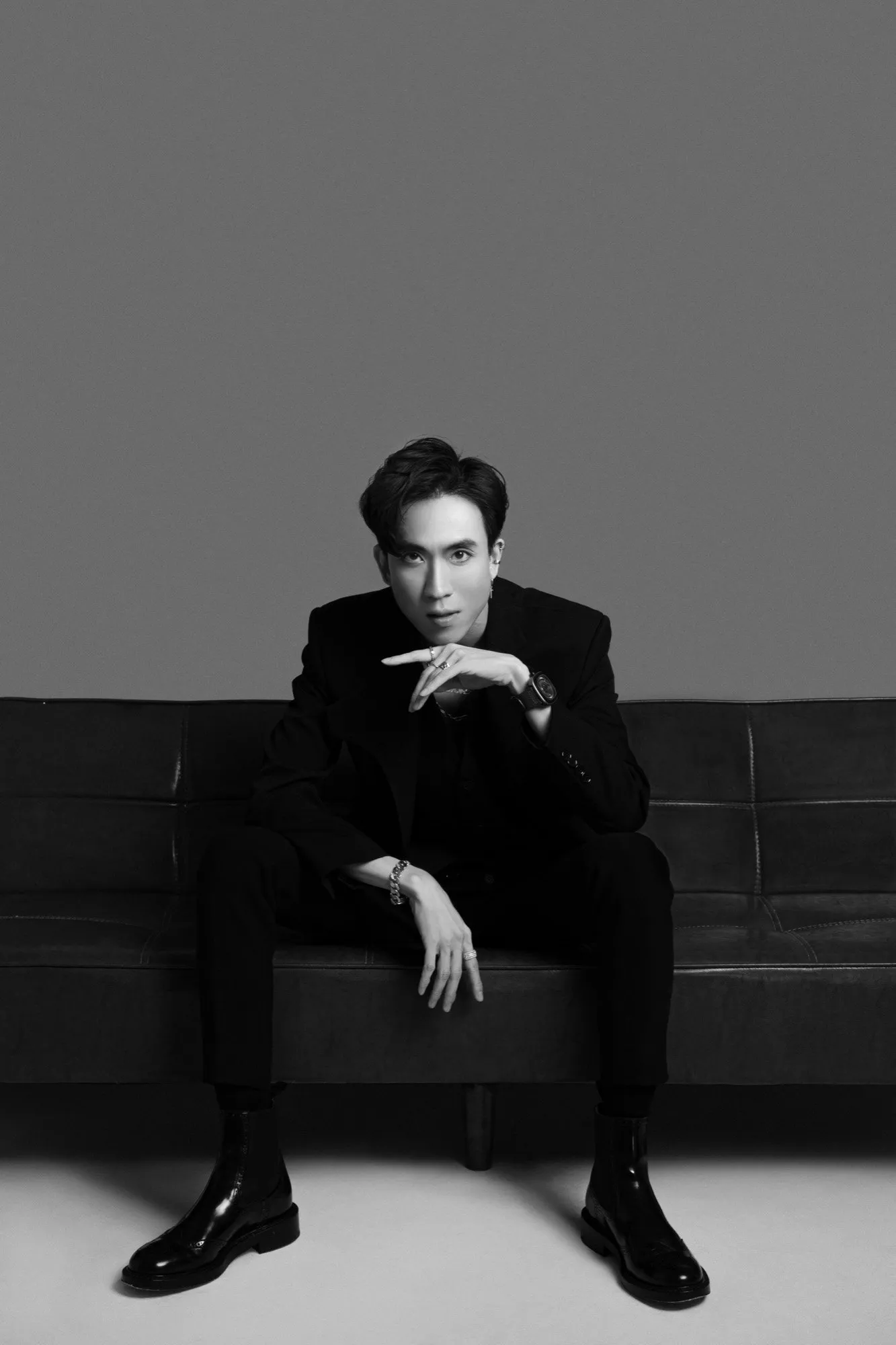
A conversation with the Vietnamese architect Lê Hưng Trọng, founder of Le House, an office based in Ho Chi Minh City, Vietnam.
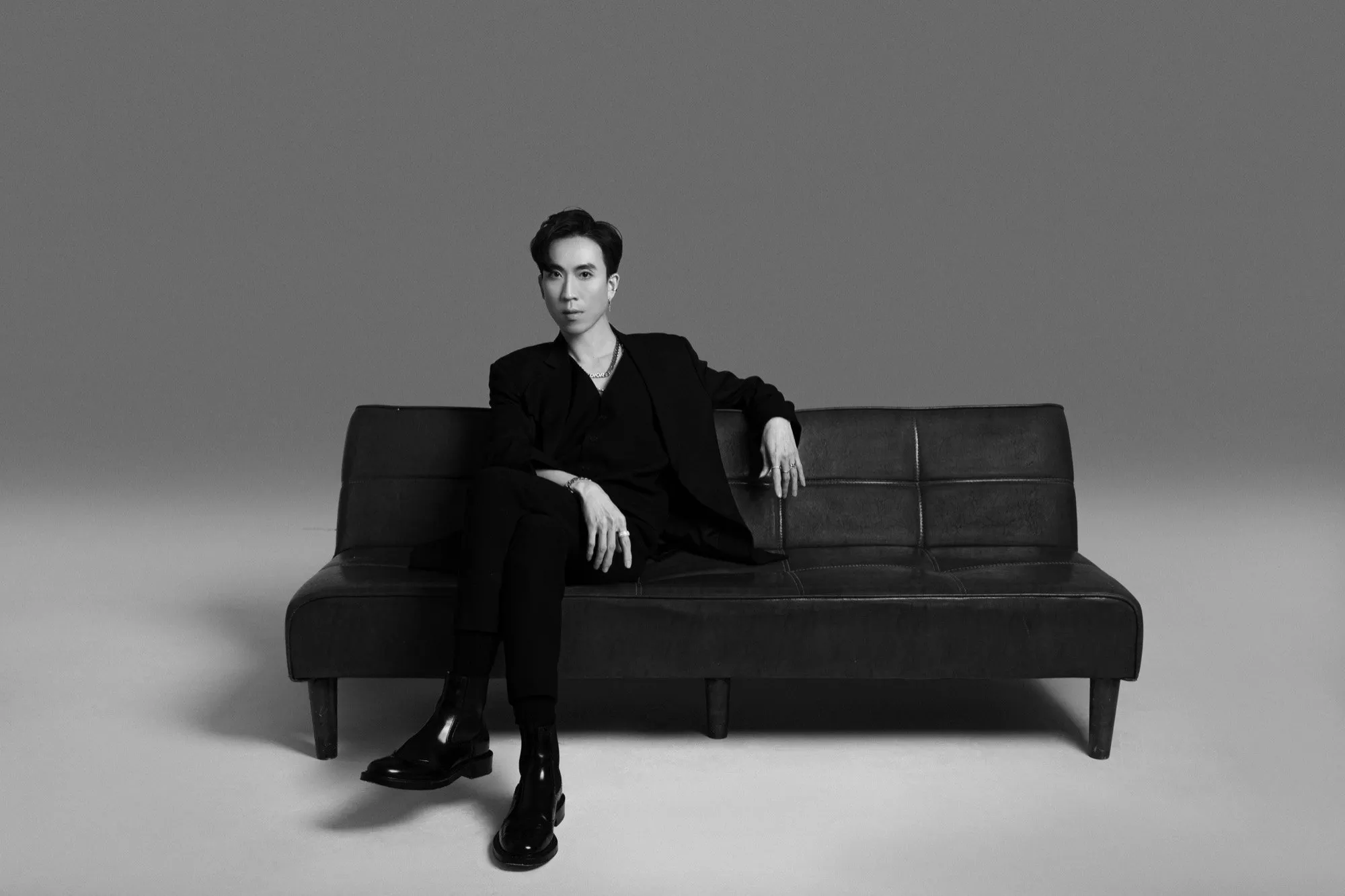
What is Le House working on at the moment?
Lê Hưng Trọng: Right now we are concentrating on housing. Since COVID-19, the food and drink business has been fairly quiet, so there is less demand for design in that field than before. Designing houses is a completely different field from designing places for service. When I designed restaurants and cafés, I could show my strengths through form and an eye-catching presence that had to please a great many people. Coming back to houses, I serve the most basic person of all: the one who lives in the home.
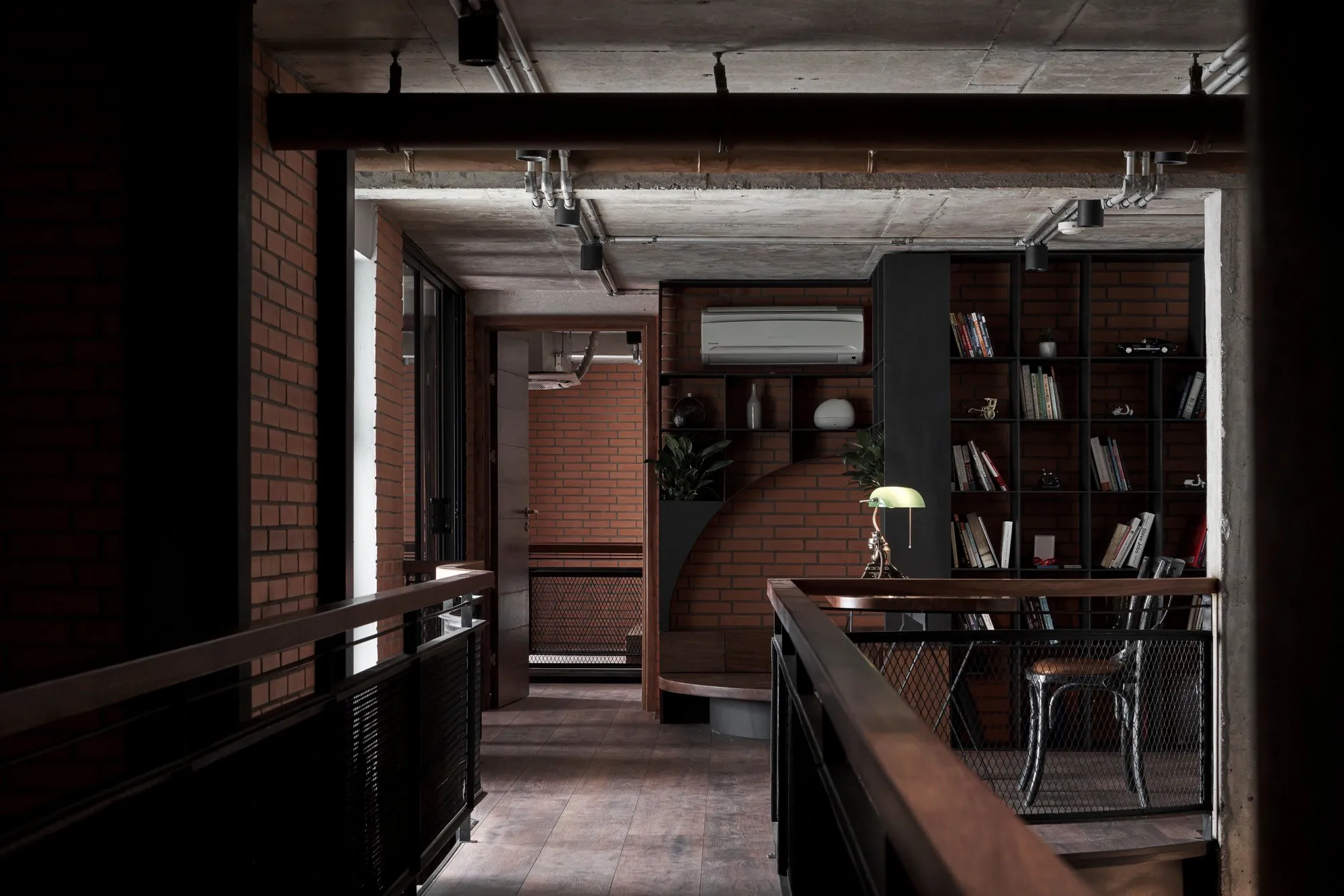
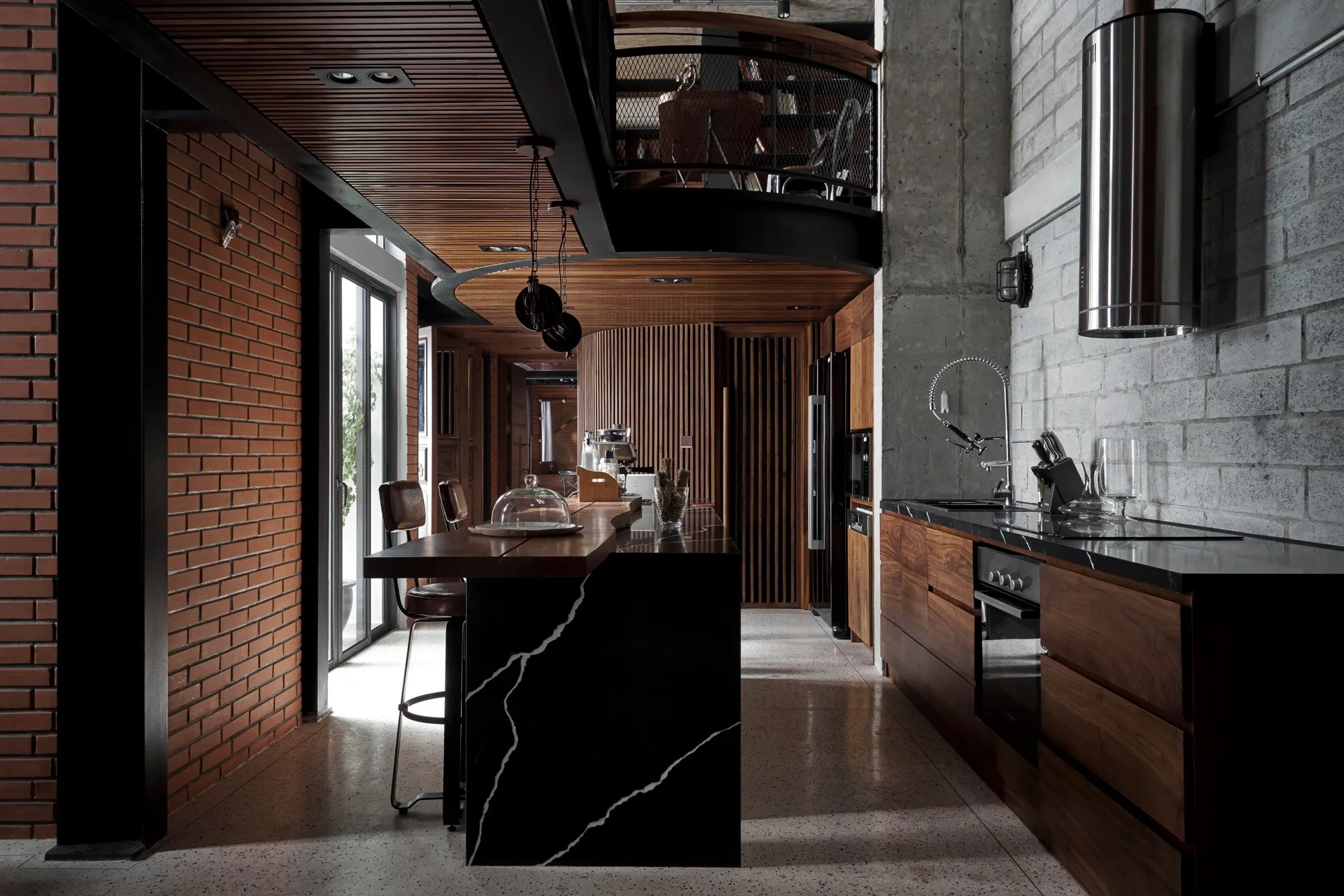
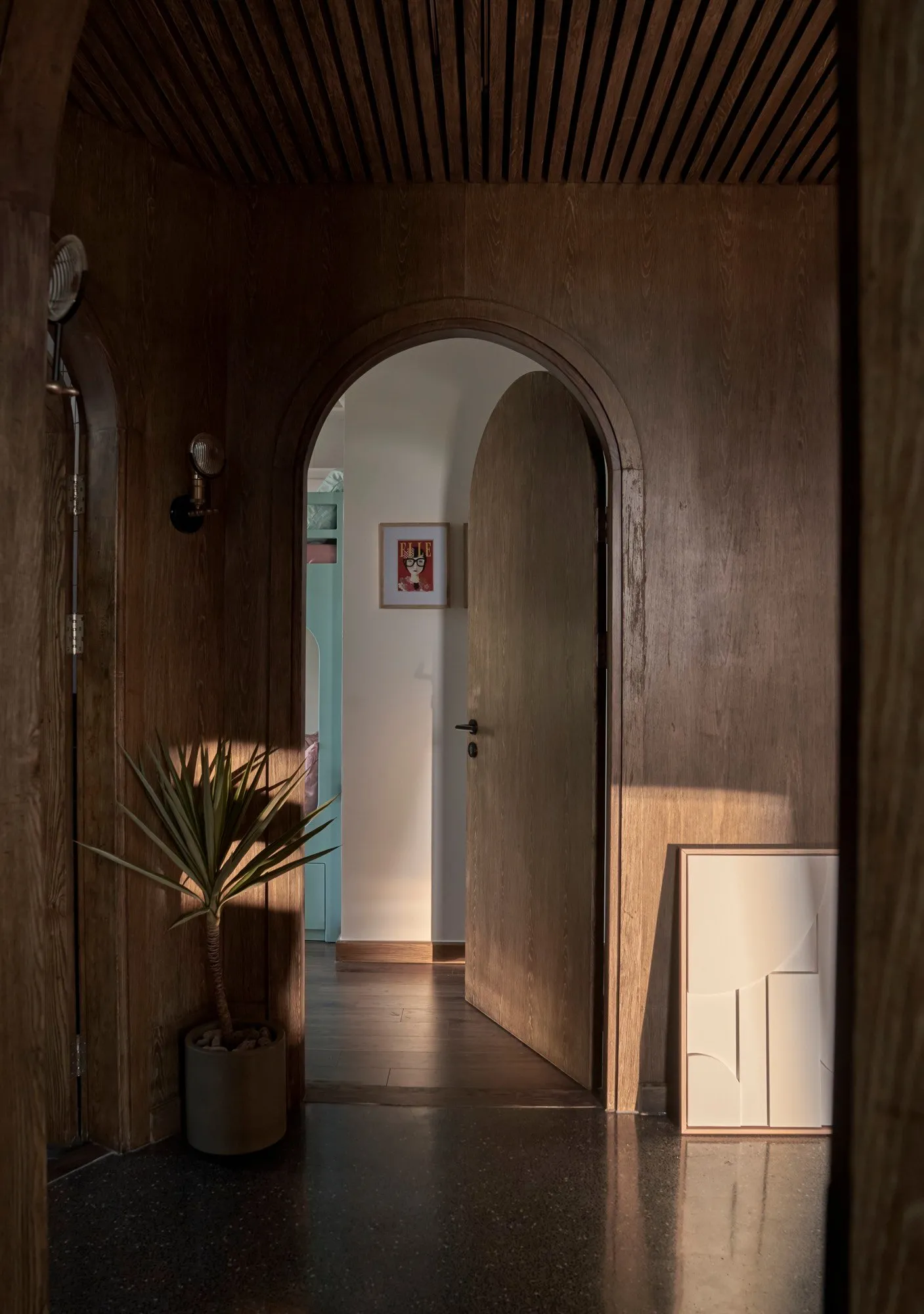
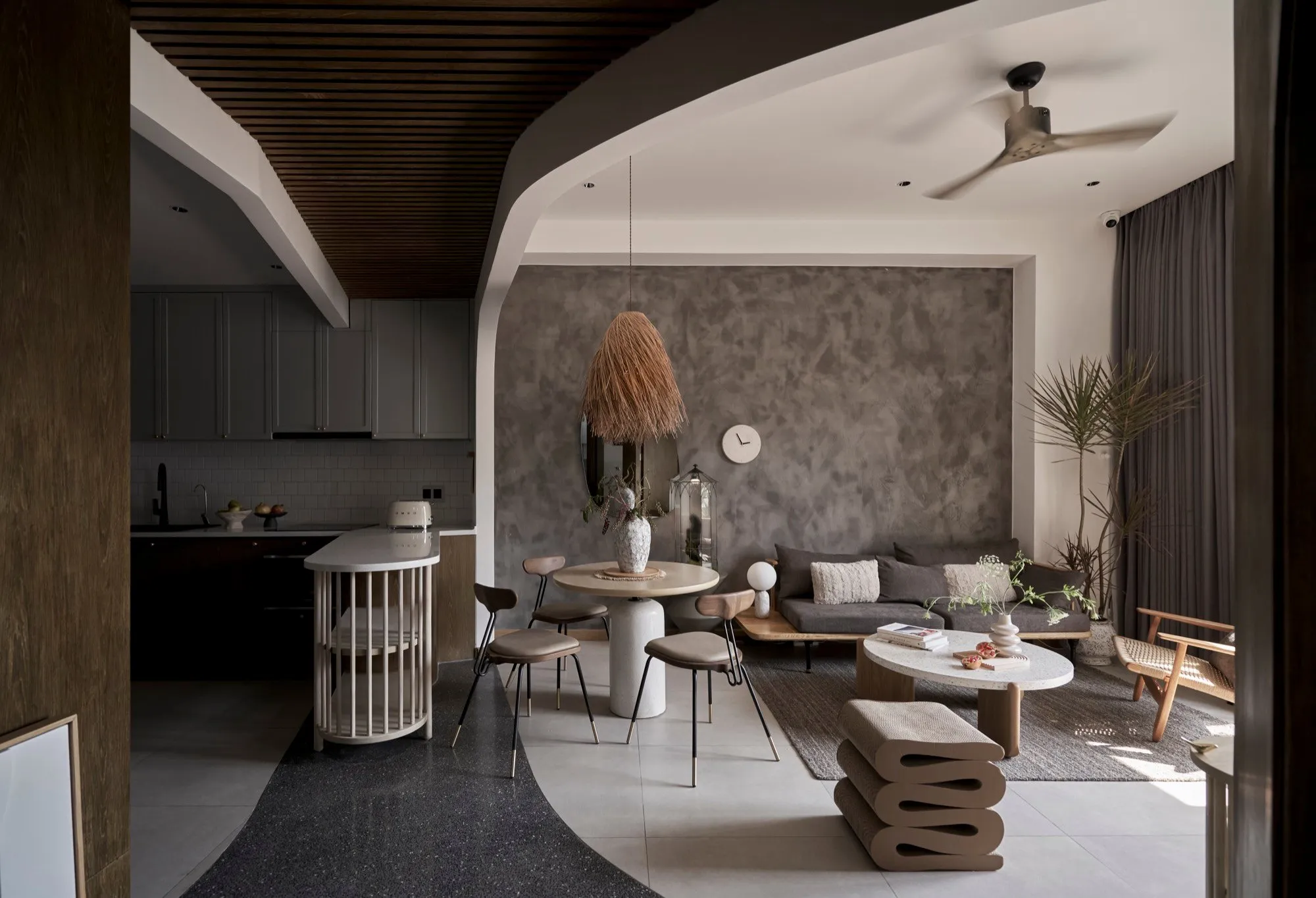
My own apartment is a typical case. I had designed many large buildings, yet when I did my own flat I realised there were a lot of things to rethink. I gradually came to understand the mindset of most clients, and to sympathise by putting myself in their place. Housing needs many skills. It isn’t simply a performance, and sometimes creativity is only one part of it. As a student, I was always a bit wary of housing projects.
What was the period before you founded Le House like?
Lê Hưng Trọng: I had no time to rest after graduating. I had to start work right away, simply because my mother stopped my monthly allowance (laughs). I felt a little lost at the time, but I also found it funny. I’m the eldest son, and getting to university was an honour for the whole family. Everyone gave me the best they had. Even now, whenever I open the notebook where my mother wrote down every expense for my five years at university, I feel I’m in debt. I haven’t had much rest, but that has been a motivation every day.
I graduated top of my year, so I carried a lot of positive energy and always wanted to create. But once I joined a company, I gradually saw that the opportunity there, at that time, wasn’t meant for me. Instead of drawing more, I was given two years of developing technical drawings, and I felt it didn’t suit me.
That doesn’t sound like a happy time.
Lê Hưng Trọng: Not at all. I’m truly grateful for that time. Those two years weren’t wasted. They trained me into who I am today. Doing technical development taught me to understand drawings and how things are built. From someone who only drew schemes, I could take a design all the way to a finished building and know exactly what a drawing depends on and what information it needs.
Instead of resenting the work, I found joy in it by trying to take care of everything I did and make it as good as possible. Even now, when I work with young people, I still tell them this story.
Is there an architect or a person who has shaped your thinking and practice?
Lê Hưng Trọng: My teacher. He thought in a fresh way, never by rote, perhaps because he trained abroad. The generation before me at school focused on hand drawing to present architecture, while he encouraged us to work more with space and to make models. He taught me how to look at a foreign-language book, read the plans, sections and photographs, and redraw a building without needing to know the language. Nearly twenty years ago, our generation didn’t have translation tools or modern computers, so what he taught was precious. Those skills are still with me every day.
Most of your buildings are in the North, while Le House is based in Saigon. Is there a story behind that?
Lê Hưng Trọng: It was chance. After leaving my first company, I worked for a while at another firm in Saigon. Just as I was about to leave, a client came to us wanting to work on a restaurant. After surveying the site in Hanoi, the company saw that the project was large and the team was short-handed, so they asked me to stay on until it was finished. I said yes without a second thought, simply because I wanted to keep going to Hanoi (laughs).
That was the Sứ Buffet restaurant. I remember the idea was very hard to realise at the time. My scheme leaned towards strong form: the facade was decorated with large, bold frangipani flowers. Honestly, I drew it without being able to picture how we would build it step by step.
In the first test I used cast iron, and a single petal was too heavy for five men to lift. Thinking of hundreds of these flowers going up, I already saw failure. But I never lost heart. Instead I tried, rather vaguely, to convince the client. And they still chose my scheme, even though it wasn’t very feasible. I think my bond with Hanoi, and later with Haiphong, began there.
Do you find it hard to express yourself? How often can you convince clients to go the way you want?
Lê Hưng Trọng: With service buildings, I feel confident and at ease. With houses, I’d say it’s fifty-fifty. Quite a few of my proposals do convince clients, especially townhouses, new or renovated; owners get very interested in how I think. Lately I’ve also been working on villas and resorts, which are still new to me. Many clients in the North come to us, but because of the distance we don’t have much time to meet in person, so some schemes haven’t yet found common ground.
Le House’s houses vary a lot in style. Is that something you bring to each project, or what each client wants?
Lê Hưng Trọng: Usually the client and I agree on it together and then carry it out. I don’t care much about the idea of style. As I see it, architecture is the essence, and style is just a way of expressing it in each place. I think architects should pay more attention to space and function, to serve the particular needs of each client on each project. After practising this many times, it gradually becomes your style.
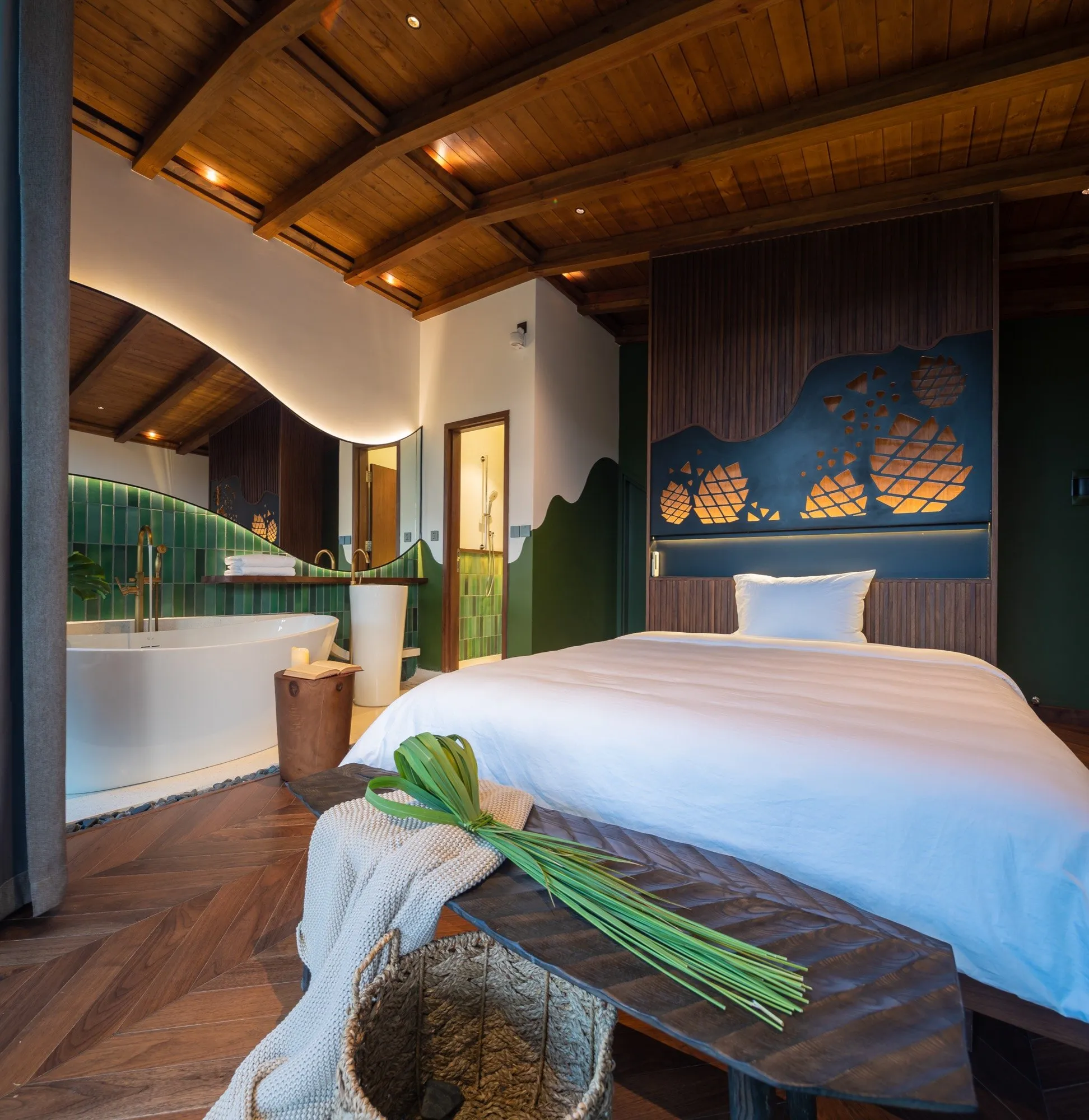
Between renovation and new building, which do you prefer?
Lê Hưng Trọng: I like renovations. After doing many, I realised: why can’t architecture be "recycled and reused" the way people do things every day? The trend now is towards reusing materials. I don’t have the means or the experience in that area, but I always want to renovate buildings. In fact, I get quite a lot of requests to renovate architecture and interiors, which I enjoy. The more I do, the more I find that in many difficult situations I can always offer the best solution, both within my means and in line with what the client wants or thinks. When you always try to do your best, clients value and respect that will. So every time I renovate a building, I feel I’m given priority. I don’t have many chances to show what I can do, and renovation is how I put that across.
Do you pay much attention to traditional architecture?
Lê Hưng Trọng: I love beauty, but not in the sense of arguing or thinking academically. I have a good feel for history and art. Just by coming into contact with something, I can sense and understand part of it, then dig deeper and apply it to my design in the simplest way. Sometimes a rigidly academic approach limits your thinking and creativity. Honestly, I don’t have much time to research every traditional idea in depth, but I’m very inspired by folk materials. When I think of them as material, I can always find a way to use them in the most harmonious and sensible way, balancing the client’s view with what I want to express. I think commercial projects in Vietnam need this, like the Pizza 4P’s restaurants or some of the vegetarian restaurants I’ve done.
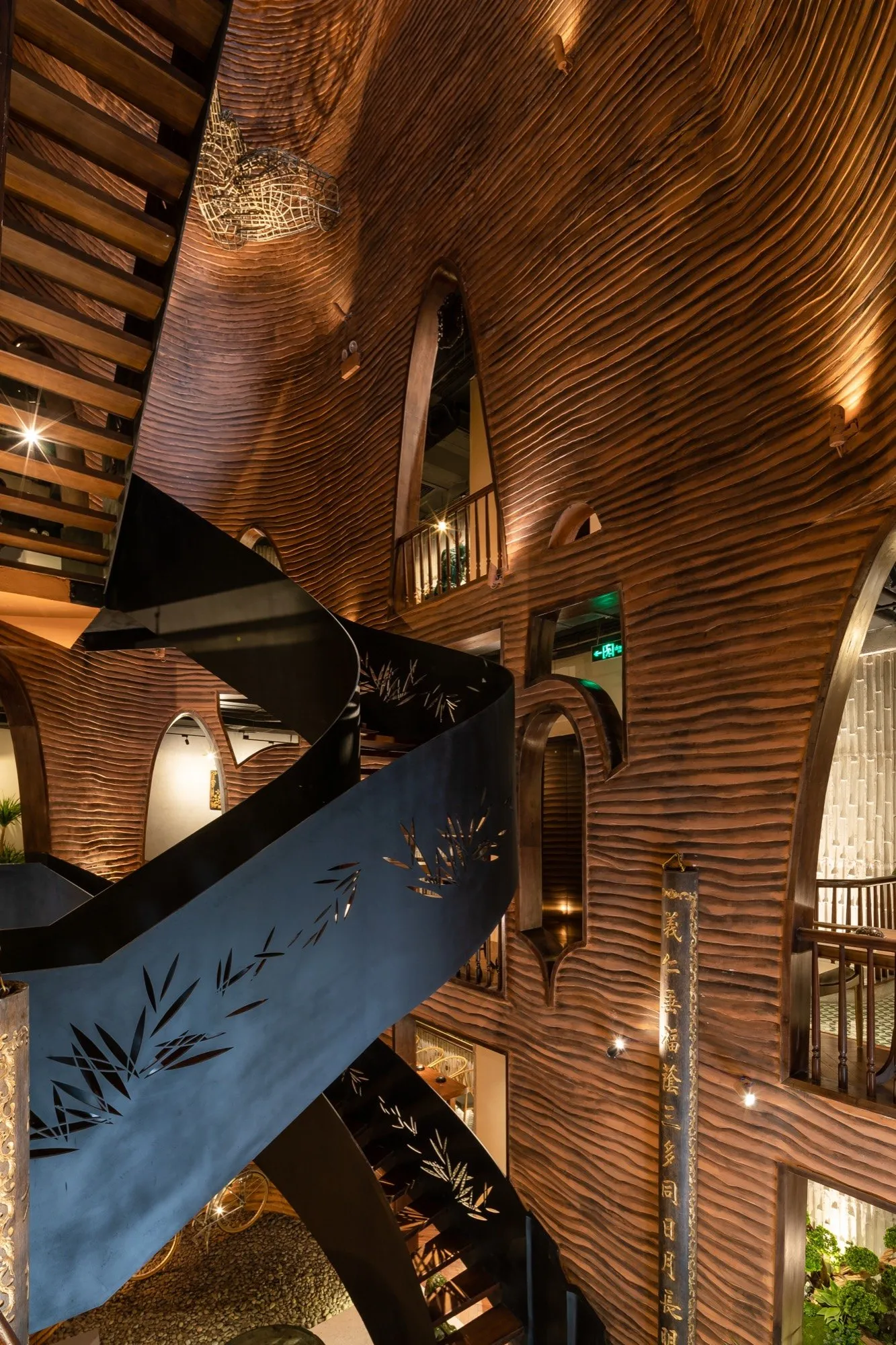
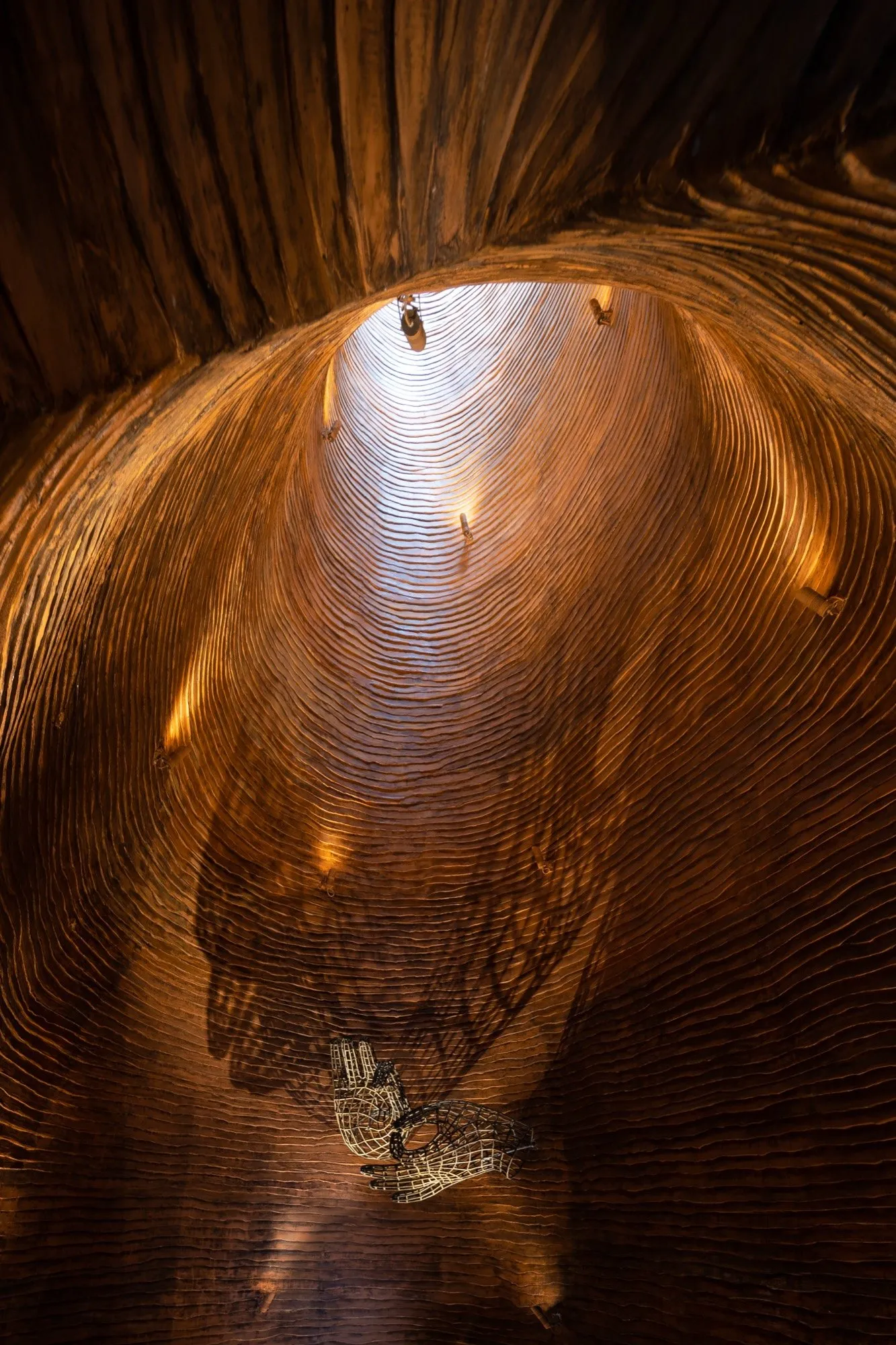
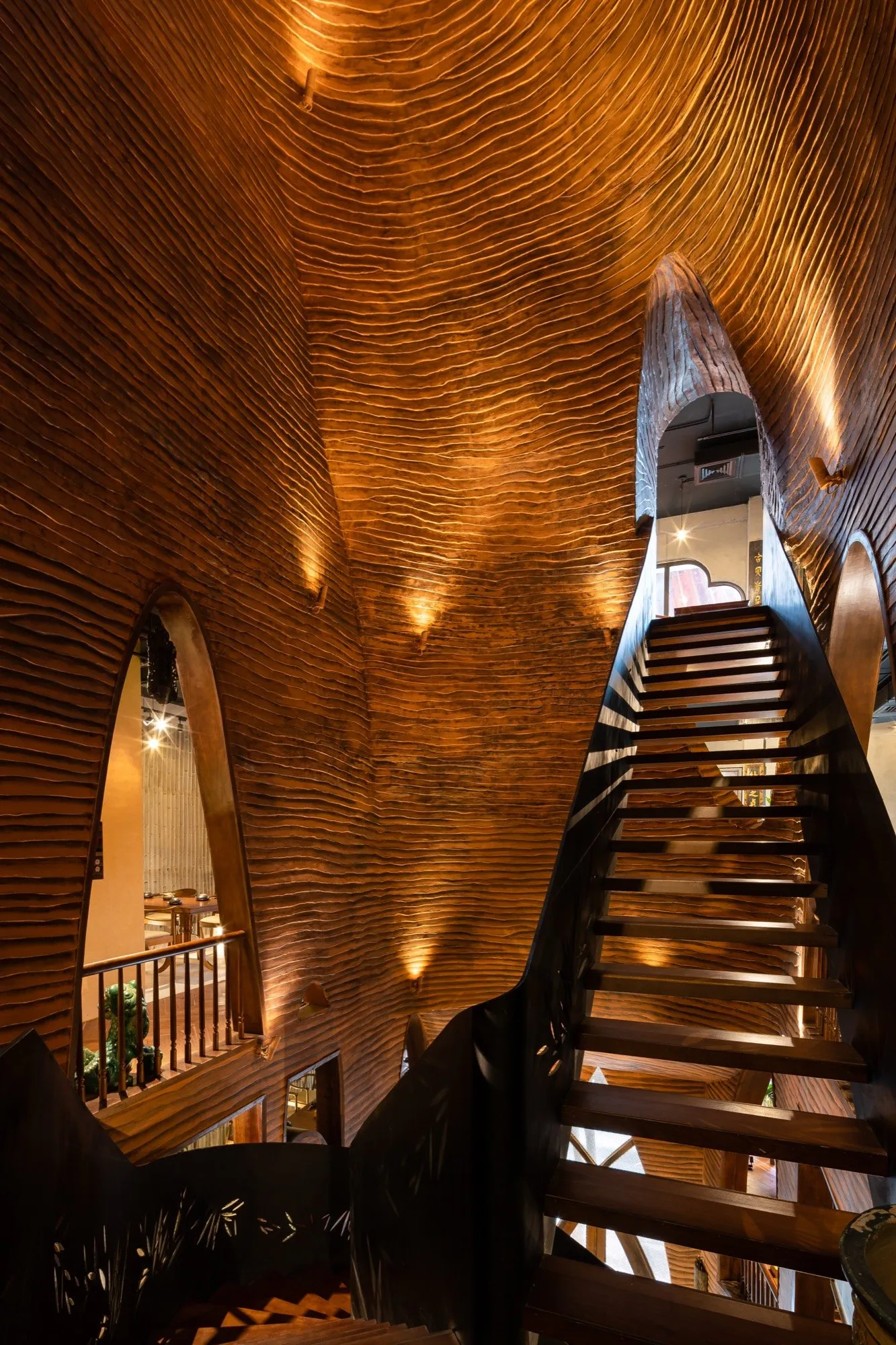
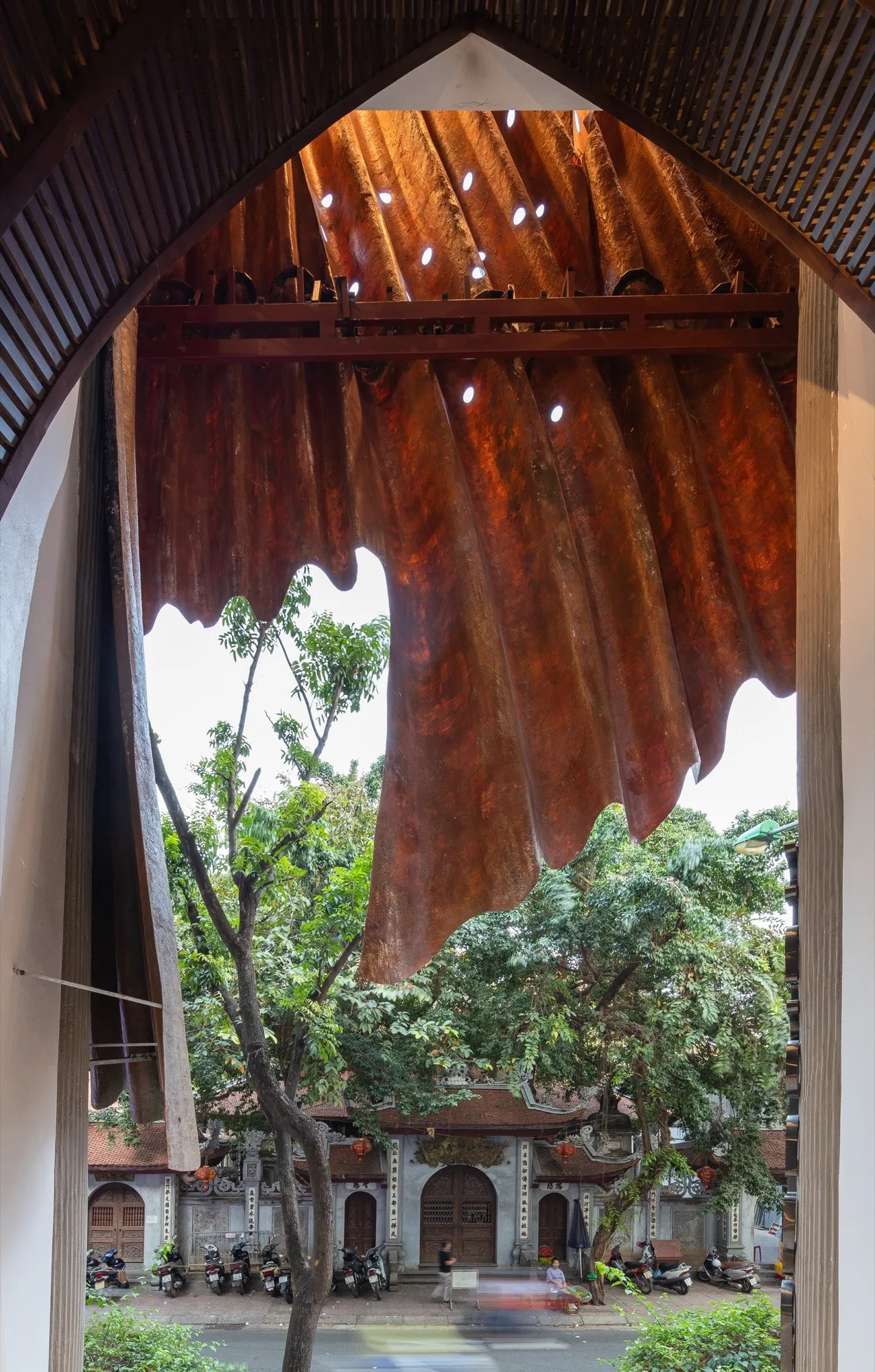
Besides folk materials, you often draw by hand and use a rich range of artistic motifs.
Lê Hưng Trọng: That comes from my passion for drawing. It’s how I balance myself against pressure and work. I draw a great deal; it’s like a world of my own. I often bring artistic details, or details that need real craft, into service buildings. That’s my strength, where my own world meets everyday life.
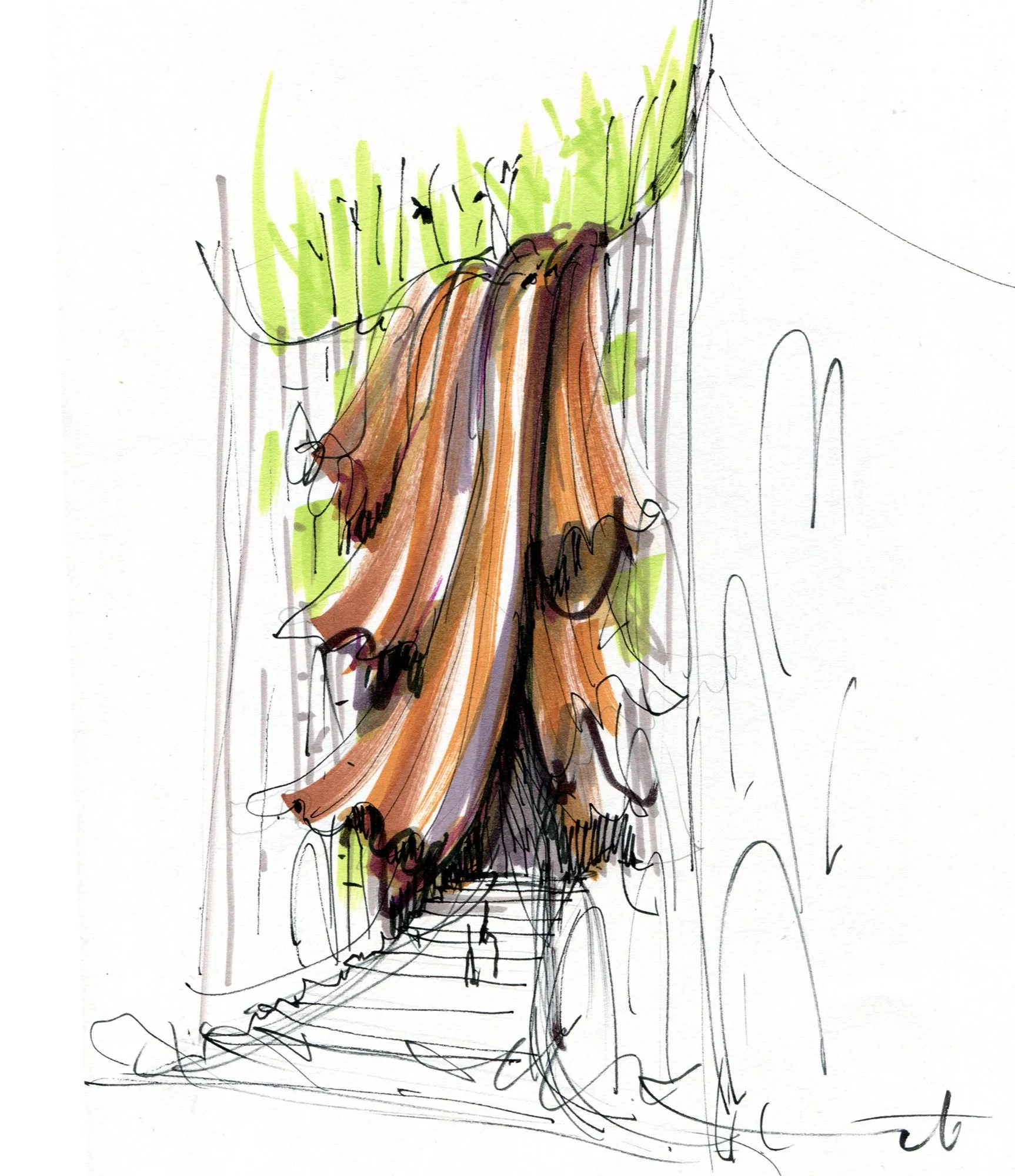
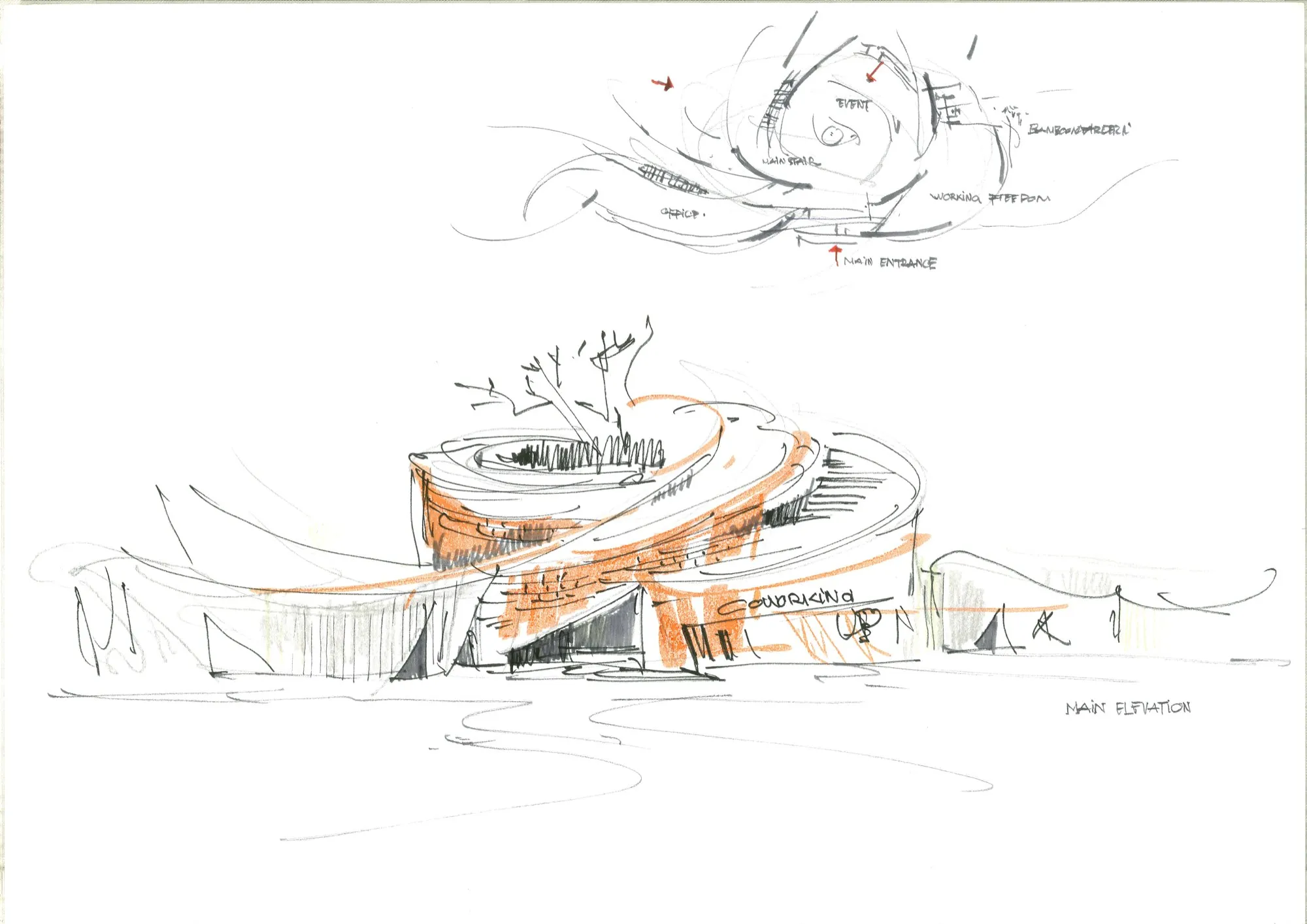
What do Le House’s vegetarian restaurants have in common?
Lê Hưng Trọng: I think what they share is Buddhism. In fact no two are exactly alike; each project has its own setting and needs. For me, Buddhism is a way, and I believe in the path I’ve chosen and in my own awakening. Eating vegetarian shouldn’t and needn’t be heavily religious, but I like to observe Buddhist images and details, then distil and separate them out to bring into each vegetarian restaurant. They don’t need to carry heavy meanings, stories or anything grand from belief. They are simply things I want anyone to feel easily, so they can sympathise and feel they belong somewhere. Every service building needs that.
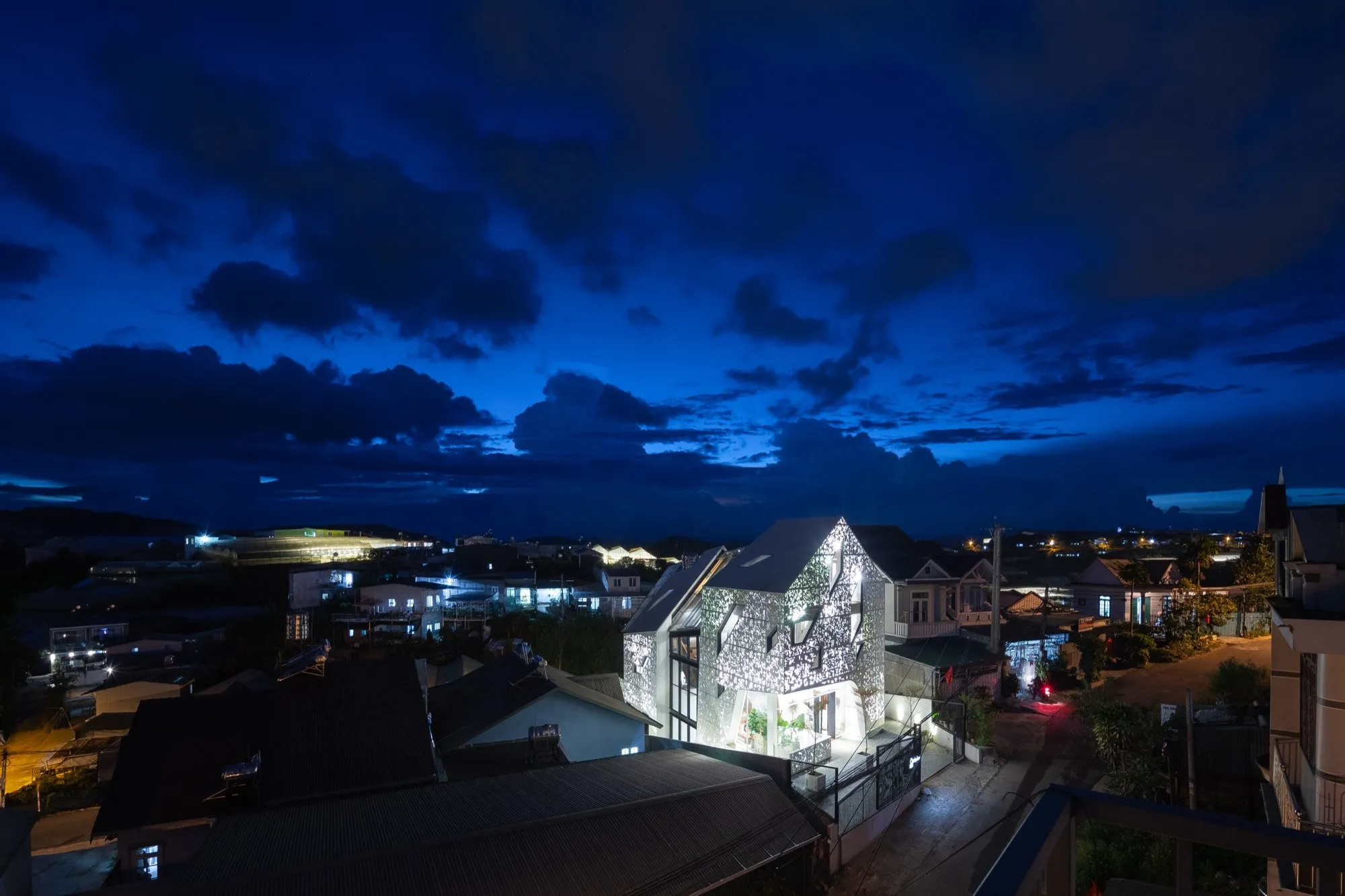
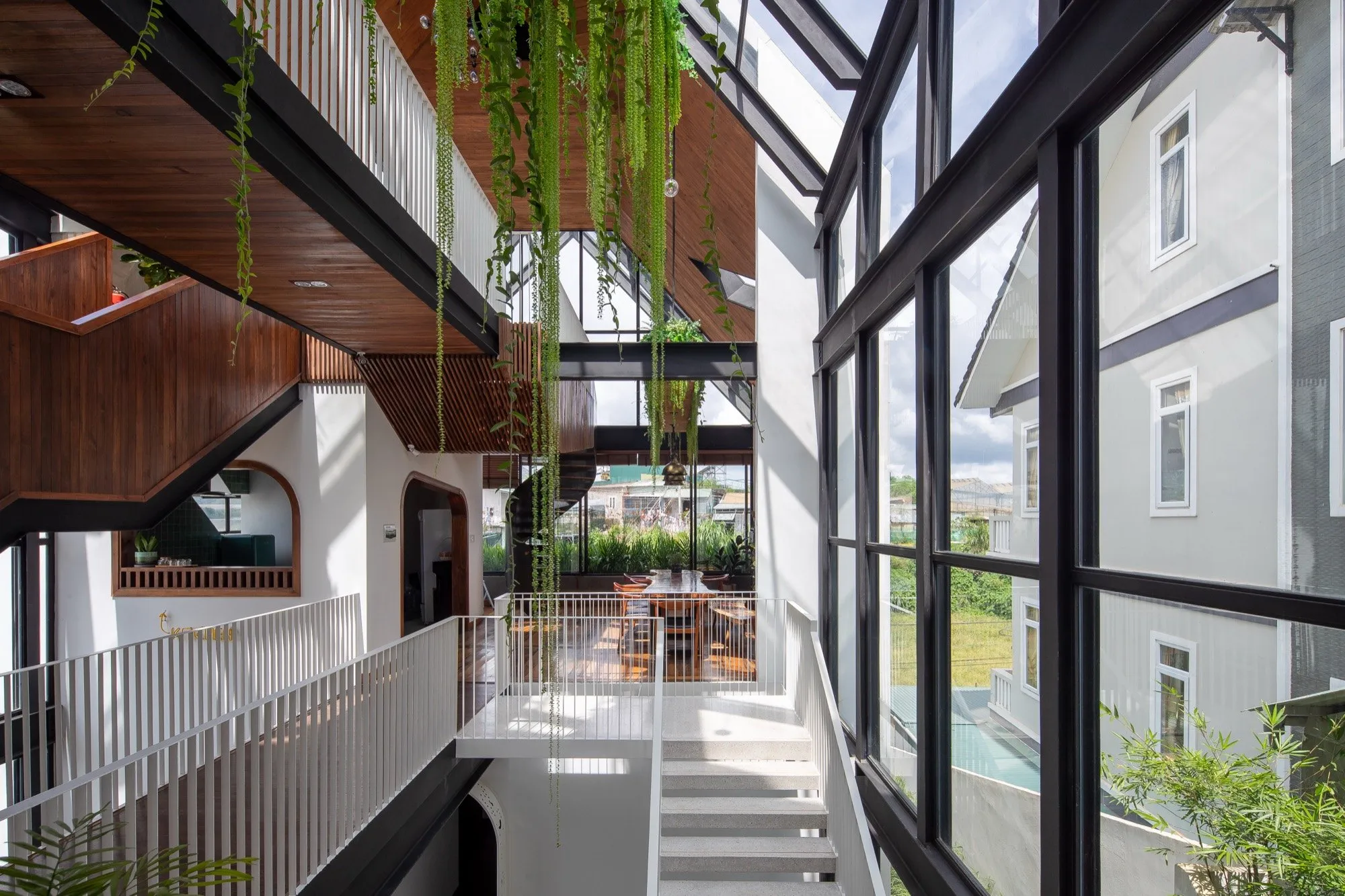
Nắp Ấm feels like all your other buildings wrapped into one. What do you think?
Lê Hưng Trọng: That may be how people see it, or it may be that Nắp Ấm suited the conditions in which it was made. At that point the team at Le House had been working very hard, and after many projects this one was our "ripest".
Our strength is massing and the interweaving of different materials, and that appears often in our projects. If you look closely, the defining surfaces at Nắp Ấm have a completely different tone. Before, I often used warm colours or left natural colours raw, because I wanted those surfaces to contrast with their surroundings. Most of my buildings also have pitched roofs, which keep the architecture modern without losing a sense of nostalgia. The climate of Da Lat added to that: the air is always cool, and enjoying the sun in such conditions is ideal. When we did Nắp Ấm, Le House had just finished a run of other projects, and it became a distillation of the best of that whole period of work.
How do you see nature, and the role of architecture in connecting with and protecting it?
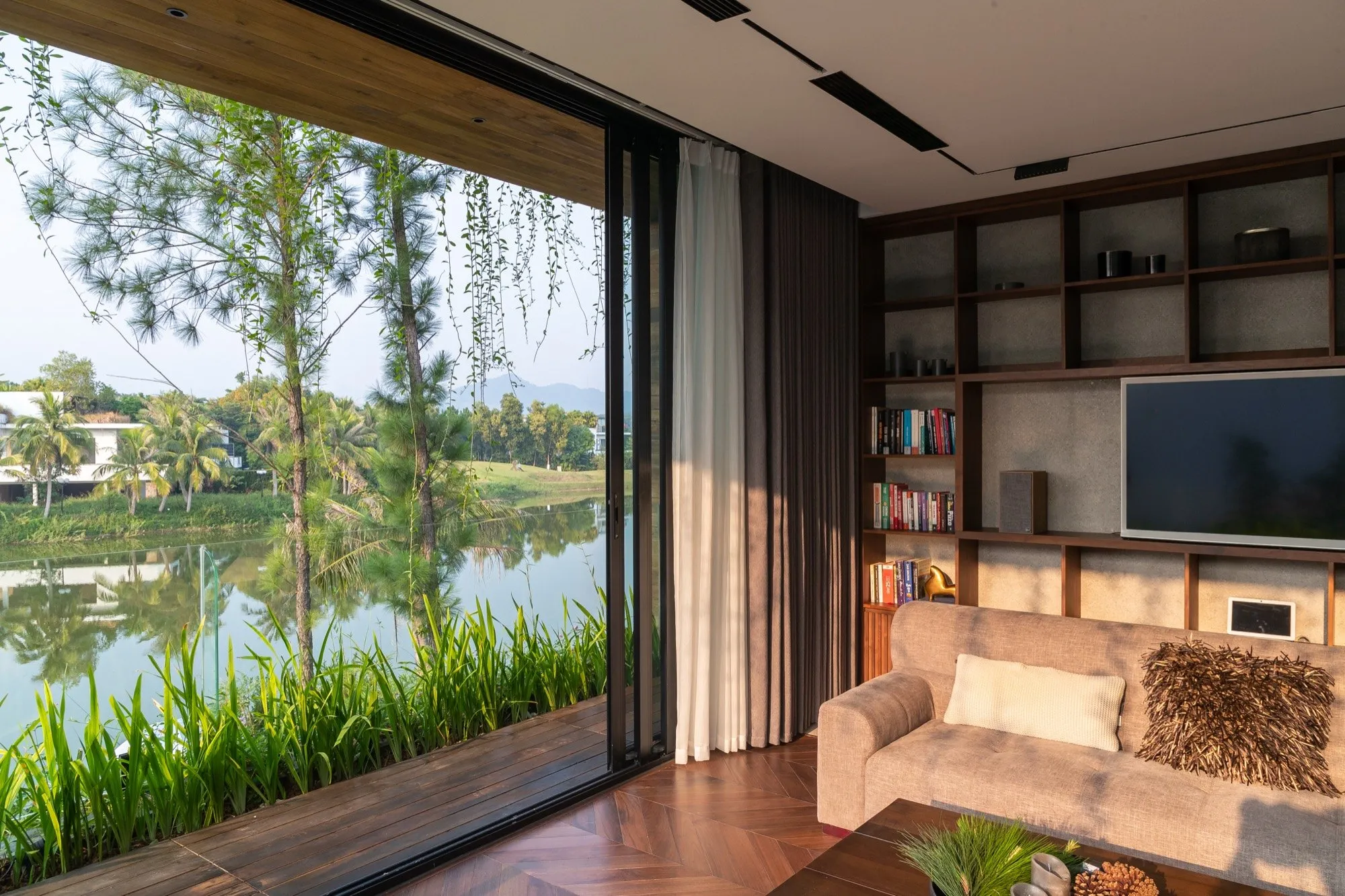
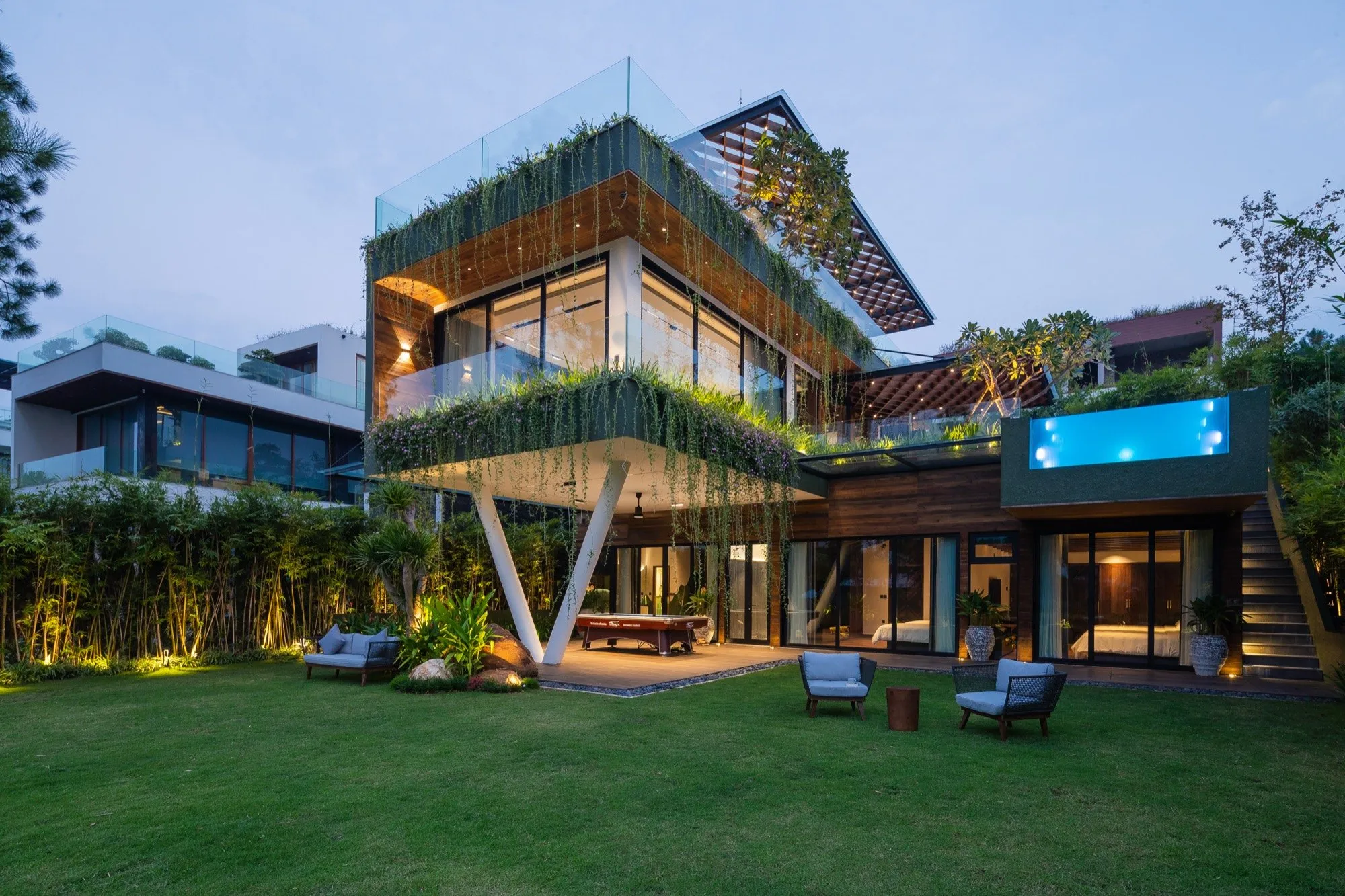
Lê Hưng Trọng: Anyone in our profession has to learn this. Nature is kind but harsh. You have to understand the kind side to receive it, and the harsh side to tame it. Once you understand that, you know how to bring nature into the right place to serve the right purpose. In the last five years people have come to think that green architecture means putting plants into a building, but it’s a broad idea that covers positive living space, environmentally friendly materials and natural technologies that answer many different needs. If you can’t solve that whole problem, it’s hard to say you’re practising green architecture. For me, when bringing nature into a building, you should measure the dose to suit real conditions.
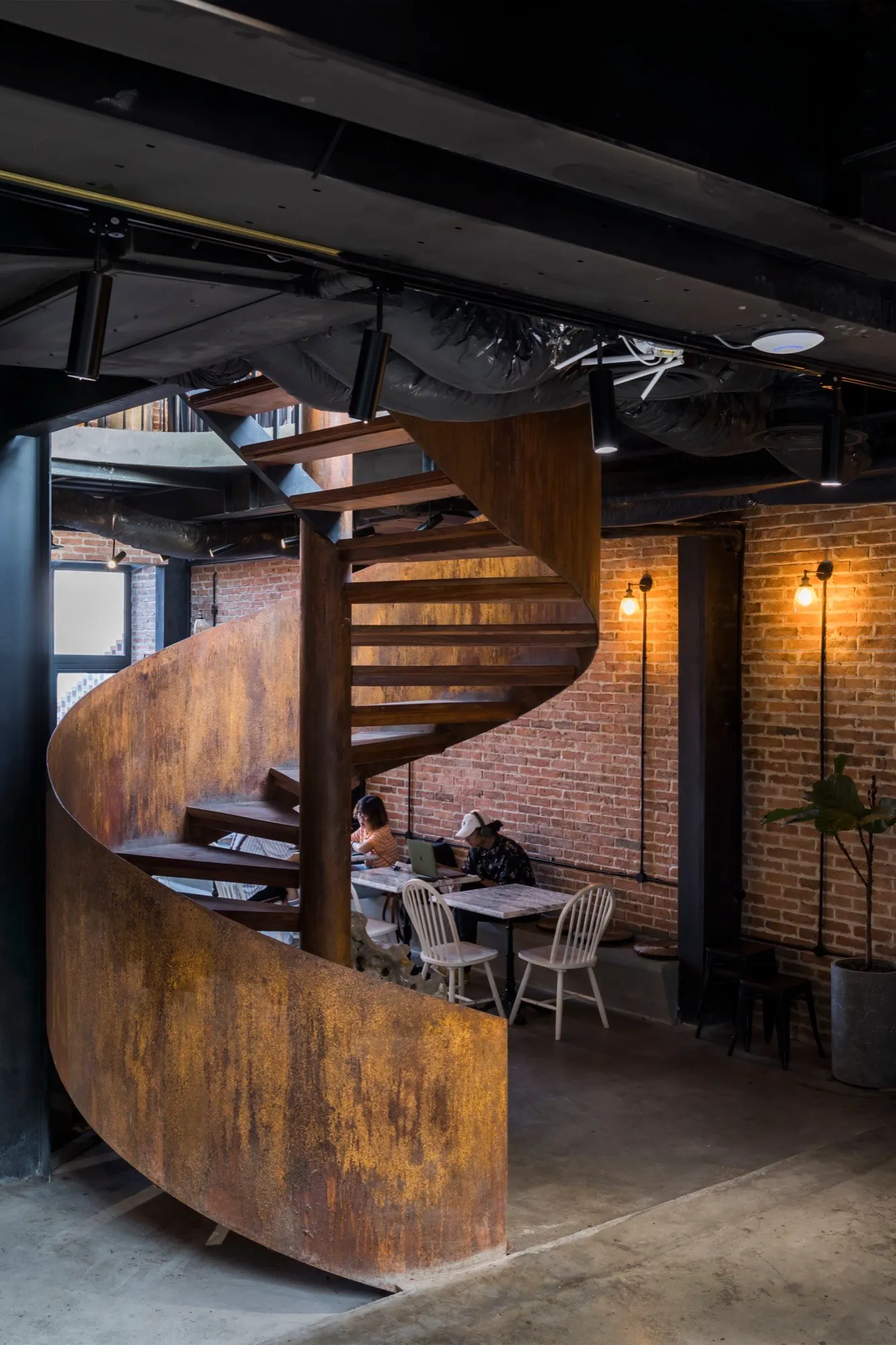
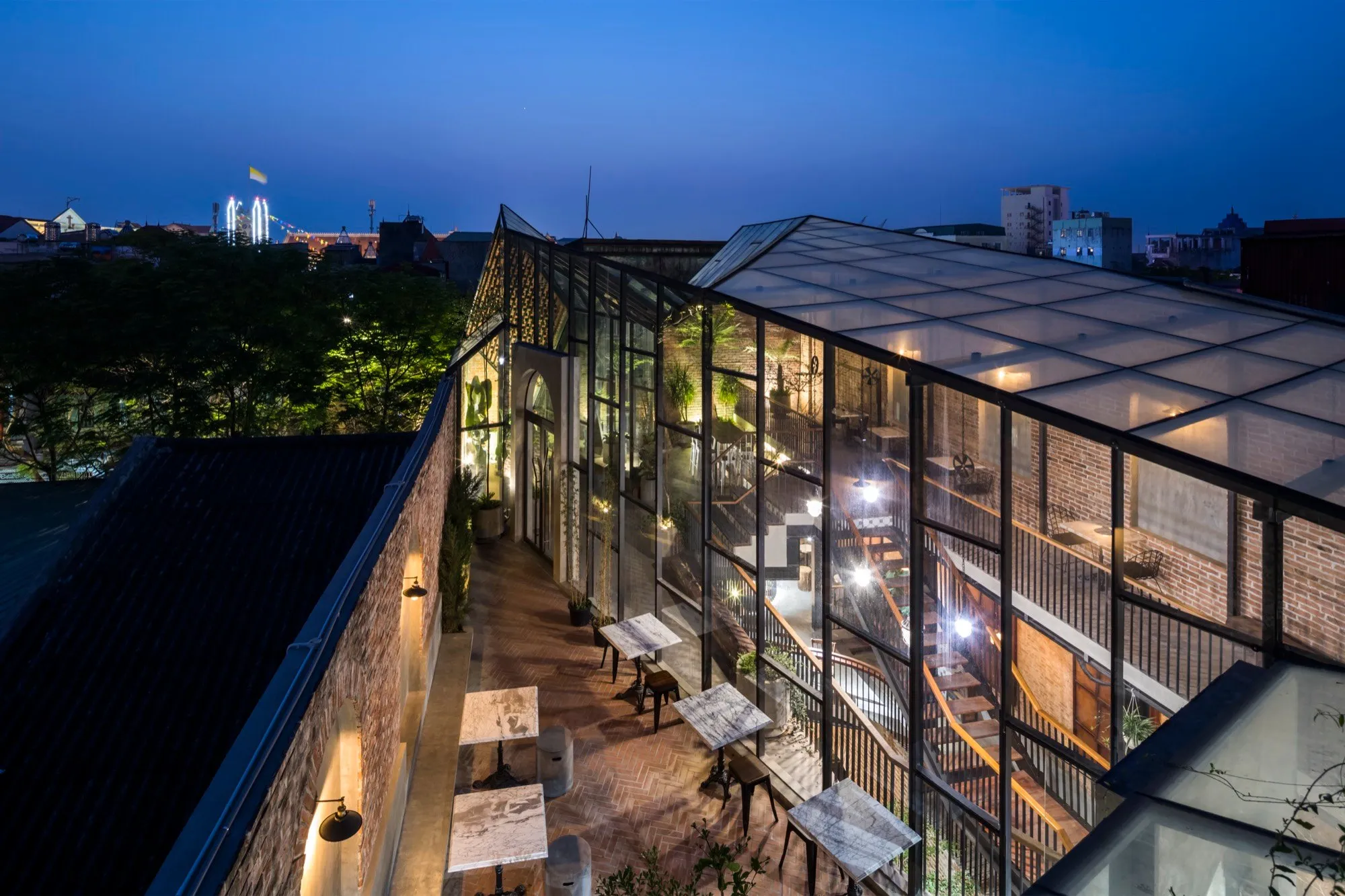
Light is a wonderful material in architecture, and so is darkness. Looking at Le House’s work, you seem to favour light.
Lê Hưng Trọng: Personally, I don’t want too much light in a building. The apartment I live in shows that honestly. But in every drawing I make, and every building I make with my colleagues, it’s the opposite. In life you sometimes face a lot of negativity, and darkness gives me a pause, a moment alone to watch and think. That’s very personal, very me. But I understand the beauty of light, natural and artificial, so I always try to use it in a way that suits each corner of the building. My own view isn’t necessarily right for the client, so I set it aside and put their wishes first.
Which of Le House’s projects was the biggest breakthrough?
Lê Hưng Trọng: Probably the Tre project in Quang Tri, from 2016 to 2018. Its structure and architecture were very complex, because Cham culture is strong there. Cham pottery is fired on the spot with straw, without a kiln, and has a very distinctive colour. I wanted to bring that into the building: it appears like a pottery kiln, with craftsmen painting patterns on the clay and then firing them right after drawing. Then there were the ideas in each corner of the building, so that everything blended with light to bring out the natural beauty of the material. The varied colours of the fired surface gave the building an element of chance. Most of what I had done before was renovation, so this project was a very bold step in my thinking.
Which material do you always want to use in your architecture?
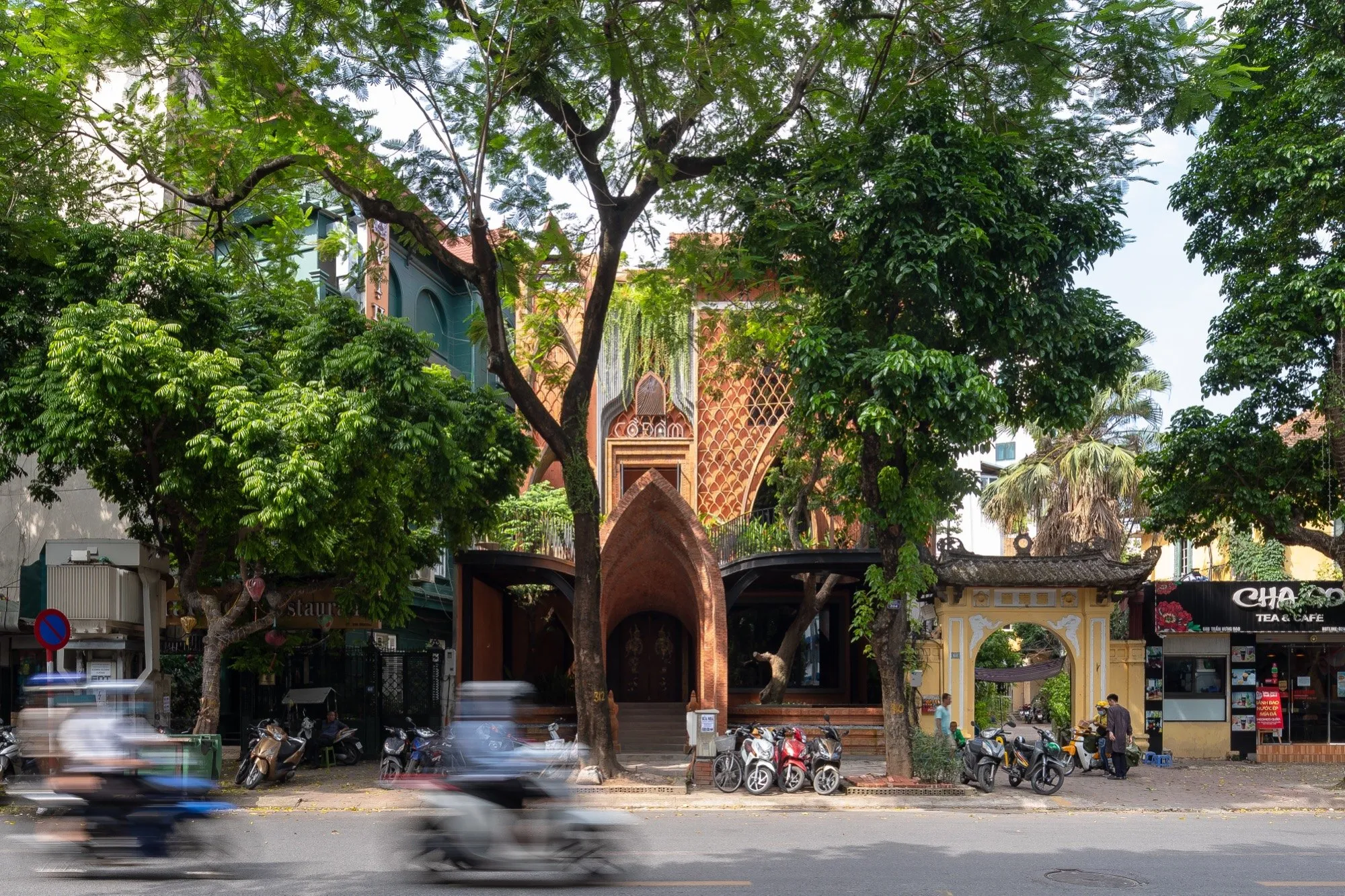
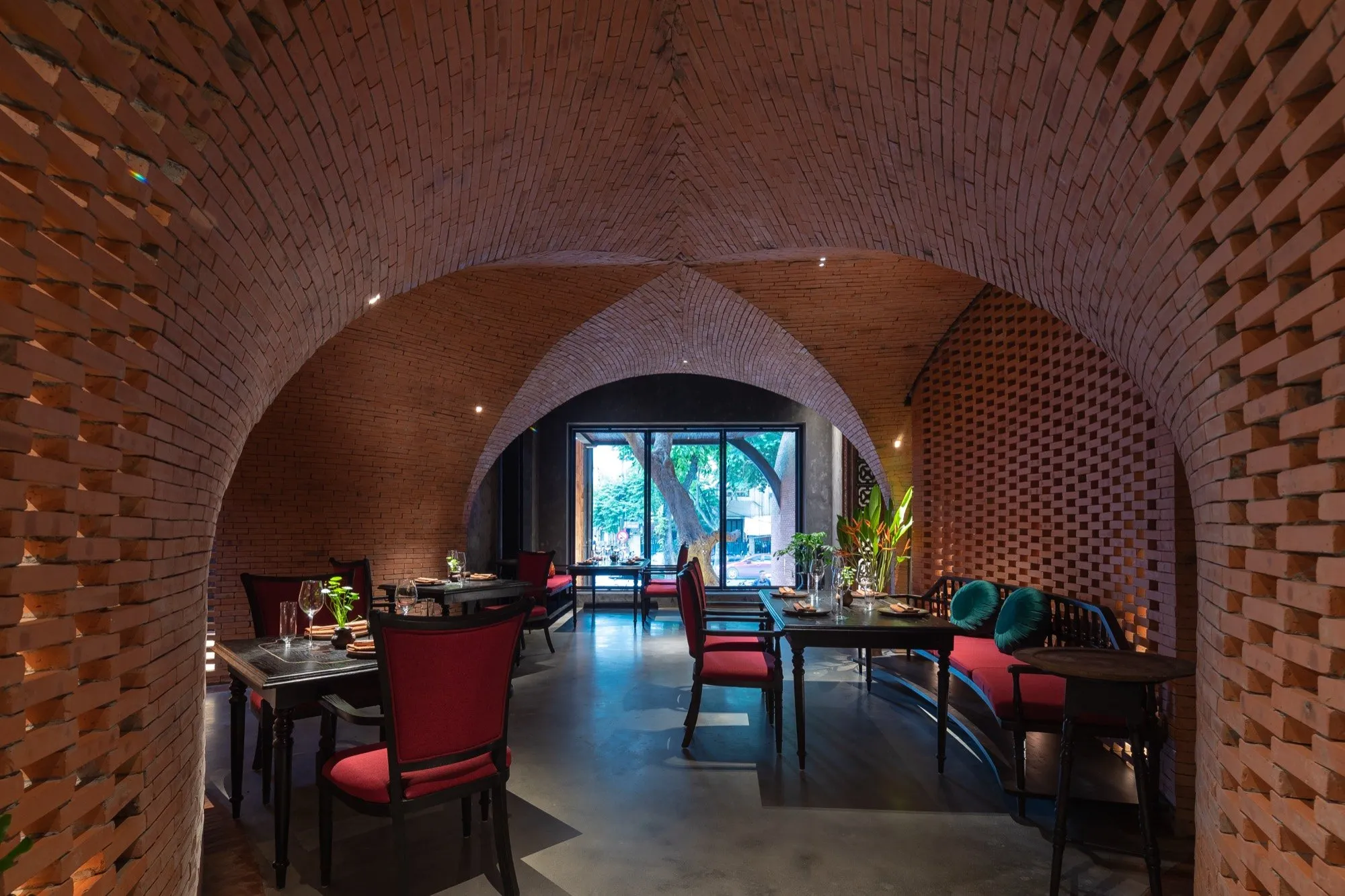
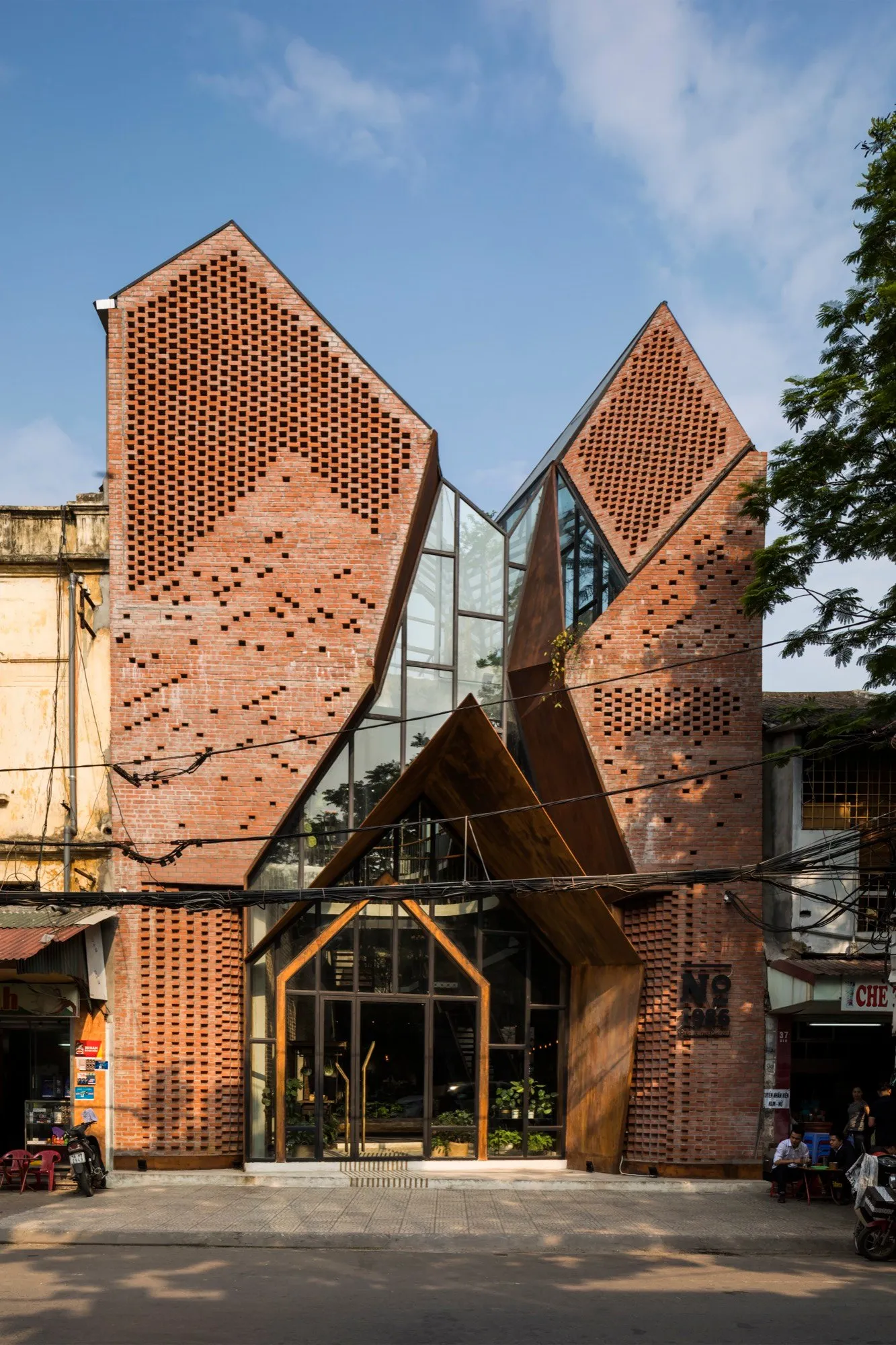
Lê Hưng Trọng: Brick. I want brick to be a material that brings out other materials. When it’s laid up, brick is very striking, yet in a building there are always other materials blending alongside it. I managed to show this at No. 1986 and at Cồ Đàm.
I don’t want Le House to be bound to one material. The variety we can bring to clients shows in how we use materials in each building, so that they sit together well and draw people in. Specialising in one particular material takes a great passion for it. If you don’t have that, you need to find a way to balance what you do have.
Interview by Anh Nguyên. Photos courtesy of Le House.