
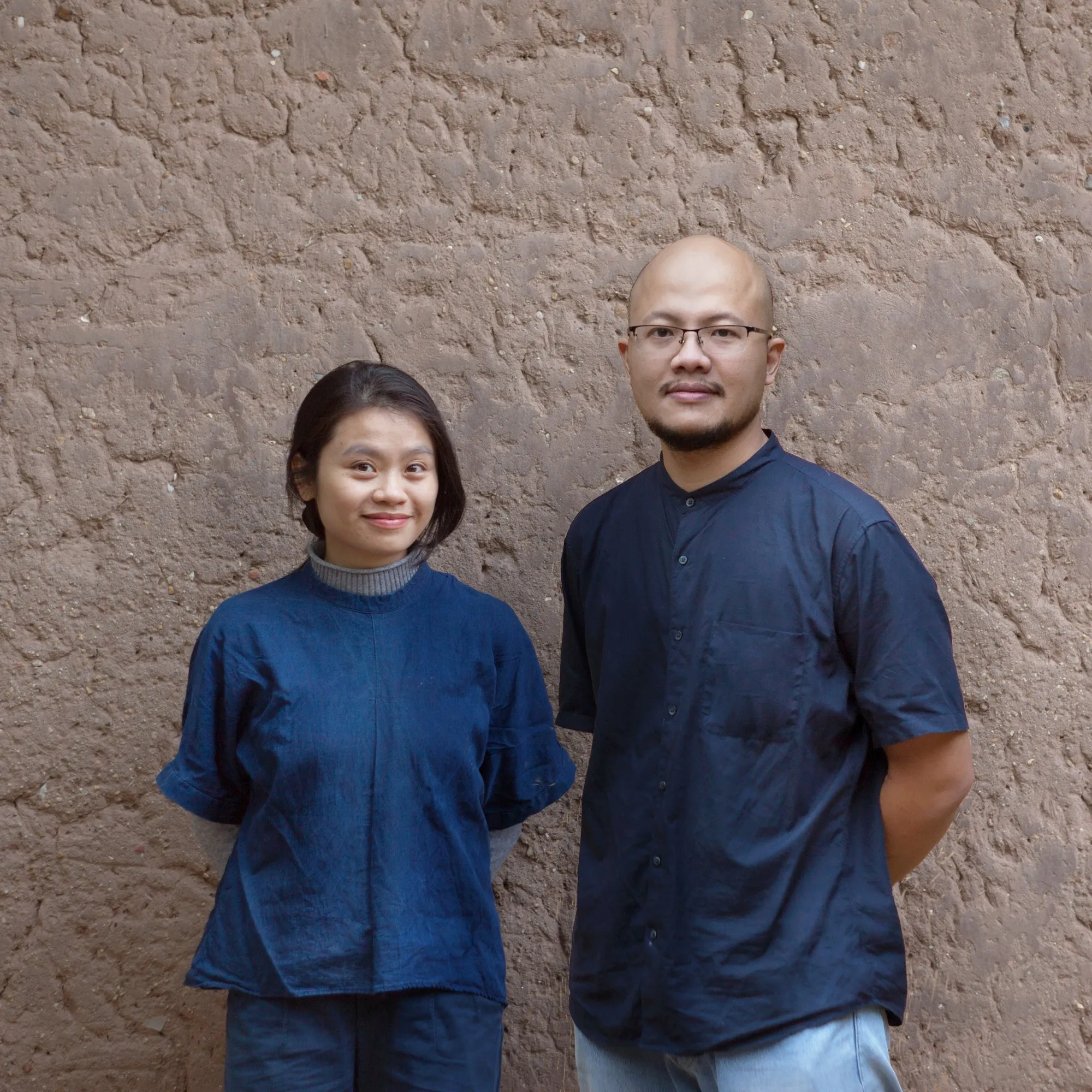
I have known K59 Atelier, an architecture office in Ho Chi Minh City, Vietnam, for a long time. Recently, looking at the work architects Phan Lâm Nhật Nam and Trần Cẩm Linh have done over five years, we were curious to learn more about their thinking, their views and how they practise.
The conversation below ran for more than two hours, and gave us the answers we had hoped for.
Could you tell us a little about K59’s current projects?
Nhật Nam: Compared with our peers and other offices, we work quite slowly and don’t take on many projects. At the moment K59 is designing a restaurant in Ninh Binh and a small house in Vung Tau. We’ve been involved in both for a few years. We feel we need time to understand each building, its users and its client, and for them to understand us, so we usually don’t take work on in a hurry.
If a project takes that long, are clients willing to wait?
Cẩm Linh: In practice many things affect timing. The restaurant in Ninh Binh is an example: with COVID and a long permit process, we couldn’t do much even though we were involved. While we waited, the client gave us the chance to renovate the interior of one of their buildings in Hoi An.
It takes time, but in return we and the client come to understand each other’s views and know exactly what each side needs and wants. That’s when we sign the contract and start. With the house in Vung Tau, we first met the family at the start of 2020, but the owner’s brief was still vague, so K59 needed time to understand it properly before saying yes. We don’t push clients. We even suggest they go to another office if they’re in a hurry.
We’ve seen many cases where people come to us, feel it isn’t a fit and leave, then come back a year or two later and say, "Well, shall we carry on?" I think design needs time on both sides, to think the brief through, and why they want us to design it.
As a young office, how did you prepare for K59?
Cẩm Linh: We didn’t prepare. We just felt we worked well together, and at some point Nam and I opened an office. We had both thought seriously about architecture since graduating and wanted to work on projects we liked. Before that we worked in different offices, and when our views and ways of thinking no longer fitted the group, we looked for another setting.
Nhật Nam: Linh and I used to share our ideas about design, and the subjects changed over time. Around 2016 and 2017, after working on a few community projects, I realised architecture is only a very small part of a building. People’s wishes and needs are what decide whether a project succeeds. After that Linh and I worked on some projects together, and it’s been five years now.
Does the name K59 Atelier mean anything in particular?
Cẩm Linh: Not really. A name is just a name; what matters is what you do. At university, "K" stood for Kiến trúc, architecture, and each year was "K" plus the intake year. Nam was K05 and I was K09, so together, K59.
In English it would be "architecture", but I wanted to keep the Vietnamese K. "Atelier" means a workshop, covering many things, because we have many interests besides architecture. We do almost everything in the office ourselves, from design and model-making to photography and film. We use whatever we have and try everything we can.
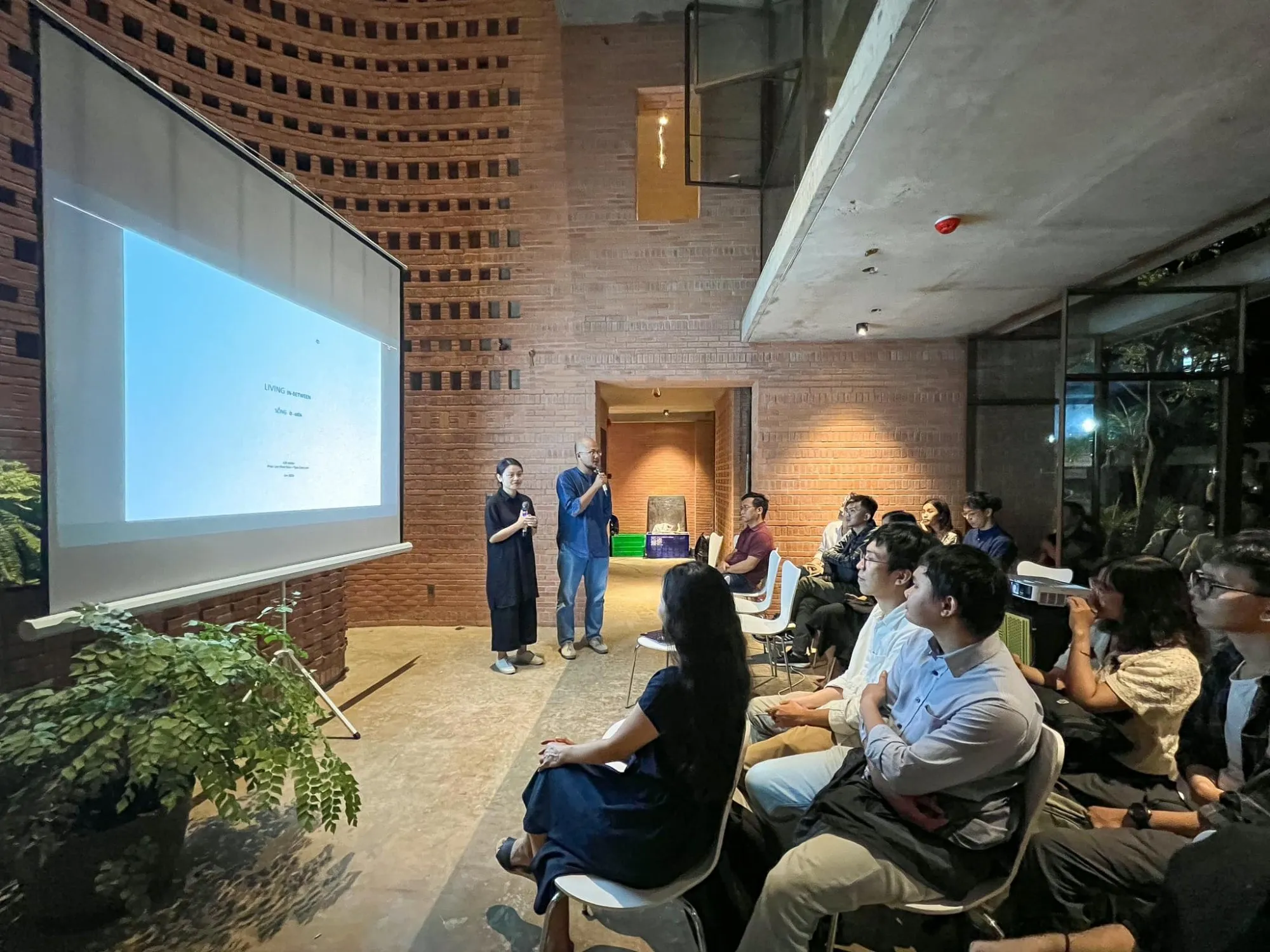
At that year-end gathering in Saigon, K59 presented a series of three buildings. Why those three?
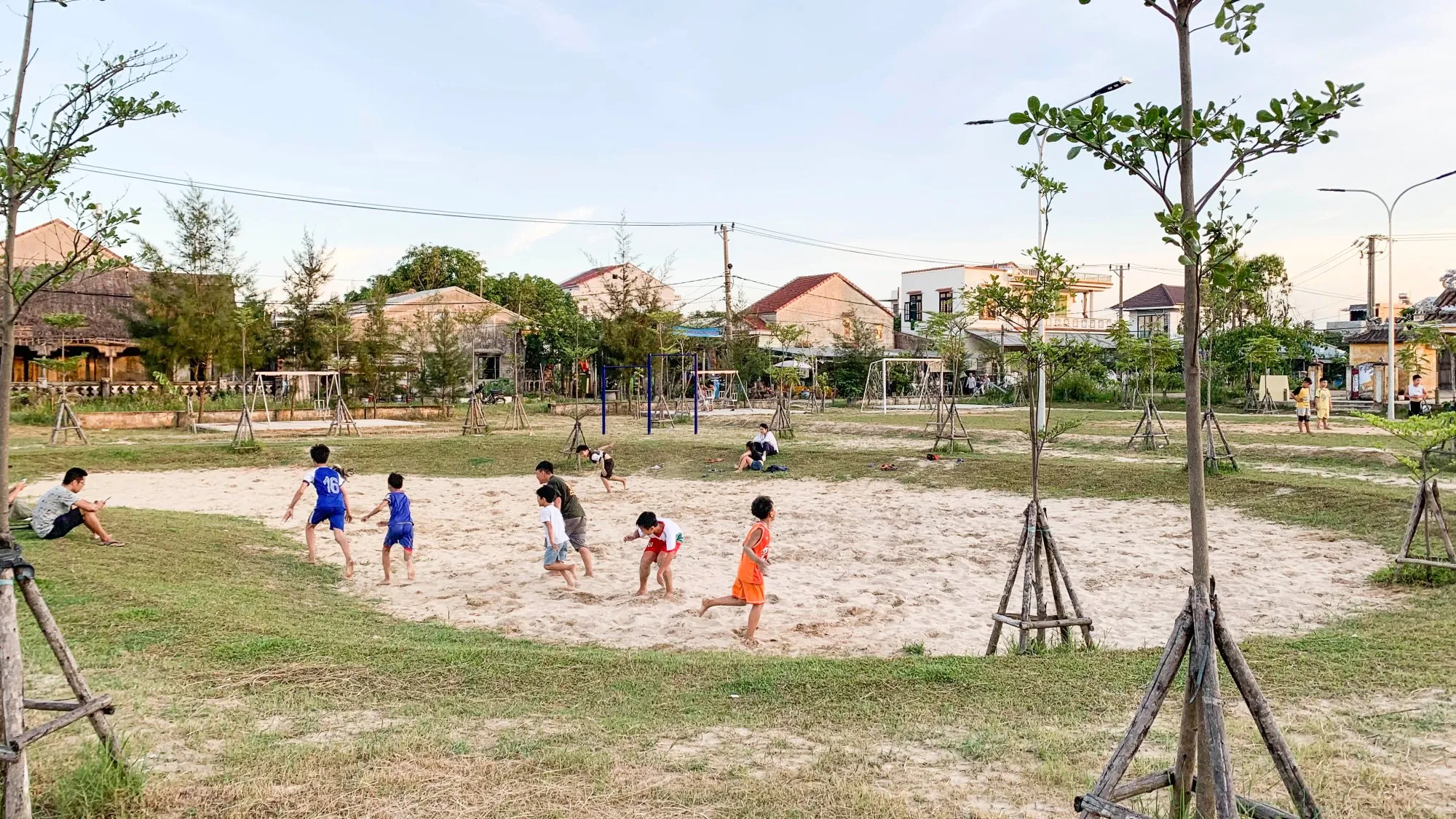
Cẩm Linh: We’ve worked together for five years and finished five buildings, so choosing wasn’t hard (laughs). The three stand for three different settings: the city, the edge of the city and the coast. We believe architecture is always tied to urban development, and that urbanisation is a necessary law of society. Through these three, we could share our view that architecture can adapt to each area and position as the city grows.
Nhật Nam: People have asked why we chose only three, not more, or projects still on the drawing board. We think a building has to pass through three stages: first on paper, then construction, and finally when it lives with the people who use it. Only by watching can you see whether it works well with its context and people, and only then do you have something to share.
As Linh says, urbanisation usually goes with concretisation. We know it’s necessary as society develops, but does that development adapt to the nature and soil of each place? We think about that a lot. What can we contribute to the area? Can local people look at our building and find inspiration for a new project?
This is a big concern now, as coastlines are increasingly covered in concrete, causing serious erosion and the loss of the coast’s soil. Or orchards and farmland flattened for new urban developments. Meanwhile the city is cramped and builds fast and in bulk. There’s no pause to look back and ask whether what we’ve built fits its context.
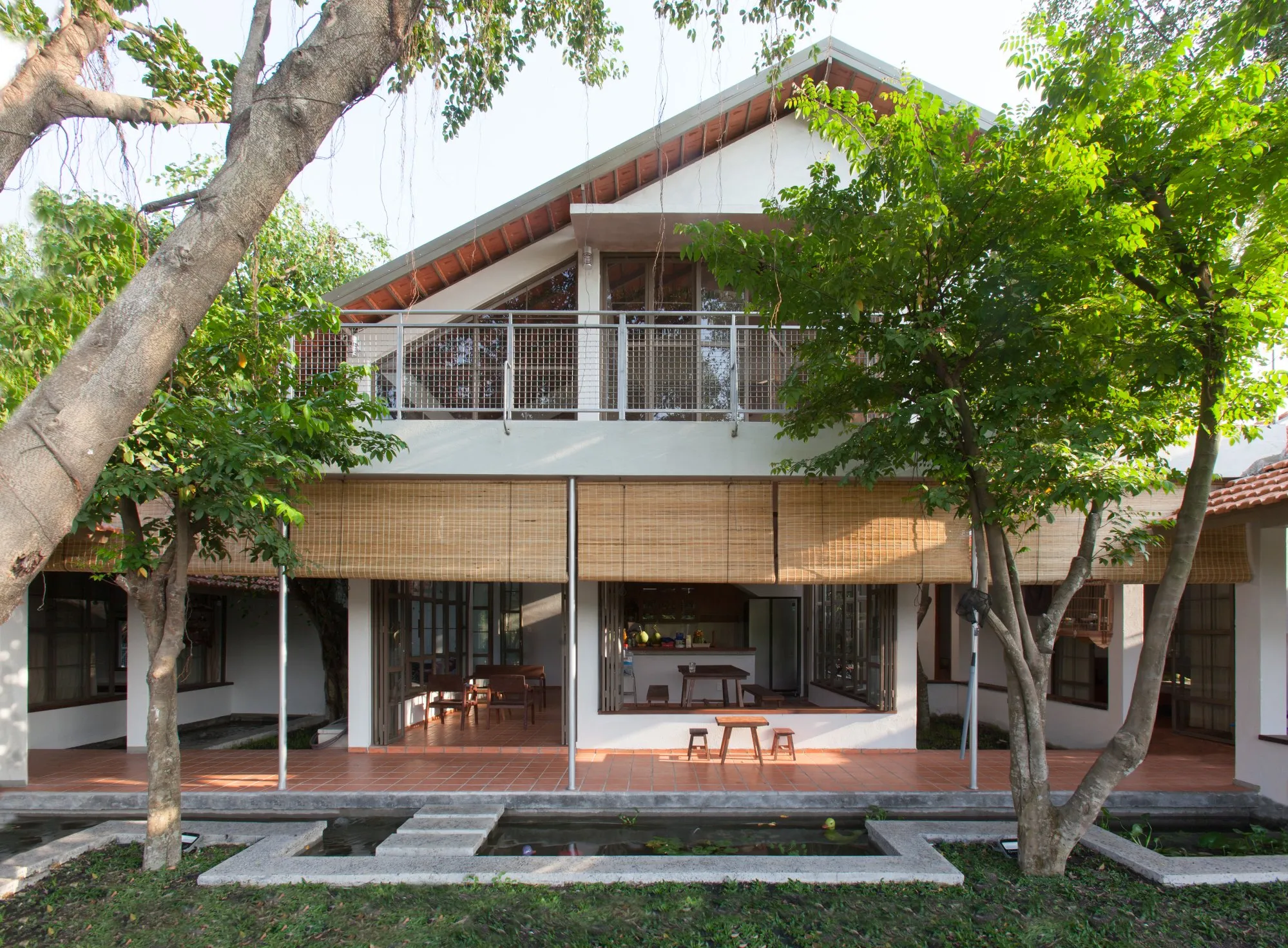
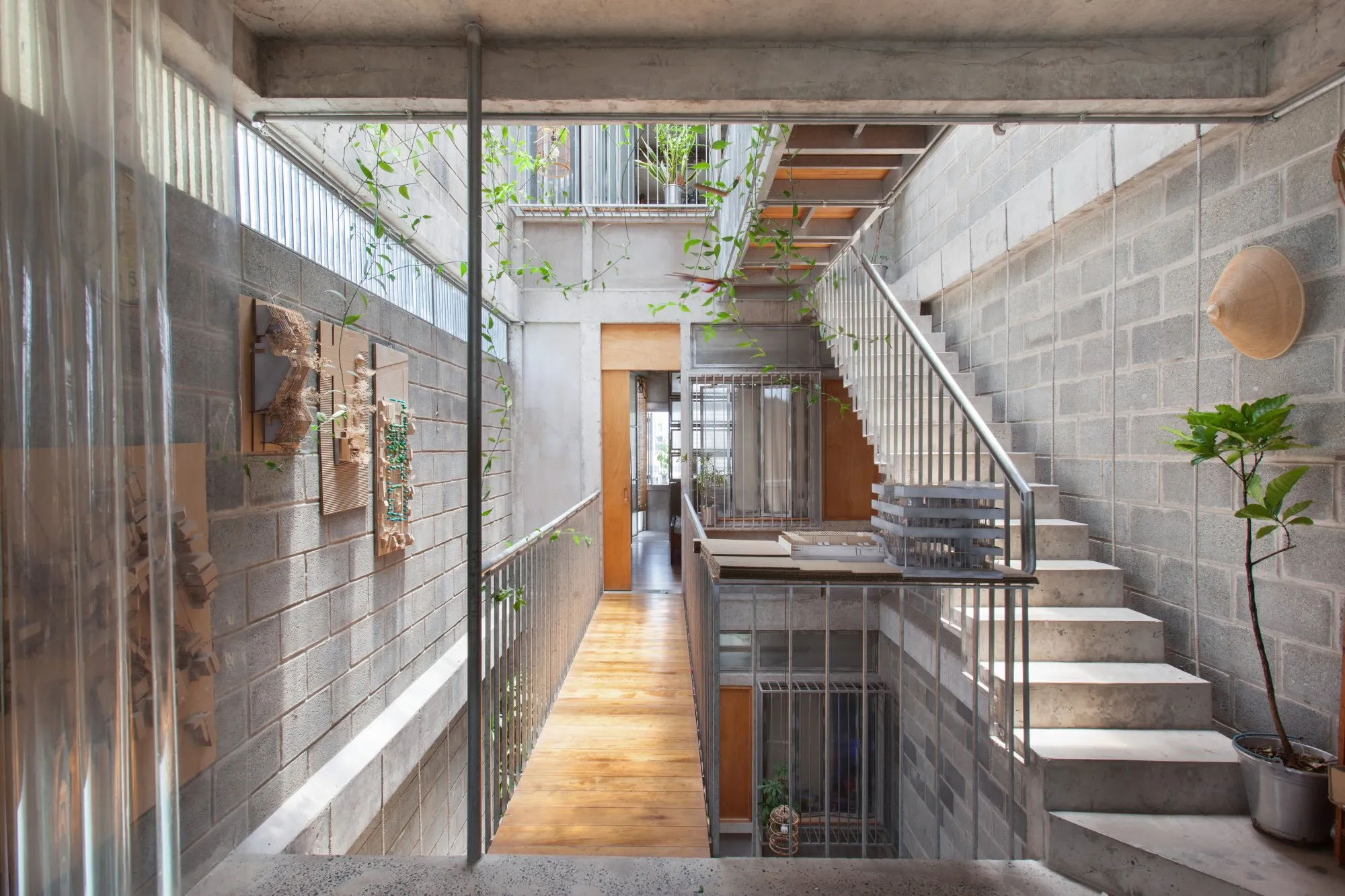
Cẩm Linh: What we share is probably one-sided, our own view. Each project has its own angles and opinions, as every architect, or anyone in any field, does. We showed the three buildings that day hoping to hear people’s views back on each place.
What makes a good building, for you?
Nhật Nam: For me, first of all, the people who use it always feel at ease there, in a way that suits each person’s needs, age and wishes. I always wonder how our clients will live and feel in the spaces K59 designs.
Cẩm Linh: Beyond houses, there are public and community buildings. For me, a good building has to fit and adapt to climate, society, customs and ways of life.
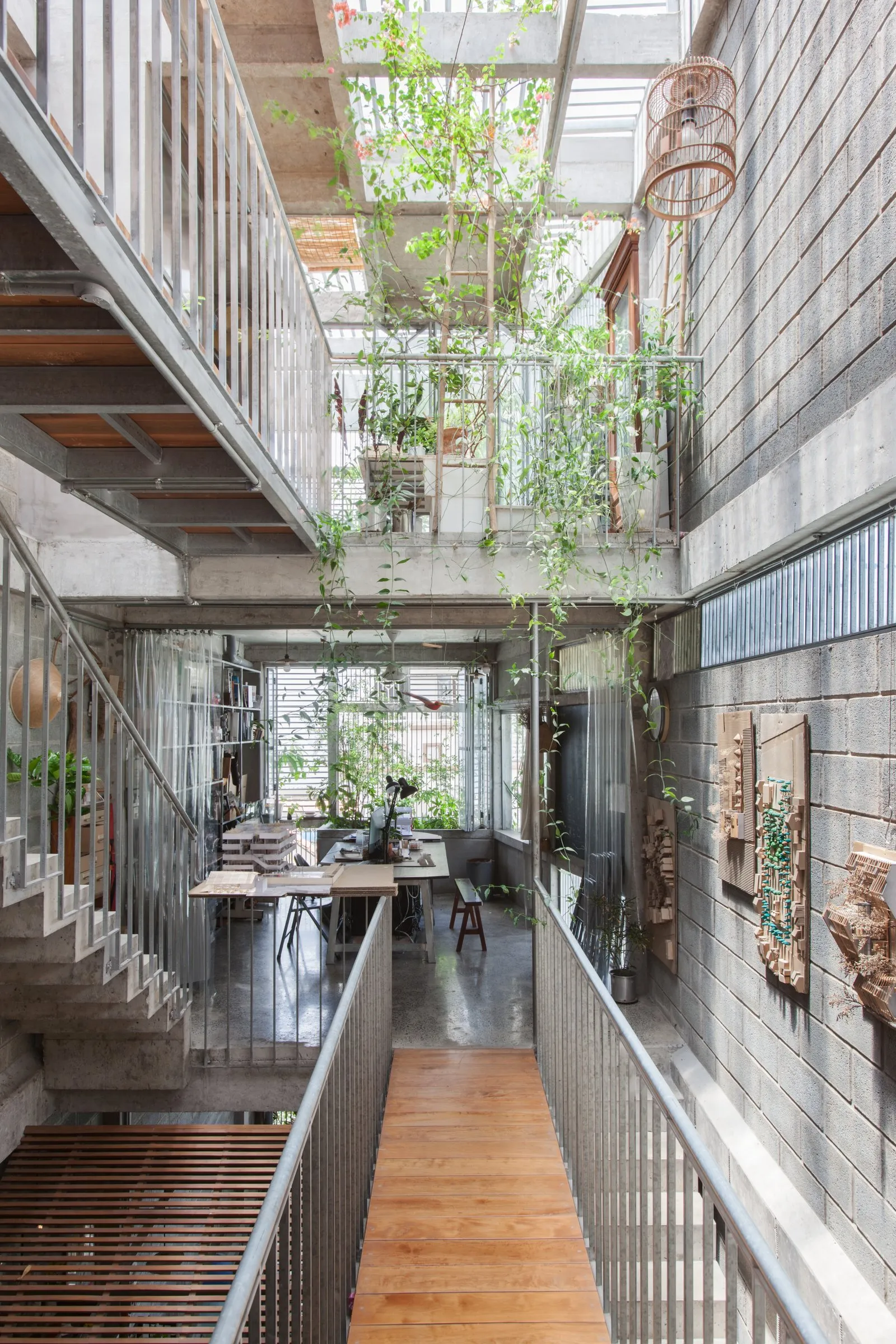
I believe every architect thinks carefully about fitting the design to its context. You should stay firm in what you do while listening to others, and sometimes guide the people using a building towards living with nature. Our office has a space without air conditioning. People sweat, but we don’t mind, because there are many windows and plants all around. An open view can sometimes push away life’s burdens and give people a sense of freedom. The building, in turn, acts on its users.
What matters most when K59 decides to take on a project? And once you do, what matters most in designing it?
Cẩm Linh: We’ve had five years of our own practice, doing every stage from meeting clients to design and construction. Gradually we’ve seen what needs improving. The most important factor in taking on a project is probably the client. Whatever the size, harmony and trust with the client decide whether what we deliver will be good. If that’s there, we’re very happy to work together. After that, it’s just as important to get a clear brief and clear information from the client. Without that, it’s hard for an architect to make something good enough.
Nhật Nam: Finding the right brief takes time, sometimes months, even a year. I believe that. The more data you have, the more precise the result, and the more of the client’s needs, difficulties and wishes it can resolve.
Has the setting of K59’s buildings shaped their design much? Which buildings in particular?
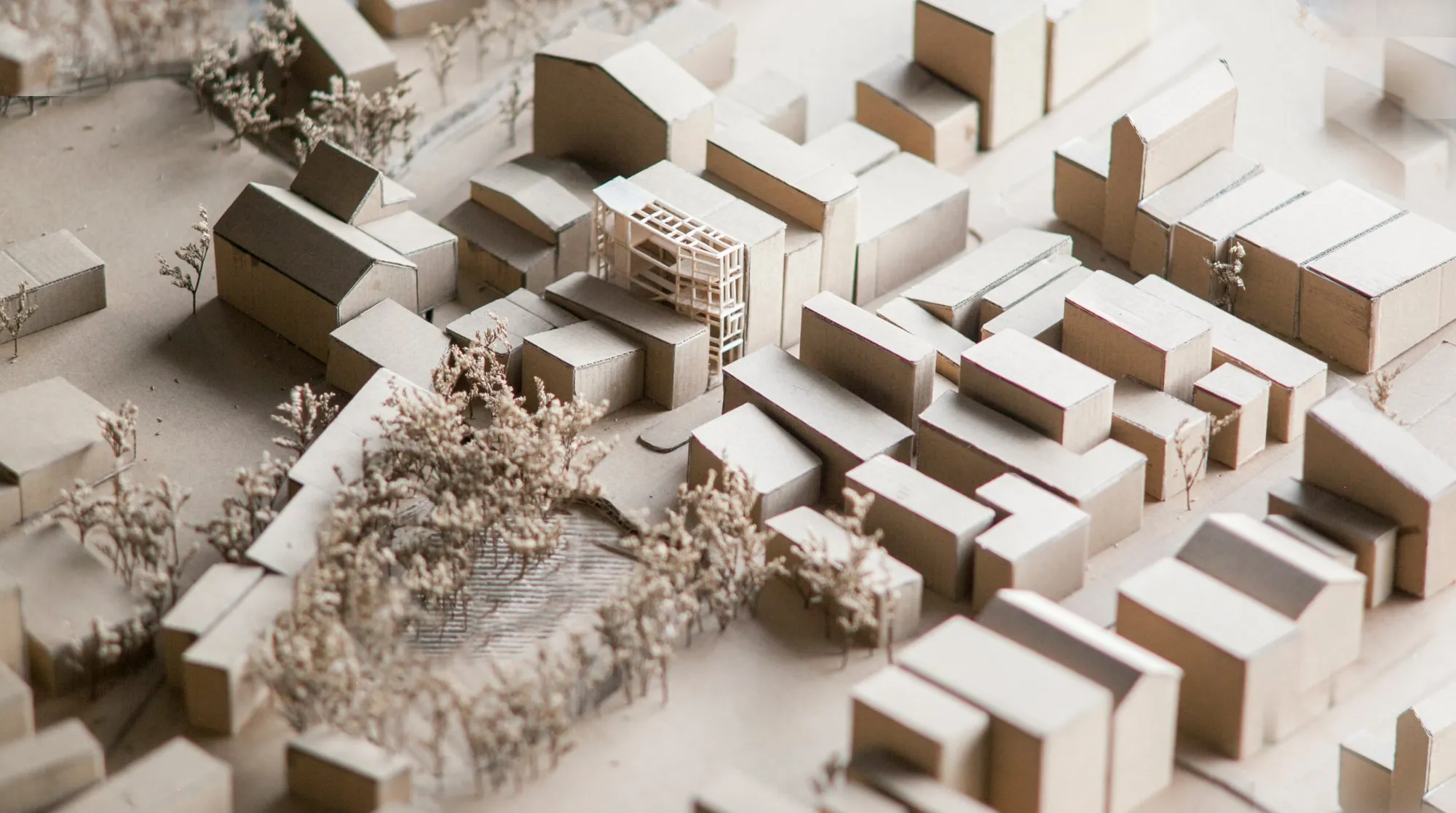
Nhật Nam: I think the natural setting is extremely important in defining a project’s brief. Climate, the site and how the surroundings interact with the building give you hints for the design idea.
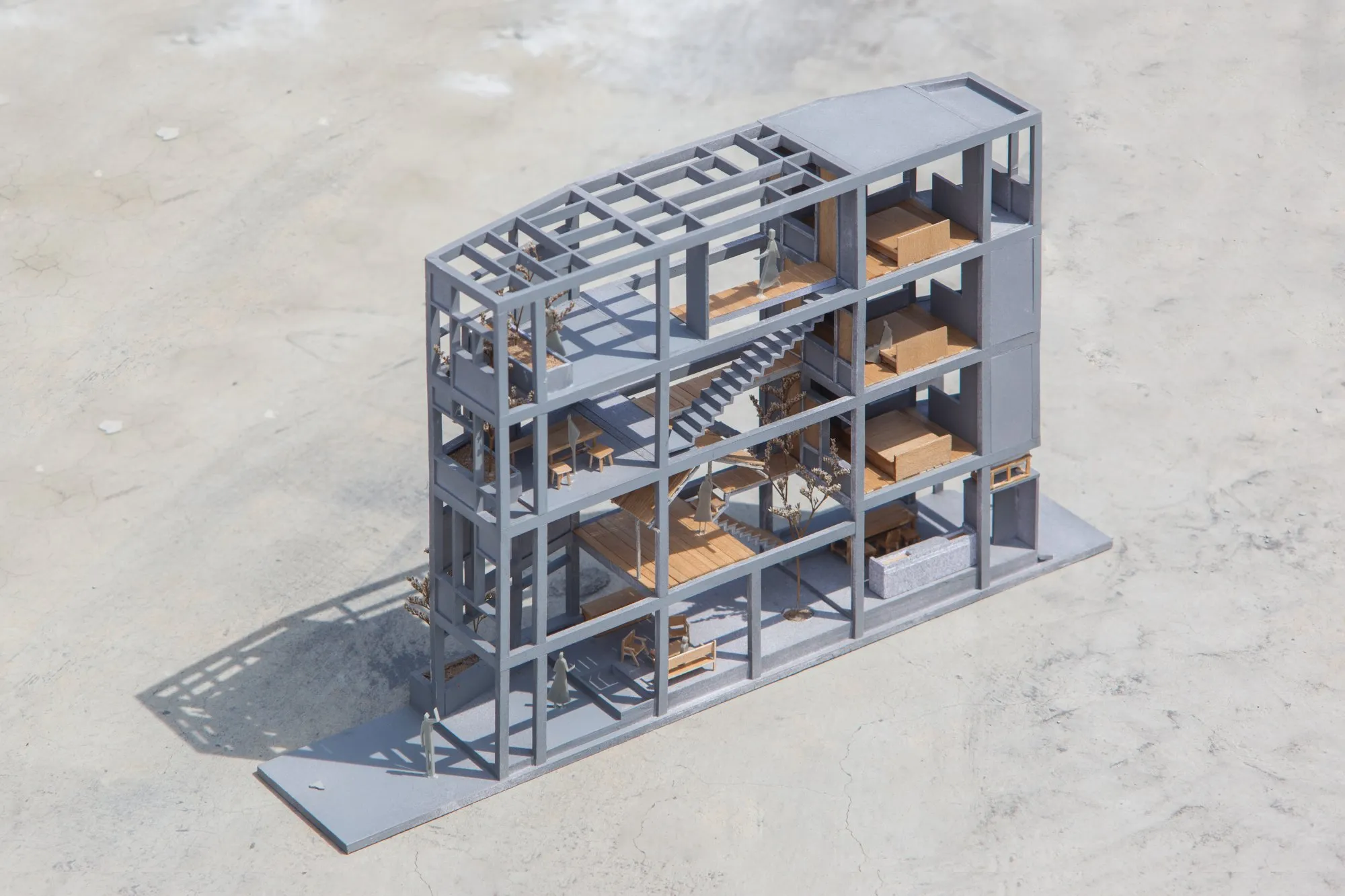
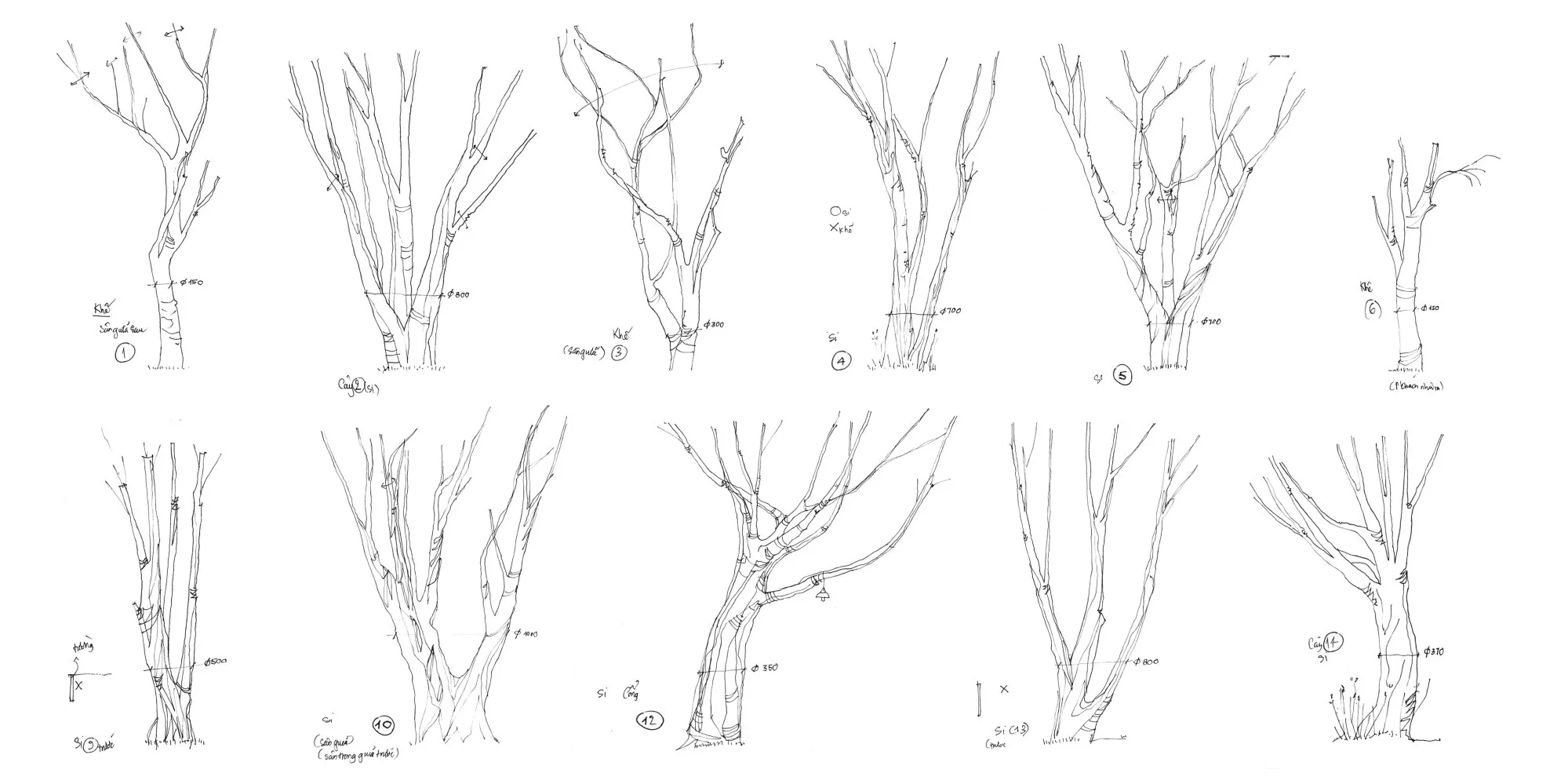
The Binh Duong House, for example, sits on land full of trees. Locating the gaps between the trees precisely made the design clearer about the uses and minimum functions needed. We don’t mind learning about the people who will use a building in depth. Of course, taking in many views at once can seem confusing, but we just think, why not? With many opinions, you can string the key points together into one coherent line. I always ask how many people I need to meet to understand the needs, and only then can I offer the most fitting design. The more you have, the easier it is to pick out the right and necessary things. Like solving a problem, the more grounds you have, the more precisely you solve it.
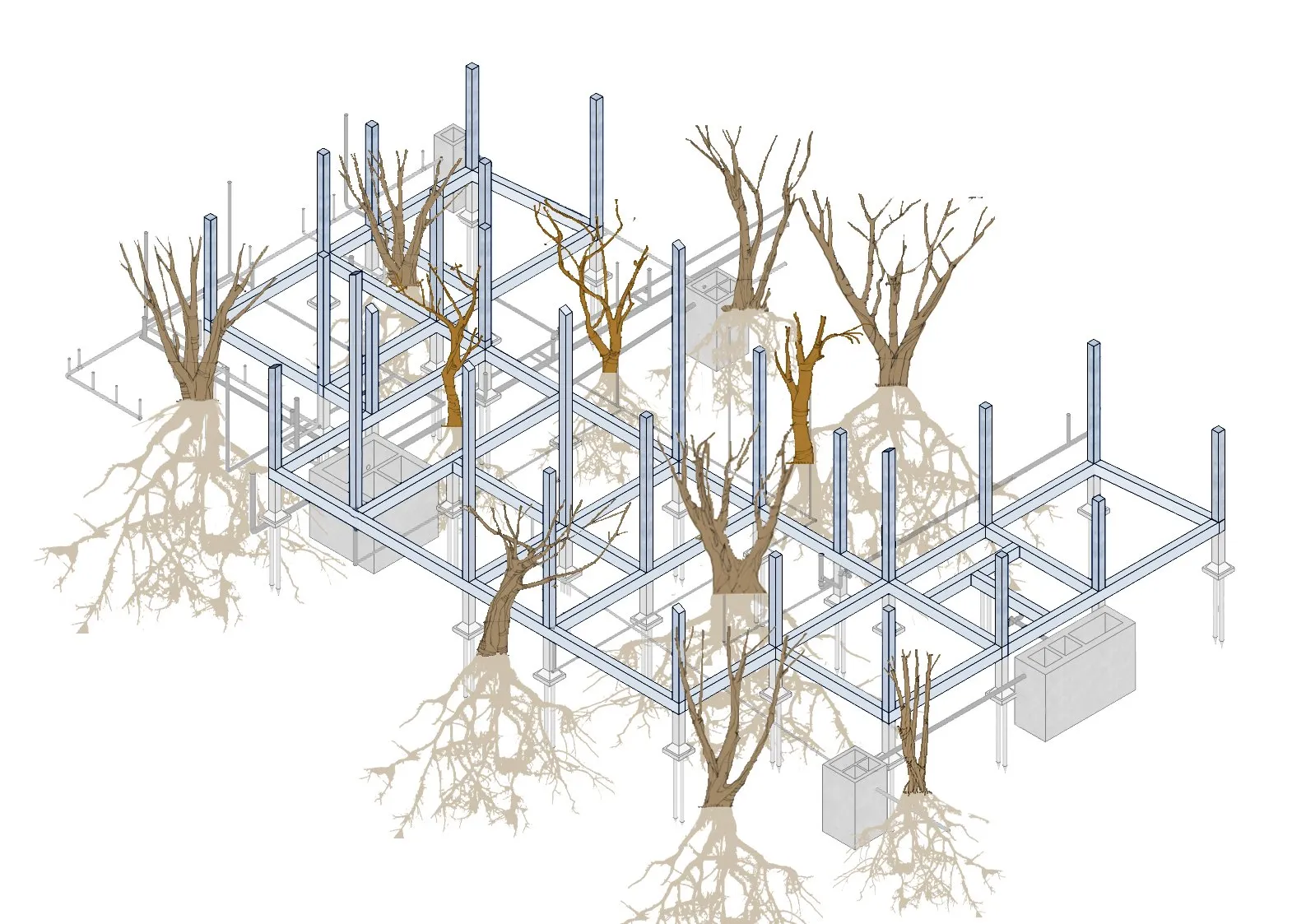
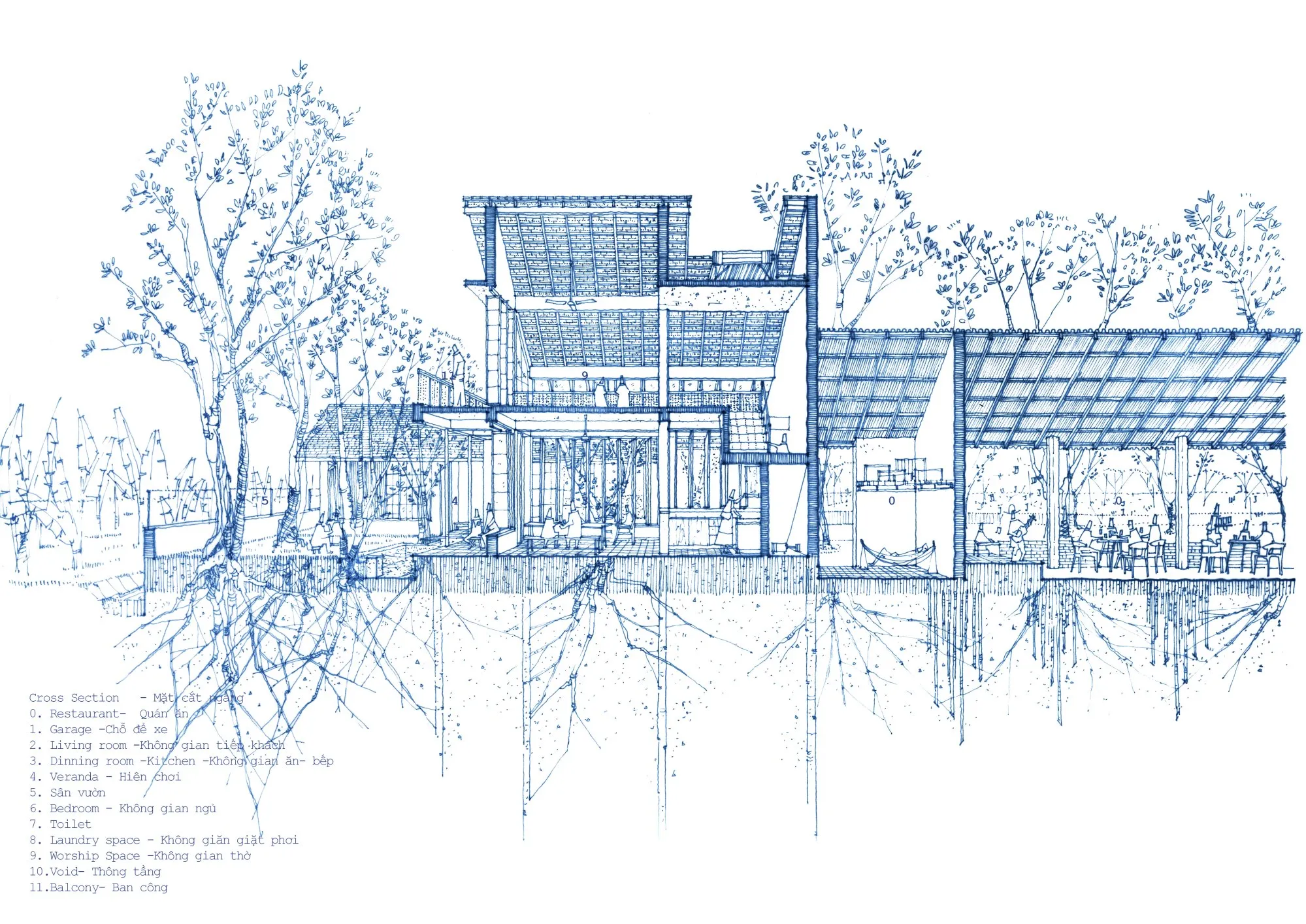
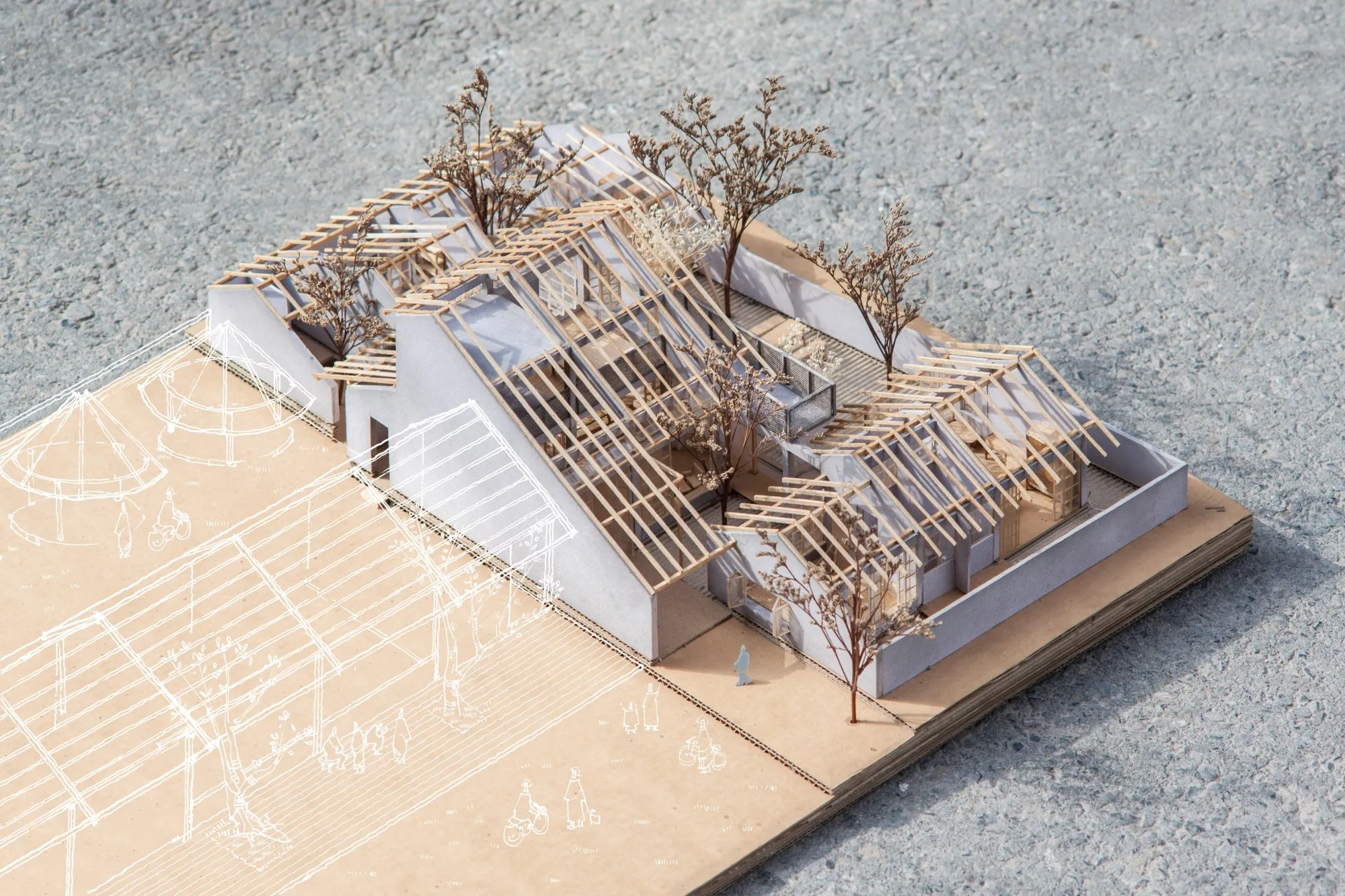
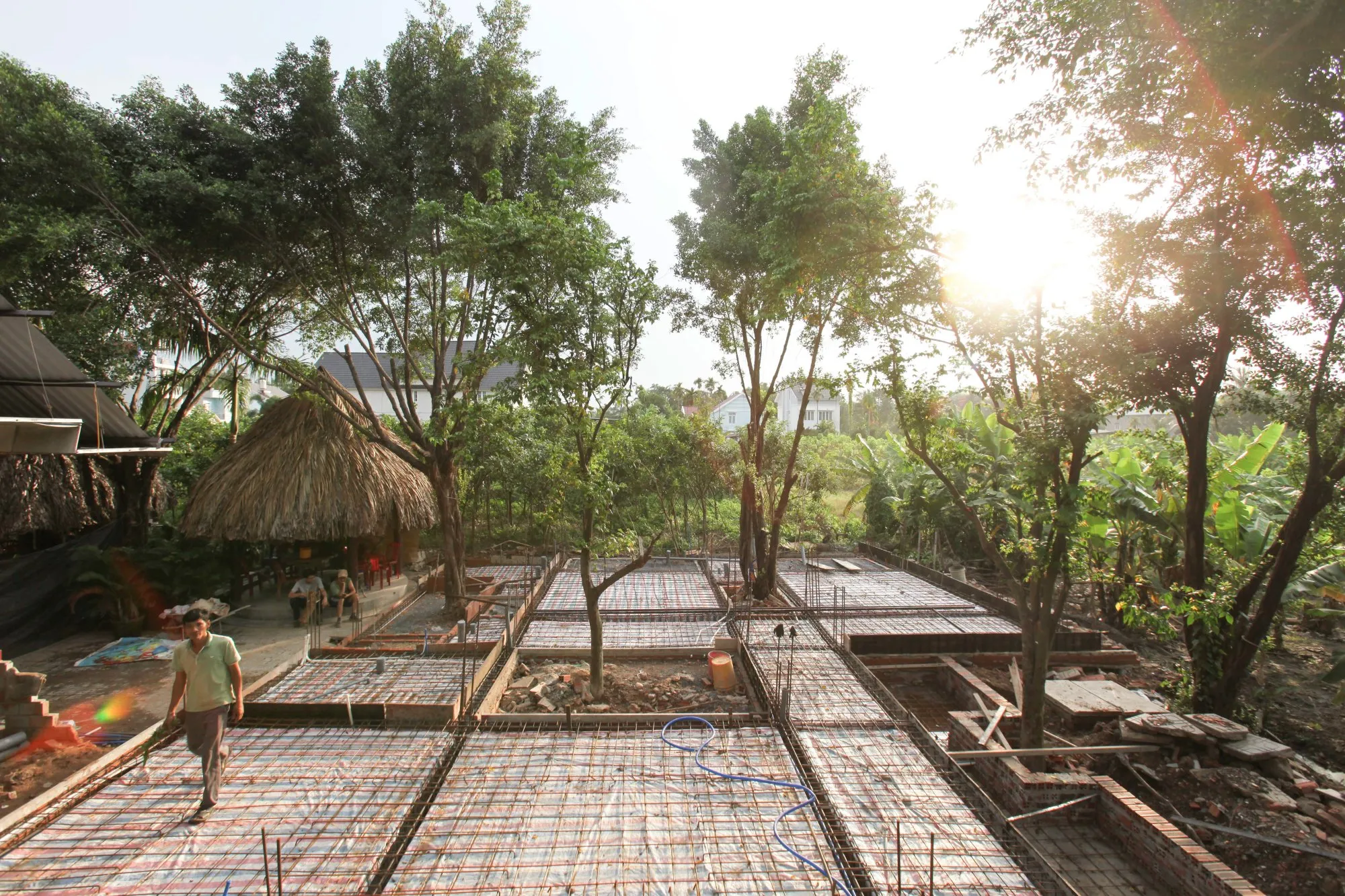
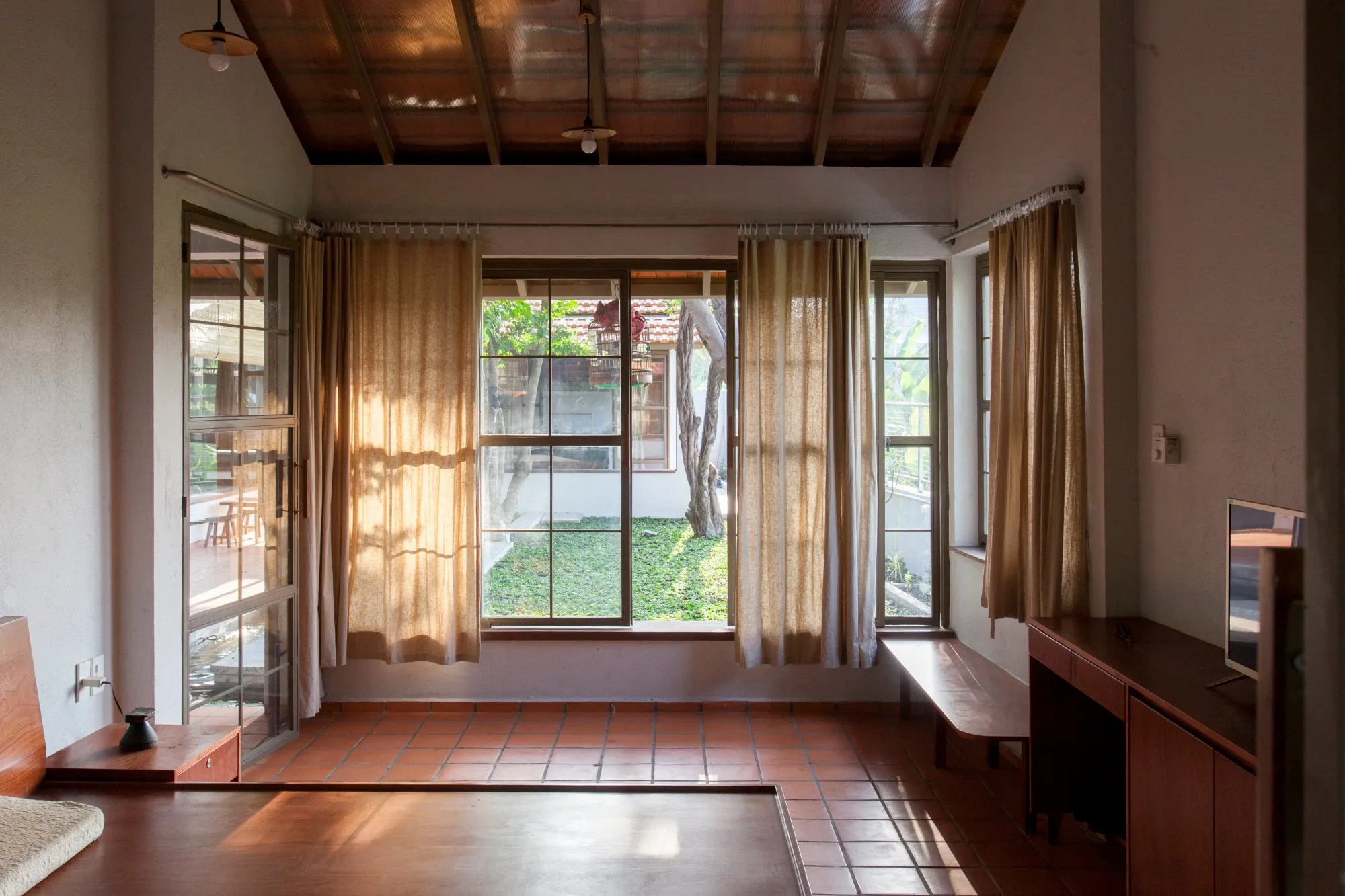
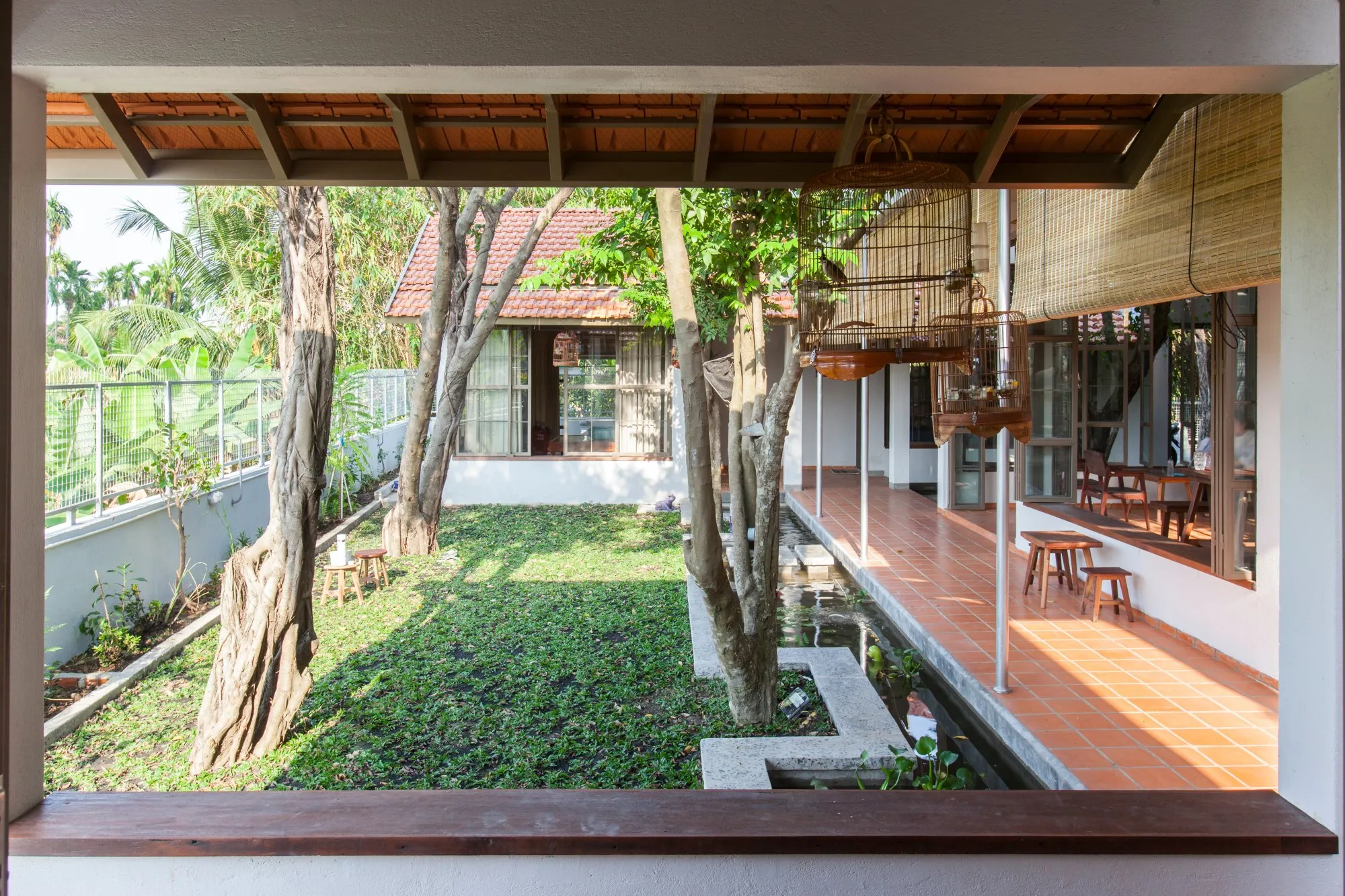
Cẩm Linh: For the house under construction in Vung Tau, when we surveyed the surroundings and the lie of the land, we also looked into the client’s family. Usually when a house is built, one or two people lead the conversation with the architect about wishes and needs. This family is large, so we spent time talking in depth with every member to understand what they wanted. We learned that the grandfather has difficulty getting around, and the family keeps many animals, birds and dogs. After careful observation, we understood what needed doing for each person there. Some like windows, some need a desk, some want an open room of their own. A house serves the fewest people of any building type, yet each corner has a different character. A house is a small society. Each room is like a house of its own, reflecting a person’s character, and each is neighbour to the next. How openings and windows interact sometimes gives us things to watch for in the design.
Which material does K59 Atelier like most?
Nhật Nam: We don’t really favour any one material. The first thing that shapes a building is its context, and we follow that to choose the materials that best suit each person. Some people fear timber because of termites, others fear steel because of lightning. Getting to know the client tells us which materials they love, and which suit the place.
We especially love handmade materials that have long been part of local life. They show how well those materials have adapted to the geography and climate of the site. To us, every material is beautiful. There’s no most beautiful or favourite one. Sometimes, during construction, a material we didn’t like at first turns out, after talking with the people using the building, to be the best fit for them or the place. Once you find exactly which material to use, you almost have no other choice. We always choose materials from the client’s point of view.
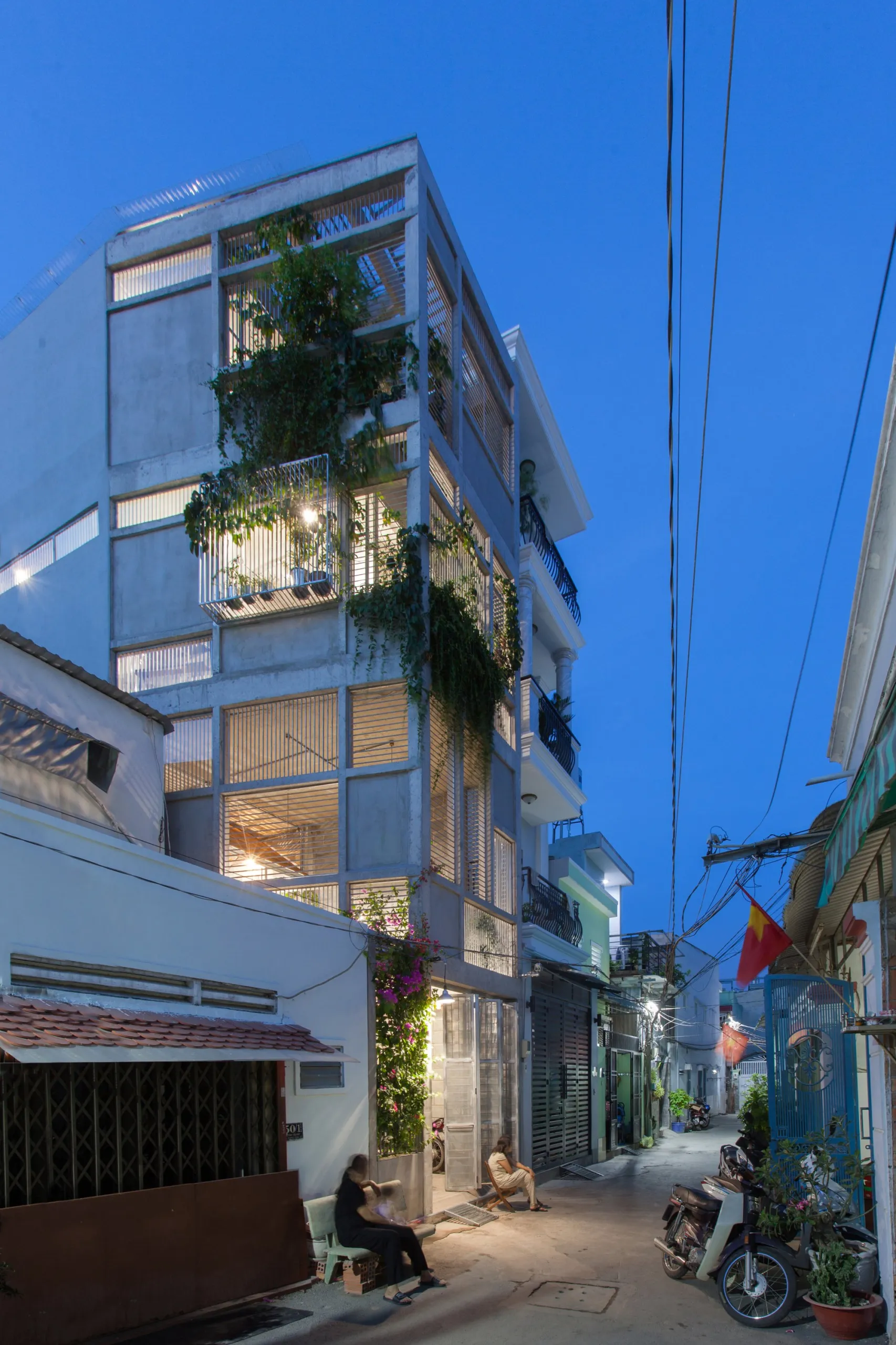
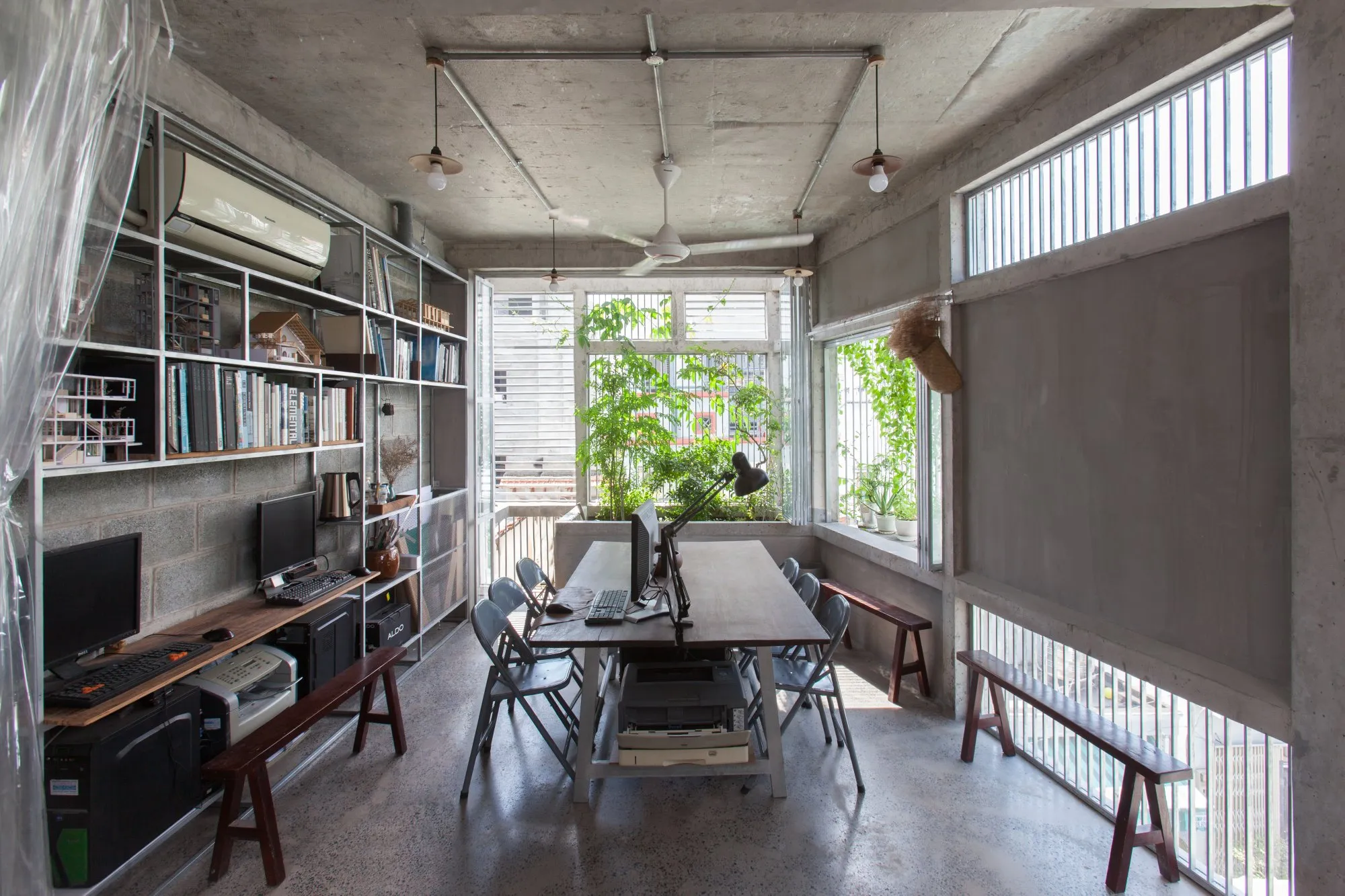
What do you think of community architecture? Having worked on community projects, what decides their quality and success?
Nhật Nam: That’s a hard question (laughs). We both love community projects because you meet so many different users. A community project is never an easy brief. There are a great many users. Then there’s money: community budgets are always limited. And the understanding and help of the users themselves is the key to success, which makes things hard for the architect. If the users don’t contribute from the start, they won’t look after or protect the building, and it falls into disrepair, everyone’s and no one’s, simply because they didn’t pay for it or invest in it.
And the first survey stage is difficult, because we can’t meet everyone. Some are too busy, some work far away, and they’re often the heads of their families with the strongest voice, sometimes even sponsors of the community building where they live. If the finished building isn’t what they wanted, they may react badly. For us this is the hardest part: surveying as many people as possible and getting a clear grasp of how it will be used. Whether a community project survives depends on whether people join in to build it.
Cẩm Linh: Gathering people’s views from the start is really difficult. With Sống Foundation we organised many community meetings, but residents often stayed away and sent neighbourhood representatives or older people instead, who are the least likely to use the space. Going door to door didn’t solve it either. Taking part depends on each person, and not everyone is comfortable giving their opinion. So for a public building to succeed, you have to keep changing, keep reaching out and encouraging people to take part in building it, to create a bond.
It’s a long project. From the start of construction to completion, and even after it opens, whenever people give us feedback I find it more interesting, because the building changes, stirs and shifts with use. Then it seems alive, adapting to its setting. For me, a community project has no end point. It keeps changing as new users take it on, and we have to accept that. Its success doesn’t lie in images but in how much it’s used once building is over.
Besides models, you draw by hand in great detail. Is that a hobby, or does it relate to design?
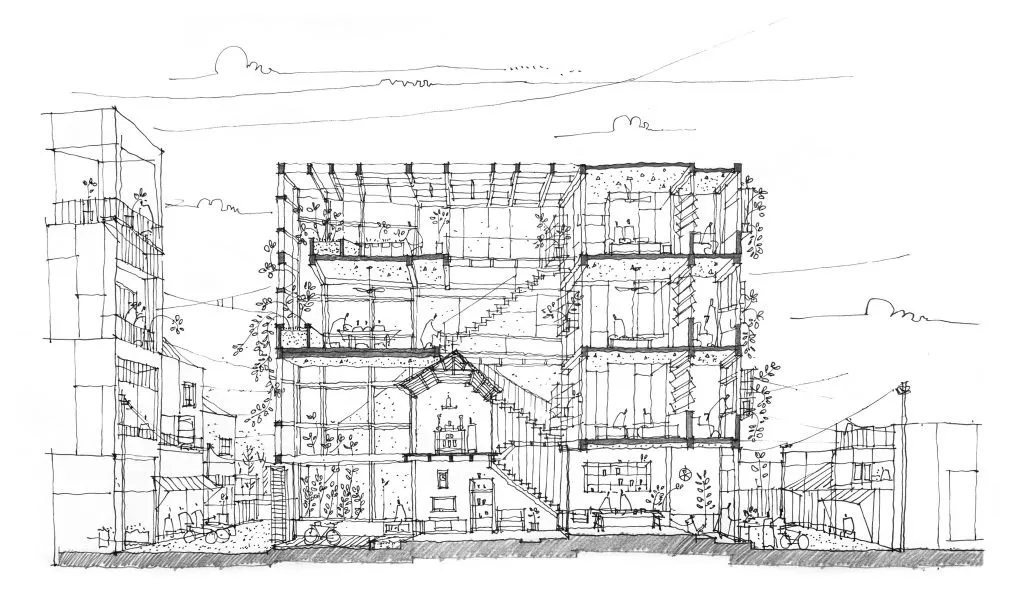
Cẩm Linh: Compared with hand drawings, computer drawings are too clean, every line perfectly straight. A hand drawing isn’t like that. It has tremors and slips. It reflects a person. Just like the buildings we make: they’re built by the hands of workers, and no wall or concrete column is as straight as in a computer drawing. They have a natural roughness, and nature is like that too. A hand drawing shows a building in the most real and lively way. We believe that the closer people look at the details of a hand drawing, the more they can picture how each person lives in their own space. It’s a vivid way of conveying people’s lives in a building.
Has any architect or person shaped how you practise?
Nhật Nam: I think the teachers, older colleagues and all the architects we’ve worked and talked with. They’re all pieces that helped shape K59 Atelier’s own architecture. I’ve learned architecture through many viewpoints and media. This age really makes it easy to find information and learn from what’s available.
Cẩm Linh: For me it’s hard to name anyone, there are too many. Every architect, teacher or colleague has influenced how I practise, more or less.
Five years into a young office, has it been hard or easy?
Nhật Nam: One advantage is that I can see the difficulties older architects faced and learn from them. I’m not afraid of change. We have the right to experiment and make mistakes to develop new thinking.
Cẩm Linh: I don’t know if this is a problem for young offices or for every office, but building clients’ trust isn’t easy. Because we’re new and haven’t done many projects, clients want to know whether we have enough experience and knowledge of what they need. You may have studied a subject a lot, but if you haven’t done it before, it causes doubt. Proving you can do it is probably the hardest thing. Sometimes you can’t prove it with figures, but you can see their trust in how you talk and work through the design.
Nhật Nam: Honestly, these five years have brought more advantages than difficulties. We weren’t under stress during COVID while many colleagues struggled. We learned a lot, had time to read and think more deeply, to invest in our buildings, and to fix the office’s weak points.
Nhật Nam, you teach as well as practise. As a lecturer, how does architectural education now differ from when you were a student?
Nhật Nam: Students today are very active, and even find more interesting things than our generation did. They can work in many offices and, while still students, take part in building and supervising. That builds confidence in the new generation. Some open their own offices just after graduating and practise very well. That feels truly different from when I studied ten years ago. Back then I only knew foreign offices; local ones weren’t as prominent as now. Another good thing, besides confidence: students now often choose young or local offices without being driven by money.
What would you tell someone choosing to study architecture?
Cẩm Linh: We think that whether you study architecture or anything else, the ability to observe helps a great deal. Practise observing as much as you can, openly and innocently, without imposing your own opinions on what you see. Observing isn’t only looking at a building, but at all the small things around you: how people live, how children play together, how older people move, even the trees, the air and the objects around you. At first it may only be looking, but once you practise architecture, you see how useful it is.
Nhật Nam: As Linh says, being objective and clear means not assuming a view and imposing it before you’ve looked. With a building, look at the positive side: who it helps, what’s interesting about it, what challenges its builders overcame. A good observer can do many things. Architecture is only the beginning.
Which building has impressed you most, and why?
Nhật Nam: Personally, I love the old house of Mr. Kiệt in Cai Be. I was struck by its flexible system of doors. They’re all mounted on a structure that can be taken apart easily, arranged very cleverly. Our forebears thought brilliantly, and we can still learn from them. Books don’t record nearly enough. The main thing is to go there, study and relearn those details so we can apply those techniques again.
Cẩm Linh: The first place I think of is the palace of the Hmong king in Ha Giang. I’ve been twice and still want to go back. Each time I learn something new. It has many interwoven spaces and a complex system of roofs. When it rains you can see drops falling and bouncing on the ground. Arriving there really moved me.
Is there a building K59 Atelier has always wanted to make?
Cẩm Linh: Since I was a student, I’ve been drawn to educational projects, especially for children in the mountains or in poor rural areas. My major projects and my thesis were all schools, and Nam thinks the same. Many people say they’ve lost faith in Vietnam’s education system, but we don’t think so. I see it trying to change and update itself. We used to hope K59 Atelier would have a chance at a project like that, but our thinking has shifted a little. The type of project no longer matters, as long as we meet clients who trust us to design and build for them.
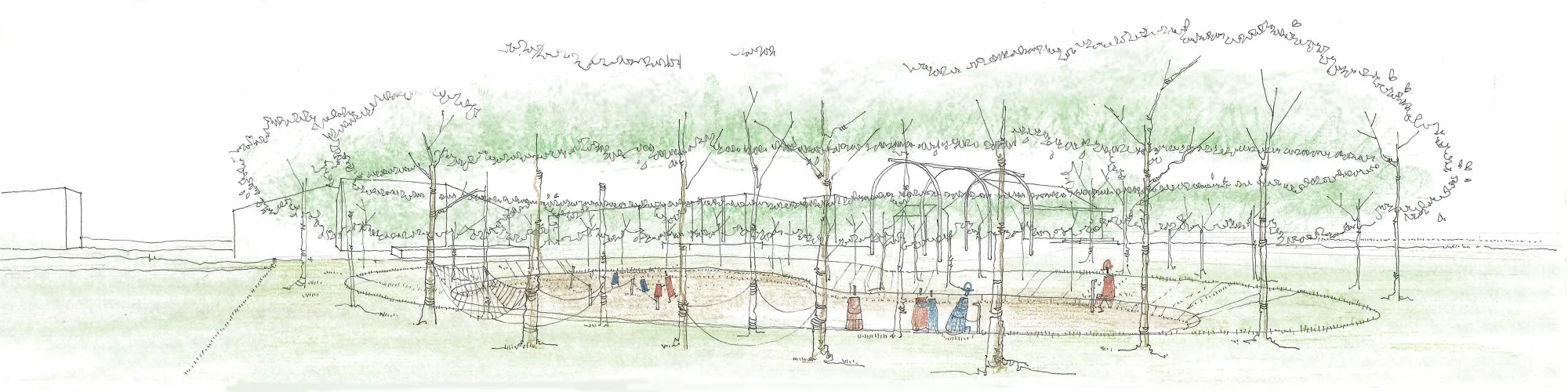
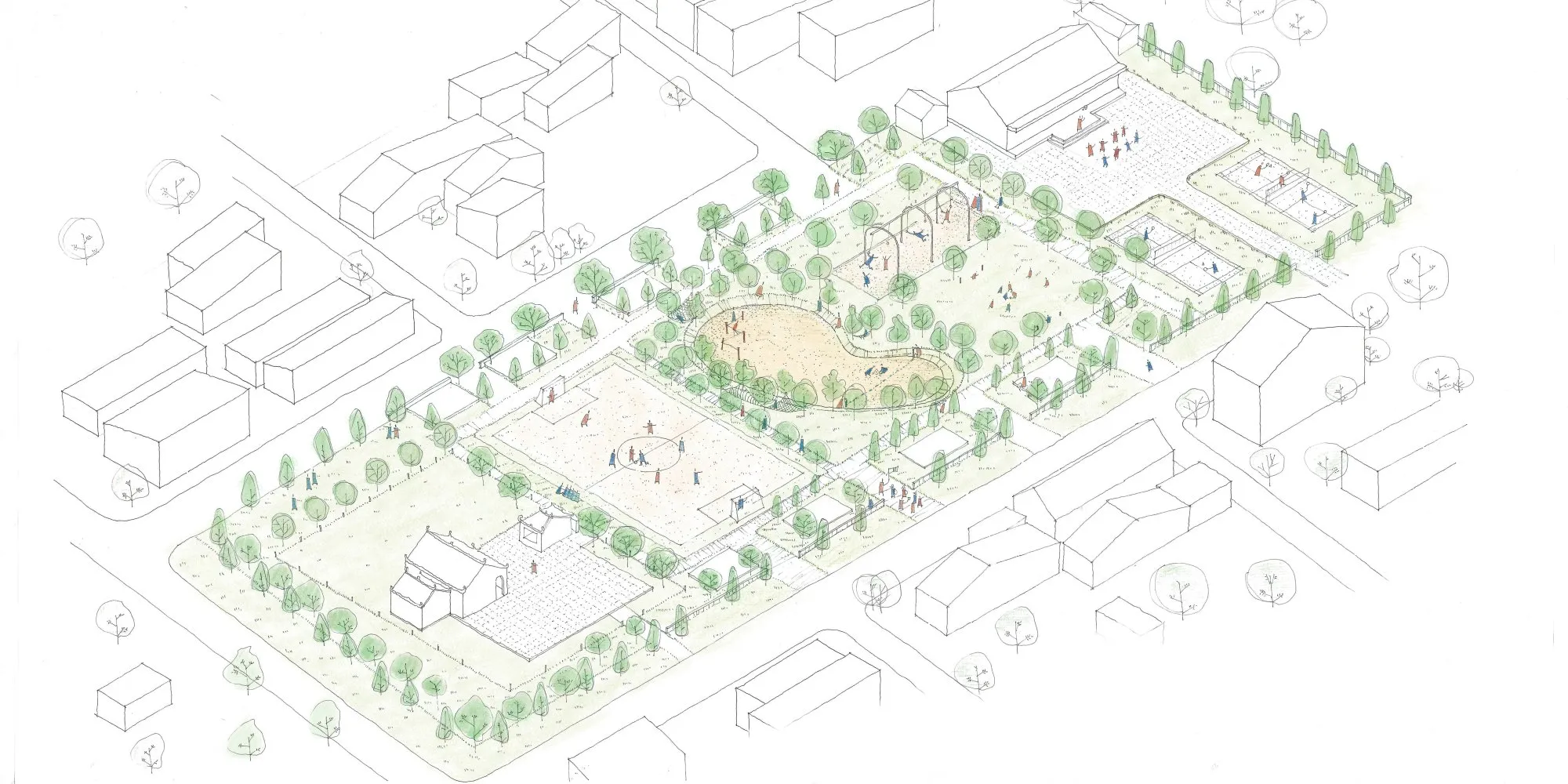
Nhật Nam: We want a project where the client feels we are the right people, is ready to give us time to design, and respects what we make from the start to the finish.
Education isn’t only about schools. Houses matter too. A child who grows up in a house is shaped by its spaces, and that is a good foundation for growing up.
Interview by Anh Nguyen, May 2023. Edited by Phạm Hà Thu. Photos courtesy of K59 Atelier.