
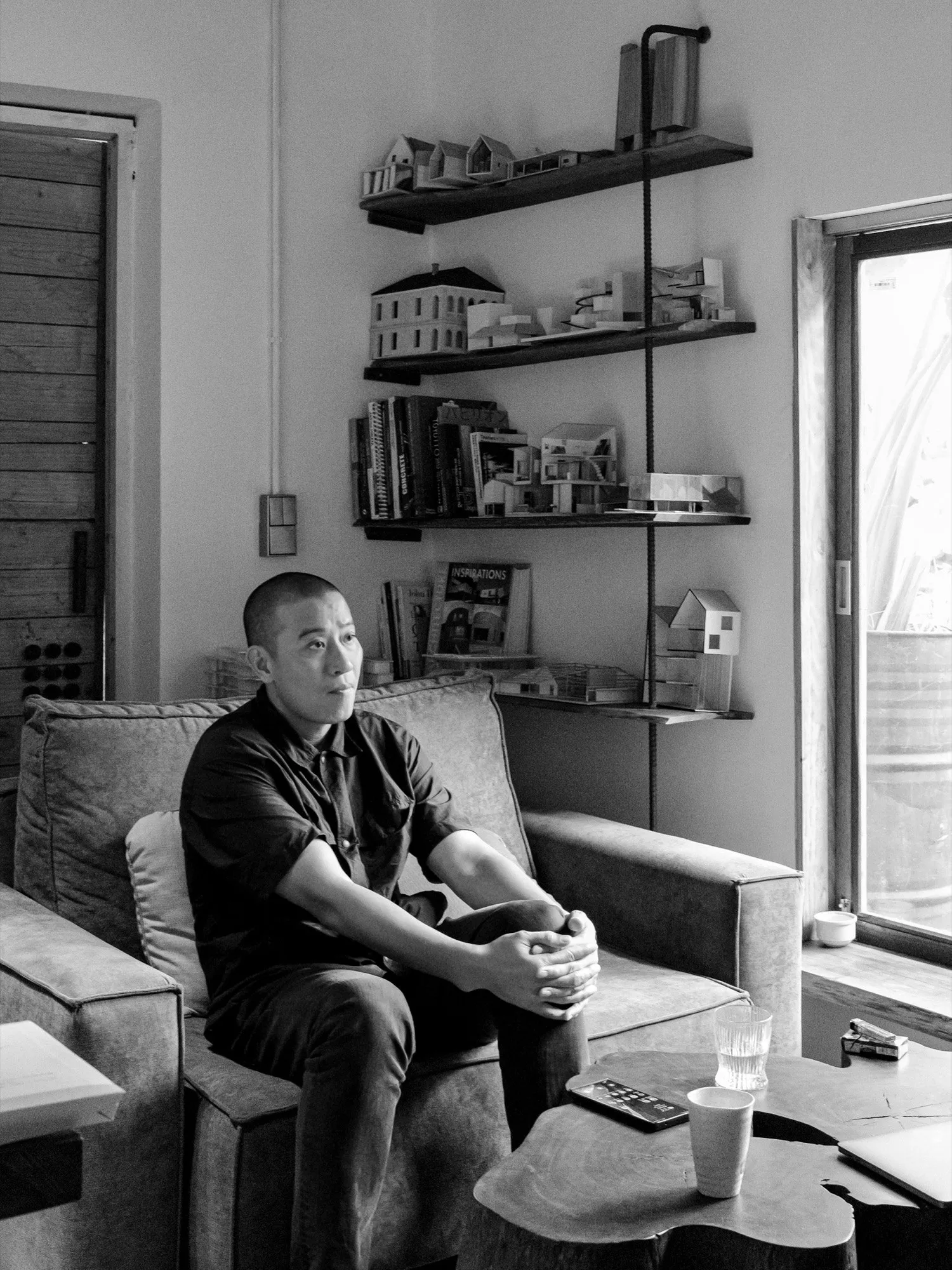
I first met the Vietnamese architect Đào Thanh Hưng in 2014, at the office of AHL Architects on Trần Quốc Toản street in Hanoi, Vietnam. AHL Architects was three years old then. Nine years later, my colleague and I from NOTES sat down with him again at his new office and spent an afternoon talking about eleven years of steady work at AHL.
The conversation held a great deal of value, and we think it will be useful to anyone who follows Đào Thanh Hưng and his partners at AHL.
What kinds of project is AHL working on now?
Đào Thanh Hưng: We’re working on several projects, focused on houses. The latest are a small hotel in Da Nang and a serviced apartment building in Hanoi, alongside others.
The newly finished project in Thai Nguyen is remarkable. Tell us about its architecture.
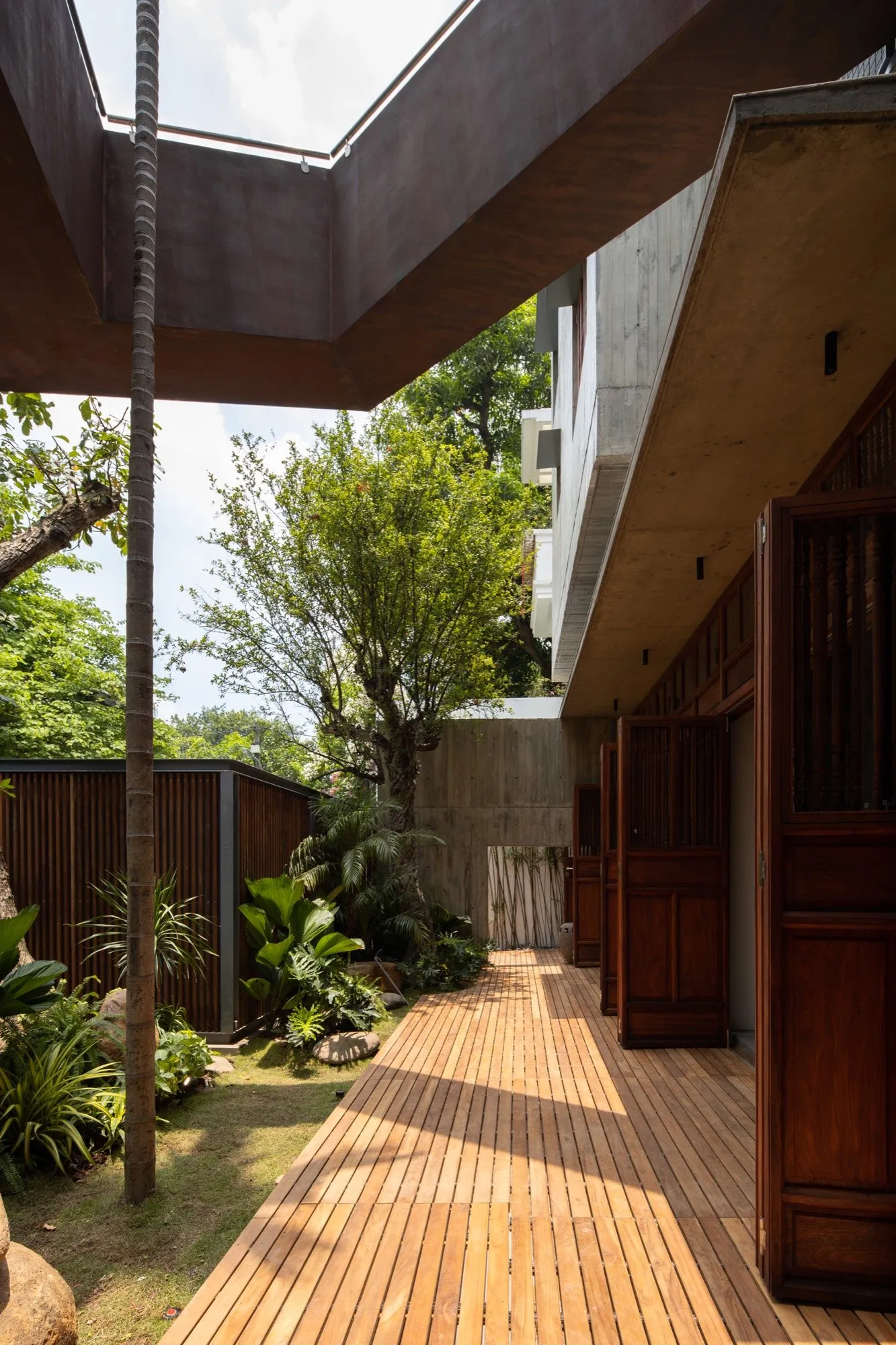
Đào Thanh Hưng: It’s the house of a Hanoi-based fashion designer, who wanted it as a gift for her mother. The mother lives alone there, and when the designer visits, each still has her own private space. There are two main blocks. The one at the front, for business, could be a café or a small shop. The square one at the back, 12 by 12 metres, is for living. The architecture reflects our client’s design sensibility; she has a strong feeling for materials, structure and large slabs. The shapes of the roofs come from the folds of a lappet, while still doing their job. Six porches slope down to protect the house from sun and rain. We are looking again at the values of our forebears’ traditional houses and learning from them for recent projects.
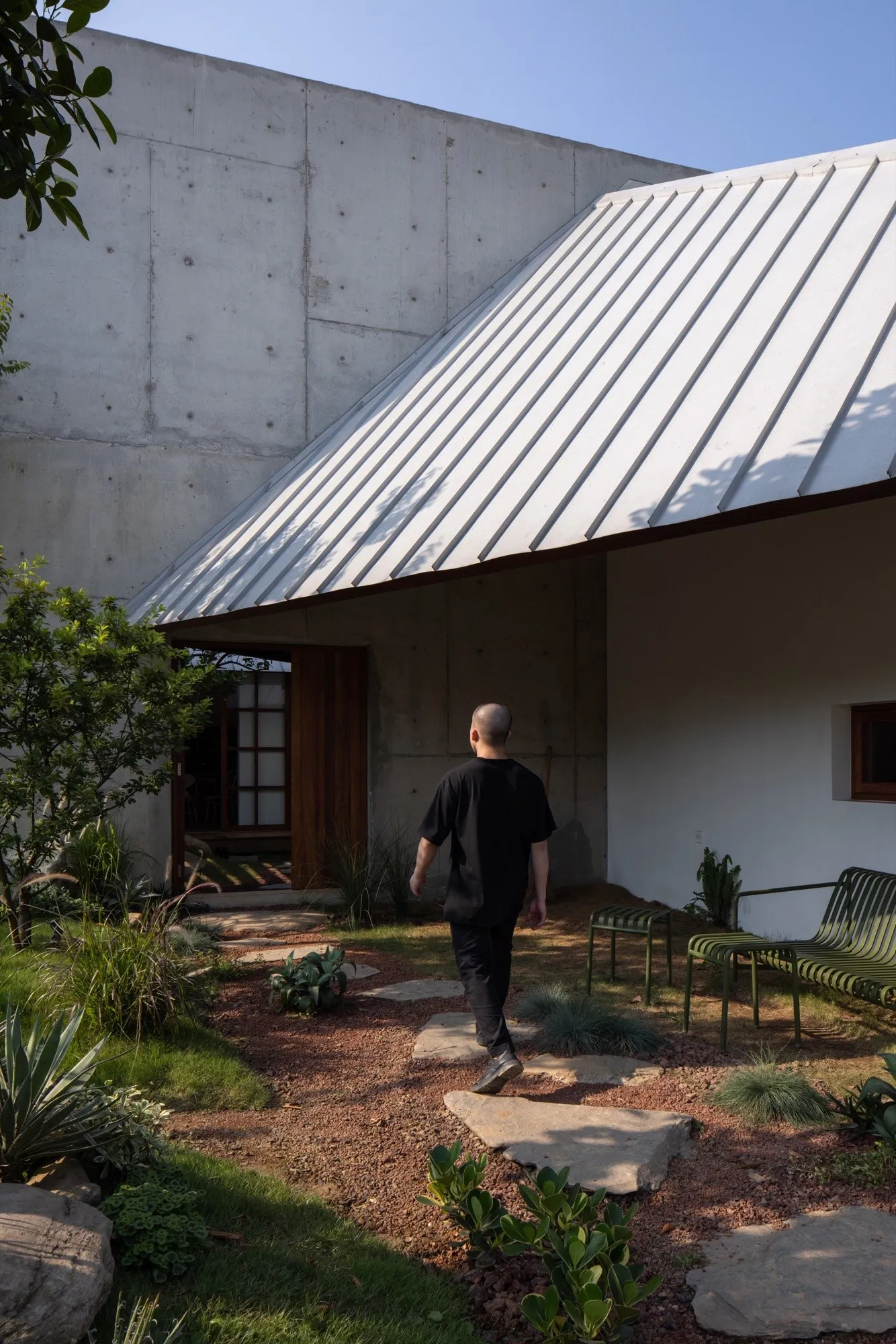
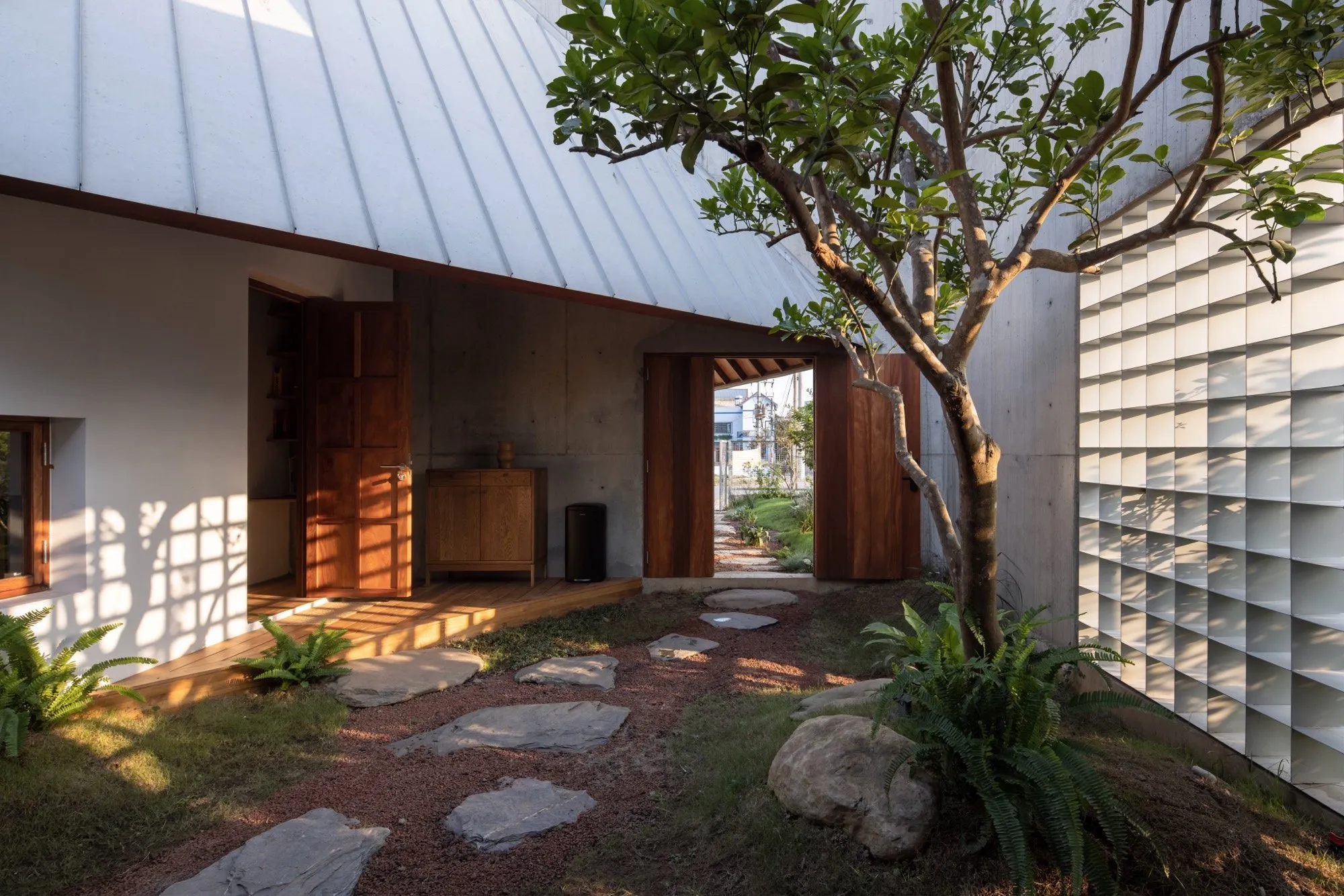
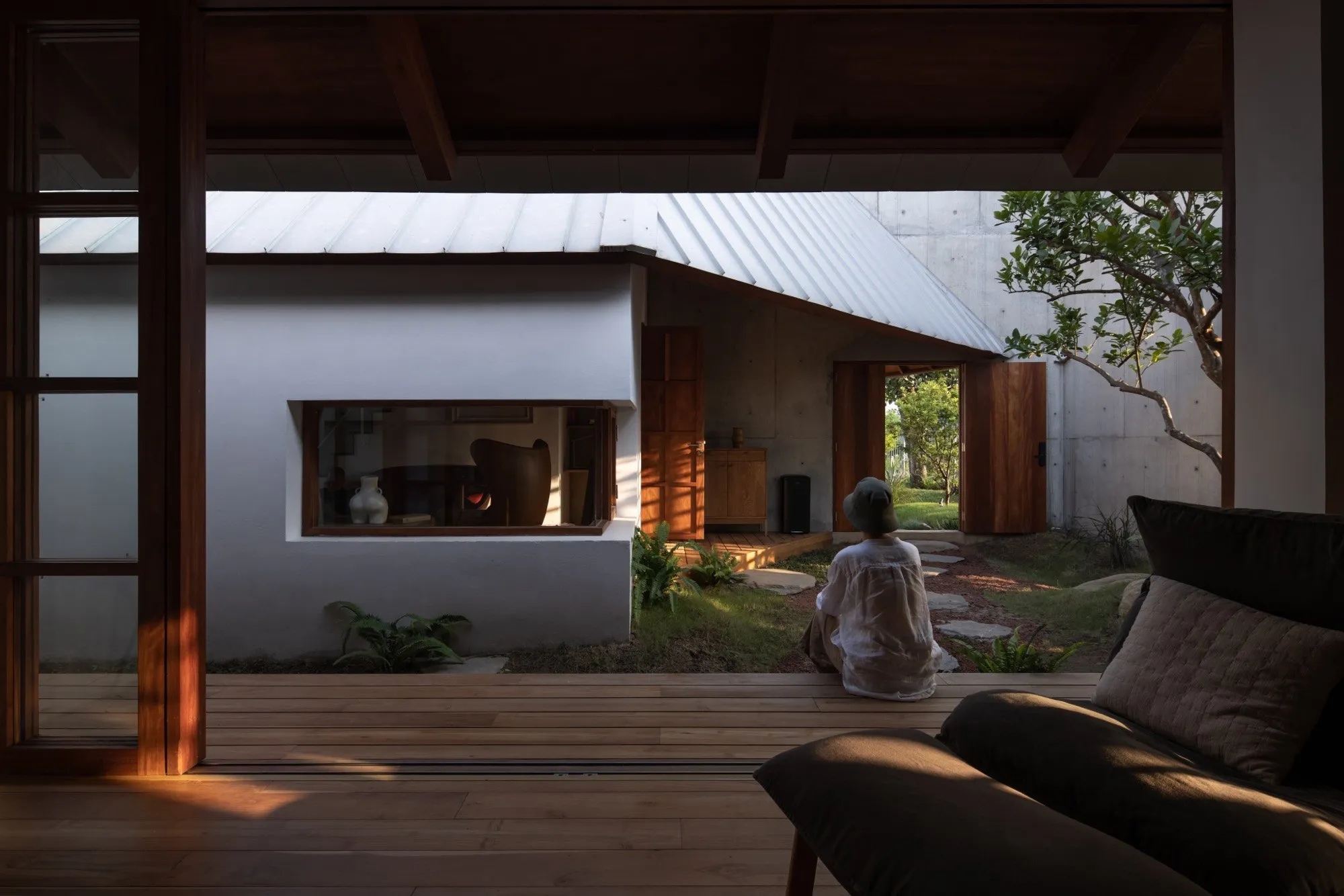
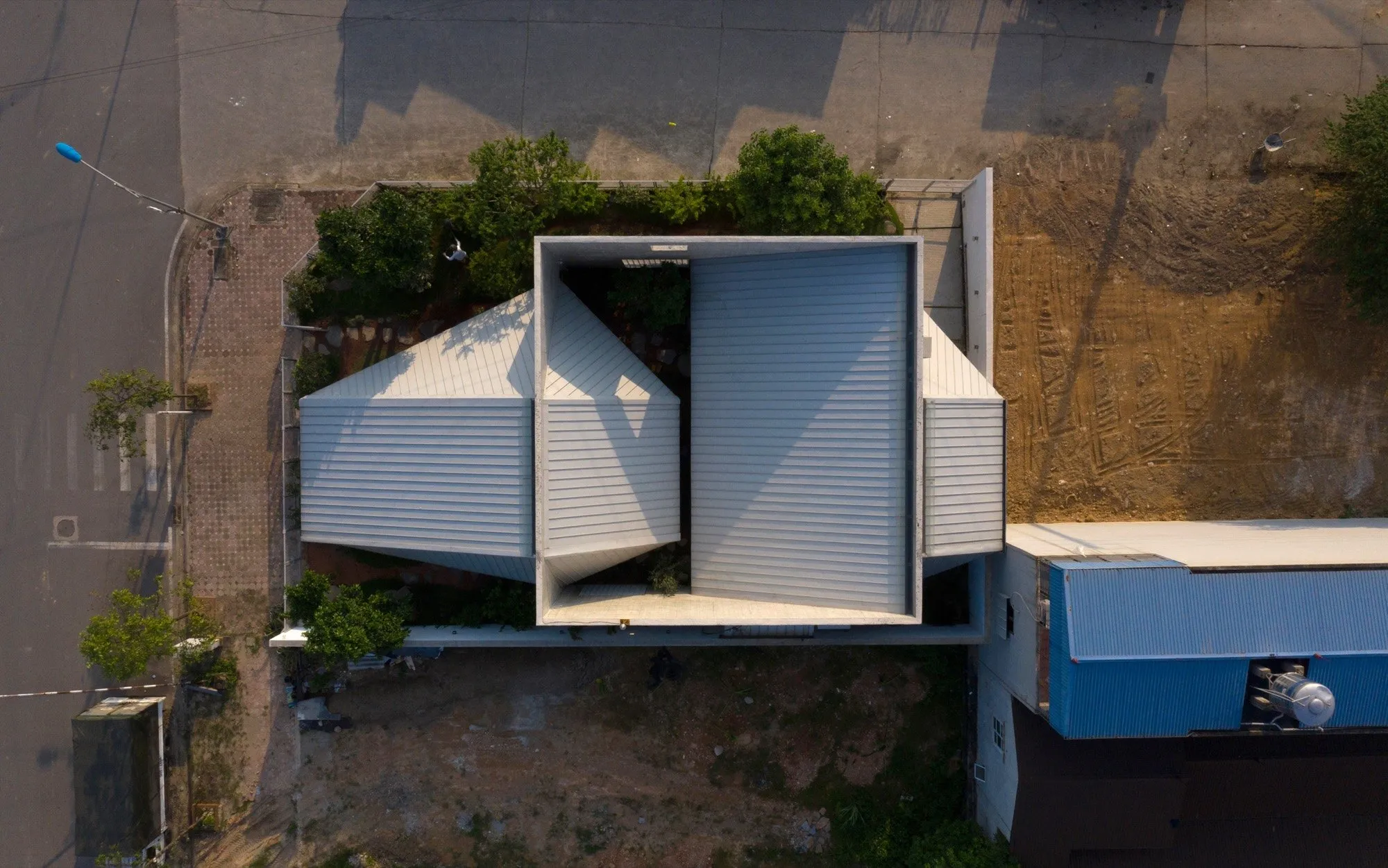
Today architects often leave out setbacks and porch roofs in pursuit of a “modern” form. In recent projects we have paid more attention to these details and found ways to use them. This project, the Porch House, puts the emphasis on porches, which act as important buffers between the rooms inside and nature outside.
The Porch House is that ordinary. The day the photographer and I went to shoot it, it was 40 degrees. People see the concrete and assume it must be stifling, but we stayed comfortably in the house with the ceiling fan on and the doors open, without air conditioning. Thanks to the setbacks, the 12 by 12 block is well ventilated. If you shut all the doors, of course, it would be like an oven (laughs).
AHL seems very “faithful” to houses. It’s hard to find other types in your work. Why?
Đào Thanh Hưng: It started with what we wanted when we founded AHL. Before that, I had worked in three or four offices, local and international, all focused on big projects. I wondered when I would see my own designs built. Watching large projects in Vietnam, I saw how hard it is to look after small details, for many reasons, objective and subjective. Reading foreign publications, I saw how carefully others work. When my two partners and I opened AHL, we thought hard about how to follow our projects scrupulously. We wanted to go all the way. A house is part of daily life, quite approachable and less exposed to the market. That is the main reason I and the others in the office focus on this kind of building. I still think it was the right decision.
At first we lacked experience with clients. It took many projects before we could gradually control things. Now I can say with confidence that AHL is in command. Clients trust our proposals and decisions as logical, made by a professional, dedicated team. Decisions on construction, materials and colour are left to us. Our architects follow every stage of building closely to control the details. Some offices send the drawings and only come back to check progress, which leads to many mistakes, because the contractor isn’t qualified or the client changes things. We build what we draw. If anything changes, it’s usually on our side, because construction is a chance for the architect to review the design before it is built, and then the contractor carries on as planned. Everyone is busy and works hard, but all parties are happy that people are doing the job they are meant to do.
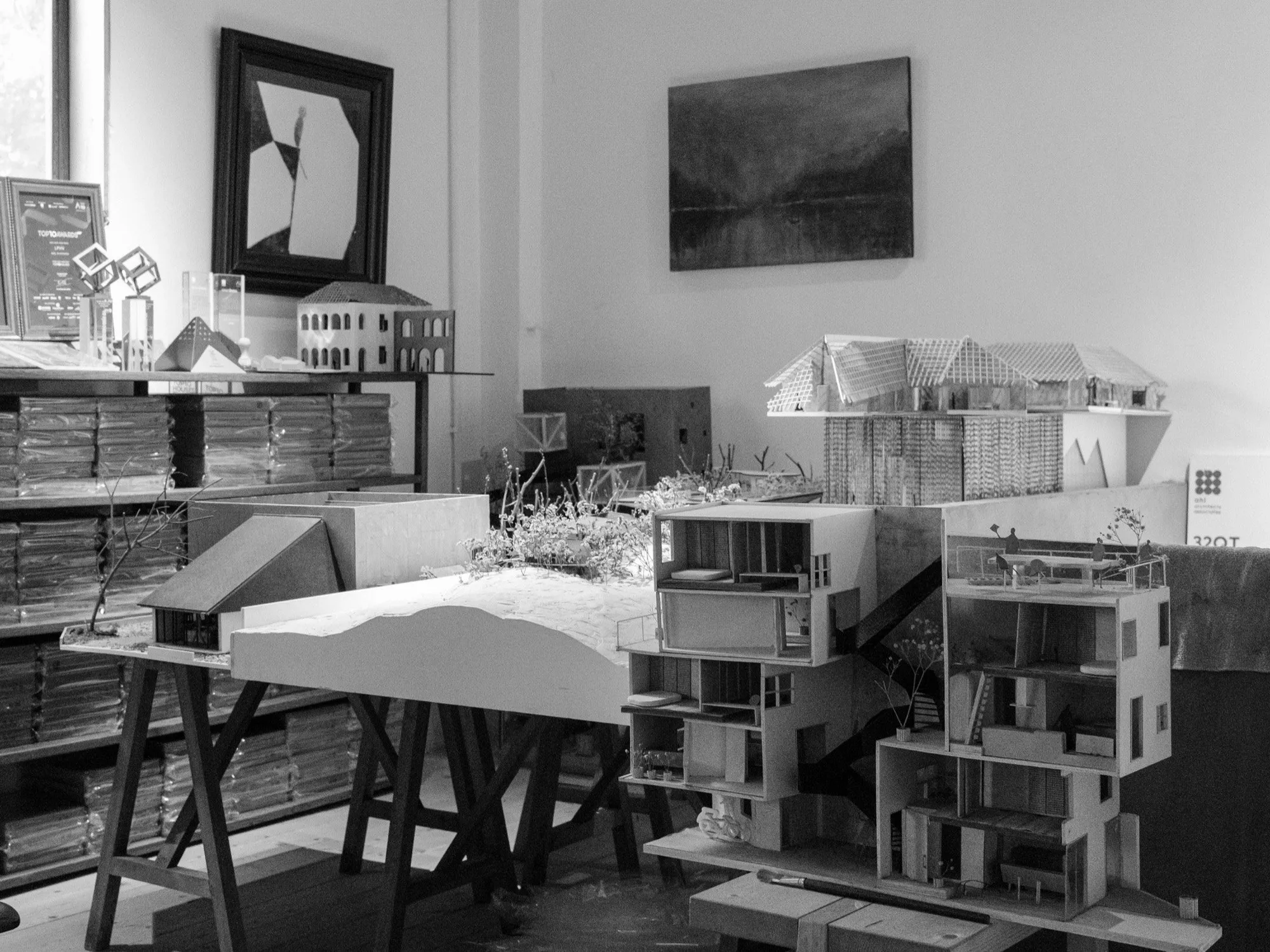
When I first saw you in the old office, it was quite small. Now you’ve moved somewhere more spacious, full of models, drawings and awards. Twelve years is neither short nor very long for an office. If you summed them up in one word or sentence, what would it be?
Đào Thanh Hưng: What I’ve done best, and seen most clearly, these twelve years is perseverance. I keep walking one particular path. For many people, houses are a foundation or a springboard to bigger projects: accessible and easy to win awards with. We disagree. I really want to work on houses.
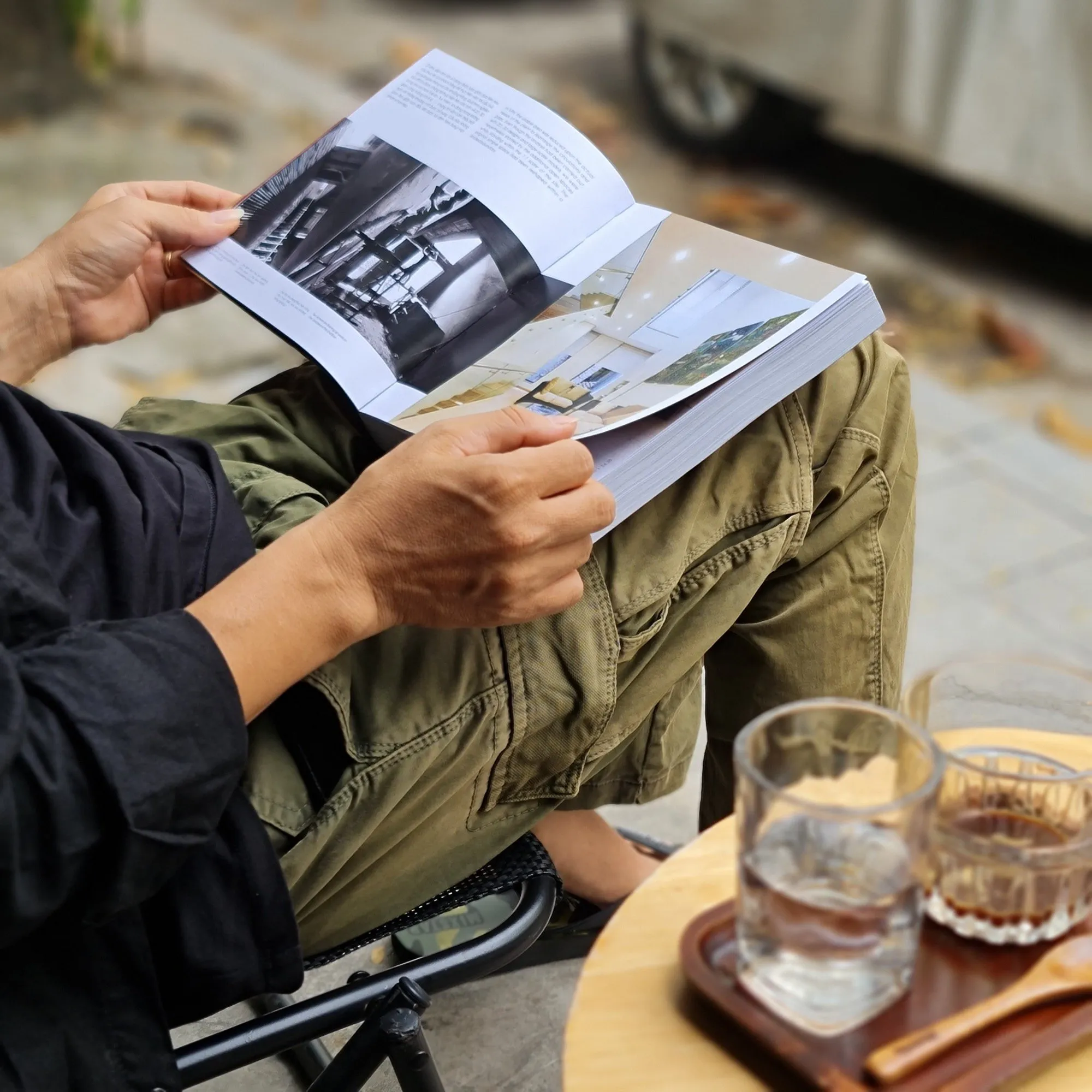
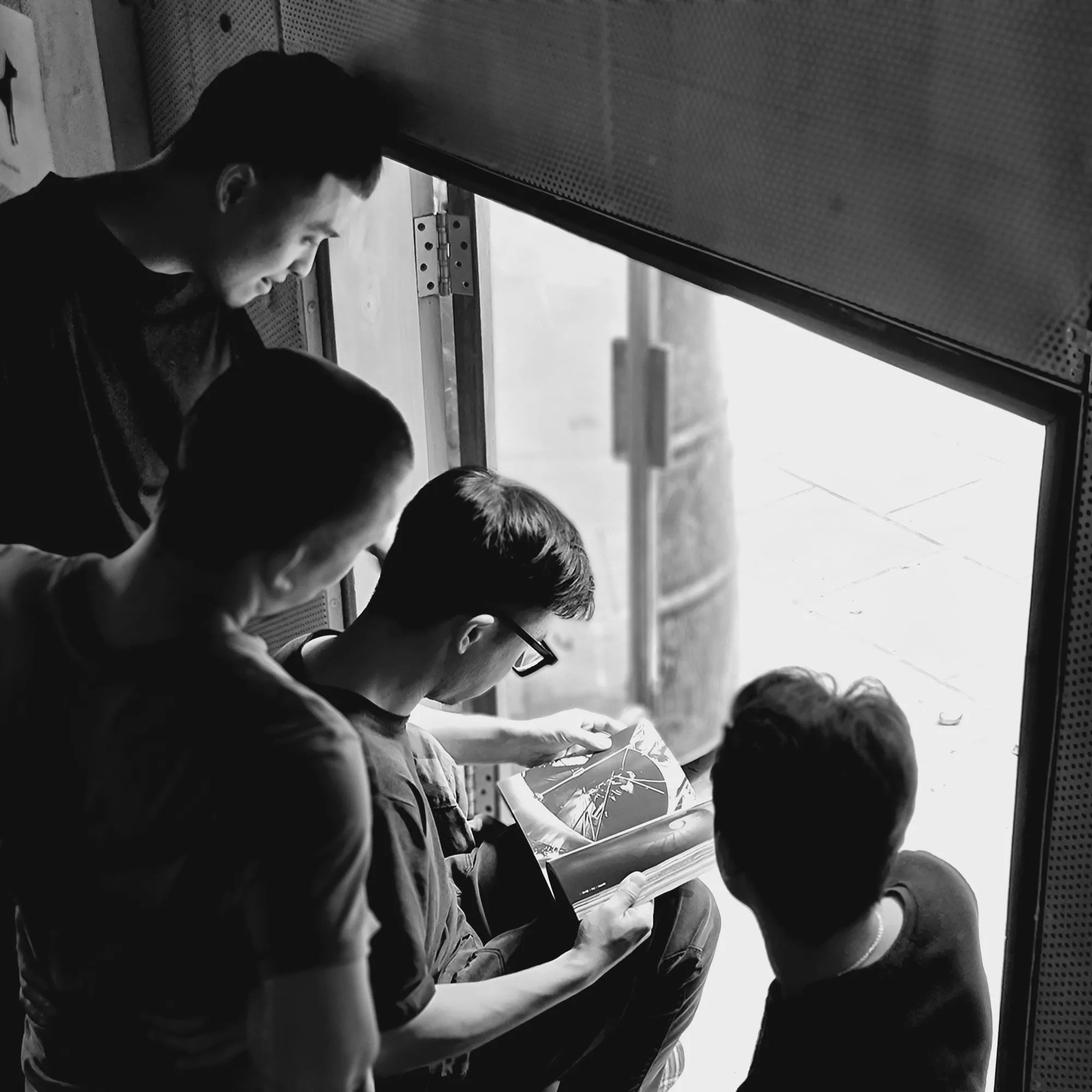
In our book there’s a question: “Aren’t you bored of houses yet?” In fact every client has their own needs, so why would you be bored?
For me, it’s about staying consistent with one way of thinking.
What have you come to understand about architecture in general along the way, and about your own?
Đào Thanh Hưng: Basically, I’m happy with what I do. After twenty years in this field, I still feel excited about the unknown person, client and brief I’ll meet the next day. My range isn’t wide, but there are plenty of challenges: how to find a solution for a design, what the idea is, which keywords to follow, which way to build.
AHL never seems to have many staff. Is a studio office what you want, or are you slowly building something bigger?
Đào Thanh Hưng: It comes from wanting to do every project as well as I can. To do my best, in my own way, I have to be directly involved from the technical drawings and details to being on site. I’ve tried to keep an office of five or six people; at its biggest it was eight. I’m the only one managing it, so that scale suits my energy. Rather than doing more projects, I want fewer. It’s far better for the value of each project to grow than to add people and work.
Having worked with many clients on houses, how do you see them now compared with before?
Đào Thanh Hưng: Most of our clients are young and independent, financially and professionally. They’re experts in their own work, and they make their own decisions without being swayed by family, relatives or friends. They really respect the architect’s view and give feedback when it’s needed. I especially welcome critical thinking. I design homes for them, not for me. Fellow architects look at a design and say, “How on earth did you convince the client?” In fact, behind these unusual designs are thorough discussions between architect and client. They know clearly what they want, and to me they spend wisely.
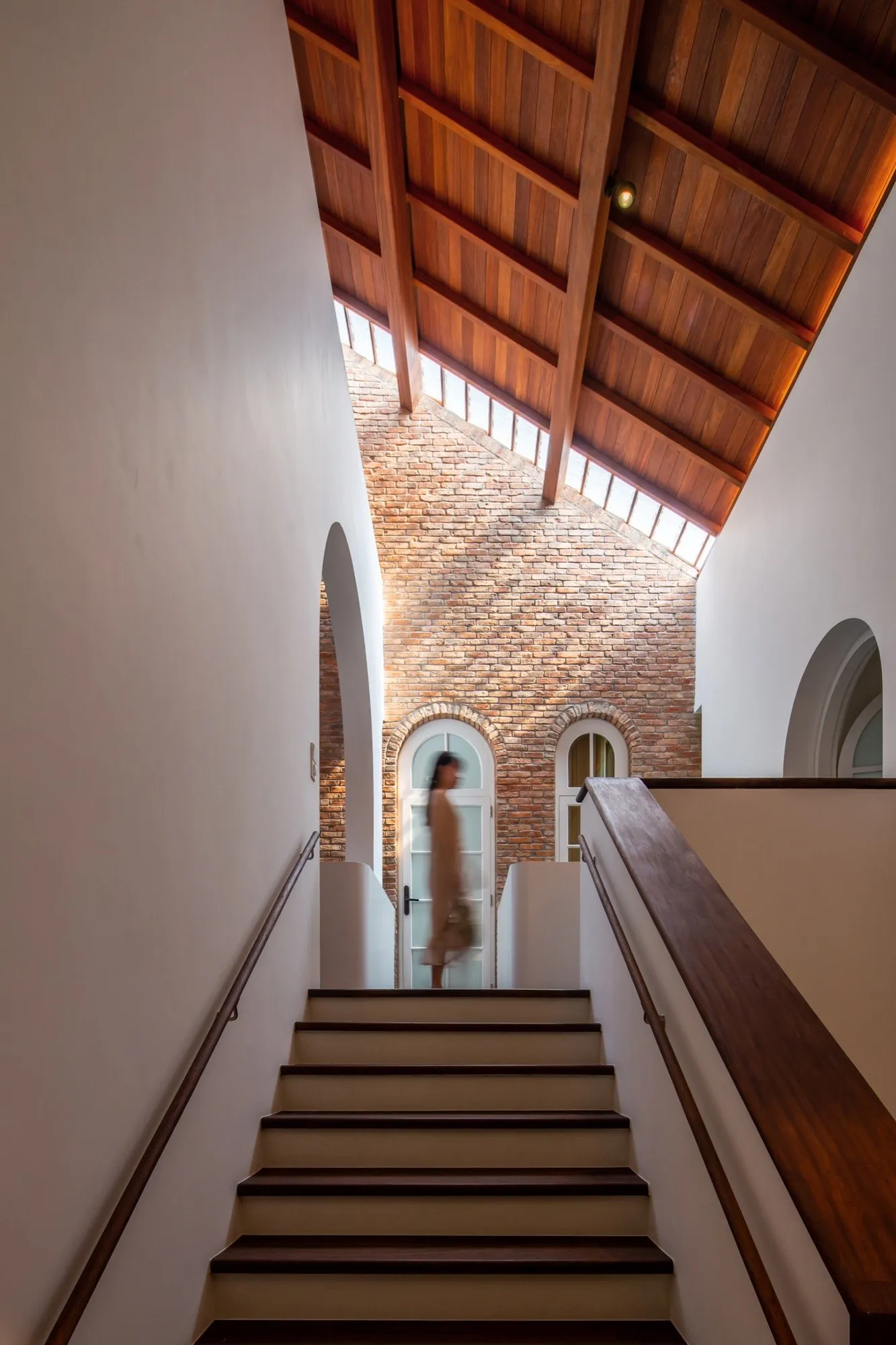
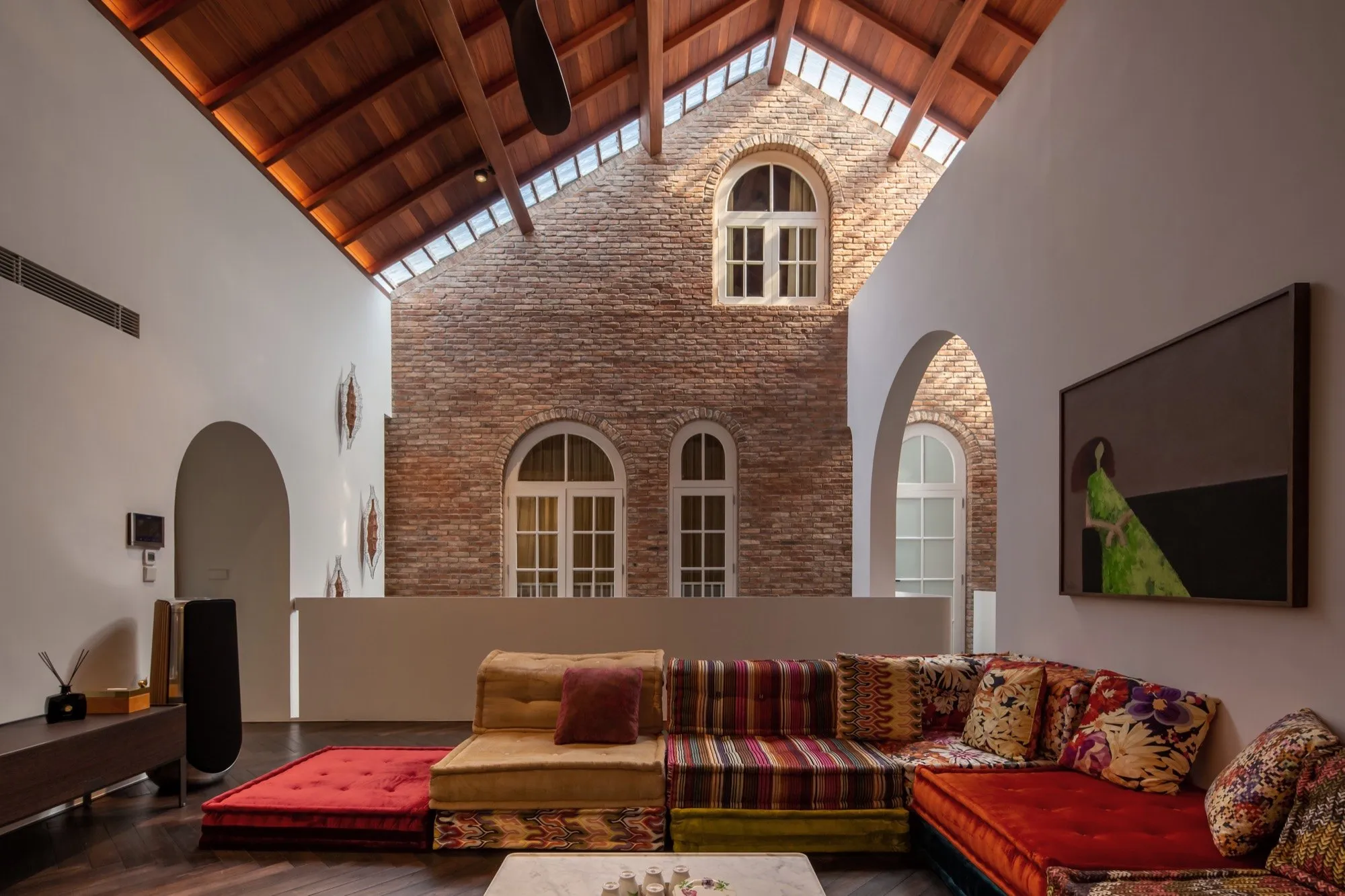
AHL’s buildings read strongly in their shapes and material surfaces, with curves and straight lines that give clarity and consistency, a modern, minimal character often found in tropical coastal countries. Have you been influenced by that architecture, or do you have your own philosophy?
Đào Thanh Hưng: I actually work quite instinctively. The office’s architecture and how we work reflect my character fairly well: direct and bold.
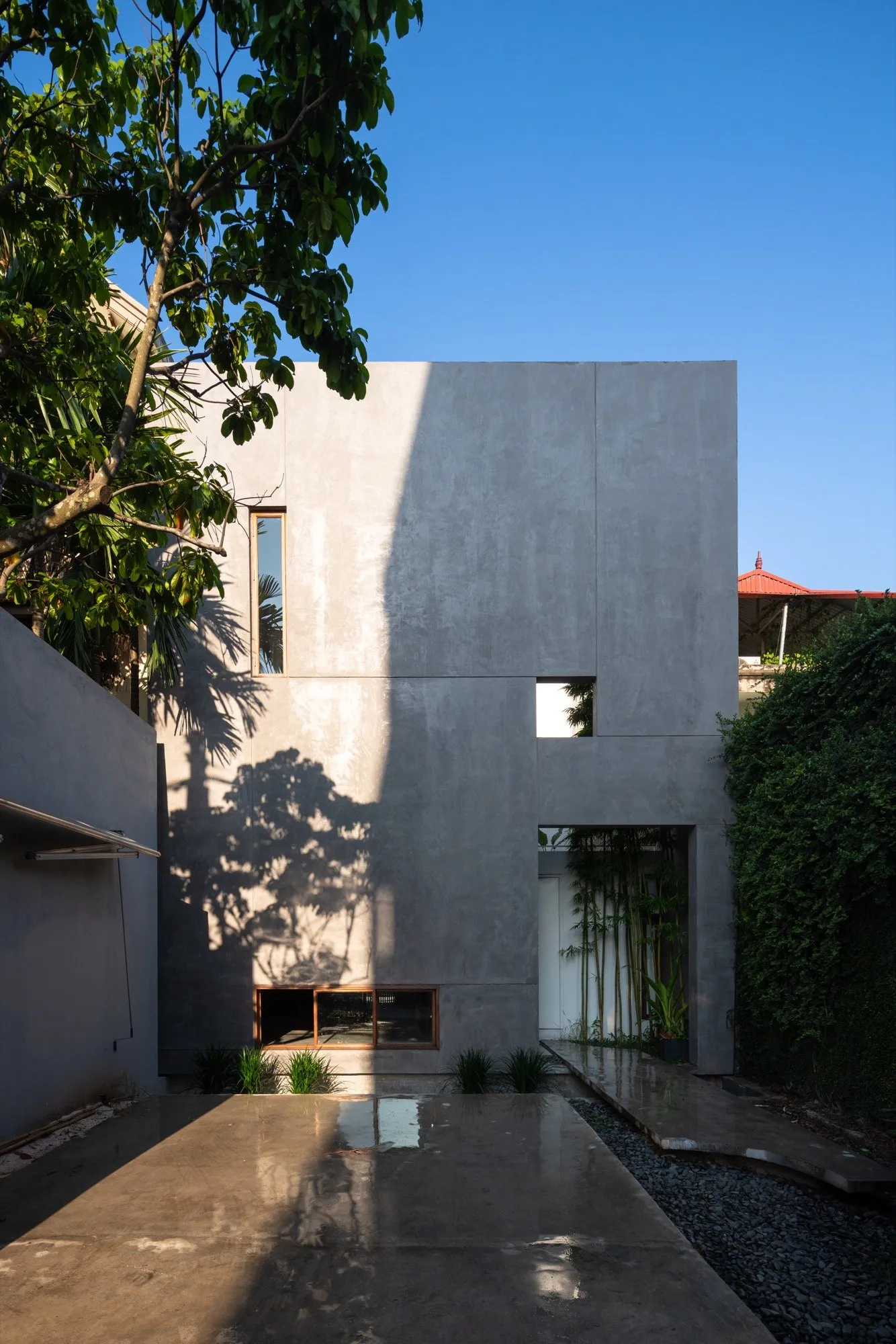
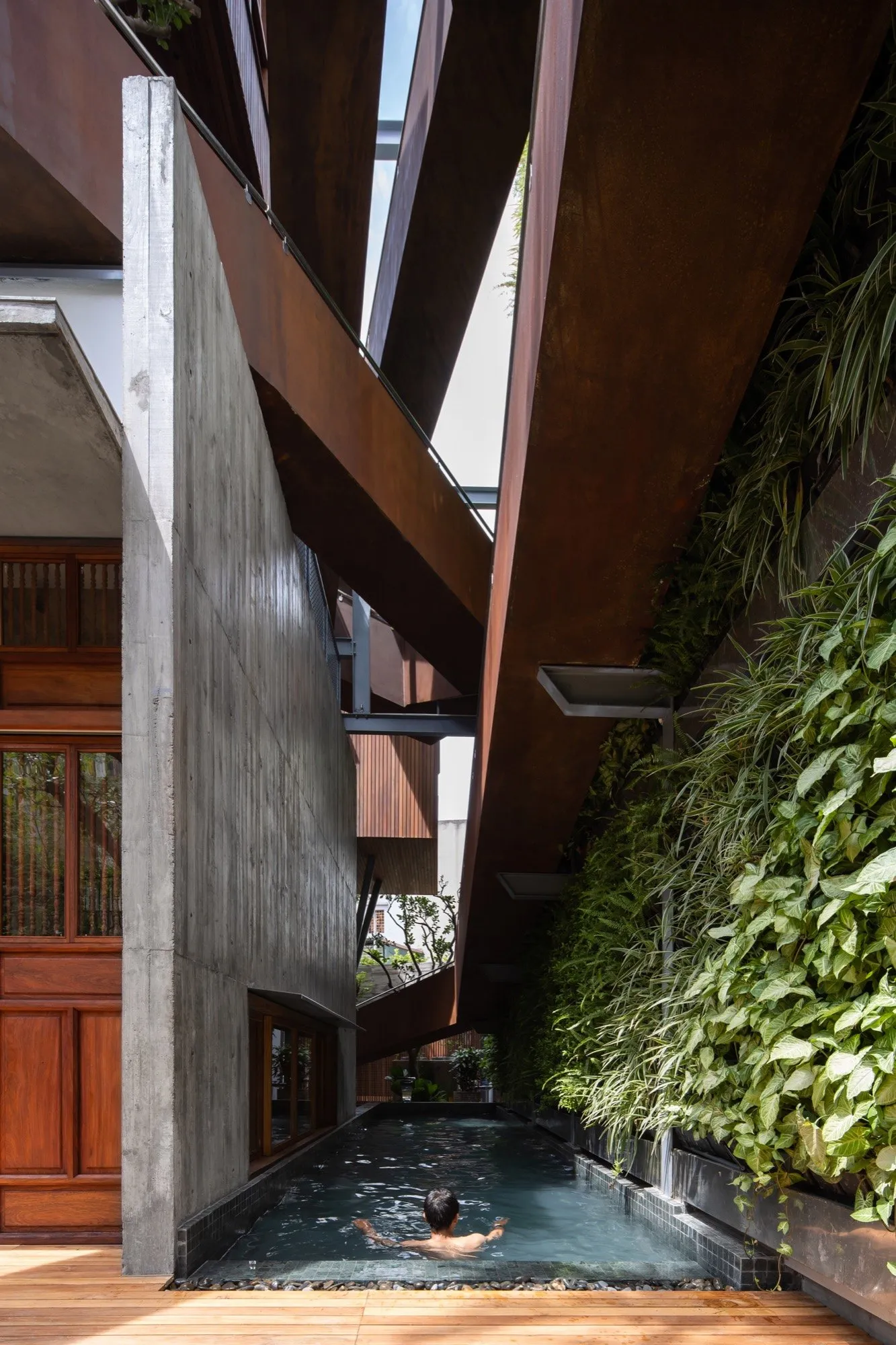
I carry a contrast within me, between a firm exterior and a burning heart. My architecture is no different: heavy and light structures, concrete, timber and steel; solid and void; rough and smooth surfaces; dark and bright; nature and the human-made. In our buildings you’ll easily find a concrete wall set against a white wall or a big piece of timber, a low, dark space beside a bright, tall one. I particularly like these. Sometimes contrast invites comparison, or the viewer may find a meaning of their own in it.
As for tropical elements, as I said, they’re a given. We live in a hot, humid country. I’ve thought about this for years, and every architect has their own way of using it. I look at buildings by older generations to pick out valuable elements, such as the porch, orientation and the porch roof. Once the details are clear, we decide how to use them, whether to follow the old way or adjust it to the design.
Of course, it should speak AHL’s language.
What do you think about the identity of Vietnamese living space in contemporary architecture, its “Vietnamese quality”?
Đào Thanh Hưng: People say “Vietnamese architecture should be modern and imbued with national identity”. More often than not, looking at old Vietnamese houses, I ask what being “imbued with national identity” and modern at once really means. Personally, I go back to the past to draw out the elements I need. Look at AHL’s projects of the last five to seven years and you may notice it vaguely. I’ve applied what I learned in different ways; I wonder whether people can see it (laughs).
Concrete, plants and light seem to be your most used materials. Do they hold particular meaning for you?
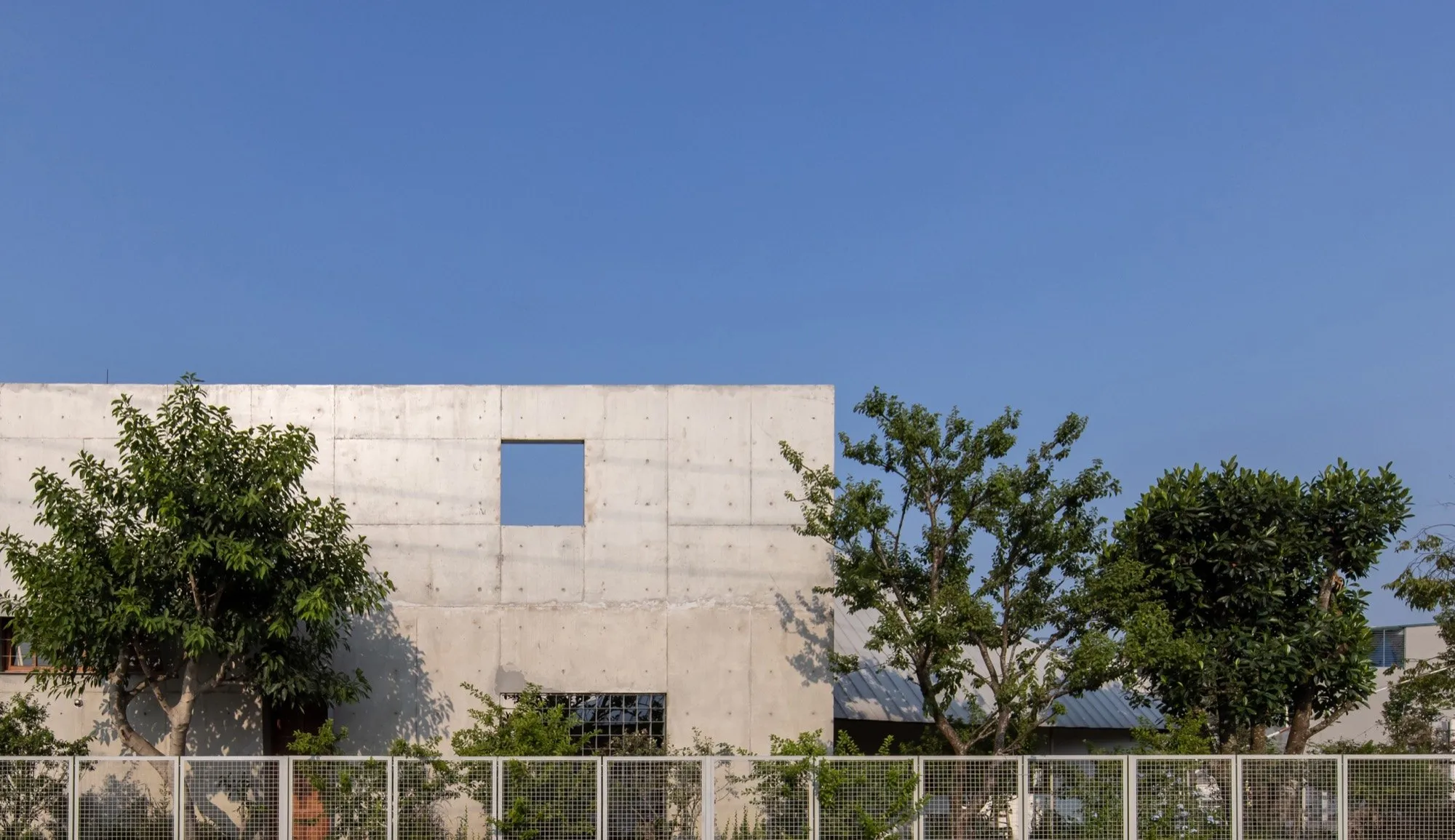
Đào Thanh Hưng: Concrete is my favourite material of all time, usually paired with steel or timber to form the main structure of our buildings. A concrete wall costs a lot more than a brick one, but it’s more durable, lasts longer and needs less maintenance in Vietnam’s climate.
I think more about an architect’s wish to play with materials. Concrete isn’t usually used for walls; it’s a load-bearing structure. A concrete wall can sometimes be the main support for other structures to rest on. With concrete I can skip the finishing layer, because the concrete is already the surface. I want to use the character of materials in my design, combining them with the masses and surfaces to create contrast.
Looking at architecture around the world, what do you think of houses similar to AHL’s?
Đào Thanh Hưng: I believe the house is the most common building in the world and the one architects work on most, especially in Vietnam. A house also expresses the personality of its owners and the nature of its place, and reflects local culture. Each project calls for different solutions depending on climate and geography.
What concerns you most about Vietnamese architecture today?
Đào Thanh Hưng: Over the last ten years, many offices, AHL among them, have been trying to make architectural practice in Vietnam more professional, and clients now recognise the architect’s position much more. Before, I felt the architect’s role was overlooked. They were seen as draughtsmen running after the client, doing what they were told. It was a hard life.
Now things seem more balanced and more valuable for architects. I always appreciate people like Mr. Hiệp of a21studio, Mr. Nghĩa of VTN, Mr. Hào of 1+1>2 and other architects born in the 1970s. They laid the foundation for later generations to grow and to be better known on the world map, and created a community of offices that take part actively and learn from each other. Promoting architecture through different media also helps Vietnamese architecture become known and spreads good values. Personally, though, I think media platforms should filter projects and information more carefully, so that architects and clients can reach useful sources.
Today everyone works hard, and many architects can make a living from their profession and the things they want to do. When one person gets better, those around them get better, and eventually it spreads to the whole community.
Which project would you most like to realise?
Đào Thanh Hưng: Honestly, houses aren’t the only thing AHL aims for. We want to take a project from A to Z, something we can finish, with a client who stays with us to the end. If someone asked me now to design a private museum or an office for their company, I’d be very happy to say yes. The main thing is that AHL must be in charge from day one to the finish, in every detail.
Which saying inspires you most, in architecture or in life?
Đào Thanh Hưng: One from a friend about kindness, which is what I follow: work kindly and treat people decently, and good things will come.
A word for young offices like AHL twelve years ago?
Đào Thanh Hưng: Be diligent, work hard, and do things kindly.
Our conversation ran from 3.15 to 5.30 one afternoon in June 2023. That evening, AHL Architects threw a party for a member who was leaving Hanoi to supervise a site in Da Nang until the project was finished.
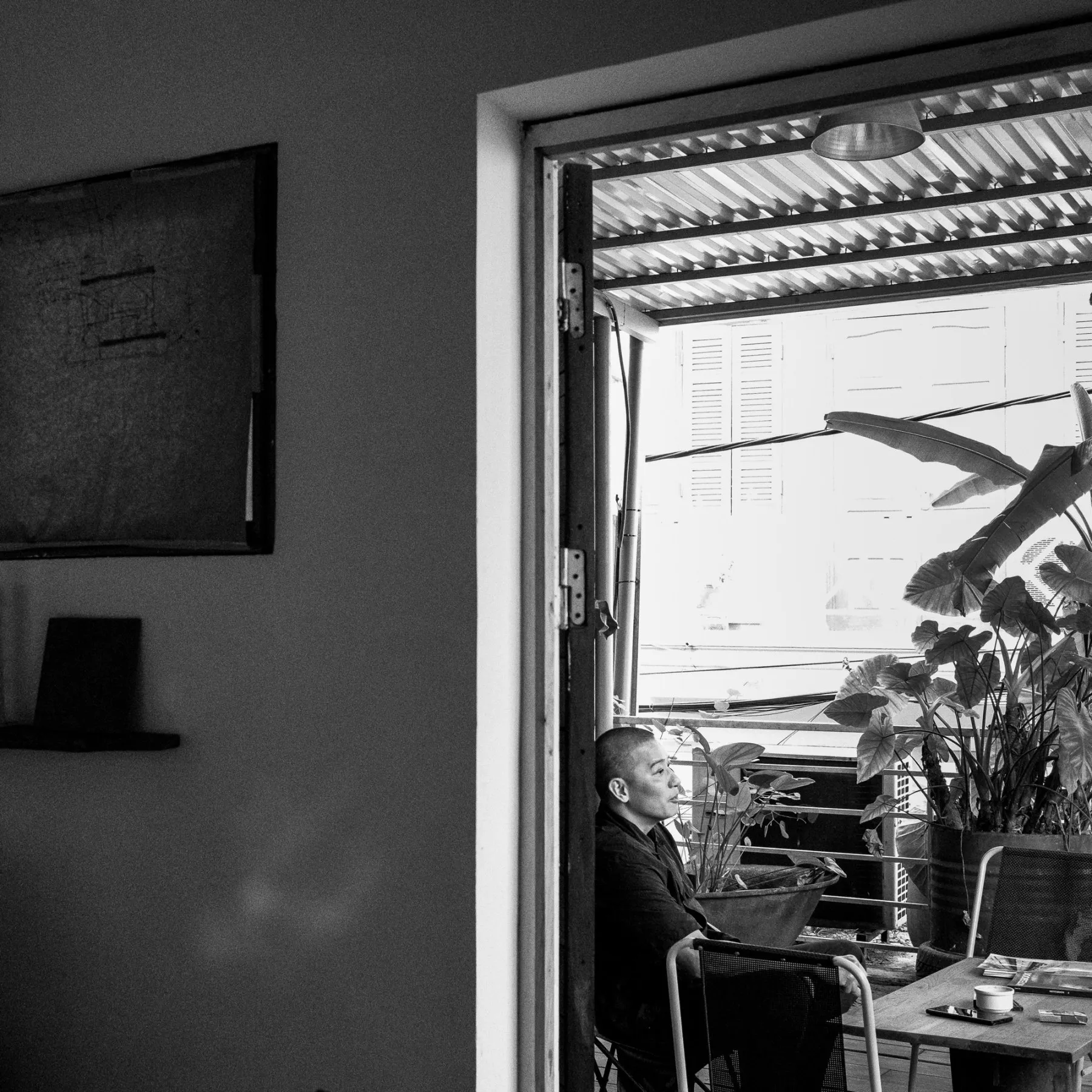
Interview by Anh Nguyen and Phạm Hà Thu, June 2023. Portraits by Anh Nguyen.